
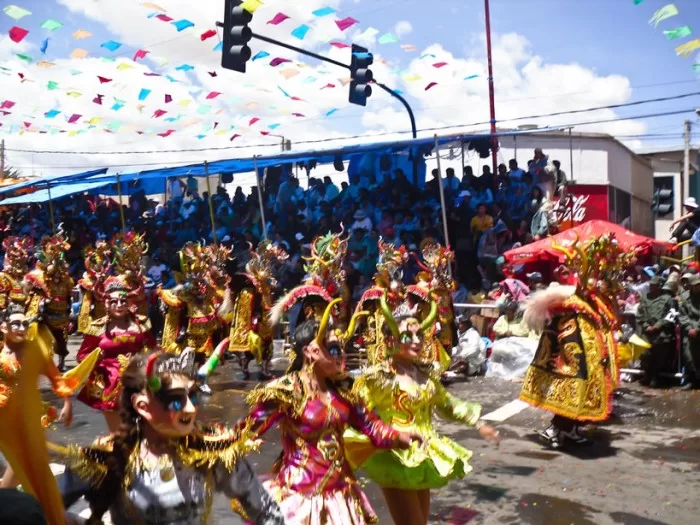
The Rich History of Oruro Carnival
Imagine a riot of color, sound, and movement, where ancient spirits dance alongside Christian saints, and the air crackles with an energy born from centuries of tradition. This is the Oruro Carnival, a spectacular annual event in Bolivia that transcends mere festivity, embodying the very soul of a nation. More than just a party, it’s a living tapestry woven from indigenous beliefs, colonial influences, and a vibrant national identity. To truly appreciate its grandeur, one must delve into the rich history of Oruro Carnival, understanding its journey from ancient rituals to a UNESCO-recognized masterpiece of cultural heritage.
Introduction to Oruro Carnival
The Oruro Carnival, or “Carnaval de Oruro” as it’s known locally, stands as one of the most significant cultural festivals in South America and indeed, the world. Held annually in the high-altitude city of Oruro, Bolivia, this pre-Lenten celebration is a breathtaking display of traditional Bolivian dances, elaborate costumes, and profound spiritual meaning. It’s a powerful expression of indigenous Bolivian culture blended seamlessly with Catholic traditions, creating a unique syncretic experience.
Recognized by UNESCO in 2001 as a Masterpiece of the Oral and Intangible Heritage of Humanity, the carnival’s significance extends far beyond its visual appeal. It serves as a vital link to the past, a vibrant present, and a hopeful future for Bolivian traditions. For anyone seeking deep cultural experiences in Bolivia, understanding the Oruro Carnival is paramount. It’s a journey into the heart of a nation, revealing layers of history, belief, and artistic expression through its captivating Oruro events.
Historical Background
To trace the origins of the Oruro Carnival is to journey back through millennia, long before the Spanish conquest. The roots of this grand celebration are deeply embedded in the pre-Columbian traditions of the Uru people, one of the oldest ethnic groups in the Andean region. For these indigenous communities, the Oruro area was a sacred place, a spiritual nexus centered around the veneration of Pachamama (Mother Earth) and the powerful, often mischievous, deity Supay (lord of the underworld, guardian of mines).
Ancient Uru rituals involved ceremonies dedicated to these forces, particularly during the time of year that coincided with the agricultural cycle and the harvest. These indigenous celebrations were crucial for ensuring fertility, good fortune, and appeasing the spirits of the mountains and mines. Dance, music, and offerings were integral components of these early local customs, laying the foundational elements for what would one day become the carnival.
When the Spanish conquistadors arrived in the 16th century, they brought with them Catholicism and a strong desire to evangelize the indigenous populations. Confronted with deeply entrenched local customs and spiritual practices, the Spanish clergy often found it easier to superimpose Christian symbols and narratives onto existing indigenous beliefs rather than eradicate them entirely. This process of syncretism is the cornerstone of the Oruro Carnival’s unique identity.
The figure of Supay, the Uru deity of the underworld and mines, was skillfully reinterpreted by the Spanish as the Christian devil, or Diablo. Similarly, the veneration of Pachamama was subtly blended with the worship of the Virgin Mary, specifically the Virgen del Socavón (Virgin of the Mineshaft), who became the patron saint of miners. The annual Uru rituals, often involving dances and offerings to Supay, were gradually adapted to coincide with the Catholic calendar, particularly the celebration of Carnival before Lent. This strategic assimilation allowed the indigenous people to continue their traditional practices under the guise of Christian festivities, thus preserving their cultural heritage while appearing to conform to the new religious order. The mining town of Oruro, with its rich silver deposits, became a focal point for this cultural fusion, attracting diverse populations and solidifying the carnival’s role in the region.
Evolution Through the Years
The Oruro Carnival, initially a series of localized, often clandestine, indigenous celebrations, gradually began to take on a more organized form, especially from the 18th century onwards. The growing population of Oruro, fueled by the mining industry, brought together various indigenous groups, mestizos (people of mixed indigenous and European descent), and Europeans, all contributing to the evolving tapestry of the festival.
By the 19th century, the carnival had blossomed into a major public event. Brotherhoods, known as fraternidades or conjuntos folklóricos, began to form, each dedicated to performing specific traditional Bolivian dances. These groups became the backbone of the carnival, meticulously preserving and innovating the dance forms, music, and costume symbolism. The Diablada, or Dance of the Devils, emerged as the most iconic dance, its narrative perfectly encapsulating the syncretic blend of indigenous and Christian beliefs—the struggle between good and evil, with the Archangel Michael triumphing over the seven deadly sins personified by the devils.
The 20th century saw the Oruro Carnival solidify its national and international reputation. Improvements in transportation and communication brought more visitors, and the festival gained prominence as a symbol of Bolivian identity. The sheer scale and artistic complexity of the Oruro Carnival events grew exponentially. Each year, new elements were incorporated, from the intricate choreography to the dazzling spectacle of the costumes, yet always maintaining a deep respect for the carnival traditions and their historical significance. The carnival became a powerful expression of collective memory, a way for the Bolivian people to celebrate their unique cultural evolution and resilience. Its impact on Bolivian culture cannot be overstated; it is a source of immense national pride and a testament to the enduring spirit of its people.
Cultural Significance
The Oruro Carnival is far more than just a vibrant street parade; it is a profound expression of Bolivian identity and a cornerstone of the nation’s cultural heritage. Its deep roots in indigenous Bolivian culture, intertwined with colonial influences, make it a living museum of history and belief. The carnival’s narrative, particularly the central Diablada dance, symbolically re-enacts the triumph of good over evil, but on a deeper level, it represents the resilience of indigenous traditions in the face of conquest and cultural assimilation.
The UNESCO recognition in 2001 as a Masterpiece of the Oral and Intangible Heritage of Humanity cemented the carnival’s global importance. This designation wasn’t just about acknowledging a spectacular festival; it was about safeguarding the intricate web of Oruro traditions, the music, the dances, the oral histories, and the craftsmanship that collectively constitute this unique cultural phenomenon. It highlights the festivity significance as a living testament to human creativity and cultural continuity.
For Bolivians, the carnival is a moment of spiritual renewal, communal bonding, and a powerful reaffirmation of their heritage. It attracts thousands of participants and spectators, making it a pivotal event for Bolivia tourism and a source of national pride. The carnival fosters a strong sense of community among the dance groups, who dedicate months to practice and preparation, passing down knowledge and skills from generation to generation. It is a vital platform for the preservation and dynamic evolution of indigenous celebrations, ensuring that the stories, myths, and artistic expressions continue to thrive in the modern world. The Oruro Carnival significance resonates deeply, serving as a vibrant reminder of Bolivia’s rich and complex past.
Key Elements of the Carnival
The Oruro Carnival is a sensory explosion, a meticulously choreographed spectacle that unfolds over several days leading up to Ash Wednesday. At its heart lies the grand procession, a nearly 20-hour marathon of dance, music, and devotion that culminates at the Sanctuary of the Virgen del Socavón. This main parade, however, is just one of many Oruro Carnival events that make up the entire festival. Beyond the sheer scale, it’s the intricate details—the steps of each dance, the symbolism of every costume, the rhythm of the music—that truly bring this celebration to life.
Popular Dances and Their Meanings
The carnival showcases a mesmerizing array of traditional Bolivian dances, each with its own history, choreography, and profound cultural significance. These dances are not merely performances; they are narratives, prayers, and historical reenactments.
-
Diablada (Dance of the Devils): Undeniably the most iconic dance, the Diablada is the spiritual and visual centerpiece of the carnival. It depicts the struggle between the Archangel Michael and the forces of evil (the devils), often joined by other mythical figures like the China Supay (female devil) and the bear. Its origins are a quintessential example of syncretism, blending the indigenous Uru belief in Supay with Christian representations of the devil. The dance meanings are complex, symbolizing the triumph of good over evil, the appeasement of the underworld for successful mining, and the spiritual journey of humanity. The dancers’ powerful, almost aggressive, movements and the intricate masks are unforgettable.
-
Morenada: This stately and melancholic dance is believed to represent the suffering of African slaves brought to the high altitudes of Bolivia to work in the mines during the colonial era. The dancers wear heavy, elaborate costumes, often adorned with silver and beads, and distinctive masks with exaggerated features, symbolizing the struggle to breathe in the thin air. The slow, heavy steps mimic the arduous walk of the shackled slaves. Its dance meanings are a poignant tribute to their enduring spirit and a reflection on historical injustices.
-
Caporales: Energetic and visually spectacular, the Caporales dance originated more recently (around the 1960s) but has quickly become one of the most popular. It is said to represent the overseers (caporales) of the African slaves, often depicted as strong and powerful figures. The dance is characterized by its vigorous, acrobatic movements, high kicks, and the distinctive sound of bells worn on the boots. The Caporales are a testament to the dynamic evolution of Bolivian dance forms, showcasing both strength and grace.
-
Kullawada: This elegant and stylized dance is associated with the textile weavers and spinners of the Altiplano. Dancers carry a spindle or a weaving tool, and their movements are graceful, evoking the rhythm of their craft. The dance is often performed in couples, reflecting courtship and community.
-
Tobas: Representing the indigenous people of the Bolivian lowlands, the Tobas dance is characterized by its powerful, agile, and almost shamanistic movements. Dancers wear elaborate feather headdresses and body paint, mimicking the hunting and warrior traditions of the jungle tribes.
These dances, among many others like the Llamerada (llama herders), Waca Waca (bullfight satire), and Suri Sicuri (feathered headdress dance), are the beating heart of the Oruro Carnival. Each tells a story, preserves a history, and contributes to the rich tapestry of Oruro traditions and local customs.
Costumes: A Visual Feast
The costumes worn during the Oruro Carnival are nothing short of spectacular—a visual feast that captivates every observer. They are meticulously crafted works of art, often requiring months of labor and significant expense, reflecting the dedication of the dancers and the profound costume symbolism embedded within each design.
The most iconic are the elaborate devil masks of the Diablada. These masks are grotesque masterpieces, adorned with serpents, toads, and other mythical creatures, often featuring bulging eyes, sharp teeth, and horns. They are made from papier-mâché, plaster, and wire, then painted with vibrant colors and embellished with mirrors, jewels, and metallic threads. Each element on the mask, from the color to the animals depicted, carries specific symbolism, representing aspects of Supay, the underworld, or the seven deadly sins. The full Diablada costume includes a heavy, embroidered suit, often depicting dragons or other infernal beasts, and boots adorned with bells.
Morenada costumes are equally impressive, characterized by their immense weight and intricate detailing. The masks, often dark-skinned with exaggerated lips and wide eyes, are made from metal or fiberglass. The dancers wear large, bell-bottomed trousers, embroidered capes, and hats adorned with feathers and sequins. The sheer volume and weight of the costume, sometimes exceeding 30 kilograms, add to the slow, deliberate pace of the dance, emphasizing the historical narrative of forced labor.
Caporales costumes, while newer, are no less dazzling. Male dancers wear ornate, militaristic-style jackets, wide-legged trousers with bells on the cuffs, and tall, plumed hats. Female dancers wear short, flowing skirts, decorated blouses, and high-heeled boots. The vibrant colors and shimmering embellishments reflect the energy and exuberance of the dance.
Beyond these, every dance group boasts its own distinctive attire, from the delicate hand-woven textiles of the Kullawada to the vibrant feather headdresses of the Tobas. These Bolivian costumes are not just garments; they are crucial components of the cultural immersion, telling stories, representing heritage, and transforming the dancers into living embodiments of Bolivia’s rich mythical and historical landscape. The artistry involved is a testament to the deep respect for carnival traditions and the desire to present the cultural heritage in its most magnificent form.
Practical Information for Attendees
Experiencing the Oruro Carnival is an unforgettable journey into Bolivian culture, but it requires some planning. For those considering attending Oruro Carnival, preparation is key to fully enjoying this spectacular event.
Best Times to Experience the Carnival
The Oruro Carnival is intrinsically linked to the Catholic liturgical calendar, specifically the days leading up to Ash Wednesday, which marks the beginning of Lent. This means the dates vary each year, typically falling in February or early March. The main procession, known as the “Gran Peregrinación” or Great Pilgrimage, usually takes place on the Saturday before Ash Wednesday. However, the festivities begin much earlier, with various Oruro Carnival events, smaller parades, and rehearsals occurring in the weeks prior.
To truly soak in the atmosphere and witness the full grandeur, plan to arrive in Oruro at least a few days before the main Saturday procession. This allows you to acclimatize to the high altitude (Oruro is over 3,700 meters or 12,000 feet above sea level) and experience some of the preliminary celebrations, which often include smaller dance performances, food fairs, and cultural events. The main parade typically lasts from early morning until late into the night, followed by more dancing and revelry on Sunday. Monday often features a “farewell” parade. Check the exact dates for the year you plan to visit well in advance, as accommodations and transportation book up quickly.
Travel Tips for Visitors
Attending the Oruro Carnival is an incredible cultural experience, but it’s wise to be prepared. Here are some essential Bolivia travel tips for visitors:
-
Accommodation: Book your accommodation far in advance—at least six months to a year out. Hotels in Oruro are limited, and prices skyrocket during carnival. Consider staying in Cochabamba or La Paz and taking a bus or train to Oruro on the main day, though this means very early starts and late returns.
-
Transportation: Buses and trains to Oruro from major cities like La Paz and Cochabamba will be packed. Book tickets in advance. If you’re planning to travel on the main carnival day, be prepared for significant delays due to road closures and heavy traffic.
-
Tickets for Seating: To get a good view of the procession, you’ll need to purchase seats in the grandstands (graderías) along the parade route. These tickets are often sold directly by locals or through travel agencies. Be wary of scalpers and aim to buy from reputable sources. Some people arrive hours early with their own chairs to stake out a spot, but this offers less protection from the sun and crowds.
-
Altitude Sickness: Oruro’s high altitude can affect visitors. Take it easy for the first day or two, stay hydrated, avoid alcohol initially, and drink coca tea, a traditional remedy for altitude sickness.
-
Sun Protection: The sun at high altitude is intense. Wear a wide-brimmed hat, sunglasses, and high-SPF sunscreen.
-
Hydration and Snacks: Carry plenty of water and snacks. The parade route is long, and getting food and drinks can be challenging in the dense crowds.
-
Safety: Be mindful of your belongings. Pickpocketing can occur in crowded areas. It’s advisable to leave valuables in your hotel and carry only what you need.
-
Respect Local Customs: Remember that the carnival is a deeply spiritual and cultural event. Be respectful of the dancers, their costumes, and the rituals. Ask permission before taking close-up photos of individuals.
-
Cultural Immersion: Embrace the experience! Try local foods, listen to the vibrant music, and engage with the local people. This is one of the best ways to understand the true spirit of this unique festival and gain deeper travel experiences. An Oruro travel guide often emphasizes the importance of immersing yourself in the local atmosphere.
Conclusion
The History of Oruro Carnival is a testament to the enduring power of cultural expression, a vibrant narrative etched into the very fabric of Bolivia. From its ancient Uru origins, through the crucible of colonial syncretism, to its modern-day recognition as a UNESCO Masterpiece, the carnival has evolved while steadfastly preserving the soul of its people. It’s a living archive of indigenous beliefs, a spectacular showcase of traditional Bolivian dances, and a profound celebration of spiritual resilience.
This is more than just one of the many festivals in South America; it is a unique cultural journey where the sacred and the profane, the ancient and the contemporary, dance in captivating harmony. The elaborate costumes, the intricate dance meanings, and the sheer scale of the Oruro Carnival events weave together a tapestry of human history and devotion. Experiencing this festival offers unparalleled cultural experiences in Bolivia, allowing visitors to witness firsthand the powerful blend of local customs and universal themes.
To truly understand Bolivia, one must embrace the Oruro Carnival. It’s an invitation to step into a world where history breathes, traditions flourish, and the human spirit shines in a dazzling explosion of color and sound. We encourage every intrepid traveler, every culture enthusiast, and every seeker of authentic travel experiences to discover the magic, the meaning, and the unforgettable vibrancy of the Oruro Carnival.