
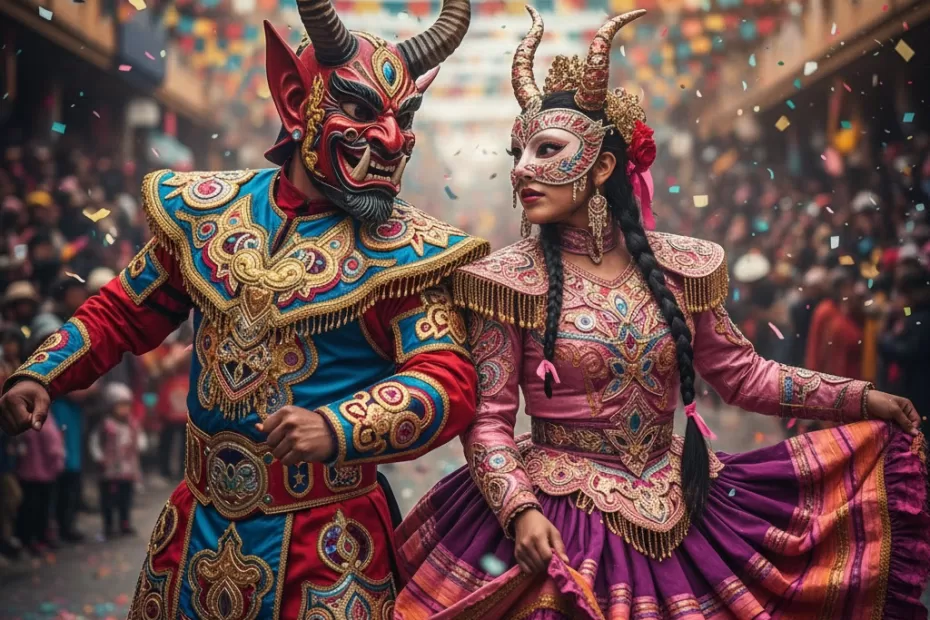
Understanding Gender Roles at the Oruro Carnival
The Oruro Carnival, an undisputed masterpiece of the Oral and Intangible Heritage of Humanity, is more than just a vibrant spectacle of dance, music, and elaborate costumes. Deep within its pulsating rhythms and ancient rituals lies a fascinating tapestry of social dynamics, particularly concerning gender roles. This monumental cultural festival, rooted in pre-Hispanic traditions and Catholic beliefs, offers a unique lens through which to explore how gender is perceived, performed, challenged, and reinforced within a profoundly significant Bolivian cultural context.
For centuries, cultural festivals worldwide have often mirrored and perpetuated the prevailing social norms of their time, including rigid gender expectations. However, as societies evolve, so too do their celebrations. The Oruro Carnival, with its rich historical significance and ongoing evolution, provides a compelling case study for gender studies, allowing us to examine the shifting landscape of gender dynamics. We’ll delve into how this incredible event in Oruro, Bolivia, both upholds tradition and surprisingly, sometimes, becomes a stage for subverting it, particularly concerning the participation and representation of women and transgender individuals. Understanding Oruro Carnival and gender roles is crucial for appreciating its full cultural significance and its potential as a catalyst for social change.
Historical Context of Oruro Carnival
To truly grasp the intricate interplay of Oruro Carnival and gender roles, we must first journey back to its origins. The carnival’s roots are deeply embedded in ancient Andean cosmology, particularly the Uru people’s veneration of Pachamama (Mother Earth) and various protective deities, often associated with mountains and mines. With the arrival of the Spanish conquistadors and the subsequent imposition of Catholicism, these indigenous spiritual practices were syncretized with Christian festivities, notably the feast of Candlemas. The result was a unique blend that gave birth to the Oruro Carnival we know today.
Historically, many indigenous rituals in Latin America, including those that form the bedrock of the Oruro Carnival, often featured distinct divisions of labor and roles based on gender. Men traditionally took on roles associated with hunting, warfare, and certain spiritual leadership, while women were central to agricultural fertility, nurturing, and domestic life, often holding significant spiritual power as well. The earliest forms of carnival events, before their grand formalization, likely reflected these societal structures.
As the carnival evolved through colonial and republican eras, it absorbed elements from Spanish popular festivals and local traditions, creating a rich mosaic of dance traditions and characters. The iconic Diablada (Dance of the Devils), for instance, emerged as a dramatic representation of the struggle between good and evil, with its origins tied to the mining culture of Oruro. Early depictions and participation in these fraternidades (brotherhoods or dance groups) were predominantly male. Men donned the elaborate devil masks, symbolizing the Supay (a figure from Andean mythology often associated with the underworld and mines, later conflated with the Christian devil), while female roles were often more peripheral, sometimes limited to accompanying figures or supporting roles in the background.
The historical significance of Oruro Carnival extends beyond mere entertainment; it’s a powerful expression of cultural identity and resistance. During times of colonial oppression and later, social stratification, the carnival provided an outlet for indigenous and mestizo populations to express their beliefs, grievances, and aspirations. However, even within this space of cultural expression, the prevailing social norms often dictated who could participate and in what capacity. The carnival history shows a gradual but persistent negotiation of these roles, particularly as the festival grew in scale and international recognition, highlighting the slow but steady shift in gender dynamics.
The early 20th century saw the gradual formalization of the carnival structure, with the establishment of specific dance groups and the codification of their performances. While men continued to dominate the most prominent and physically demanding roles, women’s involvement slowly began to increase, often starting with supporting roles or specific, less conspicuous dances. This historical overview is crucial for understanding the traditional baseline against which contemporary gender inclusivity and women empowerment efforts are measured within the festive celebrations of Oruro.
The Role of Women in Oruro Carnival
The narrative of women’s participation in the Oruro Carnival is one of evolving influence, from subtle presence to undeniable leadership. Historically, their contributions were often behind the scenes, yet indispensable. Women were the primary custodians of cultural heritage, passing down the intricate knowledge of traditional recipes for festive meals, crafting delicate embroideries for costumes, and teaching the traditional carnival music and steps to the next generation. Their role in community involvement was foundational, ensuring the continuity of the festive celebrations.
In contemporary times, the presence and impact of women in the Oruro Carnival have grown exponentially. Female performers now grace every dance group, often taking center stage in dances previously dominated by men. The Diablada, once an almost exclusively male domain, now features formidable female devils, challenging traditional perceptions of strength and spiritual representation. Similarly, in the Morenada, women’s participation has become iconic, with their elegant yet powerful movements and elaborate costumes. This shift reflects a broader trend towards gender equality and greater visibility for female talent within the carnival events.
Women are not just participants; they are vital to the logistical and artistic success of the carnival. They organize rehearsals, manage finances for their fraternidades, design and sew the elaborate carnival costumes, and ensure the well-being of their dance groups. Their dedication and passion are evident in every aspect of the festival, from the meticulous preparation of the altars to the spirited performances on the streets of Oruro. This increased female participation is a testament to their unwavering commitment to preserving and enriching Bolivian culture.
While significant strides have been made, challenges faced by female participants persist. Traditional societal norms can sometimes still impose expectations, subtly influencing costume choices, dance movements, or even leadership opportunities within certain older fraternidades. However, the overall trajectory points towards greater women empowerment, as more women assert their right to fully participate and lead, transforming the face of this magnificent cultural festival.
Women as Cultural Leaders
The increasing prominence of women in the Oruro Carnival is perhaps best exemplified by their emergence as cultural leaders. No longer confined to supportive roles, women are now at the forefront of preserving, promoting, and innovating within the carnival. Many fraternidades now boast female presidents, choreographers, and artistic directors, roles that were historically almost exclusively held by men. These women are not just breaking barriers; they are actively shaping the future direction of the carnival.
Consider the example of the “Danzas Autóctonas” (Indigenous Dances) groups. These groups often represent the most direct link to the carnival’s pre-Hispanic roots, and within them, women frequently play crucial roles in maintaining authenticity and passing down ancestral knowledge. Indigenous women leaders often ensure that the traditional dance steps, music, and narratives are preserved with integrity, acting as living archives of their cultural heritage. Their leadership extends to community involvement, organizing not just the dance performances but also educational workshops and cultural exchanges that reinforce the value of their traditions.
Beyond specific leadership titles, many women lead through their artistry and dedication. Female performers who consistently excel in their roles become inspirations for younger generations, demonstrating that excellence knows no gender. They embody the spirit of the carnival, contributing to its vibrant energy and ensuring its continued legacy. These women leaders are pivotal in fostering a more inclusive culture within the carnival, advocating for greater gender equality and ensuring that the voices and contributions of all participants are valued. Their efforts contribute significantly to the cultural identity of Oruro and its enduring festive celebrations.
Challenges Faced by Female Participants
Despite the remarkable progress, female participants in the Oruro Carnival still encounter a range of challenges, highlighting the ongoing negotiation of social norms within this traditional setting. One of the most persistent issues relates to the deeply ingrained patriarchal structures that, while slowly eroding, can still manifest in subtle or overt ways. For instance, while women now dance in virtually all fraternidades, some older groups might still prioritize male leadership or assign women to roles perceived as less central or powerful, even if their performances are equally demanding and artistic.
Another challenge can be the societal expectations regarding appearance and behavior. While carnival costumes offer a degree of freedom and self-expression, female performers can sometimes face scrutiny or objectification based on their attire or dance style. There’s a delicate balance between celebrating the sensuality and vibrancy of the carnival and ensuring that women feel respected and safe from unwanted attention or harassment. Ensuring a safe and inclusive environment for all participants, especially women, remains a critical aspect of community involvement and social justice within the carnival events.
Furthermore, the physical demands of the carnival, which involve extensive rehearsals, long hours of dancing in heavy costumes, and participation in numerous parades, can be particularly taxing. For women, especially those balancing family responsibilities, the commitment can be immense, requiring significant personal sacrifice. While this dedication is lauded, the underlying societal structures that often place a disproportionate burden of domestic duties on women can make full participation a greater challenge for them compared to their male counterparts.
The economic aspect also plays a role. The elaborate carnival costumes can be expensive, and while this applies to all participants, women often face additional pressure regarding the intricacy and cost of their ensembles, sometimes leading to financial strain. Access to resources, sponsorship, and recognition for female-led initiatives within the carnival can also sometimes lag behind those for male-dominated groups, although this is gradually changing due to increased advocacy and women empowerment efforts. Addressing these carnival challenges is vital for truly achieving gender equality and an inclusive culture in the Oruro Carnival.
Transgender Representation in Oruro Carnival
The Oruro Carnival, like many cultural festivals globally, is a dynamic space where traditional social norms meet contemporary expressions of identity. In recent years, there’s been an increasing focus on gender inclusivity, particularly concerning the representation of transgender individuals. While the carnival has historically been structured around binary gender roles, the evolving social landscape of Latin America, coupled with growing awareness and advocacy, is slowly but surely opening doors for transgender participation.
The presence of transgender individuals, especially trans women, in the carnival is a powerful statement about identity, visibility, and the quest for social justice. Their participation challenges the very foundations of traditional gender dynamics within the festival, pushing the boundaries of what is considered “normal” or “acceptable” in a culturally significant event. This journey towards inclusion is not without its difficulties, but it represents a crucial step in making the Oruro Carnival a truly inclusive culture, reflecting the diverse tapestry of Bolivian society.
Transgender representation in the carnival goes beyond mere presence; it’s about claiming space, expressing authentic selves, and contributing to the rich artistic and cultural fabric of the event. Their participation in dance groups, often in roles traditionally assigned to women, redefines the visual and performative landscape of the carnival. It forces a reevaluation of what female participation means and who gets to embody femininity within the festive celebrations. This evolving aspect of the Oruro Carnival underscores its potential as a platform for challenging rigid social norms and fostering a more accepting environment.
Trans Women and Carnival Inclusion
For trans women, the Oruro Carnival can be a particularly meaningful arena for self-expression and community building. Their journey towards carnival inclusion often involves navigating societal prejudices and traditional gender expectations, yet many find strength and affirmation within the vibrant energy of the festival. When trans women participate in fraternidades, especially in roles like the elegant Chinas Morenas or the fierce Diabladas, they are not just performing a dance; they are performing their identity with pride and resilience.
Their roles in the carnival are diverse. Some trans women join existing dance groups, seamlessly integrating into the female sections, while others might form their own groups or perform in more avant-garde capacities, pushing the artistic and social boundaries. The elaborate carnival costumes become a powerful tool for gender expression, allowing trans women to embody their authentic selves in a public and celebrated manner. The act of dancing in these costumes, adorned with glitter, feathers, and vibrant fabrics, becomes a profound statement of visibility and affirmation.
However, the path to full inclusion is not always smooth. Trans women can face discrimination, misunderstanding, or even hostility from some segments of society or traditional carnival participants. There can be challenges related to acceptance within certain fraternidades, access to resources, and simply feeling safe and respected during the intense carnival events. Advocacy groups and allies within Oruro are working to address these carnival challenges, promoting greater understanding and fostering an inclusive culture that embraces all gender identities.
Despite these obstacles, the growing presence of trans women in the Oruro Carnival signifies a powerful shift. It highlights the festival’s capacity for adaptation and its potential to become a space for genuine social justice. Their participation enriches the carnival, adding new layers of meaning to its themes of transformation, rebellion, and celebration. It also sends a clear message about the importance of gender inclusivity and the evolving nature of cultural identity in Bolivia and Latin America.
Costumes and Gender Expression
The kaleidoscope of carnival costumes is arguably one of the most captivating aspects of the Oruro Carnival. Beyond their aesthetic appeal, these elaborate ensembles serve as powerful vehicles for gender expression, reflecting, challenging, and sometimes even subverting traditional gender roles and social norms. Each costume, from the terrifying Diablada masks to the elegant Morenada dresses, tells a story about identity, history, and performance.
Historically, carnival costumes often mirrored the binary gender roles prevalent in Bolivian culture. Men typically wore the more fearsome, powerful, or physically demanding costumes associated with characters like devils, bears, or miners, emphasizing strength and authority. These costumes, often heavy and intricate, were designed to impress and intimidate, reinforcing a traditionally masculine image. The Diablada devil, for instance, with its monstrous mask and intricate serpent motifs, is a quintessential representation of male power and the struggle against evil.
Women, on the other hand, were often adorned in costumes that highlighted grace, beauty, and traditional femininity. The China Morena costume, with its voluminous skirts, delicate embroidery, and often revealing blouses, emphasizes a certain allure and elegance. Similarly, the costumes for dances like the Caporales showcase vibrant colors and intricate details, allowing female performers to exude confidence and charm. These roles, while beautiful and demanding in their own right, historically aligned with more conventional feminine ideals.
However, the contemporary Oruro Carnival has seen a fascinating evolution in how costumes are used for gender expression. A significant trend is the increasing number of women donning traditionally male costumes, particularly in the Diablada. Female devils, once a rare sight, are now a common and celebrated presence. These women actively choose to wear the heavy masks and elaborate suits, embodying power and defiance, thereby challenging the notion that certain roles are exclusively masculine. This appropriation of traditionally male attire is a potent symbol of women empowerment and a direct subversion of established gender dynamics.
Conversely, while less common, male performers sometimes adopt more fluid or traditionally feminine aesthetics, particularly in satirical or comedic roles, adding another layer of complexity to gender expression. The very act of dressing up, of transforming oneself into a character, allows for a temporary suspension of everyday social norms, creating a space where individuals can explore different facets of their identity.
The choice of carnival costumes is not merely about tradition; it’s a deliberate act of self-definition within the festive celebrations. For many, it’s an opportunity to experiment with identity, to push personal boundaries, and to make a statement about their place within the cultural identity of Oruro. The costumes, therefore, are not static symbols but dynamic elements that reflect the ongoing negotiation of Oruro Carnival and gender roles, acting as a visual barometer of evolving gender inclusivity and social change.
Future of Gender Roles in Oruro Carnival
As the Oruro Carnival continues to evolve, so too will the dynamics of gender roles within its vibrant framework. The trajectory points towards an increasingly inclusive culture, driven by both internal shifts within the community and broader societal movements towards gender equality and social justice. The future of gender roles in Oruro Carnival will likely be characterized by continued innovation, greater representation, and a deeper understanding of diverse identities.
One clear trend is the continued expansion of women’s roles. We can anticipate more women taking on leadership positions within fraternidades, not just as presidents but also as influential choreographers, musicians, and organizers who shape the artistic direction and community involvement of the carnival. The presence of female performers in traditionally male-dominated dances will likely become even more normalized, potentially leading to the creation of new dance interpretations that blend masculine and feminine aesthetics in novel ways. The emphasis on women empowerment will likely grow, leading to more structured support systems and platforms for female artists and leaders.
Furthermore, the conversation around transgender representation and gender inclusivity will undoubtedly deepen. As awareness grows and societal acceptance increases, it is probable that transgender individuals will find more open pathways to participation, not just in specific groups but across the spectrum of carnival events. This might include the creation of new characters or the reinterpretation of existing ones to better reflect diverse gender identities. The carnival could become an even more explicit platform for challenging rigid social norms and celebrating the full spectrum of human identity, contributing to a more comprehensive understanding of gender dynamics in Latin America.
However, the evolution will not be without its challenges. There will likely be ongoing debates between those who wish to preserve strict adherence to historical traditions and those advocating for more progressive interpretations of gender roles. Navigating these discussions with respect and an understanding of the cultural significance of both tradition and progress will be crucial for the carnival’s harmonious development. The future will require continuous dialogue, education, and active efforts to ensure that the Oruro Carnival remains a space where cultural heritage is celebrated while simultaneously embracing modern ideals of gender equality and inclusive culture.
Empowerment Through Participation
Empowerment through participation is not just a hopeful future scenario; it’s an ongoing process actively unfolding within the Oruro Carnival. Initiatives aimed at empowering women and marginalized groups are already taking root, transforming the festive celebrations into a more equitable and representative event. These efforts are multifaceted, encompassing everything from formal leadership programs to grassroots community involvement.
For women, empowerment often comes from the sheer act of visible and celebrated participation. When a woman leads a fraternidad, choreographs a complex dance, or performs with commanding presence in a role traditionally reserved for men, she empowers not only herself but also inspires countless others. Many women’s groups within the carnival focus on skill-building, offering workshops on dance techniques, costume design, and organizational leadership. These initiatives provide women with the tools and confidence to take on more prominent roles, fostering a stronger sense of cultural identity and ownership.
Beyond direct participation, there are growing efforts to address the carnival challenges that women face, such as ensuring safety, combating harassment, and providing equal access to resources. Advocacy for social justice and gender equality within the carnival context is becoming more vocal, pushing for policy changes within fraternidades and municipal organizations that oversee the event. These efforts aim to create an environment where all female participants feel respected, valued, and secure.
For transgender individuals and other marginalized groups, empowerment through participation often begins with simply having a visible presence and being accepted. Allies within the carnival community, including dance group leaders and fellow performers, play a crucial role in fostering an inclusive culture. Some groups are actively working to create welcoming spaces, offering mentorship and support to transgender participants. The very act of performing in a public, celebrated event like the Oruro Carnival can be profoundly empowering for individuals who may face discrimination in other aspects of their lives. It allows them to reclaim narratives, challenge misconceptions, and celebrate their authentic selves within a powerful cultural context.
These empowerment initiatives are vital for the long-term health and relevance of the Oruro Carnival. By actively working towards greater gender inclusivity and supporting the participation of all individuals, the carnival not only upholds its status as a UNESCO World Heritage site but also evolves as a living, breathing testament to Bolivian culture’s capacity for adaptation, social justice, and progressive change.
Conclusion: The Evolving Landscape of Gender Roles
The Oruro Carnival stands as a magnificent testament to Bolivian culture, a vivid tapestry woven from ancient traditions, colonial influences, and contemporary social dynamics. Our exploration of Oruro Carnival and gender roles reveals a complex and ever-evolving landscape, where the festival simultaneously reinforces historical norms and acts as a powerful stage for their redefinition and challenge.
From its historical roots, largely characterized by distinct gendered participation, to its current vibrant form, the carnival has witnessed a remarkable transformation. Women have moved from often-unseen contributors to central figures, embodying strength, artistry, and leadership across all dance traditions. Their increasing presence as female performers, cultural leaders, and organizers is a clear indicator of growing women empowerment and a significant shift in the prevailing social norms. While challenges persist, the trajectory towards greater gender equality is undeniable, enriching the carnival with diverse perspectives and talents.
Furthermore, the burgeoning transgender representation, particularly among trans women, marks a pivotal moment in the carnival’s history. Their courageous participation in carnival events, often through the expressive power of carnival costumes, directly challenges binary gender dynamics and advocates for a more inclusive culture. This growing visibility pushes the boundaries of cultural identity and highlights the carnival’s capacity to become a space for genuine social justice and acceptance within Latin America.
Understanding the gender dynamics at play in the Oruro Carnival is crucial not only for appreciating its full cultural significance but also for recognizing its potential as a mirror and a catalyst for broader societal change. It demonstrates that cultural festivals are not static relics of the past but living entities that adapt, reflect, and even shape the social evolution of a community. The ongoing dialogue and initiatives aimed at fostering empowerment through participation ensure that the Oruro Carnival remains a dynamic, inclusive, and profoundly meaningful celebration for all who partake in its magic. Its future promises an even richer, more diverse expression of Bolivian culture, where every individual finds their place in the grand, festive celebrations.
Interesting read! Understanding player psychology is key – seeing how platforms like sz777 com login optimize for engagement & retention is fascinating. Streamlined registration does make a difference! 🤔
BenVipBet. Not a bad little spot for a flutter. Seen a few good offers knocking about. Give benvipbet a shot, especially if they’ve got a promo on. Good luck!
This guide is super helpful! Makes me rethink the whole ‘quick thrill’ angle. For beginners, understanding the core flow is key, so check out taya77 legit for a fast look!
Dude, this platform vibe is actually chill. The focus on balance in 7spin sounds way better than just hype. Check out 7spin website guide for the full scoop; it seems super straightforward!