
Understanding Bolivian Identity Through the Oruro Carnival
Bolivia is a land rich in history, diverse cultures, and vibrant traditions. At the heart of its national spirit lies an event that encapsulates all these elements: the Oruro Carnival. More than just a festive parade, this spectacular celebration serves as a profound mirror reflecting the very essence of Bolivian identity. It’s a tapestry woven with indigenous beliefs, colonial influences, and a fierce sense of national pride, culminating in one of the most significant cultural events in Bolivia and indeed, all of South America. To truly grasp the depth of Bolivia culture, one must delve into the pulsating rhythm and colorful spectacle of Oruro.
What is the Oruro Carnival?
The Oruro Carnival is an annual religious and cultural festival held in Oruro, a mining city in the Bolivian altiplano. Recognized by UNESCO as a Masterpiece of the Oral and Intangible Heritage of Humanity, it is a grand spectacle that transforms the city for several days leading up to Ash Wednesday. At its core, the carnival is a vibrant expression of Oruro traditions and a testament to the region’s enduring spiritual beliefs. It is a pilgrimage, a performance, and a massive community event all rolled into one. Participants, known as comparsas, dedicate their performances to the Virgen del Socavón (Virgin of the Mineshaft), seeking her blessing and protection. This dedication underscores the deep religious practices that underpin the seemingly secular carnival celebrations. Each year, thousands of dancers and musicians fill the streets, showcasing a breathtaking array of traditional costumes, intricate choreographies, and rousing Bolivian music, making it a pivotal event for cultural tourism and a powerful symbol of Bolivian identity.
Historical Background of the Oruro Carnival
The origins of the Oruro Carnival are deeply rooted in the pre-Hispanic Andean traditions of the Uru people, who inhabited the region long before the arrival of the Spanish. Their reverence for Pachamama (Mother Earth), Supay (the god of the Uru underworld, often depicted as a devil), and other deities formed the initial spiritual layer. With the Spanish conquest in the 16th century, Catholicism was introduced, leading to a fascinating syncretism. The Spanish attempted to suppress indigenous rituals, but these practices instead merged with Christian beliefs.
Over centuries, indigenous ceremonies dedicated to Andean deities gradually intertwined with Catholic festivities, particularly those associated with the Virgin Mary. The legend of the Virgin of Socavón, who is said to have miraculously appeared to a group of miners, solidified this fusion. The carnival celebrations as we know them today began to take shape in the late 18th and early 19th centuries, evolving from localized rituals into a more organized and expansive festival. This evolution saw the incorporation of new dances and music, reflecting the country’s rich ethnic diversity and the ongoing dialogue between its indigenous and European cultural heritage. The Oruro Carnival history is a living testament to cultural resilience and adaptation.
Cultural Significance of the Oruro Carnival
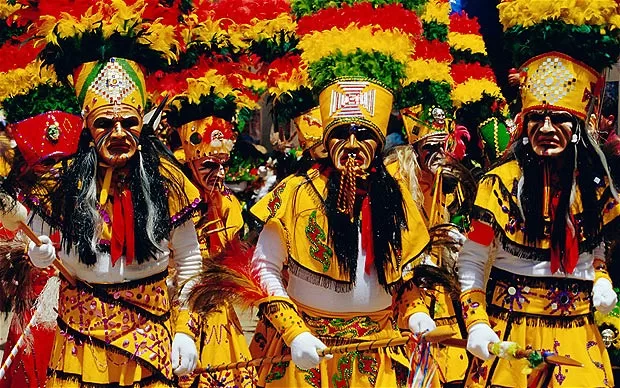
The cultural significance of the Oruro Carnival cannot be overstated. It is a powerful narrative of Bolivian identity, a living museum of Bolivian folklore, and a dynamic reflection of the nation’s complex history. The carnival celebrates diversity by showcasing a multitude of indigenous and mestizo traditions, uniting people from various backgrounds in a shared expression of Bolivian pride. It’s where ancient Andean culture meets colonial influences, and where spiritual devotion blends with exuberant festivity. The elaborate traditional costumes, the intricate dances of Bolivia, and the captivating Oruro music and dance are not merely entertainment; they are living symbols of a collective memory and a vibrant present.
Through its performances, the carnival tells stories of conquest, resistance, faith, and the daily lives of the Bolivian people. It provides a platform for the continuation of Oruro traditions, ensuring that cultural heritage is passed down through generations. This dynamic interplay makes the carnival a crucial event for cultural anthropology, offering insights into the formation of national identity in a multicultural society.
Themes and Symbols in the Carnival
The Oruro Carnival is rich with symbolism, each element carrying deep meaning related to Bolivian identity and its spiritual landscape. The central figure is the Virgen del Socavón, embodying protection and hope, particularly for the mining community. Opposing her is the devil, or Tío Supay, a complex figure stemming from indigenous beliefs as the lord of the underworld and mines, later demonized by Catholicism. Yet, he is also revered by miners who seek his permission and protection for their work. The Archangel Michael frequently appears, symbolizing the triumph of good over evil, often in a dramatic dance-drama with the devil.
Other pervasive themes include the struggle between good and evil, the syncretism of indigenous spirituality and Catholicism, and the celebration of fertility and abundance, often expressed through agricultural symbols and rituals. The elaborate Oruro Carnival costumes themselves are symbols, representing historical figures, mythical creatures, and various social strata, each telling a piece of Bolivia’s story. These symbols are not static; they are reinterpreted and re-enacted annually, reinforcing their cultural significance of carnival.
Traditional Dances at the Oruro Carnival
The heart of the Oruro Carnival lies in its spectacular traditional dances, each performed by fraternidades (brotherhoods) or conjuntos (groups) that have often practiced year-round. These dances are a living encyclopedia of Bolivian folklore and ethnic diversity, bringing ancient myths and historical events to life. Some of the most prominent dances include the Diablada (Dance of the Devils), the Morenada, the Caporales, the Tinku, the Kullawada, the Llamerada, and the Tobas. Each dance has its unique history, music, and elaborate traditional costumes, contributing to the festive parades and the overall spirit of the carnival.
Caporales Dance
The Caporales dance is one of the most popular and energetic dances performed at the Oruro Carnival. Its origins trace back to the Afro-Bolivian communities, though its modern form emerged in the 1960s. The dance is believed to be inspired by the caporales (foremen) who oversaw African slaves and indigenous laborers during the colonial era, often depicted as figures of authority and power. Dancers wear vibrant, often sequined, Caporales costumes, characterized by high-heeled boots with large bells (cascabeles) for male dancers, and short skirts and ornate blouses for female dancers. The powerful, rhythmic stomping of the boots and the dynamic, almost acrobatic movements make the Caporales a thrilling spectacle. It’s a dance of strength, pride, and celebration, widely embraced across Bolivia and by Bolivian communities worldwide, becoming a powerful symbol of Bolivian identity.
Moreno Dance
The Moreno dance, or Morenada, is another iconic and deeply significant dance of the Oruro Carnival. Its origins are steeped in the colonial history of Bolivia, particularly the arduous conditions endured by African slaves brought to work in the silver mines of Potosí and Oruro. The distinctive heavy, ornate Moreno costumes, often weighing over 30 pounds, are said to symbolize the chains and burdens of the slaves, while the masks with exaggerated features and protruding tongues represent the physical suffering and exhaustion from the high altitude and demanding labor. The slow, deliberate, and powerful steps evoke the forced march of the slaves. Despite its somber origins, the Morenada has evolved into a dance of resilience and cultural heritage, a poignant reminder of Bolivia’s past and a vibrant celebration of its present. The deep bass drum rhythms and the mournful yet majestic melodies are instantly recognizable as part of Oruro music and dance.
Music and Instruments of the Oruro Carnival
The sonic landscape of the Oruro Carnival is as rich and diverse as its visual spectacle. Bolivian music is integral to every dance and every moment of the celebration. The soundscape is dominated by large brass bands, which accompany most of the dance groups with their powerful and exhilarating performances. These bands, often comprising dozens of musicians, play everything from traditional Andean melodies to more contemporary compositions, all infused with a distinctive carnival rhythm.
Beyond the brass, traditional Andean instruments play a crucial role, especially in dances with deeper indigenous roots. You’ll hear the haunting melodies of sikus (panpipes), the vibrant sounds of quenas (flutes), and the rhythmic strumming of charangos (small, ten-stringed Andean lutes). Percussion is ever-present, with various drums and rattles providing the driving beat for the thousands of dancers. The sheer volume and energy of Oruro music and dance create an immersive experience, a constant symphony that fuels the festive parades and binds the participants and spectators alike in a shared celebration of Bolivian folklore.
The Role of Religion in the Oruro Carnival
While the Oruro Carnival is a riot of color and revelry, its spiritual core remains undeniably strong. The influence of religion, particularly Catholicism, is deeply interwoven with the carnival’s practices, creating a unique syncretic expression. The entire event is essentially a massive pilgrimage in honor of the Virgen del Socavón. Dancers, musicians, and devotees undertake a long, arduous journey through the streets of Oruro, culminating in a final act of devotion at the Sanctuary of the Virgen del Socavón.
This pilgrimage is not merely a formality; it is a deeply personal and communal act of faith. Participants often dance for years, sometimes decades, as a promise (promesa) to the Virgin, seeking blessings, giving thanks, or asking for protection. The blend of indigenous beliefs, such as the reverence for Pachamama and Tío Supay, with Catholic traditions is evident throughout. Ancient rituals are performed alongside Christian prayers, and symbols from both belief systems coexist harmoniously. This spiritual dimension elevates the Oruro Carnival beyond a mere festival, positioning it as a profound act of religious practices and cultural heritage, a testament to the enduring faith that underpins Bolivian identity.
Visitor Experience at the Oruro Carnival
Attending the Oruro Carnival is an unforgettable experience, a sensory overload in the best possible way. For visitors, it’s an unparalleled opportunity for cultural tourism, offering a deep dive into South American traditions and the heart of Bolivia culture. The city buzzes with an electrifying energy, with music emanating from every corner and the streets alive with dancers in their spectacular Oruro Carnival costumes. Expect long days filled with continuous parades, vibrant performances, and a strong sense of community events. The main parade, the Entrada, is a marathon, lasting for over 20 hours as thousands of dancers make their pilgrimage.
Beyond the main procession, the days leading up to and following the Entrada are filled with smaller celebrations, local gatherings, and informal street parties. It’s a chance to witness the authentic traditions in Oruro, taste local cuisine, and interact with the friendly Bolivian people. The sheer scale and passion of the participants are inspiring, and the atmosphere is one of joyous celebration and deep reverence. For those interested in cultural festivals and anthropology, it’s an invaluable experience.
Best Practices for Attending
To make the most of your Oruro Carnival experience, planning ahead is crucial. Accommodation in Oruro sells out months in advance, so book early. Similarly, securing seats along the parade route is essential if you want a good view; these are typically rented out days before the main event.
Practical advice includes:
-
Dress in layers: Oruro’s high altitude means temperatures can vary wildly between day and night.
-
Stay hydrated: The altitude can also be challenging, so drink plenty of water and consider coca tea.
-
Protect yourself from the sun: Sunscreen, a hat, and sunglasses are highly recommended.
-
Wear comfortable shoes: You’ll be doing a lot of walking and standing.
-
Be mindful of your belongings: Like any large festival, pickpocketing can occur.
-
Respect local traditions: Remember the religious significance of the event and engage with respect.
-
Embrace the joy: Participate in the festivities, try local foods, and let yourself be swept up in the incredible energy.
Conclusion: The Oruro Carnival as a Reflection of Bolivian Identity
The Oruro Carnival is far more than a mere spectacle; it is a profound and dynamic expression of Bolivian identity. Through its rich tapestry of historical narratives, ancient Andean traditions, colonial influences, and fervent religious practices, the carnival encapsulates the very soul of the nation. It is a living testament to Bolivia’s vibrant cultural heritage, a place where ethnic diversity is not just acknowledged but celebrated with unparalleled fervor.
From the intricate Oruro Carnival history to the mesmerizing Oruro music and dance, every element of this grand festival contributes to a deeper understanding of what it means to be Bolivian. The dedication of the dancers, the symbolism of the traditional costumes, and the powerful blend of faith and festivity underscore a collective sense of Bolivian pride. As one of the most significant cultural events in Bolivia, the Oruro Carnival celebrates diversity, resilience, and the enduring spirit of a nation that proudly cherishes its unique blend of indigenous and mestizo heritage. It is, without doubt, the beating heart of Bolivian folklore and a true cultural journey for anyone seeking to understand this remarkable South American country.
So, been diving into bahisbozdurnedir lately. Getting my head around the strategy. Seems like a solid resource for understanding the ins and outs. Learn more at bahisbozdurnedir
I’ve been trying out a few sites lately and this one really stands out. The interface is smooth and the payouts are fast. Definitely worth a try if you want a reliable experience. Check out idmambawin for more.