
Artistic Performances at the Oruro Carnival
The Oruro Carnival, a breathtaking spectacle of culture and devotion, stands as one of the most magnificent artistic performances and traditional festivals in South America. Recognized by UNESCO as a Masterpiece of the Oral and Intangible Heritage of Humanity, this Bolivian cultural treasure transforms the usually quiet mining city of Oruro into a vibrant hub of sound, color, and movement. It’s an immersive experience where ancient Andean traditions blend seamlessly with Catholic beliefs, creating a unique tapestry of artistic expressions that captivate every visitor. At its heart lies an extraordinary display of dance, music, and elaborate costumes, all coming together to tell stories of history, myth, and faith. For anyone interested in cultural events, folklore dances, and the rich tapestry of Bolivian traditions, the Oruro Carnival offers an unparalleled glimpse into the soul of a nation, showcasing the immense artistic creativity embedded in its people.
Overview of the Oruro Carnival
The Oruro Carnival’s roots delve deep into pre-Columbian times, tracing back to indigenous rituals dedicated to Pachamama (Mother Earth) and the Andean deities. With the arrival of the Spanish conquistadors, these ancestral customs began to intertwine with Catholic festivities, particularly those honoring the Virgin of Socavon, the patron saint of miners. This syncretism gave birth to the unique character of the Oruro Carnival, a testament to the resilience and adaptability of Bolivian culture. The carnival, celebrated annually before Ash Wednesday, is not merely a party; it’s a profound spiritual journey, a pilgrimage where thousands of dancers and musicians pay homage to the Virgin, seeking blessings and offering gratitude.
The cultural significance of the Oruro Carnival within Bolivian culture cannot be overstated. It serves as a powerful expression of national identity, a living museum of history, and a vibrant showcase of artistic heritage. Each year, over 28,000 dancers and 10,000 musicians participate in the grand procession, known as the “entrada,” which stretches for miles through the city streets. This massive undertaking requires months of preparation, from intricate costume design to rigorous dance rehearsals, all fueled by a deep sense of community involvement and pride. The carnival festivities are a cornerstone of Oruro celebrations, drawing people from all walks of life, uniting them in a shared celebration of their past and present. It’s a key highlight among cultural events Bolivia has to offer, reflecting the nation’s diverse indigenous and colonial influences.
Key Artistic Performances
The true essence of the Oruro Carnival lies in its dynamic and diverse dance performances. Each troupe, or “conjunto,” specializes in a particular traditional Bolivian dance, each with its own history, symbolism, and distinct performance style. These artistic traditions are meticulously preserved and passed down through generations, ensuring the continuity of this invaluable cultural heritage. The sheer variety of movements, rhythms, and narratives presented during the carnival is astounding, making it a feast for the senses and a profound experience for any observer.
Diablada Dance
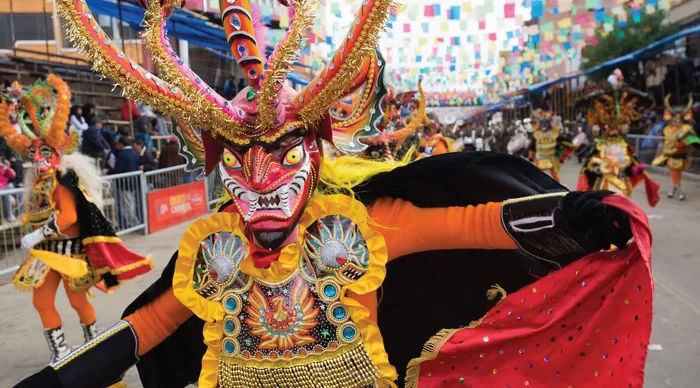
Perhaps the most iconic and recognizable of all the carnival’s artistic performances is the Diablada, or “Dance of the Devils.” This powerful and dramatic dance is central to the Oruro Carnival’s narrative, representing the eternal struggle between good and evil, an allegory of the miners’ battles against the dangers of the underworld and their devotion to the Virgin of Socavon. The history of the Diablada is rich, blending pre-Hispanic beliefs about the Uru god Supay, lord of the underworld, with Christian representations of the devil.
The Diablada performance style is characterized by its energetic, almost aggressive movements. Dancers, known as “diablos,” wear magnificent, elaborate costumes featuring horned masks, often adorned with snakes, toads, and other symbolic creatures. These masks are true works of art, each uniquely crafted and incredibly detailed, reflecting the dancer’s individual expression within the larger communal performance. The lead dancer, often portraying Archangel Michael, battles Lucifer and his retinue of devils, ultimately triumphing and guiding the souls to salvation. This dramatic dance history and its profound spiritual significance make the Diablada a cornerstone of the Oruro Carnival, embodying both the fears and hopes of the mining community. The accompanying music is equally intense, driven by powerful brass bands that create an atmosphere of both awe and reverence.
Moreno Dance
In stark contrast to the fierce energy of the Diablada, the Moreno dance (or Morenada) offers a more stately and melancholic yet equally captivating performance. The Moreno dance is a poignant tribute to the African slaves brought to Bolivia during the colonial era to work in the silver mines. Its origins are steeped in the painful history of forced labor and the enduring spirit of resilience. The dance portrays the arduous conditions and suffering of these individuals, particularly the heavy chains they bore and the slow, deliberate pace of their work.
The cultural messages conveyed by the Moreno dance are profound, speaking to themes of injustice, endurance, and the syncretic blend of cultures that defines Bolivia. Dancers wear enormous, elaborate costumes that can weigh up to 30 kilograms, often featuring a large, wide-brimmed hat adorned with feathers and a mask with exaggerated features, representing the African slaves. The most distinctive element is the “matraca,” a large wooden rattle shaped like a fish or a boat, which dancers rhythmically shake, mimicking the sound of chains and the waves of Lake Titicaca, which some theories suggest was the route for transporting slaves. The slow, heavy, and rhythmic steps of the Moreno dancers evoke the burden of their ancestors, creating a powerful and moving spectacle. The music, driven by brass instruments and a deep bass drum, reinforces the solemn yet proud character of this significant dance performance.
Caporales Dance
The Caporales dance, a more contemporary addition to the Oruro Carnival, has rapidly gained immense popularity, both within Bolivia and internationally. This vibrant and energetic dance is a lively celebration with a fascinating link to Afro-Bolivian culture. While not directly representing the slaves themselves, the Caporales symbolize the “Caporal” or overseer, who was often of mixed race and tasked with supervising the African slaves or indigenous laborers. Over time, the dance has evolved to become a dynamic expression of pride and liberation, shedding its darker origins to become a celebratory performance.
Caporales dancers, both male and female, don dazzling, often sequined, costumes. Male dancers wear high boots with large bells (“cascabeles”), colorful shirts, and wide-brimmed hats, while female dancers wear short, ornate skirts, elaborate blouses, and matching boots. The dance is characterized by its vigorous, acrobatic movements, high kicks, and intricate footwork, all performed with infectious enthusiasm. The rhythm is fast-paced and exhilarating, driven by a strong drum beat and brass instruments, making it one of the most visually and audibly stimulating artistic performances of the carnival. The Caporales dance highlights the ongoing evolution of Bolivian folklore and its capacity to incorporate new forms while maintaining a connection to its historical roots, becoming a powerful symbol of cultural integration and festive celebrations.
Costumes and Their Significance
The costumes worn during the Oruro Carnival are not merely garments; they are elaborate works of art, imbued with deep cultural meanings and symbolic significance. Each costume tells a story, reflects a tradition, and enhances the artistic expressions of the dancers. The sheer scale of detail, the vibrant colors, and the intricate craftsmanship involved in costume design are truly astounding, making them a central element of the carnival’s visual splendor.
For the Diablada, the devil masks are the most striking feature. Crafted from papier-mâché, plaster, or fiberglass, they are adorned with an array of serpents, toads, lizards, and other creatures, each representing aspects of Andean mythology and the underworld. The colors used are bold – reds, blacks, greens – symbolizing fire, darkness, and life. The full costume includes richly embroidered capes, often depicting religious or mythical scenes, and elaborate boots. The Diablada costume significance lies in its dual role: it frightens away evil spirits while also paying homage to the powerful entities of the earth, embodying the syncretic nature of the carnival.
Moreno costumes, as mentioned, are heavy and visually distinct. The oversized masks with their bulging eyes and thick lips are a stylized representation of the African slave, often bearing a look of exhaustion or suffering. The “matraca” adds both sound and visual weight. The large, decorated hats and the voluminous layers of fabric emphasize the burden carried by those they represent. The overall effect is one of solemn grandeur, a silent testament to a painful past.
Caporales costumes, on the other hand, are designed for flamboyance and agility. Bright, often metallic fabrics, sequins, and intricate embroidery catch the light, reflecting the energetic nature of the dance. The bells on the male dancers’ boots are crucial, providing a percussive element that integrates directly with the music. For female dancers, the short skirts allow for dynamic leg movements, while the blouses are often adorned with patterns inspired by indigenous textiles. These costumes are a celebration of youth, vitality, and modern Bolivian folklore.
Across all dances, the painstaking effort put into creating these costumes highlights the dedication of the participants and the community’s commitment to preserving its artistic traditions. They are not just clothing but wearable sculptures that bring the stories and characters of the carnival to life.
Role of Music in Performances
Music is the lifeblood of the Oruro Carnival, an inseparable element that elevates the artistic performances from mere dance to a profound sensory experience. It’s the driving force behind every step, every turn, and every dramatic pause, dictating the pace and mood of the entire carnival festivities. Traditional Bolivian music, played by thousands of dedicated musicians, creates an immersive soundscape that resonates through the streets of Oruro, echoing the cultural heritage of the Andes.
The instruments used are primarily brass bands, featuring trumpets, trombones, tubas, and saxophones, which provide a powerful, often booming sound that can carry over the roar of the crowds. Percussion instruments, especially large bass drums, snare drums, and cymbals, add a dynamic rhythm that compels dancers forward. In some dances, like the Morenada, the “matraca” becomes an integral percussive element, adding a unique texture to the sound. For other dances, indigenous instruments such as panpipes (sikuris) and flutes (quenas) are also incorporated, particularly during more traditional or ceremonial moments, connecting the carnival to its ancient roots.
Each dance has its specific musical style and rhythm. The Diablada is accompanied by intense, dramatic melodies that swell and recede, mirroring the battle between good and evil. The Moreno dance features a slower, more deliberate tempo, its heavy brass sounds evoking the solemnity and weight of its historical narrative. Caporales music, in contrast, is fast, upbeat, and highly rhythmic, encouraging energetic and acrobatic movements. The musicians, often organized into large “bandas,” practice for months, perfecting their intricate arrangements and ensuring a seamless flow of sound throughout the long procession. Their tireless dedication is a testament to the community involvement and the importance of music in festivals, making it as much a performance as the dancing itself. The interplay between the visual spectacle of the costumes and the auditory richness of the music creates a truly holistic artistic experience that defines the Oruro Carnival.
Impact on Tourism and Local Economy
The Oruro Carnival is not only a cultural and spiritual event but also a significant economic driver for the region. Its status as a UNESCO World Heritage site and its reputation as one of the most spectacular festivals in South America draw tens of thousands of national and international visitors each year, making it a cornerstone of Bolivia tourism. This influx of tourists has a profound impact on the local economy, generating considerable revenue and providing employment opportunities for the residents of Oruro and beyond.
Hotels, hostels, and guesthouses in Oruro fill up months in advance, often at premium prices, as visitors flock to witness the artistic performances. Restaurants, street vendors, and local markets experience a boom in sales, catering to the diverse culinary needs and souvenir desires of the crowds. Transportation services, from intercity buses to local taxis, are in high demand. Furthermore, the extensive preparation required for the carnival itself stimulates various local industries. Costume designers, mask makers, embroiderers, and tailors are busy for months leading up to the event, creating the thousands of elaborate outfits. Musicians and instrument makers also benefit from the demand for their skills and products.
Beyond the direct economic benefits, the carnival plays a crucial role in promoting cultural heritage and raising Bolivia’s profile on the global stage. It highlights the richness of Bolivian traditions and folklore, encouraging greater appreciation and understanding of its unique artistic expressions. While the economic benefits are undeniable, the community also faces challenges related to managing the large crowds, ensuring adequate infrastructure, and maintaining the authenticity of the cultural event amidst growing commercialization. However, with careful planning and continued community involvement, the Oruro Carnival remains a vital engine for both cultural preservation and economic prosperity in the region.
Visitor Information
Experiencing the Oruro Carnival is an unforgettable journey into the heart of Bolivian culture, but a little preparation goes a long way to ensure a smooth and enjoyable visit. The main carnival festivities typically take place over a weekend in February or early March, culminating in the Grand Entrada on Saturday. Exact dates vary each year based on the Catholic liturgical calendar, so it’s essential to check the official schedule well in advance.
Location: Oruro is a city located in the Bolivian altiplano, about a three-hour drive south of La Paz. Due to its high altitude (approximately 3,700 meters or 12,140 feet above sea level), visitors should be prepared for potential altitude sickness. Acclimatizing for a day or two in La Paz or a similar high-altitude city before arriving in Oruro is highly recommended.
Tickets and Seating: To get the best views of the artistic performances, especially the main parade, purchasing grandstand seats (graderías) is advisable. These tickets can be expensive and sell out quickly, often months in advance, so plan to book through reputable tour operators or local contacts. Standing room on the streets is free but often crowded, and views can be obstructed.
Accommodation: As mentioned, hotels in Oruro book up very fast. Consider booking your accommodation at least six months to a year in advance. Alternatively, some visitors opt to stay in La Paz and take early morning buses or private transport to Oruro on the day of the parade, though this means a very early start and potentially long waits in traffic.
Travel Tips Oruro:
-
Arrive Early: On the day of the main parade, secure your spot or grandstand seat early in the morning. The procession starts early and lasts all day.
-
Stay Hydrated: Drink plenty of water or coca tea to combat altitude sickness and stay refreshed throughout the long day.
-
Protect Yourself from the Sun: The sun at high altitude is intense. Wear a hat, sunglasses, and high-SPF sunscreen.
-
Dress in Layers: Temperatures can fluctuate significantly throughout the day, from cool mornings to warm afternoons and chilly evenings.
-
Guard Valuables: Like any major festival, pickpocketing can be an issue. Keep your belongings secure and be aware of your surroundings.
-
Embrace the Festive Spirit: Be ready for confetti, foam spray, and water balloons – it’s all part of the carnival atmosphere!
-
Respect Local Customs: Remember that for many participants, this is a deeply spiritual event. Observe with respect and appreciate the profound cultural integration and artistic traditions on display.
By following these tips, visitors can fully immerse themselves in the vibrant energy and rich artistic heritage of the Oruro Carnival, witnessing firsthand the incredible dance performances, traditional music, and overall grandeur of this unique Bolivian cultural experience. It’s an unforgettable journey into the heart of a nation’s festive celebrations and a testament to enduring human artistic expression.
Just signed up for r33win. Registration was quick and easy. The interface is clean. Let’s see if I can turn this initial deposit into something serious! Fingers crossed.
jilibee https://www.gojilibee.org