
Chinas Supay Dance: A Cultural Treasure of Oruro
Nestled high in the Andes, the city of Oruro, Bolivia, pulsates with an energy unlike any other, especially during its world-renowned Carnival. At the heart of this vibrant celebration lies a dance that captivates with its mystique and dazzling spectacle: the Chinas Supay dance Oruro. Far more than just a performance, this traditional dance is a living tapestry woven from indigenous beliefs, colonial influences, and a profound sense of cultural identity. It’s a powerful expression of Bolivian dance traditions, showcasing a unique blend of grace, power, and deep spiritual meaning. For anyone interested in South American folklore and cultural events, understanding the Chinas Supay offers a window into the soul of Oruro and its enduring heritage.
Introduction to Chinas Supay Dance
The Chinas Supay dance, often seen as a graceful counterpart to the more boisterous Diablada, is an integral part of the Oruro Carnival, a UNESCO Intangible Cultural Heritage of Humanity. At its core, the dance is a narrative, a spiritual dialogue expressed through movement. While the Diablada features devils and angels, the Chinas Supay introduces a different set of characters, primarily female, who embody elegance and a certain allure. The term “China Supay” literally translates to “female devil” or “devil woman,” but her role is far more nuanced than a simple villain. She represents the seductive, often mischievous, and powerful female aspect associated with the underworld or the earth’s depths in Andean cosmology.
The dance typically portrays these Chinas Supay as companions or temptresses of the Supay (the devil figure). Their movements are fluid, rhythmic, and often involve intricate footwork and elaborate spinning. The dance’s significance in Oruro’s culture cannot be overstated; it’s a profound connection to ancestral beliefs, a way to honor Pachamama (Mother Earth) and the Tío (the Lord of the Mines, often associated with Supay). This traditional dance is a powerful example of how folklore dances in Bolivia continue to thrive, preserving ancient narratives through modern performance. It’s a key element of the Oruro Carnival dance, drawing spectators into a world where spiritual and earthly realms intertwine.
Historical Background
The roots of the Chinas Supay dance are deeply embedded in the syncretic culture of the Bolivian Andes, a fascinating blend of pre-Hispanic traditions and Spanish colonial influences. Before the arrival of the Spanish, indigenous communities in the Oruro region, particularly the Uru people, had rich spiritual practices centered around the earth, mountains, and underworld, often personified by deities and spirits. The Supay, in its original Andean context, was not necessarily evil in the Christian sense, but rather a powerful, ambivalent spirit of the underworld, associated with mines and natural forces, capable of both good and ill.
With the Spanish conquest and the imposition of Catholicism, these indigenous deities and spirits were often demonized, reinterpreted as Christian devils. This cultural clash gave birth to figures like the Supay and, subsequently, the Chinas Supay. The dance likely evolved as a way for indigenous people to continue honoring their ancestral spirits, albeit disguised within a Christian framework. Early forms of the dance would have been less elaborate, gradually incorporating elements of European theatricality and costuming over centuries.
The evolution of the Chinas Supay dance is closely tied to the history of mining in Oruro. Miners, spending their lives deep underground, developed a unique relationship with the Tío or Supay, seeking his protection and blessings for successful extraction. The Chinas Supay, as the female companions of the Tío, became an important part of these rituals and celebrations, eventually finding their prominent place in the Oruro Carnival. This historical trajectory highlights the dance’s resilience and adaptability, continuously evolving while retaining its core cultural significance. It’s a testament to the enduring power of South American folklore and the way traditional Bolivian folklore adapts to changing times.
Cultural Significance
The cultural significance of the Chinas Supay dance within Oruro’s festivals, particularly the Oruro Carnival, is immense and multi-layered. It serves as a vital link between the past and the present, embodying a complex spirituality that is uniquely Bolivian. The dance is not merely entertainment; it’s a ritual, a form of devotion, and a celebration of collective identity.
The symbolism of the Chinas Supay characters is particularly rich. While superficially appearing as “devil women,” their deeper meaning is tied to Andean cosmology. They represent the feminine aspects of the underworld, often seen as guardians of the earth’s treasures (minerals) and fertility. They embody allure, temptation, and the untamed spirit of nature. In some interpretations, the Chinas Supay can symbolize the seductiveness of wealth from the mines, or the powerful, sometimes dangerous, allure of the earth itself. Their movements, often graceful yet provocative, reflect this duality – a captivating beauty that holds a hint of the unknown or the forbidden. They are a powerful representation of the feminine mystique, a force to be reckoned with, balancing the masculine energy of the Diablada dancers.
During the Oruro Carnival, the Chinas Supay dance is performed with fervent devotion, often as an offering to the Virgin of Socavon, the patron saint of miners. This syncretism—where indigenous beliefs merge with Catholic veneration—is a hallmark of Bolivian culture. The dance is a moment of collective expression, where the community reaffirms its cultural heritage, its connection to the land, and its spiritual beliefs. It’s a vibrant display of Oruro traditions and one of the most compelling cultural events in the region. The cultural impact of dance, especially this particular Chinas Supay Oruro performance, resonates deeply within the community, fostering a strong sense of belonging and pride. The act of dancing itself is a form of spiritual cleansing and a plea for prosperity and protection, making it an indispensable part of Bolivian festivals and dance festivals across the country.
Costumes and Music
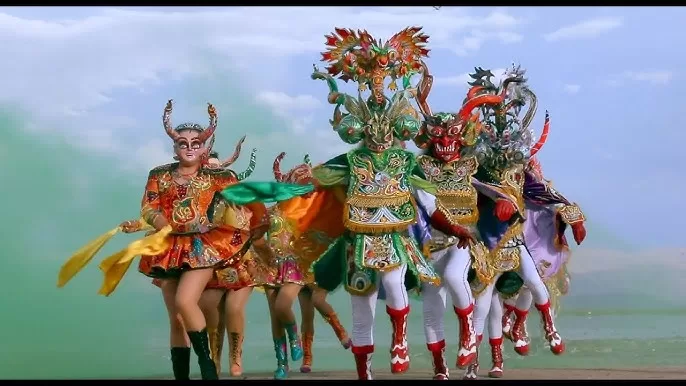
The visual splendor of the Chinas Supay dance is undeniably one of its most captivating aspects, largely due to the exquisite traditional costumes worn by the performers. Each costume is a work of art, meticulously crafted and laden with symbolism. Typically, the Chinas Supay wear elaborate, often brightly colored dresses, characterized by full skirts that flare dramatically with each spin and twirl. These skirts are frequently adorned with intricate embroidery, sequins, beads, and often feature images of flowers, animals, or religious symbols. The upper part of the costume usually includes a fitted bodice, also heavily decorated.
A defining feature is the headdress, which can range from ornate crowns to feathered arrangements or elaborate hairpieces, often incorporating mirrors, jewels, and feathers that shimmer and sway with the dancer’s movements. These elaborate headpieces add to the majestic and somewhat otherworldly appearance of the Chinas Supay performers. Masks are less common for the Chinas Supay compared to the Diablada, allowing the dancers’ expressions to convey emotion and allure, though some groups might incorporate subtle facial adornments. The overall effect of the traditional costumes in dance is one of dazzling elegance and a hint of mystique, reflecting the alluring nature of the characters.
The dance is brought to life by the vibrant sounds of traditional Bolivian music. The accompanying music is typically performed by large brass bands, known as bandas de músicos, which are central to the Oruro Carnival. These bands create a powerful, energetic sound that provides the rhythmic backbone for the dance. Instruments commonly include trumpets, trombones, tubas, saxophones, and percussion like bass drums and snare drums. The melodies are often lively and catchy, with a distinct Andean flavor, though they also incorporate European marching band influences. The rhythm is crucial for the Chinas Supay choreography, dictating the precise footwork, spins, and synchronized movements of the dancers. This blend of powerful brass music and graceful dance creates an immersive sensory experience, truly showcasing the dynamic interplay between dance music and performance.
How to Experience Chinas Supay Dance
To truly appreciate the magic of the Chinas Supay dance, experiencing it firsthand is essential. The prime location and time to witness this spectacular traditional dance is during the Oruro Carnival, held annually in the city of Oruro, Bolivia. This grand event usually takes place in February or early March, leading up to Ash Wednesday, and is considered one of the largest and most important cultural events in South America.
During the Carnival, numerous dance groups, known as conjuntos folklóricos, parade through the city streets for days. The main procession, the “Peregrinación al Socavón,” is the highlight, where thousands of dancers, including the Chinas Supay performers, make their way to the Sanctuary of the Virgin of Socavon. To get the best views, it’s advisable to book seats in the grandstands along the parade route well in advance, as they sell out quickly. Alternatively, finding a spot along the general viewing areas requires arriving early to secure a good vantage point.
Beyond the Carnival, smaller performances or cultural presentations of the Chinas Supay Oruro might be featured at local tourism events or cultural centers throughout the year, especially in Oruro or La Paz. Checking with local tourism boards or cultural institutions in Bolivia tourism destinations can provide information on these opportunities. Attending a rehearsal of a conjunto folklórico can also offer a more intimate look into the dedication and training involved in mastering this iconic Bolivian dance. Engaging with local guides can enhance the experience, providing deeper insights into the dance’s history and cultural nuances.
Chinas Supay Dance in Popular Culture
The Chinas Supay dance, with its captivating visuals and rich symbolism, has naturally found its way into various aspects of popular culture, both within Bolivia and beyond. Its vibrant presence in the Oruro Carnival ensures its regular feature in national and international media coverage of the event. Documentaries, travel shows, and news reports often highlight the dazzling Chinas Supay performers as a key representation of Bolivia’s unique cultural heritage. These portrayals help introduce the dance to a global audience, fostering an appreciation for Bolivian traditions and South America cultural events.
Within Bolivia, the Chinas Supay dance holds a significant place in the national identity. It is a source of immense pride, symbolizing the country’s rich indigenous roots and its ability to blend diverse cultural influences into a cohesive whole. The imagery of the Chinas Supay is frequently used in art, advertising, and even political campaigns, serving as a recognizable emblem of Bolivian culture. Folkloric music groups often feature Chinas Supay themes in their songs, and artistic renditions of the costumes and movements are common in paintings and sculptures.
The dance’s influence extends to fashion and contemporary art, where designers and artists draw inspiration from the elaborate traditional costumes and the powerful symbolism of the characters. While the core choreography and traditional costumes in dance remain largely unchanged for ceremonial performances, the essence of the Chinas Supay continues to inspire new creative expressions, ensuring its relevance in a modern context. This constant presence in different forms of media reinforces the dance’s cultural importance and its role in shaping and reflecting Bolivian identity.
Opportunities for Differentiation
To truly delve into the heart of the Chinas Supay dance and offer a unique perspective, there are several avenues that can enrich the narrative beyond a general overview. These opportunities allow for a deeper, more personal, and perhaps more academic exploration of this fascinating cultural phenomenon.
Interviews with Dancers and Choreographers
One of the most powerful ways to bring the Chinas Supay dance to life is through the voices of those who embody it. Interviews with the Chinas Supay performers themselves or their choreographers can provide invaluable personal stories and experiences. Imagine hearing directly from a dancer about the rigorous training, the physical demands of the elaborate costumes, and the profound emotional and spiritual connection they feel when performing. They could share insights into the specific meanings behind certain movements, the significance of their particular costume elements, or the evolution of the Chinas Supay choreography within their conjunto.
A seasoned choreographer might discuss the challenges of preserving traditional movements while allowing for creative expression, or the historical lineage of their group’s particular style. Such narratives humanize the dance, transforming it from a mere spectacle into a living, breathing tradition passed down through generations. These personal accounts highlight the dedication required and the deep sense of responsibility performers feel towards their cultural heritage, offering a truly differentiated view of the Chinas Supay cultural importance.
Impact of Chinas Supay Dance on Local Tourism
The Oruro Carnival, with the Chinas Supay dance as one of its shining stars, is a massive draw for local tourism. Exploring this economic and social impact provides another unique angle. The influx of national and international tourists for the Carnival generates significant revenue for the city of Oruro, boosting hotels, restaurants, transportation, and local artisan markets. The demand for traditional dance costumes, musical instruments, and related crafts creates employment opportunities and sustains traditional skills.
Beyond the immediate economic benefits, the dance elevates Oruro’s profile on the world stage, establishing it as a key destination for cultural events and folklore significance. This attracts further investment in infrastructure and cultural preservation efforts. Discussing how local businesses adapt to capitalize on the Carnival, or how community initiatives leverage the dance’s popularity for sustainable development, offers a compelling insight into the broader societal effects. It underscores how the Chinas Supay dance Oruro is not just an artistic expression, but a vital engine for the local economy and a cornerstone of Oruro events, encouraging more Bolivia tourism.
Future of Chinas Supay Dance
Considering the future of the Chinas Supay dance in an increasingly globalized and modernized world presents a thought-provoking discussion. How do young generations perceive and engage with this traditional art form? Are there concerns about commercialization or dilution of its spiritual meaning? Conversely, how might global exposure through social media and international festivals help preserve and promote the dance?
This section could explore the efforts being made by cultural institutions, dance groups, and the Bolivian government to ensure the longevity of the Chinas Supay. This might include educational programs, funding for conjuntos, or digital archiving projects. It could also touch upon how the dance adapts to contemporary influences while maintaining its authenticity. The challenge lies in balancing tradition with innovation, ensuring that the Chinas Supay dance continues to resonate with new audiences without losing its profound historical and cultural roots. Speculating on these dynamics offers a forward-looking perspective on the enduring power of traditional Bolivian folklore and its place in the 21st century.
Conclusion
The Chinas Supay dance Oruro is far more than a dazzling spectacle; it is a profound expression of Bolivian identity, a vibrant thread in the rich tapestry of South American folklore. From its syncretic origins blending indigenous Andean beliefs with colonial influences to its current status as a highlight of the Oruro Carnival, this traditional dance embodies resilience, spiritual depth, and artistic beauty. The intricate symbolism of the Chinas Supay characters, representing the alluring and powerful feminine aspects of the underworld, provides a captivating narrative that continues to resonate with performers and audiences alike.
Through its elaborate costumes, dynamic dance music, and precise choreography, the Chinas Supay dance transcends mere performance, becoming a living ritual that honors ancestral spirits, celebrates cultural heritage, and fosters a deep sense of community. Its impact extends beyond the parade route, influencing local tourism, inspiring new generations, and solidifying Oruro’s place as a global hub for cultural events. We hope this exploration encourages you to delve deeper into Oruro’s rich cultural heritage and perhaps one day experience the magic of the Chinas Supay dance for yourself. It’s an unforgettable journey into the heart of Bolivian dance traditions.
Yo, gotta say 7kgames ain’t bad. Some fun little games on there. Nothing crazy, but it’s good for a quick break. Check out what they got: 7kgames
nexusgaming https://www.modnexusgaming.net