
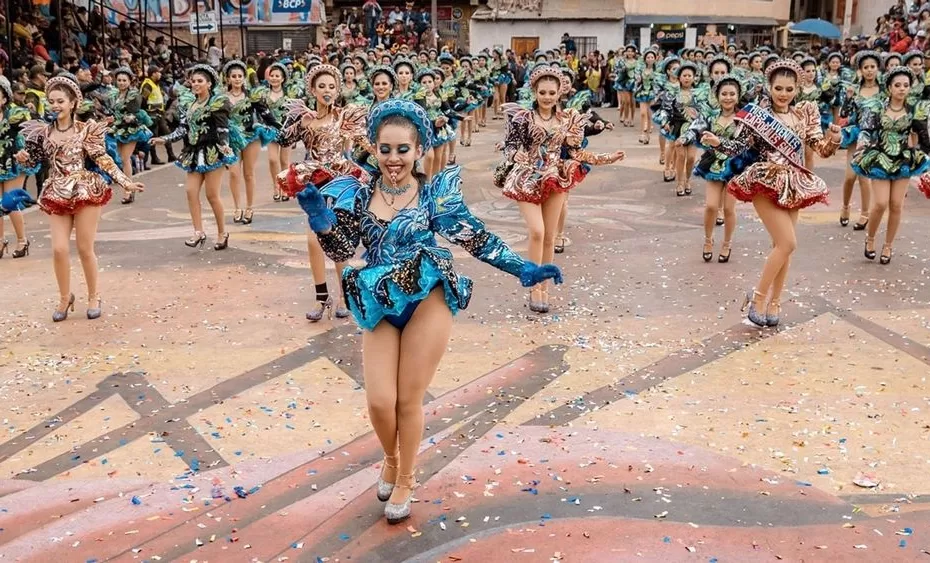
The Evolution of Oruro Carnival Dances
The vibrant spectacle of the Oruro Carnival, a UNESCO Masterpiece of the Oral and Intangible Heritage of Humanity, is more than just a festival; it’s a living tapestry woven from centuries of history, faith, and cultural resilience. At its heart lie the captivating Oruro Carnival dances, each step and rhythm telling a story of Bolivia’s rich past. To truly appreciate this monumental celebration, one must delve into the dynamic evolution of these traditional Bolivian dances, understanding how they have transformed from ancient rituals to the dazzling performances seen today. This journey through time reveals the profound cultural significance embedded in every movement, costume, and melody, making it a cornerstone of Bolivian culture and a global cultural heritage.
Introduction to Oruro Carnival
Nestled high in the Andes, the city of Oruro, Bolivia, becomes the epicenter of one of the world’s most spectacular and spiritually charged festivals each year: the Oruro Carnival. This grand celebration, held annually before Ash Wednesday, is not merely a party but a profound religious and cultural event, deeply rooted in Andean cosmology and Catholic tradition. It serves as a vibrant display of Bolivian heritage, attracting hundreds of thousands of spectators and performers. The carnival’s central narrative revolves around the struggle between good and evil, culminating in a dramatic procession dedicated to the Virgen del Socavón (Virgin of the Mineshaft). Beyond its religious fervor, the Oruro Carnival is a magnificent showcase of folklore dances, intricate traditional costumes, and captivating carnival music, embodying the spirit of festivals in Bolivia. Its recognition by UNESCO underscores its importance as a unique expression of human creativity and cultural identity, making Oruro tourism a must-do for anyone interested in cultural events and unique dance performances. The sheer scale and historical depth of these carnival celebrations offer an unparalleled glimpse into the heart of a nation’s soul.
Historical Background of Oruro Carnival Dances
The origins of Oruro Carnival dances are as complex and layered as the Andean landscape itself, stretching back long before the arrival of the Spanish conquistadors. Pre-Hispanic influences are undeniably the bedrock upon which these dances were built, with indigenous cultures celebrating Pachamama (Mother Earth) and various Andean deities through elaborate rituals and ceremonial dances. These early forms of cultural expression were deeply intertwined with agricultural cycles, mining activities, and spiritual beliefs, often involving masks, music, and rhythmic movements designed to appease gods and ensure prosperity.
When the Spanish arrived in the 16th century, they brought with them Catholicism and a determination to convert the indigenous populations. This clash of cultures, rather than eradicating the native traditions, led to a fascinating process of syncretism. Indigenous deities were often reinterpreted as Catholic saints, and ancient rituals subtly blended with Christian festivities. For instance, the veneration of the Tio Supay (Uncle Devil), the lord of the underworld and protector of miners, found its counterpart in the Christian devil figure, leading to the creation of one of the carnival’s most iconic dances.
The Spanish also introduced new elements, including European musical instruments and theatrical representations, further enriching the existing dance forms. The mining boom in Oruro, a significant silver-producing region, brought together diverse groups: indigenous laborers, Spanish overseers, and later, African slaves. This convergence created a melting pot of cultural exchanges, where different dance styles and musical traditions interacted and evolved. The historical dances of Oruro Carnival thus became a living testament to this colonial encounter, reflecting the struggles, adaptations, and enduring spirit of a people determined to preserve their cultural heritage. The folklore dances of Oruro are not static; they are a dynamic narrative of centuries of resistance and fusion, showcasing the deep roots of Bolivian heritage and carnival folklore.
Key Dances of the Oruro Carnival
The Oruro Carnival is a dazzling parade of over 50 distinct dance groups, each performing a specific traditional Bolivian dance with its own unique history, costume, and musical style. Among these, three stand out for their historical significance, elaborate presentations, and profound cultural importance: the Diablada, the Morenada, and the Saya Afro-Boliviana. These dance styles are central to the carnival’s identity, offering a powerful display of cultural expressions.
Diablada: The Dance of the Devils
The Diablada, or “Dance of the Devils,” is arguably the most iconic and visually striking of all Oruro Carnival dances. Its spectacle of vibrant colors, intricate masks, and dramatic choreography instantly captures attention. At its core, the Diablada is a symbolic representation of the eternal struggle between good and evil, a narrative deeply rooted in both indigenous Andean beliefs and Catholic teachings.
Historically, the dance draws from pre-Hispanic mining rituals where indigenous miners would pay homage to Tio Supay, the benevolent (and sometimes malevolent) guardian of the underworld, who controlled the precious metals. With the arrival of the Spanish and Catholicism, Tio Supay was reinterpreted as the Christian devil. The dance then evolved to incorporate figures like the Archangel Michael, who leads the forces of good against the devils and the seven deadly sins. The Diablada’s narrative typically involves a battle between Michael and Lucifer, with the devils ultimately submitting to the Virgin of the Socavón, symbolizing the triumph of good over evil.
The Diablada costumes are legendary. Dancers don elaborate, often monstrous masks with bulging eyes, horns, and fangs, representing various demonic figures. The costumes are richly adorned with sequins, mirrors, and metallic threads, reflecting the light and adding to the theatricality. The heavy, detailed masks alone can weigh several kilograms, requiring immense stamina from the dancers. The music is powerful and driving, characterized by brass bands and percussion, setting a dramatic pace for the energetic movements. The dance history of the Diablada is a perfect example of syncretism, blending ancient beliefs with colonial influences to create a uniquely Bolivian form of cultural expression.
Morenada: The Dance of the Afro-Bolivians
The Morenada, meaning “dance of the dark ones” or “black dance,” is another cornerstone of the Oruro Carnival. This dance is a poignant and powerful tribute to the African slaves brought to Bolivia by the Spanish colonizers, particularly to work in the silver mines of Potosí and Oruro. It serves as a historical memory, reflecting the hardships and experiences of these enslaved people.
The origins of the Morenada are debated but largely linked to the mining industry. One theory suggests it mimics the slow, heavy steps of the African slaves, burdened by chains and the high altitude, as they transported grapes for wine production or worked in the mines. The distinctive matracas (rattles) carried by the dancers are said to symbolize the rattling of chains or the sound of the miners’ tools. The dance also incorporates satirical elements, often depicting the Spanish overseers and their opulence.
The Morenada costumes are among the most elaborate and expensive in the carnival. The male dancers wear enormous, intricately decorated masks, often depicting dark-skinned faces with exaggerated features, sometimes with large, plumed hats. Their attire includes heavy, wide skirts (known as polleras), jackets adorned with beads and sequins, and boots. The sheer weight of these costumes, sometimes exceeding 30-40 kilograms, makes the slow, deliberate steps of the Morenada incredibly challenging, further emphasizing the arduous conditions faced by the slaves it commemorates. The female dancers, known as cholitas, wear elegant polleras, blouses, and mantas, often with small bowler hats. The music is characterized by a distinctive, melancholic rhythm, often played by brass bands, creating a powerful emotional resonance. This dance highlights a crucial aspect of Afro-Bolivian culture and its contributions to Bolivian society and carnival performances.
Saya Afro-Boliviana: The Afro-Bolivian Influence
While the Morenada subtly references the struggles of African slaves, the Saya Afro-Boliviana is a direct and vibrant expression of contemporary Afro-Bolivian culture, particularly from the Yungas region of Bolivia. Unlike the Morenada, which evolved through a process of syncretism and satirical representation, Saya is a more direct continuation of African musical and dance traditions that have been preserved and adapted over centuries by the Afro-Bolivian communities.
Saya is characterized by its infectious rhythm, created primarily by drums (bombos and cajones) and ganguis (shakers), accompanied by call-and-response singing. The dance itself is energetic and sensual, with dancers moving their hips and shoulders to the beat. The male dancers typically wear white shirts and trousers, often with colorful sashes, while the female dancers wear long, flowing skirts (polleras) and blouses, often with headscarves, showcasing traditional costumes distinct from other carnival styles.
The performance style of Saya is deeply communal and celebratory, reflecting the strong sense of identity and resilience within the Afro-Bolivian community. It’s a dance that tells stories of daily life, love, work, and resistance, serving as a powerful vehicle for cultural preservation and affirmation. Although a relatively newer addition to the Oruro Carnival compared to the ancient Diablada and Morenada, Saya has gained significant recognition, bringing a distinct and vital aspect of Afro-Bolivian heritage to the forefront of the carnival celebrations. It represents a living link to the African diaspora in Bolivia and showcases the diversity of cultural festivals and dances of Oruro.
The Influence of Colonialism on Carnival Dances
Colonialism profoundly reshaped the landscape of Oruro Carnival dances, transforming pre-Hispanic rituals into the complex, syncretic forms we recognize today. The Spanish conquest introduced new religious doctrines, social hierarchies, and economic systems that inevitably intertwined with indigenous cultural expressions. The most significant influence was the imposition of Catholicism, which led to the reinterpretation of indigenous deities and rituals through a Christian lens. For instance, the Andean concept of Pachamama (Mother Earth) became associated with the Virgin Mary, and the Tio Supay, the lord of the mines, was demonized as the Christian devil. This syncretism is vividly illustrated in the Diablada, where indigenous figures dance alongside the Archangel Michael, creating a unique religious narrative.
The mining industry, central to the colonial economy in Oruro, also played a crucial role. The arduous conditions in the mines, coupled with the introduction of African slaves, gave rise to dances like the Morenada. This dance, with its heavy costumes and deliberate steps, subtly yet powerfully evokes the suffering and labor of enslaved Africans and indigenous miners. It became a form of hidden protest and cultural memory, allowing marginalized communities to express their experiences within the framework of a sanctioned festival.
Furthermore, colonial rule introduced European musical instruments such as brass instruments, which significantly altered the soundscape of carnival music. The introduction of European theatrical elements also influenced the performance styles, adding dramatic flair and narrative structure to the existing dance forms. Despite the oppressive nature of colonialism, the indigenous and Afro-Bolivian populations creatively adapted, using the carnival as a space to preserve their cultural identity, resistance, and memory. The dances became a powerful testament to their resilience, transforming colonial impositions into unique forms of cultural expression that are now celebrated as integral to Bolivian heritage. This rich tapestry of historical dances and carnival significance continues to fascinate scholars and visitors alike, revealing the layers of Oruro Carnival history.
Modern Evolution of Oruro Carnival Dances
The Oruro Carnival dances, while deeply rooted in tradition, are by no means static. They continue to evolve, adapting to contemporary influences and modern interpretations while striving to maintain their core cultural heritage. In recent decades, globalization, media exposure, and the demands of tourism have played significant roles in shaping these dynamic dance styles.
One notable aspect of modern evolution is the heightened level of professionalism and spectacle. Dance groups (fraternities) now invest heavily in elaborate costumes, often incorporating new materials and design techniques, making them even more dazzling for the growing number of spectators and Oruro tourism. Choreography has also become more refined and complex, with groups striving for synchronized perfection and innovative formations to stand out in the grand parade. While the fundamental steps remain, there’s a constant push for creative interpretation within traditional boundaries.
Music, too, has seen its own evolution. While traditional brass bands remain central, modern arrangements sometimes incorporate contemporary instruments or fusion elements, appealing to a broader audience without losing the essence of carnival music. The influence of younger generations, who embrace both tradition and modernity, is evident in these changes. They are passionate about preserving their cultural heritage but also keen to infuse it with fresh energy, ensuring the dances remain relevant and appealing to new participants.
The increasing international recognition, particularly after the UNESCO designation, has placed a spotlight on the carnival, leading to greater efforts in cultural preservation but also to a push for higher production values. While some worry about commercialization, most agree that the core spirit and cultural significance of the dances endure, adapting in ways that ensure their longevity. The modern evolution of Oruro Carnival dances is a delicate balance between honoring the past and embracing the future, ensuring these vibrant cultural expressions continue to thrive as a vital part of Bolivian heritage and Oruro cultural events.
The Role of Dance in Oruro Carnival Today
Today, dance remains the beating heart of the Oruro Carnival, playing an indispensable role that extends far beyond mere entertainment. It is a powerful conduit for cultural expression, a cornerstone of community identity, and a profound spiritual journey for thousands of participants. The act of dancing in the carnival is a deeply personal and collective commitment, often requiring months of preparation, rigorous practice, and significant financial investment in traditional costumes and accessories.
For the dancers, participation is a form of devotion to the Virgen del Socavón, an offering of effort and sacrifice in exchange for blessings and protection. Each step, each turn, and each movement carries a spiritual weight, connecting the dancer to centuries of tradition and faith. It’s a living prayer, a physical manifestation of their beliefs and their connection to Bolivian culture.
Beyond the spiritual, dance fosters an incredibly strong sense of community. The numerous fraternities or conjuntos (dance groups) are often multi-generational, bringing together families and friends who share a common passion and heritage. These groups serve as social structures, reinforcing bonds and transmitting cultural knowledge from elders to youth. They are custodians of the folklore dances, ensuring that the intricate steps, meanings, and stories behind each dance are passed down, preserving Oruro folk traditions for future generations.
Furthermore, the dance performances are the primary draw for Oruro tourism, transforming the city into a global stage for cultural festivals. The visual spectacle of thousands of dancers in their elaborate attire, moving in synchronized rhythm to powerful carnival music, is an unforgettable experience. It showcases Bolivia’s rich cultural heritage to the world, fostering pride among Bolivians and educating international visitors about the depth and diversity of Oruro’s cultural events. In essence, dance is not just a part of the Oruro Carnival; it is the Oruro Carnival, embodying its history, faith, community, and enduring spirit.
Conclusion: Preserving the Legacy of Oruro Carnival Dances
The journey through the evolution of Oruro Carnival dances reveals a story of remarkable resilience, adaptation, and profound cultural depth. From their ancient pre-Hispanic roots, through the transformative period of colonialism, and into their vibrant modern forms, these dances have consistently served as powerful cultural expressions of Bolivian heritage. The Diablada, Morenada, and Saya Afro-Boliviana, alongside dozens of other dance styles, are not merely performances; they are living historical documents, embodying the struggles, beliefs, and triumphs of a people. Their continued existence and evolution are a testament to the enduring spirit of Bolivian culture.
Preserving the legacy of Oruro Carnival dances is of paramount importance. It means safeguarding a unique blend of indigenous cosmology, Catholic faith, and Afro-Bolivian culture that has been meticulously woven over centuries. Efforts to protect this cultural heritage involve meticulous documentation, support for the traditional dance fraternities, and educational initiatives that teach younger generations the historical background, significance, and intricate steps of each dance. It also means fostering an environment where innovation can occur without compromising the authenticity and deep meaning embedded in these traditional Bolivian dances. The Oruro Carnival is a dynamic, living museum, and its dances are the priceless artifacts within it, offering an unparalleled glimpse into the soul of Bolivia. Ensuring their continuity is not just about preserving art; it’s about preserving identity, history, and a vital piece of humanity’s shared cultural tapestry for future generations to cherish and experience.
Travel Tips for Experiencing Oruro Carnival
Experiencing the Oruro Carnival firsthand is an unforgettable adventure, but it requires careful planning due to its immense popularity. Here are some practical tips for travelers wanting to immerse themselves in this spectacular cultural event:
1. Book Early, Very Early: Accommodation and transportation to Oruro sell out months in advance. As soon as the carnival dates are announced (usually a year prior), book your flights, bus tickets, and hotel or hostel. Many tour operators also offer packages that include seating and accommodation.
2. Secure Your Seating: The main parade route is lined with grandstands (graderías). These seats offer the best views and can be purchased well in advance. Alternatively, many businesses along the route sell balcony spaces. Be prepared to pay a premium for good spots, and ensure you buy from reputable vendors.
3. Arrive Early on Parade Days: Even with reserved seating, arriving early on the main Saturday and Sunday of the carnival is crucial. The streets fill up quickly, and navigating the crowds can be challenging.
4. Dress in Layers and for the Weather: Oruro is at a high altitude (over 3,700 meters or 12,000 feet), so temperatures can fluctuate dramatically. Days can be sunny and warm, but evenings are cold. Be prepared for potential rain, and bring comfortable walking shoes.
5. Stay Hydrated and Acclimatize: Due to the altitude, it’s essential to drink plenty of water and avoid excessive alcohol, especially in the first few days. Take it easy to avoid altitude sickness. Coca tea is a local remedy that can help.
6. Be Aware of Agua y Espuma (Water and Foam): A fun, but sometimes messy, tradition of the carnival involves people spraying water and foam on each other. If you don’t want to get wet, consider wearing a poncho or staying clear of areas where this is most prevalent.
7. Protect Your Valuables: Like any large festival, pickpocketing can occur. Keep your valuables secure, carry only what you need, and be mindful of your surroundings.
8. Immerse Yourself Respectfully: Engage with the local culture, try traditional foods, and enjoy the carnival music. Remember that this is a deeply spiritual event for many, so observe with respect. Learning a few basic Spanish phrases will also enhance your experience.
9. Consider a Guide: For first-timers, hiring a local guide or joining an organized tour can greatly enhance your experience, providing insights into the Oruro Carnival history, the meaning of the folklore dances, and navigating the complexities of the event.
By following these Oruro travel tips, you can ensure a safe, enjoyable, and truly enriching experience of one of the world’s most spectacular cultural festivals.
Been playing 33vin for a while now and I’m pretty impressed with the variety of games they offer. There’s always something new to try! Site is secure, too, which is a big plus in my book. Check it out: 33vin