
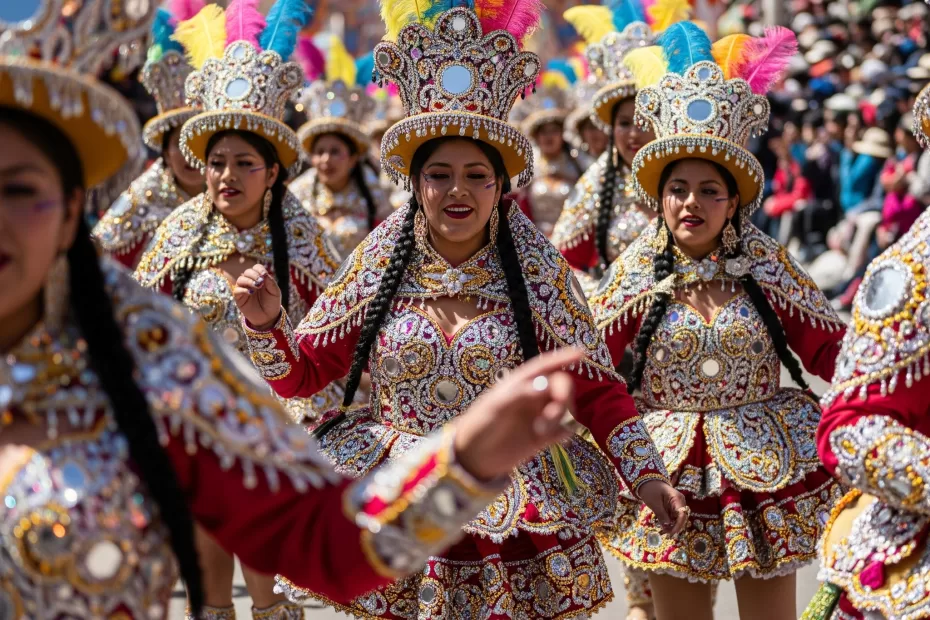
The Impact of Women in the Oruro Carnival
The Oruro Carnival, a breathtaking spectacle of color, sound, and fervent devotion, stands as one of the most magnificent cultural celebrations in Latin America. Recognized by UNESCO as a Masterpiece of the Oral and Intangible Heritage of Humanity, this Bolivian fiesta is far more than just a party; it’s a living tapestry of indigenous traditions, colonial influences, and a deep-rooted spiritual connection. While often viewed through the lens of its grand parades, elaborate costumes, and mesmerizing dances, the true heart and soul of the Oruro Carnival beat strongly within the unwavering dedication and profound contributions of its women.
From the intricate threads of traditional Bolivian costumes to the powerful rhythms of the dance, women in Oruro Carnival are not merely participants; they are the custodians of cultural heritage, the vibrant performers who bring stories to life, and the resilient forces driving the continuity of this extraordinary event. Their presence is fundamental, shaping the carnival’s identity and ensuring its transmission across generations. This article delves into the indispensable role of women in the Oruro Carnival, exploring their historical significance, artistic expressions, challenges, and the undeniable empowerment they derive from this iconic festival. It highlights how Oruro Carnival women embody the spirit of their community, making the carnival an enduring symbol of Bolivian culture and a testament to female strength and artistry.
Historical Significance of Women in Oruro Carnival
To truly grasp the essence of women’s involvement in the Oruro Carnival, one must look back through the annals of its rich and complex history. The carnival’s roots are deeply entwined with pre-Columbian Andean rituals, particularly the Ito festival of the Uru people, which honored Pachamama (Mother Earth) and other deities. In these ancient ceremonies, women held prominent roles as spiritual leaders, healers, and keepers of sacred knowledge. Their participation was not just ceremonial; it was integral to the spiritual efficacy and communal well-being of the festivities.
With the arrival of the Spanish conquistadors and the subsequent imposition of Catholicism, these indigenous traditions underwent a syncretic transformation. The Ito festival merged with the Catholic celebration of Candlemas (February 2nd), evolving into the modern Oruro Carnival. Despite the colonial overlay, women continued to be crucial in preserving the original essence of the celebrations. They were often the ones who secretly maintained ancestral practices, blending them with new religious symbols to ensure the survival of their cultural heritage. This subtle yet powerful act of resistance and adaptation meant that, even as the carnival outwardly embraced Christian narratives, its indigenous soul, nurtured largely by women, remained intact.
During the colonial era, and well into the republican period, women’s roles diversified. While public participation in the more organized dance troupes might have been limited by societal norms for some time, women were undeniably active in the domestic spheres vital to the carnival’s existence. They prepared traditional foods, crafted elements of costumes, and passed down the stories and myths associated with the various characters and dances. These seemingly ‘behind-the-scenes’ contributions were, in fact, foundational, demonstrating their deep commitment to Oruro traditions.
As the carnival gradually gained more structure and public visibility in the 19th and 20th centuries, women’s roles became increasingly overt. They began to join dance groups, initially often in supporting or less prominent roles, but steadily asserting their presence. The Diablada, for instance, a dance symbolizing the struggle between good and evil, traditionally featured male dancers. However, over time, women began to take on roles previously exclusive to men, showcasing their skill and challenging gender conventions. This gradual integration into the most iconic dances marked a significant shift, highlighting a growing recognition of women’s capabilities and their indispensable contributions to the carnival’s vibrancy.
Their historical contributions extend beyond performance. Women were instrumental in organizing community events, raising funds, and fostering the sense of collective responsibility that underpins the carnival. They advocated for the recognition and preservation of unique Bolivian culture, ensuring that the carnival’s historical narrative was not lost. Their dedication to heritage preservation has been a continuous thread, weaving through generations, making them true guardians of the carnival’s past and present. The story of Oruro Carnival is, therefore, inseparable from the unwavering spirit and enduring legacy of its women, who have shaped its evolution and ensured its cultural significance for centuries. They are central to the carnival history, embodying the resilience and adaptability of Bolivian culture itself.
Traditional Costumes and Their Meaning
One of the most visually striking aspects of the Oruro Carnival is the breathtaking array of traditional Bolivian costumes, and for women, these garments are much more than mere attire; they are expressions of identity, cultural representation, and intricate storytelling. Each costume, meticulously crafted and adorned, carries layers of meaning, reflecting the history, beliefs, and artistic prowess of the communities it represents. Exploring these costumes reveals the depth of women’s engagement with the carnival’s aesthetic and symbolic language.
Consider the Diablada, arguably the most famous dance of the Oruro Carnival. While male dancers traditionally wear elaborate devil masks, female dancers, known as China Supay (female devil), adorn themselves with equally intricate and vibrant costumes. Their outfits often feature richly embroidered skirts, blouses, and capes, adorned with sequins, beads, and metallic threads that shimmer under the Bolivian sun. The China Supay character, though a devil, often embodies a seductive and powerful figure, challenging traditional feminine stereotypes. Her costume, with its bold colors and often feathered headpieces, symbolizes both the allure and the danger of evil, yet also a strength that is distinctly female.
In the Morenada, a dance that satirizes the African slave trade in Bolivia, women’s costumes are particularly opulent. The Chola Paceña (women from La Paz) style, often seen in the Morenada, features voluminous, layered skirts known as polleras, intricately embroidered shawls (mantas), and elegant bowler hats (bombines). These elements are not just decorative; the pollera, for instance, is a symbol of indigenous and mestizo pride, a garment that has evolved from a colonial imposition to a powerful marker of identity. The richness of the fabrics, the weight of the silver jewelry, and the precision of the embroidery all speak to the economic status and the artistic dedication of the dancer and her family. The Morenada female dancers move with a dignified grace, their heavy costumes emphasizing the slow, ponderous steps that recall the struggles of the enslaved.
The Caporales dance, known for its energetic and acrobatic movements, also showcases stunning female attire. Women in Caporales wear short, richly decorated skirts, fitted blouses, and tall, feathered boots, often accompanied by a small whip. Their costumes are designed to highlight their dynamic movements, with bright colors and sparkling embellishments that capture the festive traditions and the youthful exuberance of the dance. The Caporales female performers exude confidence and strength, embodying a contemporary form of female empowerment within the carnival context.
Other dances feature equally significant female costumes:
-
Suri Sicuri: Women wear large, circular feathered hats resembling the rhea bird, with colorful ponchos and skirts, symbolizing a connection to nature and indigenous heritage.
-
Kallawaya: These healers’ costumes, for both men and women, are more subdued but rich in textile patterns, reflecting ancient wisdom and traditional medicine. Women’s garments often include woven bags (chuspas) and intricate head coverings.
-
Awatiri: Representing sheep herders, women wear practical yet beautifully woven garments, often with distinct regional patterns, emphasizing their connection to the land and agricultural traditions.
-
Waca Waca: A satirical bullfight dance, women’s costumes are vibrant, featuring large, decorated hats and flouncy skirts, often mimicking the movements of the bull.
-
Tinku: Originating from ritualistic combat, Tinku female dancers wear strong, woven textiles, often with intricate patterns and vibrant colors, symbolizing resilience and communal strength.
-
Tobas: Representing jungle tribes, women’s costumes are adorned with feathers, beads, and natural elements, reflecting a connection to Amazonian cultures and the diversity of Bolivia festivals.
The creation of these carnival costumes is often a community effort, with women playing a central role in their design, embroidery, and assembly. This process is not just about making clothes; it’s about preserving heritage, passing down specific weaving and embroidery techniques, and ensuring that the cultural significance of each element is understood and respected. The act of wearing these traditional Bolivian costumes transforms the female performer, connecting her to centuries of history and a vibrant cultural identity, making her a living canvas of Oruro’s festive traditions.
Women as Cultural Guardians
Beyond their dazzling performances and elaborate costumes, women in the Oruro Carnival serve a profound and often understated role: that of cultural guardians. They are the primary preservers and transmitters of the carnival’s intricate cultural practices, ensuring that the spirit and traditions of this magnificent event endure for future generations. This vital role extends across various facets of the carnival, from the most visible dances to the most intimate family rituals.
At the heart of heritage preservation lies the oral tradition, and women are often the primary storytellers. They pass down the myths and legends associated with each dance, the spiritual meanings behind the costumes, and the historical narratives that give context to the entire celebration. Grandmothers, mothers, and aunts share these stories with their children and grandchildren, instilling a deep appreciation for Oruro traditions and a sense of belonging to a rich cultural lineage. This intergenerational transfer of knowledge is crucial for maintaining the authenticity and depth of the carnival, preventing it from becoming merely a superficial spectacle.
Furthermore, women are instrumental in transmitting the practical skills required for the carnival. This includes the intricate art of costume making. While some elaborate elements might be outsourced to professional artisans, many traditional Bolivian costumes, or at least significant parts of them, are still handcrafted within families and communities. Women teach younger generations how to embroider specific patterns, how to select and work with various fabrics, and how to assemble the complex layers of a pollera or a manta. This hands-on learning ensures that traditional craftsmanship, a vital part of the carnival’s cultural representation, continues to thrive. These skills are not just technical; they are imbued with cultural meaning, as each stitch and embellishment often carries symbolic weight.
In the realm of dance and music, women play a crucial role in teaching and maintaining the authenticity of movements and rhythms. Many female dancers, after years of performing, become instructors within their respective fraternities (dance groups). They meticulously teach the specific steps, gestures, and formations of dances like the Diablada, Morenada, or Caporales, ensuring that the traditional choreography is preserved. They also instill the emotional and spiritual connection to the dance, explaining its significance and encouraging devotional participation. This mentorship is critical for Oruro dance groups, as it guarantees a consistent standard of performance and a deep understanding of the dances’ cultural roots.
Beyond formal instruction, women foster community participation through various informal roles. They organize rehearsals, coordinate logistics for their families and dance groups, and often serve as the emotional anchors of their carnival communities. They prepare the traditional meals that sustain dancers during long practice sessions and the days of the carnival itself, ensuring that the festive traditions are accompanied by the tastes and aromas of home. These acts, though often unheralded, knit together the social fabric of the carnival, reinforcing bonds and strengthening the collective spirit.
Moreover, women are often the ones who initiate children into the carnival world. From dressing toddlers in miniature traditional costumes to encouraging their first hesitant dance steps, they cultivate an early love and respect for the Oruro festivities. This early immersion is key to ensuring that new generations embrace the carnival not just as an event, but as an integral part of their identity and cultural legacy. By actively preserving and transmitting these practices, women ensure that the Oruro Carnival remains a vibrant, living cultural entity, a testament to their unwavering dedication as cultural guardians.
Dancing and Music: Female Performers
The Oruro Carnival is synonymous with its spectacular dances and pulsating music, and female performers are at the very core of this vibrant display. Their energy, artistry, and unwavering dedication bring life to the streets of Oruro, transforming the city into a stage for a profound cultural celebration. The role of women in dance and music during the carnival is not merely supportive; it is central, powerful, and increasingly prominent.
In almost every major dance group (known as fraternidades or conjuntos), women now hold significant and visible roles. Take the Diablada, for instance. While historically dominated by male devil dancers, the China Supay (female devil) has become an iconic figure. These female dancers perform with incredible stamina and precision, executing complex footwork and powerful movements that reflect the struggle between good and evil. Their presence adds a captivating dimension to the dance, challenging traditional interpretations and showcasing the evolving nature of female empowerment within the carnival.
The Morenada features women in some of the most visually stunning and physically demanding roles. Dressed in their heavy, layered polleras and intricate mantas, they move with a dignified, almost hypnotic rhythm. The weight of their traditional Bolivian costumes requires immense strength and endurance, yet they dance for hours, embodying the solemnity and resilience of the dance’s historical narrative. Their synchronized movements and expressions of pride are a testament to their dedication and their role in preserving this unique form of cultural representation.
Perhaps nowhere is female dynamism more evident than in the Caporales. This high-energy dance is characterized by its explosive jumps, turns, and intricate footwork, and female Caporales dancers execute these movements with astonishing agility and power. Their short skirts and vibrant costumes emphasize their athleticism and grace, making them a focal point of many Oruro dance groups. The female performers in Caporales exude confidence and joy, their infectious energy often drawing the loudest cheers from the crowds. They are a powerful symbol of modern women’s active and robust participation in Latin American festivals.
Other dances also highlight the diverse talents of female performers:
-
Tinku: Female Tinku dancers embody strength and resilience, their powerful steps and arm movements reflecting the ritualistic combat traditions from which the dance originates. They move with a fierce grace, their presence adding to the raw intensity of the Tinku.
-
Tobas: Women in Tobas perform agile, often acrobatic movements, imitating the animals and spirits of the jungle. Their feathered costumes and earthy movements connect the audience to the diverse cultural heritage of Bolivia.
-
Kullawada: This elegant and stylized dance sees women moving with a graceful, almost gliding motion, spinning their traditional spindles. Their participation highlights the importance of textile arts and the refined beauty of indigenous traditions.
Beyond dance, women are increasingly making their mark in the musical landscape of the Oruro Carnival. While traditionally male-dominated, a growing number of female musicians are joining brass bands (bandas de música) and folk ensembles. They play a variety of instruments, from trumpets and trombones to traditional Andean flutes (quenas and zampoñas) and percussion. Their contributions add rich layers to the carnival’s soundscape, ensuring that the vibrant rhythms and melodies are performed with passion and skill. The presence of female musicians is a significant step towards greater gender equality in carnival events, demonstrating that women’s roles in festivals are expanding beyond dance.
The commitment of these female performers is immense. It involves months of rigorous rehearsals, significant financial investment in their carnival costumes, and unwavering physical and mental endurance during the days of the carnival itself. Yet, they perform with an infectious joy and a deep sense of devotion, understanding that they are not just entertaining, but actively participating in a sacred ritual and contributing to the living cultural heritage of Bolivia. Their performances are a powerful testament to their artistry, their spirit, and their essential role in making the Oruro Carnival an unforgettable experience.
Challenges Faced by Women in the Carnival
While the Oruro Carnival offers immense opportunities for cultural expression and empowerment for women, it is also important to acknowledge the challenges they encounter. Participating in an event of this magnitude, which demands significant physical, financial, and emotional investment, can present unique hurdles for women, often exacerbated by societal and economic factors prevalent in Bolivia. Understanding these challenges is crucial for fostering a more inclusive and equitable future for women in Oruro Carnival.
One of the most immediate challenges is the physical demand of the performances. Many dances, such as the Diablada, Morenada, and Caporales, require incredible stamina, strength, and endurance. Dancers perform for hours, often under the intense sun at high altitudes, all while wearing heavy and elaborate traditional Bolivian costumes. For women, this can be particularly demanding, especially when balancing these physical rigors with other responsibilities. Injuries, exhaustion, and altitude sickness are common concerns that require careful management and preparation.
Financial burdens represent another significant obstacle. The carnival costumes, particularly those for dances like the Morenada or Diablada, can be incredibly expensive. They often involve intricate embroidery, precious metals, and high-quality fabrics, costing hundreds or even thousands of dollars. For many women, especially those from lower-income backgrounds, affording these costumes can be a major strain on family finances. While some fraternities offer support or allow for payment plans, the cost remains a barrier to entry and sustained participation. This economic factor can limit who can participate, potentially excluding talented women who lack the financial means.
Societal expectations and gender roles also play a subtle yet pervasive role. Despite the growing visibility of women in the carnival, traditional gender norms can still influence their experiences. Women are often expected to balance their carnival commitments with domestic responsibilities, such as childcare, cooking, and household management. This double burden can lead to increased stress and limited time for rehearsals, costume preparation, or rest. While male participants might be able to dedicate themselves solely to the carnival during its peak, women often navigate these dual demands, highlighting their remarkable resilience. There can also be pressure regarding appearance, with an emphasis on maintaining a certain image, adding another layer of expectation.
Furthermore, safety and security concerns can arise, particularly during large public gatherings. While carnival events are generally festive, issues such as overcrowding, public intoxication, and harassment can be a concern, requiring women to be vigilant and take precautions. Although efforts are made to ensure a safe environment, the sheer scale of the Oruro festivities means that these challenges persist.
The lack of formal leadership roles within some traditional fraternities can also be a challenge. While women are increasingly visible as dancers, their representation in organizational and decision-making capacities (e.g., as presidents or board members of dance groups) has historically been lower. This can mean that their voices and perspectives might not always be fully integrated into the planning and direction of carnival events, despite their significant contributions on the ground. However, this is a slowly evolving area, with more women stepping into leadership positions, advocating for greater female empowerment.
Addressing these challenges requires a concerted effort from carnival organizers, communities, and society at large. Support systems, financial aid, childcare options, and increased representation in leadership are all crucial steps towards ensuring that all women can participate fully and safely in the Oruro Carnival, without undue burden. Despite these hurdles, the enduring spirit and commitment of women in Oruro Carnival continue to shine brightly, underscoring their profound dedication to this cultural phenomenon.
Empowerment Through Participation
Despite the challenges, participating in the Oruro Carnival is a powerful source of empowerment for women, fostering a profound sense of identity, community, and self-worth. The carnival transcends mere entertainment; it becomes a transformative experience that strengthens individual women and bolsters the fabric of Bolivian culture. This vibrant celebration offers unique avenues for female empowerment, allowing women to break free from conventional roles and embrace a more dynamic presence in their society.
One of the most significant aspects of empowerment is the sense of identity and pride that comes from embodying traditional Bolivian costumes and performing ancestral dances. For many women, wearing the elaborate garments and executing the intricate choreography of dances like the Diablada or Morenada connects them deeply to their cultural heritage. It’s a public affirmation of their roots, their history, and their place within the community. This cultural representation instills a profound sense of pride, not just in their individual performance, but in their collective contribution to the Oruro Carnival, a UNESCO-recognized event.
Participation also fosters strong community ties and social networks. Women become part of a fraternidad (dance group), which functions as a second family. Within these groups, they build lasting friendships, find support systems, and develop a sense of belonging. This communal aspect is particularly empowering, as it creates spaces where women can share experiences, provide mutual encouragement, and collaborate on a shared passion. These bonds extend beyond the carnival season, creating a robust network that supports women in various aspects of their lives. Community participation is a cornerstone of the carnival, and women are central to its strength.
The carnival provides a unique platform for self-expression and artistic liberation. Through dance and music, women can express emotions, tell stories, and showcase their talent in a grand public spectacle. This creative outlet is incredibly empowering, allowing them to transcend daily routines and inhabit characters that might be powerful, mischievous, or sacred. The physical act of dancing, often for hours on end, also builds physical strength and confidence, contributing to a holistic sense of well-being and capability. The sheer joy and energy of the carnival dance become a powerful form of personal and collective expression.
Furthermore, the Oruro Carnival can open doors to leadership roles and economic opportunities. Within dance groups, women increasingly take on organizational responsibilities, from coordinating rehearsals to managing finances and liaising with other groups. These roles hone their leadership skills, public speaking abilities, and strategic thinking. Economically, the carnival creates opportunities for female artisans who specialize in costume making, embroidery, or jewelry design. Women also contribute through preparing and selling traditional foods and beverages. These ventures provide financial independence and recognition for their skills, demonstrating how women’s roles in festivals can extend into tangible economic benefits.
For many, the carnival is a space where traditional barriers are challenged and broken. Women performing in dances historically dominated by men, or taking on more assertive roles, directly contributes to female empowerment. It shows younger generations that women are strong, capable, and deserving of visible leadership and artistic recognition. This shift in cultural norms, driven by the increasing visibility and influence of women in Oruro Carnival, contributes to a broader movement for gender equality and women’s rights within Bolivian society.
In essence, the Oruro Carnival is a vibrant crucible where women forge a stronger identity, build supportive communities, express their artistic spirit, and assert their leadership. It’s a testament to how cultural celebrations can be powerful engines of personal and collective empowerment, ensuring that the legacy of Oruro Carnival women continues to inspire and uplift.
Interviews with Female Participants
To truly understand the profound impact and personal significance of the Oruro Carnival for women, there’s no better way than to hear directly from those who live and breathe its spirit. While these are illustrative examples, they capture the authentic voices and deep-seated emotions of women who are integral to this extraordinary celebration.
Isabel Mamani, 48, Morenada Dancer & Costume Embroiderer:
“I’ve been dancing the Morenada since I was a teenager, following in my mother’s footsteps. For me, it’s more than just a dance; it’s our history, our pain, and our resilience. When I put on my pollera and manta, I feel a connection to all the women before me who kept this tradition alive. The weight of the costume is heavy, yes, but it’s also the weight of our heritage, and I carry it with pride. My hands, after years of dancing, now also embroider the intricate designs for other dancers’ costumes. It’s a way to ensure our traditional Bolivian costumes continue to tell their story. The carnival is my life; it’s where I feel most connected to my community and to myself. It’s where I truly understand what women empowerment means in our culture.”
Rosaura Quispe, 29, Caporales Dancer & Group Organizer:
“The Caporales is pure energy! It’s demanding, physically intense, but the adrenaline and the joy are unmatched. I started dancing when I was 15, and now I help organize our fraternidad. It’s a lot of work – coordinating rehearsals, managing finances, making sure everyone feels included – but it’s incredibly rewarding. We have so many young women joining now, and it’s amazing to see their confidence grow. I tell them, ‘This is your stage, your voice. Show the world what Bolivian culture is about!’ Being a female performer in the Oruro Carnival has taught me so much about leadership and how to stand strong, not just on the parade route, but in life. It’s a true example of women’s roles in festivals evolving.”
Elena Flores, 67, Awatiri (Shepherdess) Dancer & Community Elder:
“I dance the Awatiri, a dance that reminds us of our connection to Pachamama and the land. My role is to share the old ways, the stories my grandmother told me about the carnival history. It’s important that the young ones understand the spiritual meaning, not just the steps. We women, we are the guardians of these stories, of the ancient Oruro traditions. I remember when women were mostly on the sidelines, helping, but not always visible. Now, seeing so many young women dancing with such passion, leading groups, it fills my heart with joy. The Oruro Carnival women are the strength of our community and the future of our cultural heritage. We ensure the festive traditions continue.”
Sofia Vargas, 22, Diablada Dancer & University Student:
“Dancing the Diablada as a China Supay is incredibly empowering. It’s a powerful character, and wearing that costume, moving with such intensity, makes you feel invincible. It’s a stark contrast to some of the traditional expectations placed on women. During carnival, I feel completely free to express myself. It’s also a huge commitment alongside my studies, but it’s worth every sacrifice. The camaraderie in my Oruro dance group is amazing; we support each other through everything. For me, the Oruro Carnival is a symbol of our vibrant Bolivian culture and a powerful platform for female empowerment. It shows the world the strength and artistry of women in music and dance.”
These voices underscore a common thread: for women in the Oruro Carnival, participation is a journey of identity, pride, community, and personal growth. It’s a space where they honor their past, celebrate their present, and actively shape the future of one of the world’s most spectacular cultural celebrations. Their experiences vividly illustrate the deep connection between women, culture, and empowerment within the heart of Bolivia.
Future of Women in Oruro Carnival
The trajectory of women’s involvement in the Oruro Carnival has been one of increasing visibility, influence, and empowerment. Looking ahead, it’s clear that the role of women will continue to evolve, shaping the carnival in dynamic and profound ways. This evolution promises to strengthen the carnival’s cultural significance and ensure its enduring vitality as a testament to Bolivian culture.
One of the most anticipated developments is the continued expansion of leadership and organizational roles for women. As more female performers gain experience and demonstrate their capabilities, there will be an increased demand and opportunity for them to step into positions of authority within dance fraternities and carnival organizing committees. This means more women serving as presidents, vice-presidents, and key strategists, ensuring that female perspectives are fully integrated into decision-making processes regarding carnival events. This shift will not only lead to more inclusive policies but also inspire younger generations of Oruro Carnival women to aspire to these leadership positions, further fostering female empowerment.
We can also expect to see greater innovation in dance and music, driven in part by women’s creative contributions. While respecting traditional Oruro traditions and cultural heritage remains paramount, women performers and choreographers will likely continue to explore new interpretations, subtle variations, and perhaps even introduce new elements that reflect contemporary Bolivian culture while still honoring the carnival’s roots. The increasing presence of female musicians in traditionally male-dominated bands will also enrich the carnival’s soundscape, bringing diverse talents and perspectives to the festive traditions. This blend of tradition and innovation is crucial for the carnival’s continued relevance.
Technological integration and global outreach will also play a role. Women involved in the carnival are increasingly using social media and digital platforms to share their experiences, showcase their traditional Bolivian costumes, and promote their dance groups. This digital presence not only helps in heritage preservation by documenting the carnival but also expands its reach, attracting a global audience and fostering international appreciation for women’s roles in festivals. This increased visibility can also lead to more opportunities for cultural exchange and collaboration.
Furthermore, there will likely be a continued focus on addressing the challenges faced by women. As awareness grows, initiatives aimed at providing financial support for costumes, ensuring safety, and offering childcare options during rehearsals and performances may become more formalized and widespread. Advocacy for greater gender equality within carnival structures will also likely intensify, leading to a more equitable and supportive environment for all participants. This commitment to improving conditions will further solidify the carnival as a space for female empowerment.
The future will also see a deeper emphasis on intergenerational knowledge transfer, with women continuing to be central to this process. As cultural guardians, they will ensure that the intricate details of costume making, the nuances of dance steps, and the spiritual meanings of the carnival are passed down effectively. This continuous flow of knowledge is essential for the long-term sustainability of the Oruro Carnival and its cultural representation.
In essence, the future of women in Oruro Carnival is bright and dynamic. Their evolving roles will not only enhance the vibrancy and diversity of this Latin American festival but also reinforce its status as a powerful symbol of cultural identity and female strength. Women will continue to be the essential thread weaving together the past, present, and future of this magnificent Bolivian celebration, ensuring its legacy for generations to come.
Conclusion: The Essential Role of Women
The Oruro Carnival stands as a magnificent testament to the enduring power of cultural identity, spiritual devotion, and artistic expression. Yet, as this exploration has shown, the very heartbeat of this UNESCO-recognized masterpiece resonates most powerfully through the indispensable contributions of its women. From their historical roles as quiet custodians of ancient traditions to their contemporary status as dazzling performers, dedicated organizers, and visionary leaders, women in Oruro Carnival are not merely participants; they are the architects of its past, the vibrant pulse of its present, and the hopeful guardians of its future.
Their tireless efforts in preserving the intricate details of traditional Bolivian costumes, transmitting the complex choreography of each dance, and upholding the spiritual essence of the Oruro traditions ensure that the carnival remains a living, breathing entity. They navigate significant physical, financial, and societal challenges with grace and resilience, transforming these hurdles into opportunities for personal growth and collective strength. Through their passionate engagement, they foster profound community ties, champion female empowerment, and provide a powerful platform for self-expression, demonstrating how women’s roles in festivals are both foundational and transformative.
The Oruro Carnival is, at its core, a celebration of life, faith, and heritage. And it is the Oruro Carnival women, with their unwavering spirit, their artistic brilliance, and their profound dedication, who truly embody these values. Their impact extends far beyond the dazzling parades; it shapes the cultural identity of an entire region, inspiring awe and respect across the globe. As the rhythms of the carnival continue to echo through the streets of Oruro, it is the legacy of its women that will ensure its vibrancy, its authenticity, and its enduring magic for generations to come.
Heard about grupomultibet, looks like they specialize in multi-bets. Anyone tried their services? Share the wisdom!