
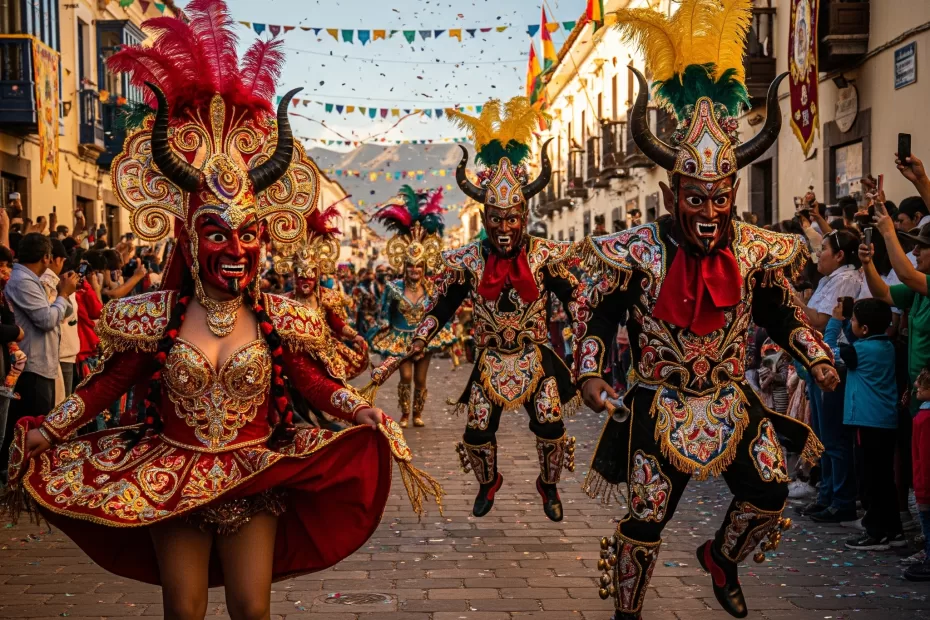
Capturing the Colors and Culture of Oruro Carnival
The Oruro Carnival in Bolivia is not just a festival; it’s a living, breathing canvas of color, sound, and fervent devotion, offering unparalleled photographic opportunities. Declared a Masterpiece of the Oral and Intangible Heritage of Humanity by UNESCO, this annual spectacle transcends mere entertainment, embodying centuries of cultural heritage and spiritual belief. For photographers, it’s an immersive experience, a chance to capture the very soul of a nation through its most vibrant celebration. From the intricate details of a dancer’s costume to the raw emotion etched on a participant’s face, every moment at Oruro is a potential masterpiece waiting to be framed. This guide will equip you with the insights and practical tips needed to navigate the whirlwind of the carnival and emerge with a stunning collection of images that truly tell its story.
Introduction to Oruro Carnival
Nestled high in the Bolivian Andes, Oruro transforms once a year into the epicenter of one of the world’s most spectacular cultural events. The Oruro Carnival is a pre-Lenten festival that seamlessly blends indigenous Andean traditions with Catholic rituals, creating a unique tapestry of faith, folklore, and festivity. Its roots trace back to pre-Columbian times, when Andean communities honored Pachamama (Mother Earth) and Supay (god of the Uru people’s underworld). With the arrival of the Spanish, these traditions merged with Christian beliefs, particularly the veneration of the Virgin of Socavon, the patron saint of miners.
What makes the Oruro Carnival truly unique for photography is its profound spiritual dimension, expressed through elaborate dance performances, stunning carnival costumes, and deeply symbolic rituals. Unlike many carnivals globally, which are primarily secular celebrations, Oruro’s festival is a pilgrimage, a fervent display of faith and tradition. Thousands of dancers and musicians, organized into dozens of fraternities, parade for days, performing intricate choreographies that tell ancient stories of good versus evil, the Spanish conquest, and the enduring spirit of the Andean people.
The sheer scale and intensity of the celebration present a photographer’s dream. The air crackles with energy, the streets pulsate with the rhythm of traditional music, and every corner offers a new visual feast. For those interested in Bolivia cultural events, this is the pinnacle, a chance to witness and document a living piece of history. The vibrant colors, the dramatic expressions, the dynamic movement of the dance, and the festive atmosphere create an endless array of photographic opportunities. Capturing the essence of this event goes beyond just documenting what you see; it’s about conveying the spirit, the devotion, and the unbridled joy that defines this extraordinary Bolivian spectacle. It’s an essential destination for anyone keen on Bolivia travel photography.
Best Photography Spots at the Carnival
Navigating the bustling streets of Oruro during carnival can be overwhelming, but knowing the prime photography spots can significantly elevate your Oruro Carnival photography. The main parade route, stretching several kilometers through the city, is undoubtedly the heart of the action. However, not all spots along this route are created equal.
One of the most sought-after locations is near the Sanctuary of the Virgin of Socavon. As the dancers approach the sanctuary, their devotion reaches its peak, often resulting in incredibly emotional and powerful performances. This area provides a fantastic backdrop, especially during the final stretch of the pilgrimage, where fatigue mixes with spiritual fervor. The light here can be challenging due to crowds and structures, but the authenticity of the moments is unparalleled.
Another excellent vantage point is along Avenida Cívica, a wide avenue that offers a good perspective of the larger dance groups and their formations. The stands here provide elevated views, allowing you to capture the sweeping scale of the parades and the intricate patterns formed by hundreds of dancers. Arrive early to secure a good spot, especially if you want an unobstructed view of the carnival costumes and synchronized movements. Many local photographers Oruro favor this area for its comprehensive views.
For more intimate shots and to capture the festive atmosphere away from the densest crowds, explore the side streets and plazas leading up to the main route. Areas around Plaza 10 de Febrero and the surrounding blocks often host smaller, spontaneous performances, and you can find dancers preparing or resting, offering candid portrait opportunities. These areas are also great for photographing parades from a different angle, capturing the excitement of spectators and the interactions between participants.
Consider seeking out elevated positions. If you can secure access to a balcony or a rooftop along the parade route, you’ll gain an incredible bird’s-eye view, perfect for wide-angle shots that convey the sheer magnitude of the Oruro festival highlights. These spots are often reserved or require prior arrangement, so inquire well in advance if this is your goal.
Finally, don’t overlook the “Despedida” (Farewell) ceremony, which often takes place on the Sunday after the main parade. While less formal, it offers a more relaxed environment to capture close-ups of costumes and individual expressions as dancers bid farewell to the carnival until next year. The light tends to be softer, and the crowds thinner, providing a different dynamic for your Oruro travel photography portfolio. Remember, flexibility and a willingness to explore will lead you to unexpected and rewarding photographic opportunities throughout Oruro.
Essential Photography Tips for Oruro Carnival
Photographing the Oruro Carnival is an exhilarating challenge that demands preparation, technical skill, and cultural sensitivity. To capture the vibrant colors and dynamic energy of this incredible event, here are some essential festival photography tips.
Equipment Recommendations:
-
Camera Body: A reliable DSLR or mirrorless camera with good low-light performance is crucial. The carnival often extends into the evening, and indoor shots might be necessary.
-
Lenses:
-
Versatile Zoom (e.g., 24-70mm f/2.8 or 70-200mm f/2.8): These are workhorses for capturing everything from wide street scenes to tight portraits of dancers. The wider aperture (f/2.8) is invaluable for low light and creating subject separation.
-
Wide-Angle (e.g., 16-35mm): Essential for capturing the scale of the parades, the bustling crowds, and the architectural context of Oruro tourist attractions.
-
Telephoto (e.g., 70-300mm or 100-400mm): Perfect for isolating dancers from a distance, especially if you’re in a crowded area or want to focus on intricate details of carnival costumes.
-
Prime Lens (e.g., 50mm f/1.4 or 85mm f/1.8): Excellent for low-light conditions and creating beautiful bokeh in portraits, allowing you to focus on the expressive faces of the participants.
-
-
Batteries: Bring at least 3-4 fully charged spare batteries. You’ll be shooting continuously for long hours.
-
Memory Cards: Multiple high-capacity, fast memory cards are a must. You don’t want to run out of space in the middle of a prime moment.
-
Camera Bag: A comfortable, secure, and easily accessible camera bag is vital. Consider one that offers some weather protection.
-
Lens Cleaning Kit: Dust and sweat are inevitable.
-
Small Backpack: For water, snacks, and extra layers of clothing.
-
Protective Gear: A rain cover for your camera, even if it’s just a plastic bag, is a good idea. The weather in Oruro can be unpredictable.
Camera Settings for Capturing Vibrant Colors and Motion:
-
Shutter Speed: For dance photography, you’ll often want to freeze motion. Start with a shutter speed of 1/500s or faster, especially for fast-paced dances like the Caporales or Diablada. If you want to convey a sense of motion blur in the background while keeping the subject relatively sharp, experiment with slower speeds like 1/125s or 1/60s, panning with the dancers.
-
Aperture: Use a wider aperture (f/2.8-f/5.6) to separate your subjects from the often-cluttered background, making the vibrant carnival costumes pop. In very bright conditions or for group shots, you might close down to f/8 or f/11 for greater depth of field.
-
ISO: Given the varying light conditions, you’ll be constantly adjusting your ISO. Aim to keep it as low as possible for image quality (e.g., ISO 100-400 in bright daylight). As light fades or you move indoors, don’t hesitate to increase it (ISO 800-3200 or even higher on modern cameras) to maintain a fast enough shutter speed. Better a slightly noisy sharp image than a clean blurry one.
-
White Balance: While auto white balance (AWB) works well in many situations, manually setting it to “Daylight” or “Cloudy” can help maintain consistent color temperature, especially important when capturing the true vibrancy of the costumes. You can fine-tune this in post-processing.
-
Shooting Mode: Aperture Priority (Av/A) or Shutter Priority (Tv/S) modes are excellent for festivals. Aperture Priority allows you to control depth of field while the camera selects the shutter speed. Shutter Priority ensures you have the speed needed for dance photography, with the camera adjusting the aperture. Many pros opt for Manual (M) mode for complete control once they get a feel for the light.
-
Metering Mode: Evaluative or Matrix metering usually works well, but be mindful of bright costumes against darker backgrounds or vice-versa, which might require exposure compensation.
-
Burst Mode: Use continuous high-speed shooting mode (burst mode) to capture sequences of dance moves, increasing your chances of getting that perfect, sharp moment.
General Tips:
-
Arrive Early: Secure your spot along the parade route hours before it starts.
-
Respectful Photography: Always ask for permission before taking close-up portraits, especially of children or elderly participants. A smile and a gesture often go a long way. Remember, this is a deeply spiritual event for many.
-
Stay Hydrated and Energized: Long days of standing and shooting require fuel.
-
Protect Your Gear: Dust, sweat, and spilled drinks are common. Keep your camera covered when not in use.
-
Blend In: Dress comfortably and not overtly like a tourist. The less you stand out, the more natural your shots will be.
-
Look Beyond the Parade: Explore the side streets, the markets, and the preparations for unique carnival photo ideas and a broader understanding of the local culture.
-
Anticipate: Dancers often follow patterns. Watch a group for a few minutes to anticipate their movements and capture peak action.
Mastering these photography tips for festivals will not only help you capture stunning images but also ensure a more enjoyable and productive experience documenting the spectacular Oruro Carnival.
Cultural Significance of the Carnival
To truly capture the essence of the Oruro Carnival through your lens, understanding its profound cultural significance is paramount. This isn’t just a party; it’s a vibrant expression of Bolivia’s rich cultural heritage, a syncretic blend of indigenous Andean cosmology and Catholic tradition. Every dance, every mask, every thread of a costume tells a story, making it a goldmine for vibrant cultural photography.
The carnival is fundamentally a tribute to the Virgin of Socavon, the patron saint of miners, and a plea for good fortune and protection. The culminating act of the main parade, the “entrada,” sees thousands of dancers making a pilgrimage to her sanctuary, often on their knees, as an act of penance and devotion. This spiritual journey infuses the entire event with a deep sense of reverence and emotion, which photographers should strive to convey.
The Dances:The heart of the Oruro Carnival lies in its diverse and energetic traditional dances, each with its own history and symbolism.
-
Diablada (Dance of the Devils): This is perhaps the most iconic dance, representing the eternal struggle between good and evil. Dancers wear elaborate, often terrifying, devil masks with bulging eyes and horns, intricate serpent details, and vibrant colors. The choreography depicts the Archangel Michael battling the seven deadly sins, personified by various devils. Capturing the dynamic movements, the dramatic expressions of the masks, and the sheer power of the collective performance is a key challenge for dance photography at Oruro.
-
Morenada: Characterized by its slow, heavy, and majestic rhythm, the Morenada represents the suffering of African slaves brought to the mines. Dancers wear heavy, often silver-studded, costumes with voluminous skirts and distinctive “Rey Moreno” masks, which often have exaggerated features to mimic the perceived appearance of African slaves (a controversial aspect, though historically rooted). The bells on their costumes symbolize the chains of slavery. The slow, deliberate steps offer opportunities for capturing intricate costume details and the solemnity beneath the festive facade.
-
Caporales: A more modern and highly energetic dance, the Caporales is characterized by its powerful leaps, intricate footwork, and vibrant, often sequined, costumes. It’s said to represent the overseers of the African slaves, though its modern interpretation is more about youthful exuberance and showmanship. This dance demands fast shutter speeds to freeze the dynamic action.
-
Tobas: Representing the indigenous groups from the Bolivian Amazon, the Tobas dance is characterized by its quick, agile movements, feathered headdresses, and body paint (or simulated body paint on costumes). It’s a visually striking performance that offers a contrast to the heavy costumes of the Diablada and Morenada.
-
Kullawada: A courtship dance, the Kullawada features dancers spinning large spindles, symbolizing the traditional textile weaving of the Andean region. Their elegant movements and colorful costumes, often with intricate embroidery, make for beautiful, flowing compositions.
Carnival Costumes and Masks:The costumes are masterpieces of artisanal craftsmanship, often taking months to create. They are not merely garments but sacred vestments, laden with symbolism.
-
Materials: Expect rich velvets, satins, sequins, beads, feathers, and often precious metals or intricate embroidery. The sheer weight and detail of some costumes, particularly the devil masks, are astonishing.
-
Symbolism: Every element, from the colors chosen to the animals depicted (condors, pumas, serpents, toads representing Andean deities), holds meaning. The elaborate headdresses, capes, and decorative elements are all part of a larger narrative.
-
Photographic Focus: When photographing carnival costumes, pay attention to the textures, the play of light on sequins, and the intricate details that reveal the artisan’s skill. Capture the movement of the capes and skirts as dancers twirl. For masks, focus on the expressions, the eyes (often the only visible part of the dancer), and how they convey character and emotion.
Understanding these cultural aspects allows you to move beyond superficial snapshots and capture images that resonate with the spirit and history of the Oruro Carnival, offering true insights into the local culture. It’s an immersion into a world where ancient beliefs dance alongside modern expressions, making it one of the most compelling Bolivia Carnival events to document.
Behind the Scenes: Preparing for the Carnival
While the main parade is the dazzling spectacle, some of the most compelling and intimate photographic opportunities lie in the preparations leading up to the Oruro Carnival. This “behind the scenes” peek offers a unique perspective, allowing photographers to differentiate their work and capture the dedication, artistry, and community spirit that fuels this colossal event. It’s a chance to delve deeper into the local culture and capture stories often missed by general tourists.
Costume Making: A Labor of Love and LegacyThe elaborate carnival costumes are not mass-produced; they are often the result of months of meticulous work by local artisans and seamstresses, many of whom have inherited their craft through generations. Visiting their workshops in the weeks and days before the carnival can be incredibly rewarding for Oruro Carnival photography.
-
The Artisans: Seek out workshops where masks are sculpted, painted, and adorned, or where intricate embroidery is hand-stitched onto velvets and satins. These are places where passion and tradition intertwine. You might find a master artisan meticulously applying sequins to a Diablada devil mask, or a family working together to assemble a towering feathered headdress.
-
Details and Process: Focus on the hands at work, the stacks of vibrant fabrics, the trays of beads and sequins, and the specialized tools. Capture the intense concentration, the weariness, and the pride in their eyes. These images tell a story of dedication and the preservation of cultural heritage.
-
Personal Stories: Engage with the artisans. They often have fascinating stories about their craft, their family’s involvement, and the significance of each costume element. Their narratives can add profound depth to your photographic series. Capturing the process of costume making offers a unique angle for vibrant cultural photography, highlighting the human element behind the spectacle.
Rehearsal Insights: The Dedication of the DancersThe precision and synchronization of the carnival’s dance fraternities are not accidental; they are the result of countless hours of rigorous rehearsals, often beginning months in advance. Attending these rehearsals offers a different kind of photographic opportunity.
-
Raw Emotion and Effort: Away from the public gaze, dancers are often more relaxed, yet intensely focused. You can capture their raw effort, the beads of sweat, the moments of exhaustion, and the camaraderie among group members. These are often more authentic and less posed expressions than those seen during the parade.
-
Learning the Choreography: Observe the intricate footwork, the subtle cues, and the corrections from the dance leaders. These sessions provide insights into the complexity of dance photography, allowing you to anticipate movements and frame your shots more effectively.
-
Costume Testing: Sometimes, dancers will wear parts of their carnival costumes during rehearsals, allowing you to see how the fabrics move and how the masks fit, giving you ideas for angles and lighting during the actual event.
-
Community Spirit: Rehearsals are also social events, fostering a strong sense of community. Capture the laughter, the shared meals, and the bonds that form, which are just as much a part of the Oruro festival highlights as the parade itself.
-
Logistics: Inquire locally about rehearsal schedules for different fraternities. Often, these take place in community halls, schools, or even open plazas in the evenings. Always ask permission before photographing, explaining your interest in documenting the preparation process.
By venturing behind the scenes, you gain a deeper appreciation for the immense effort, skill, and devotion that goes into creating the Oruro Carnival. These moments offer a unique narrative for your Bolivia travel photography, providing context and emotion that elevate your overall collection of images.
Interviews with Local Photographers
Gaining insights from those who know the Oruro Carnival best – the local photographers Oruro – can provide invaluable tips and perspectives for your own Oruro Carnival photography. They navigate the crowds, understand the light, and have a deep connection to the local culture. Here are some fictionalized but representative quotes and advice from experienced local lensmen and women:
Diego Mamani, a veteran photojournalist who has covered the Carnival for over 20 years, shares his wisdom:“My best advice for photographing parades is to anticipate. Don’t just point and shoot. Watch a dance group for a minute or two, understand their rhythm, and then predict the peak of their movement. The Diablada, for example, has these powerful, almost theatrical pauses. That’s when you get the dramatic shots of the masks. Also, don’t be afraid of the wide-angle lens, even in crowds. It helps you tell the story of the environment, not just the individual dancer. And always, always, have multiple memory cards and batteries. You will run out when you least expect it!”
Sofia Quispe, known for her vibrant cultural photography and intimate portraits, offers a different perspective:“For me, it’s about connection. I try to make eye contact with the dancers, especially those resting on the side streets. A smile, a nod, and sometimes a simple ‘permiso’ before raising my camera. The most powerful images come from capturing the emotion behind the carnival costumes – the fatigue, the devotion, the sheer joy. Early morning is fantastic for portraits before the main crowds, when the light is softer and the dancers are often preparing. Look for the details: the intricate embroidery, the worn boots, the hands that hold the traditional instruments. These tell a deeper story of our cultural heritage.”
Carlos Flores, a young photographer focused on the dynamic energy of the festival, emphasizes technical aspects:“Don’t underestimate the challenge of dance photography here. The light changes constantly, from harsh midday sun to the deep shadows of the evening parade. I mostly shoot in Shutter Priority, keeping my speed high – 1/500s or even 1/800s for the Caporales. But sometimes, I’ll drop it to 1/125s and pan with a dancer to get that beautiful motion blur in the background, making them pop. And don’t forget the sound! While you can’t photograph it, the music is integral. Try to imagine the rhythm as you shoot; it helps you find the beat of the action. Also, protect your gear! The confetti, the water, the drinks – it’s all part of the festive atmosphere but can be rough on your camera.”
Elena Rojas, an emerging artist specializing in the ‘behind the scenes’ aspect, provides unique insights:“The real magic of Oruro isn’t just on the parade route; it’s in the months leading up to it. I spend weeks visiting the artisans who make the masks and costumes. There’s such dedication, such history in their workshops. Capturing their hands at work, the piles of sequins, the intricate painting of a devil mask – these are the images that show the true soul of the carnival. And the rehearsals! Seeing the fraternities practice, the sweat, the camaraderie, the corrections – it gives you a whole new appreciation for the final performance. These moments offer incredible carnival photo ideas that many tourists miss, providing a unique narrative to your Bolivia travel photography.”
These perspectives highlight key themes: anticipation, connection, technical adaptability, and a deeper dive into the preparatory stages. Their collective advice underscores the importance of both technical proficiency and cultural understanding for truly impactful Oruro festival highlights photography.
Post-Processing Tips for Carnival Photos
Once the dust settles and the vibrant memories of the Oruro Carnival begin to fade, the real magic of photo editing begins. Post-processing is where you can truly enhance the colors, details, and overall impact of your carnival photos, bringing them to life in a way that truly reflects the festive atmosphere. Here are some specific tips tailored for festival photography.
1. Embrace and Enhance Color:The Oruro Carnival is an explosion of color, and your editing should reflect this.
-
Saturation and Vibrance: Start by subtly boosting the Vibrance slider to make colors pop without looking artificial. Vibrance primarily affects less saturated colors, giving them a lift. Then, a slight increase in Saturation can add depth, but be careful not to overdo it, as this can make skin tones look unnatural and lead to color banding.
-
Targeted Color Adjustments (HSL/Color Mixer): Use the HSL (Hue, Saturation, Luminance) or Color Mixer panel in your editing software (Lightroom, Photoshop, Capture One) to fine-tune specific colors. For example, you might want to increase the saturation of the reds and blues prominent in many carnival costumes, or adjust the hue of greens to make them more vibrant. Be mindful of skin tones; avoid over-saturating yellows and oranges, which can make people look jaundiced.
-
Split Toning/Color Grading: Experiment with split toning to add complementary colors to your highlights and shadows, further enhancing the festive atmosphere. For example, adding warm tones (yellows/oranges) to highlights and cool tones (blues/cyans) to shadows can create a dynamic, cinematic look.
2. Optimize Exposure and Contrast:Festival environments often present challenging lighting conditions, from harsh midday sun to deep shadows.
-
Exposure: Correct any underexposed or overexposed areas. Use the Highlights and Shadows sliders to recover detail in bright skies or dark costumes. The Whites and Blacks sliders can help set your overall dynamic range.
-
Contrast: A moderate increase in contrast can add punch and depth to your images, making the details of carnival costumes and masks stand out. However, too much contrast can crush shadows or blow out highlights, so find a balance. The Dehaze slider can also be effective in cutting through any atmospheric haze and boosting clarity.
3. Sharpening and Noise Reduction:High ISO settings are often necessary for dance photography, especially in lower light, which can introduce noise.
-
Noise Reduction: Apply noise reduction carefully. Start with Luminance noise reduction to smooth out graininess, but avoid overdoing it, as it can soften details. Color noise reduction is usually safe to apply more aggressively.
-
Sharpening: After noise reduction, apply sharpening to bring back detail. Use a mask (holding Alt/Option while dragging the masking slider in Lightroom) to apply sharpening only to the edges and details, preventing noise from being sharpened in smoother areas. This is crucial for making intricate costume details stand out.
4. Cropping and Composition:Refine your composition to draw the viewer’s eye to the most important elements.
-
Rule of Thirds/Golden Ratio: Use these classic compositional guidelines to place your subjects effectively.
-
Eliminate Distractions: Crop out distracting elements from the edges of your frame, such as stray hands, half-people, or cluttered backgrounds. Sometimes, a tight crop on a dancer’s face or an intricate part of their costume can be more impactful than a wider shot.
-
Straighten Horizons: Ensure your horizons are level, especially in wide shots of the parade.
5. Local Adjustments for Impact:
-
Radial Filters/Graduated Filters: Use these tools to selectively brighten or darken areas, or to add local contrast. For example, a radial filter can be used to lighten a dancer’s face, making them stand out from the background.
-
Adjustment Brushes: Fine-tune specific areas. You can use a brush to selectively increase clarity on a mask, sharpen a dancer’s eyes, or subtly dodge (lighten) or burn (darken) certain parts of a costume to enhance its three-dimensionality.
6. Consider Black and White for Emotion:While Oruro is synonymous with color, don’t shy away from converting some images to black and white. This can strip away distractions and emphasize emotion, texture, and form, particularly for powerful portraits or dramatic scenes of devotion. Use the individual color sliders in the Black & White panel to control how different colors convert to shades of grey.
By thoughtfully applying these photo editing techniques, you can transform your raw captures into captivating images that truly convey the energy, beauty, and cultural depth of the Oruro Carnival, enriching your Bolivia travel photography portfolio.
Conclusion and Final Thoughts
The Oruro Carnival is an experience unlike any other, a breathtaking display of cultural heritage, spiritual devotion, and unbridled joy. For photographers, it represents a unique and challenging opportunity to capture the very essence of Bolivia’s soul. From the thunderous rhythms of the Diablada to the intricate artistry of the carnival costumes, every moment offers a story waiting to be told through your lens.
We’ve journeyed through the vibrant streets of Oruro, exploring the best photography spots, equipping you with essential photography tips for festivals, and delving into the profound cultural significance of each dance and mask. We’ve peeked behind the scenes, witnessing the dedication of artisans and dancers, and gathered insights from local photographers Oruro who have mastered the art of photographing parades. Finally, we’ve discussed how to enhance your captures with post-processing tips, ensuring your images truly reflect the festive atmosphere and vibrant colors of the event.
Remember, successful Oruro Carnival photography goes beyond technical skill; it requires an open heart, cultural sensitivity, and a willingness to immerse yourself in the local culture. Be respectful, be patient, and allow yourself to be swept away by the energy. The Oruro festival highlights are not just about what you see, but what you feel.
So, pack your gear, charge your batteries, and prepare for an unforgettable adventure. Whether you’re a seasoned professional or an enthusiastic amateur, the photographic opportunities at Oruro Carnival are boundless. Go, experience, and photograph this magnificent celebration, and bring home not just images, but a piece of Bolivia’s enduring spirit. Your Bolivia travel photography journey will be forever enriched by the vivid memories and stunning photographs you’ll capture at this extraordinary cultural event.
Juzcasino is a decent spot if you’re looking for some casual slots. Selection is pretty good, and I haven’t had any issues with withdrawals so far. Not the flashiest site, but gets the job done. See for yourself: juzcasino
[7223]PH2: The Best Online Casino in the Philippines for Legit Slots and Seamless GCash Gaming Experience the ultimate gaming thrill at **ph2 online casino**, recognized as the **best online casino Philippines**. Offering a secure **ph2 login**, our platform features a massive selection of **legit online slots Philippines** and a wide variety of live dealer games. Enjoy the convenience of **GCash online gambling PH** for seamless, instant deposits and fast withdrawals. Join PH2 today—the most trusted destination for secure, fair, and high-paying casino action in the country! visit: ph2