
Political Influence in the Oruro Carnival
The Oruro Carnival, a vibrant explosion of color, music, and dance nestled high in the Bolivian Andes, is far more than just a pre-Lenten celebration. Recognized by UNESCO as a Masterpiece of the Oral and Intangible Heritage of Humanity, it stands as a profound testament to Bolivia’s rich cultural tapestry, a unique blend of indigenous traditions and colonial influences. Yet, beneath the dazzling costumes and rhythmic beats, a complex interplay of forces shapes this grand spectacle, with political influence often playing a significant, albeit sometimes subtle, role. Understanding the Oruro Carnival means delving into its history, its cultural heart, and the political currents that navigate its grand procession, revealing how power dynamics can both preserve and transform cultural heritage.
Introduction to Oruro Carnival
At its core, the Oruro Carnival is Bolivia’s most important folkloric and cultural event, drawing hundreds of thousands of spectators and participants each year to the mining city of Oruro. This Bolivian Carnival is a dazzling display of artistic expression, a spiritual journey, and a powerful affirmation of cultural identity. The festival is dedicated to the Virgen del Socavón (Virgin of the Mineshaft), the patron saint of miners, and it masterfully intertwines Catholic rituals with ancient Andean cosmovision. For days, the streets of Oruro transform into a living stage, showcasing an incredible array of Oruro traditions, from the intricate artistry of the costumes to the energetic precision of the various dance groups.
The carnival’s significance extends beyond mere entertainment. It serves as a vital platform for cultural expression Bolivia, allowing communities to reaffirm their unique heritage and share it with the world. The elaborate parades, known as entradas, feature thousands of dancers and musicians performing more than 50 distinct folk dances, each telling a story rooted in history, myth, or social commentary. This convergence of faith, folklore, and community spirit makes the Oruro Festival a cornerstone of Bolivian identity, deeply embedded in the national consciousness. It’s a period where the sacred and the profane dance hand-in-hand, where ancient spirits meet Christian saints, and where the past constantly informs the present. The Oruro Carnival events are not just performances; they are living traditions, passed down through generations, ensuring the continuity of Bolivian heritage. The sheer scale and complexity of the carnival demand meticulous organization, involving various stakeholders from local communities to national authorities, inevitably bringing the dimension of politics and culture into sharp focus.
Historical Background
The origins of the Oruro Carnival are deeply rooted in pre-Columbian Andean traditions, long before the Spanish conquest. Indigenous cultures in the region celebrated Pachamama (Mother Earth) and Supay (the god of the Uru people and lord of the underworld, often conflated with the devil by colonizers) through elaborate rituals and ceremonies, particularly around the time of the agricultural cycle. These ancient rites were designed to honor deities, ensure bountiful harvests, and appease the spirits of the mountains and mines. The Uru people, one of the oldest ethnic groups in the Andes, had a rich spiritual world that formed the bedrock of what would eventually become the Oruro Carnival.
With the arrival of the Spanish in the 16th century and the subsequent imposition of Catholicism, these indigenous practices did not simply disappear. Instead, they underwent a process of syncretism, blending with Christian beliefs and festivities. The Spanish colonizers, finding it difficult to eradicate deeply ingrained indigenous culture, often allowed local customs to persist but recontextualized them within a Catholic framework. Thus, figures like Supay were demonized and transformed into the Devil in Christian narratives, while Pachamama became associated with the Virgin Mary. The carnival history began to take shape as indigenous rituals, such as the Anata or Phujllay, which celebrated fertility and harvest, were gradually absorbed into the Christian calendar, specifically around the period of Lent.
The mining boom in Oruro, particularly during the colonial era, further cemented the carnival’s development. Miners, facing perilous conditions and constant danger, sought protection and solace in both indigenous deities and Christian saints. The cult of the Virgen del Socavón emerged from this context, becoming a powerful symbol for the miners. Legends tell of a miner saved by the Virgin, solidifying her place as the carnival’s spiritual core. The dances and music that characterize the Oruro Carnival today began to evolve from these early expressions, incorporating elements from Spanish military marches, African rhythms brought by enslaved people, and indigenous instruments and steps.
Over centuries, the carnival transformed from a localized religious observance into a massive folk festival. The 18th and 19th centuries saw the formalization of many dance groups and the development of the distinct costume styles that are now iconic. The 20th century brought increased recognition, culminating in its UNESCO designation in 2001, which not only highlighted its cultural heritage but also brought it to international attention. This historical evolution underscores how the Oruro Carnival is a living, breathing archive of Bolivian history, a profound reflection of its complex past, and a dynamic expression of its enduring cultural identity, constantly adapting while retaining its deep roots in indigenous culture and belief systems.
Political Context of the Carnival
The Oruro Carnival, despite its spiritual and cultural façade, is undeniably a significant arena for political influence. From national government policies to local municipal decisions, various political forces shape its organization, funding, and even its symbolic meaning. The festival’s massive scale and international prestige make it a valuable asset, and consequently, a site of interest for political actors seeking to leverage its popularity for various ends. The presence of government involvement is palpable, impacting everything from infrastructure to security, and often reflecting broader political agendas concerning cultural promotion and national identity.
Local politics plays a crucial role in the day-to-day management and logistical execution of the Oruro Festival. The municipal government of Oruro, along with various local committees and associations, bears the primary responsibility for coordinating the countless elements that make up the carnival. This includes route planning, vendor permits, public safety, sanitation, and the delicate balance of interests among different dance groups, musicians, and local businesses. These decisions are rarely apolitical; they often reflect the priorities of the ruling local administration, their relationships with community leaders, and their vision for the carnival’s future. For instance, the allocation of resources or the enforcement of regulations can become contentious issues, highlighting the inherent Oruro Carnival politics at play.
Beyond the local level, the national government also exerts considerable political influence. The carnival is a major driver of tourism and national pride, making it a strategic asset for any administration. Presidents and high-ranking officials frequently attend the opening ceremonies, using the platform to deliver speeches, promote national unity, or showcase their commitment to cultural preservation. The narrative surrounding the carnival, particularly its indigenous roots and its status as a UNESCO heritage site, often aligns with political discourses on multiculturalism and the revaluation of indigenous cultures, especially prominent in Bolivia’s recent history. This intersection of politics and culture transforms the carnival into a space where national identity is not just celebrated but actively constructed and reinforced.
The sheer economic impact of the carnival also draws political attention. It generates substantial revenue for the city and the country through tourism, hospitality, and local commerce. This economic potential means that politicians are keen to ensure its success, often leading to debates over funding, infrastructure improvements, and promotional strategies. The politics of the festive season can also involve conflicts over commercialization versus cultural preservation, where political decisions can lean towards one side or the other, depending on the prevailing ideological climate or the lobbying power of various interest groups. Ultimately, the Oruro Carnival is a testament to how deeply cultural events are interwoven with the fabric of governance and power, making “festive politics” an inescapable aspect of this grand Bolivian tradition.
Government Support and Regulation
Government support and regulation are integral to the continued existence and success of the Oruro Carnival. Given its scale and complexity, the carnival simply could not function without significant backing from both municipal and national authorities. This support manifests in various forms, from direct financial aid to logistical coordination and legal frameworks designed to protect its integrity.
Financially, the government plays a crucial role in subsidizing aspects of the carnival. While dance groups and private sponsors bear much of the cost for costumes, music, and travel, public funds are often allocated for infrastructure improvements, security personnel, healthcare services, and promotional campaigns. These funds are vital for maintaining the high standards expected of a UNESCO-recognized event and for ensuring the safety and comfort of both participants and the massive influx of tourists. Debates over the allocation of these funds can be politically charged, with various stakeholders — dance associations, local businesses, and community groups — vying for a share, thereby highlighting the sensitive nature of government and festivals.
Regulation is another critical area where government influence is evident. The Oruro municipal government, in conjunction with the Association of Folkloric Dancers of Oruro (ACFO), establishes rules and guidelines for the carnival. These regulations cover everything from the order of dance groups in the procession, the duration of performances, sound levels, and the sale of food and beverages. Such rules are essential for maintaining order and tradition, but they also represent a form of control, reflecting the authorities’ vision for the carnival. For instance, regulations might be introduced to limit commercial advertising on costumes or to ensure the authenticity of traditional dances, aiming to balance modernization with the preservation of Oruro cultural practices.
Furthermore, the government is often involved in the international promotion of the Oruro Carnival. Through ministries of culture and tourism, official campaigns are launched to attract visitors from around the globe, positioning the carnival as a key element of Bolivia’s cultural offerings. This involves diplomatic efforts, participation in international tourism fairs, and partnerships with travel agencies. The UNESCO designation itself, while a recognition of its intrinsic value, also comes with responsibilities that require government oversight and commitment, such as reporting on conservation efforts and ensuring the sustainable development of the festival.
Beyond direct support, the government also exercises its influence through policy decisions that affect the broader cultural landscape. Laws related to intellectual property, cultural heritage protection, and indigenous rights can all have an impact on how the carnival evolves. For example, policies that promote indigenous representation Oruro or protect traditional artistic expressions can directly strengthen the carnival’s core identity. Conversely, a lack of supportive policies could lead to the erosion of traditions or increased commercialization. Thus, the government’s hand, whether through funding, regulation, or broader cultural policy, is a pervasive force in shaping the Oruro Carnival’s present and future, making the “Political influence Oruro Carnival” a dynamic and ever-present reality.
Cultural Significance
The Oruro Carnival is more than just a grand spectacle; it is a profound embodiment of Bolivian identity and a vibrant canvas for cultural expression Bolivia. Its immense cultural significance lies in its ability to synthesize diverse historical and spiritual elements into a cohesive, living tradition that resonates deeply with the nation’s soul. For many Bolivians, the carnival is a powerful affirmation of who they are, a reflection of their complex heritage, and a celebration of resilience.
At its heart, the carnival is a spectacular demonstration of syncretism, where indigenous Andean beliefs harmoniously coexist with Catholic traditions. The veneration of the Virgen del Socavón, for instance, is inextricably linked to the ancient worship of Pachamama and the Tío Supay (Uncle Devil), the lord of the underworld and guardian of the mines. This spiritual duality is not seen as contradictory but as complementary, reflecting a uniquely Bolivian worldview where ancestral spirits and Christian saints share a sacred space. This intricate blend is what gives the Oruro Festival its unique spiritual depth and makes it a focal point for understanding Bolivian identity.
The dances, music, and costumes of the carnival are encyclopedic in their cultural references. Each of the dozens of dance styles tells a story, commemorates a historical event, or embodies a particular social commentary. They are living narratives that transmit history, myths, and values from one generation to the next. The Morenada, for example, while visually stunning, carries a poignant historical weight, representing the suffering of African slaves brought to the mines. The Diablada, with its elaborate devil costumes, is a powerful allegorical dance depicting the struggle between good and evil, deeply rooted in indigenous cosmology. These performances are not merely entertainment; they are acts of remembrance, resistance, and cultural pride, making the Oruro cultural significance immeasurable.
Furthermore, the carnival serves as a critical mechanism for cultural cohesion and continuity. It brings together people from all walks of life – urban dwellers and rural communities, indigenous groups and mestizos, young and old – in a shared experience. Participation in a dance group (a fraternidad) is often a lifelong commitment, fostering strong community bonds and a sense of collective identity. Through rehearsals, costume making, and shared rituals, participants deepen their understanding of Bolivian heritage and pass on Oruro cultural practices to younger generations. The sheer scale of participation, involving tens of thousands of dancers and musicians, underscores its role as a collective endeavor that reinforces national unity through shared cultural expression.
The carnival also acts as a dynamic space for the reappropriation and revaluation of indigenous traditions. In a country that has historically grappled with issues of racial discrimination and the marginalization of indigenous peoples, the Oruro Carnival offers a platform where indigenous culture is not only celebrated but takes center stage, asserting its rightful place in the national narrative. This aspect of the carnival is particularly significant in contemporary Bolivia, where there is a growing movement to recognize and empower indigenous communities. Thus, the Oruro Carnival significance extends far beyond its festive surface, serving as a powerful symbol of national unity, spiritual syncretism, and the enduring strength of Bolivian heritage.
Indigenous Representation
Indigenous representation is a cornerstone of the Oruro Carnival, deeply embedded in its history, symbolism, and performances. The festival is a powerful testament to the resilience and vibrancy of indigenous cultures in Bolivia, showcasing their traditions, beliefs, and artistic expressions on a grand international stage. This representation is not merely decorative; it is fundamental to the carnival’s identity and its role in reflecting Bolivian heritage.
From its pre-Columbian origins, the carnival has been a space for indigenous spiritual practices, particularly those of the Uru and Aymara peoples. While colonial influences introduced Catholicism, the core elements of reverence for Pachamama (Mother Earth), Tío Supay (the guardian of the mines), and ancestral spirits persist. These beliefs are visibly woven into the fabric of the carnival, from the rituals performed before the main procession to the iconography on costumes and the narratives embedded in the dances. The figure of the Diablo (Devil) in the iconic Diablada dance, for instance, is often interpreted as a syncretic representation of Supay, acknowledging the indigenous lord of the underworld rather than solely the Christian devil. This indigenous representation Oruro ensures that ancient worldviews remain central to the festival.
Many of the traditional dances themselves are direct expressions of indigenous culture and history. The Kullawada depicts the ancient textile weavers, honoring their craft and social structures. The Tobas dance commemorates the indigenous people from the Bolivian lowlands, their warrior spirit, and their connection to nature. The Chacarera and Potolos also reflect rural indigenous life and agricultural practices. Even dances with more mestizo origins, like the Caporales, draw heavily on indigenous aesthetics and themes, such as the imagery of the caporal (foreman) and the tundiqui (a dance with Afro-Bolivian roots that also has indigenous adaptations). The music, too, features traditional Andean instruments like the zampoña (panpipes) and quena (flute), underscoring the indigenous soundscape of the carnival.
The thousands of carnival participants, many of whom come from indigenous communities or have strong indigenous roots, are the living carriers of these traditions. Their dedication to learning and performing the dances, crafting the intricate costumes, and preserving the music ensures that indigenous cultural practices are kept alive and passed down through generations. The fraternidades (dance groups) often serve as community hubs where these traditions are taught and celebrated, reinforcing a sense of collective identity and pride in Bolivian heritage.
In contemporary Bolivia, with a significant indigenous population and a government that has championed indigenous rights and cultural recognition, the Oruro Carnival serves as a powerful symbol of national identity. It demonstrates how indigenous cultures are not peripheral but are foundational to the nation’s character. The carnival provides a vital platform for indigenous voices and artistic expressions, challenging historical marginalization and asserting the richness and diversity of Bolivia’s cultural landscape. This robust indigenous representation is a key factor in the Oruro Carnival’s enduring significance and its status as a global cultural treasure.
Key Traditions and Practices
The Oruro Carnival is a meticulously choreographed spectacle, built upon a foundation of key traditions and practices that have evolved over centuries. These elements combine to create a deeply spiritual, culturally rich, and visually breathtaking experience. The entire Oruro Festival overview reveals a carefully structured series of events, each imbued with specific meaning and ritual.
The carnival officially begins with a series of preliminary events in the weeks leading up to the main procession. These include convites (invitations), which are preview parades and rehearsals where dance groups showcase their progress and invite the public to witness their dedication. These early events are crucial for building excitement and for the fraternidades to present their new costumes and choreography. There are also smaller, localized celebrations, blessing ceremonies, and masses dedicated to the Virgen del Socavón, reinforcing the spiritual dimension of the carnival traditions.
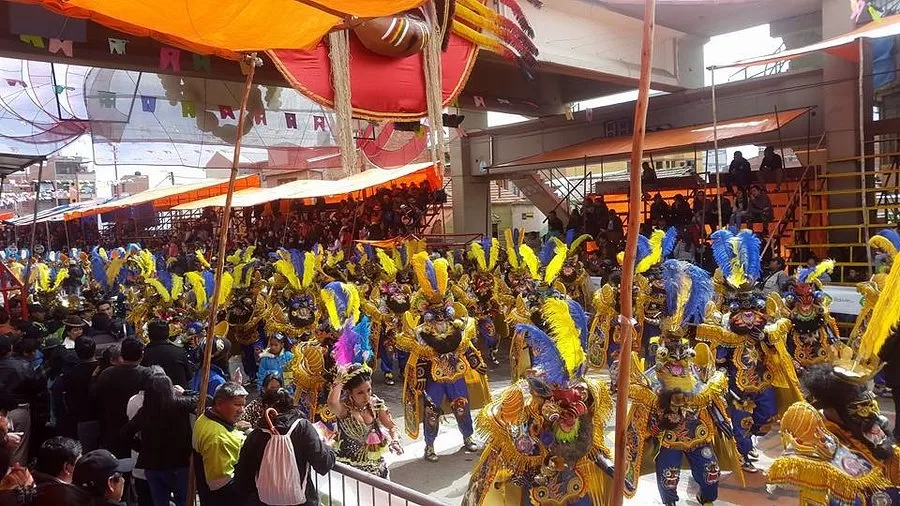
The most significant event is the Gran Peregrinación (Great Pilgrimage) or Entrada, which takes place on the Saturday before Ash Wednesday. This is the main procession, a continuous stream of thousands of dancers and musicians, stretching for kilometers through the streets of Oruro. The journey culminates at the Sanctuary of the Virgen del Socavón, where dancers, often on their knees for the final stretch, offer their devotion and gratitude. This pilgrimage is not just a performance; it is an act of faith and penance, a spiritual offering to the patron saint. The commitment of the carnival participants is immense, often involving years of practice and significant personal expense.
Throughout the carnival, music is a constant, pulsating presence. Each dance group has its own accompanying band, playing traditional instruments like bombos (bass drums), trompetas (trumpets), trombones, and sometimes Andean flutes. The rhythms are infectious and varied, driving the energy of the dancers and captivating the audience. The meticulous craftsmanship of the costumes is another central practice. These are not mere outfits; they are works of art, often taking months to create, adorned with intricate embroidery, sequins, beads, and mirrors. Each costume is symbolic, reflecting the character of the dance, its historical context, or its spiritual meaning.
Beyond the main procession, the carnival includes other significant practices. On Sunday, the Entrada de la Alba (Dawn Entrance) features more informal dancing and celebrations, often continuing late into the night. Monday is dedicated to the Día del Diablo y del Moreno (Day of the Devil and the Moreno), focusing on these two iconic dances and their characters. The final days see more localized celebrations, including ch’allas (blessings of property with offerings to Pachamama) and water fights, signaling a more playful, secular conclusion to the intense spiritual and artistic efforts of the preceding days. These diverse practices underscore the multifaceted nature of the Oruro Carnival, blending sacred devotion with boisterous festivity, all rooted in deeply cherished Bolivian cultural practices.
Traditional Dances
The Oruro Carnival is renowned for its incredible diversity of traditional dances, each a living narrative that contributes to the rich tapestry of Bolivian heritage. There are over 50 distinct dance styles performed, but some stand out for their historical significance, elaborate costumes, and widespread popularity. These carnival dances are not just choreographed movements; they are powerful forms of cultural expression, embodying historical memory, social commentary, and spiritual devotion.
One of the most iconic and visually striking dances is the Diablada, or “Dance of the Devils.” This ancient dance is central to the Oruro Carnival significance, as it allegorically depicts the battle between good and evil, with the Archangel Michael leading a legion of devils in a dramatic struggle. The costumes are spectacular, featuring elaborate masks with bulging eyes, sharp teeth, and horns, often adorned with serpents, lizards, and other symbolic creatures. The devils’ dance steps are vigorous and theatrical, performed to a driving brass band. The Diablada is deeply rooted in the mining culture of Oruro, where the Tío Supay (Uncle Devil) is revered as the guardian of the underworld and its mineral riches. It’s a powerful representation of the syncretism between indigenous beliefs and Catholic teachings.
Another immensely popular dance is the Morenada, or “Dance of the Black Slaves.” This dance is characterized by its heavy, rhythmic steps, which are said to mimic the arduous journey and suffering of African slaves brought to work in the Bolivian mines during the colonial era. The dancers wear elaborate, heavy costumes, often weighing over 30 pounds, adorned with sequins, beads, and intricate embroidery. Their masks, known as matracas, typically feature exaggerated facial features and often have a tongue sticking out, symbolizing thirst and exhaustion. The distinctive sound of the matracas (a type of noisemaker) provides a unique rhythmic accompaniment. The Morenada is a poignant historical commentary, highlighting a dark chapter of Bolivian history while celebrating the resilience of the human spirit.
The Caporales is a relatively newer dance, emerging in the 1970s, but it has rapidly become one of the most dynamic and widespread dances in the Oruro Carnival and throughout Bolivia. It is a vibrant, energetic dance said to represent the caporal (foreman), a figure of authority who oversaw indigenous and African laborers during colonial times. The male dancers wear elaborate, often sequined, costumes with high boots and carry a whip or staff, while female dancers wear short skirts, embroidered blouses, and high heels. The movements are athletic and synchronized, performed to a fast-paced, catchy rhythm. Caporales is a dance of power, grace, and youthful energy, symbolizing cultural fusion and pride.
Other significant dances include the Kullawada, which portrays the ancient textile weavers; the Llamerada, depicting llama herders and their connection to the Andean landscape; the Tobas, an energetic dance representing the indigenous people of the Bolivian lowlands; and the Waka Waka, a humorous representation of bullfighting. Each of these dances, along with many others, contributes to the overall narrative of Bolivian festivities, offering a glimpse into the nation’s diverse regional cultures, historical experiences, and spiritual beliefs. The dedication of the carnival participants in preserving and performing these dances ensures that the living heritage of Oruro continues to thrive.
Visitor Experience
Attending the Oruro Carnival is an unforgettable, immersive experience that plunges visitors into the heart of Bolivian culture and traditions. It’s an overwhelming sensory feast of sights, sounds, and emotions that truly captures the spirit of Bolivian identity. For those planning to witness this spectacular event, understanding what to expect and how to best prepare can significantly enhance their carnival experiences.
The city of Oruro itself transforms during the carnival. Streets are adorned with decorations, vendors line every available space selling food, drinks, and souvenirs, and the air crackles with anticipation. Accommodation can be challenging to secure, with hotels and guesthouses booking up months in advance, often at inflated prices. Many visitors opt to stay in nearby cities like Cochabamba or La Paz and travel to Oruro for the main events, though this requires early morning departures.
The main attraction is the Gran Peregrinación on Saturday, an all-day event that can last from early morning until well past midnight. Spectators typically secure seats in grandstands (graderías) along the parade route. These tickets, especially for prime locations, are highly sought after and should be purchased well in advance, often through local tour operators or reputable online platforms. Standing room is available in some areas, but views can be obstructed, and it requires enduring long hours on your feet amidst dense crowds.
Beyond the main parade, the atmosphere in Oruro remains festive for days. Sunday and Monday feature more informal dancing, street parties, and spontaneous celebrations. This is often when locals engage in Ch’alla rituals – blessings of homes, businesses, and vehicles with offerings to Pachamama – and lively water and foam fights, particularly popular among younger revelers. These less structured events offer a different, more intimate glimpse into the local Oruro traditions and festive spirit.
For those interested in the deeper cultural aspects, visiting the Santuario de la Virgen del Socavón is a must. It’s the spiritual heart of the carnival, and during the festival, it’s a site of profound devotion and pilgrimage. The Museo Nacional Antropológico Eduardo López Rivas and the Museo del Socavón (a mining museum) also offer valuable insights into the history, indigenous culture, and significance of the region and its carnival. Engaging with locals, trying traditional Bolivian cuisine, and simply soaking in the vibrant energy are all part of the unique Oruro Carnival events. This incredible display of cultural heritage and festive politics provides a truly unparalleled opportunity for cultural immersion.
Best Practices for Attending
To ensure a safe, enjoyable, and culturally respectful experience at the Oruro Carnival, visitors should keep several best practices in mind. The carnival is an intense and crowded event, and preparation is key to navigating it successfully.
1. Book in Advance: This is perhaps the most crucial tip for carnival tourism. Secure your accommodation, grandstand tickets, and any necessary transportation (bus or private car services) months ahead of time, especially if you plan to attend the main Saturday procession. Oruro’s infrastructure is stretched to its limits during this period.
2. Arrive Early: On the day of the Gran Peregrinación, get to your grandstand seats as early as possible. The streets fill up quickly, and navigating through the crowds can be challenging. Many people arrive before dawn to claim their spots.
3. Dress Appropriately and Comfortably: Wear light, comfortable clothing during the day, as temperatures can be warm, but bring layers for the evenings, which can get chilly at Oruro’s high altitude. Comfortable walking shoes are essential. Consider wearing older clothes, especially if you plan to participate in the water and foam fights on Sunday and Monday.
4. Stay Hydrated and Eat Well: Carry bottled water, as the long hours and high altitude can lead to dehydration. Sample local street food, but choose vendors with visible hygiene practices.
5. Protect Yourself from the Sun: Oruro is at a high altitude (over 3,700 meters or 12,000 feet), meaning the sun’s rays are intense. Use high-SPF sunscreen, wear a wide-brimmed hat, and sunglasses.
6. Be Mindful of Altitude Sickness: If you’re not accustomed to high altitudes, arrive in Bolivia a few days early to acclimatize in a city like La Paz or Cochabamba before heading to Oruro. Drink plenty of water, avoid alcohol and heavy meals initially, and take it easy. Coca leaf tea (mate de coca) is a traditional remedy that many find helpful.
7. Safeguard Your Belongings: Crowded events are unfortunately attractive to pickpockets. Keep your valuables secure and out of sight. Consider using a money belt or a secure cross-body bag. Avoid displaying expensive jewelry or electronics unnecessarily.
8. Respect Local Customs and Traditions: Remember that the carnival is a deeply spiritual and cultural event for Bolivians. Be respectful of the dancers, musicians, and religious ceremonies. Ask permission before taking close-up photos of individuals, especially during private rituals. Avoid making disparaging remarks about the costumes or performances.
9. Be Prepared for Water and Foam Fights: Especially on Sunday and Monday, be aware that locals and visitors alike engage in playful water balloon and foam spray fights. If you don’t want to get wet, it’s best to observe from a distance or carry a poncho. Embrace it as part of the fun, but always ensure it’s playful and consensual.
10. Stay Informed: Pay attention to local news and official announcements regarding schedules, security, and any changes to the carnival events. Understanding the local context and being prepared will allow you to fully immerse yourself in the vibrant energy and profound cultural significance of the Oruro Carnival, making for truly memorable carnival experiences.
Conclusion
The Oruro Carnival stands as a magnificent testament to Bolivia’s rich and complex identity, a living tapestry woven from threads of indigenous tradition, colonial history, and contemporary national pride. Far from being a mere spectacle, it is a profound cultural expression Bolivia, a spiritual pilgrimage, and a vibrant assertion of Bolivian identity on the global stage. Its UNESCO recognition underscores its unique Oruro cultural significance, drawing attention to its intricate blend of Andean cosmovision and Catholic faith, vividly portrayed through its mesmerizing dances and elaborate costumes.
The political influence Oruro Carnival experiences is undeniable and multifaceted. From the direct government involvement in funding, regulation, and international promotion to the intricate dynamics of local politics shaping its logistical execution, the carnival is deeply intertwined with governance. Political figures leverage its popularity, and policies concerning cultural heritage and indigenous representation directly impact its evolution. This “festive politics” ensures that the carnival is not just a celebration but also a platform where national identity is negotiated and reinforced, reflecting the ongoing dialogue between power and culture in Bolivia.
Crucially, the Oruro Carnival serves as a powerful conduit for indigenous representation Oruro, showcasing the resilience and vitality of ancestral cultures that form the bedrock of Bolivian heritage. The traditional dances, from the iconic Diablada to the poignant Morenada, are not just performances but living historical documents, transmitting stories, beliefs, and social commentaries through generations of carnival participants. These Oruro traditions, nurtured by dedicated communities and dance groups, ensure the continuity of unique Oruro cultural practices.
For visitors, the Oruro Carnival offers an unparalleled opportunity for cultural immersion, a chance to witness the transformative power of a festival that seamlessly blends the sacred with the celebratory. It’s an experience that transcends mere tourism, inviting participants to engage with the very soul of Bolivia. In contemporary Bolivia, the Oruro Carnival significance continues to grow, serving as a dynamic symbol of national unity, artistic brilliance, and the enduring spirit of a people proud of their diverse heritage, skillfully navigating the intricate dance between politics and culture.
I’ve been using vin68bet for a while now, and I’ve gotta say, I’m pretty happy with it. Good odds and a decent selection of bets. Just my two cents. vin68bet