
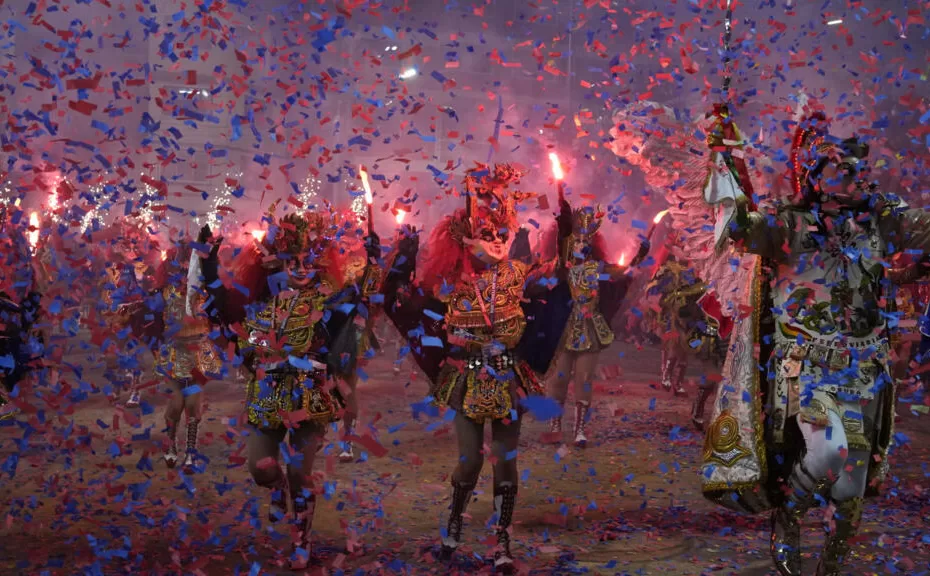
Oruro Carnival in the Media: A Colorful Celebration
The air in Oruro, Bolivia, crackles with an energy unlike anywhere else when its annual carnival bursts into life. More than just a party, the Oruro Carnival is a profound cultural celebration, recognized by UNESCO as a Masterpiece of the Oral and Intangible Heritage of Humanity. This vibrant spectacle, a breathtaking fusion of indigenous Andean traditions and Catholic rituals, draws millions of eyes annually, both locally and from across the globe. But how does this rich tapestry of dance, music, and devotion translate through the lens of national and international media? The way the Oruro Carnival in the media is presented shapes global perceptions, influences tourism, and plays a crucial role in its ongoing preservation and evolution.
From the thunderous drums of the Diablada to the intricate embroidery of the Caporales costumes, the carnival offers a visual and auditory feast that media outlets eagerly capture. News reports, documentaries, travel blogs, and social media feeds all contribute to a sprawling narrative that highlights the event’s cultural significance, its challenges, and its enduring appeal. Understanding this media representation is key to appreciating the carnival’s place in the modern world, bridging ancient customs with contemporary global communication.
Overview of Oruro Carnival
At its heart, the Oruro Carnival is a pre-Lenten festival, but its roots delve far deeper than the Christian calendar. It’s a spectacular manifestation of Bolivia’s rich cultural heritage, a living bridge between pre-Columbian Andean beliefs and the Catholic faith introduced by Spanish colonizers. The carnival dates back centuries, evolving from ancient indigenous rituals dedicated to Pachamama (Mother Earth), Tío Supay (Lord of the Underworld, often associated with the devil), and the veneration of water deities. When the Spanish arrived, they attempted to suppress these native practices, but indigenous communities cleverly adapted, cloaking their traditional venerations in Catholic guise. The result is a unique syncretism, where the Virgin of Socavón (patron saint of miners) is revered alongside the ancient spirits.
Historically, the carnival began as a series of rural harvest festivals and ceremonies, particularly the “Anata Andina,” a thanksgiving ritual to Pachamama. Over time, these local traditions converged in Oruro, a city founded on mining, where indigenous workers continued their ancestral practices in secret. The Catholic Church eventually embraced, or at least tolerated, these expressions, leading to the elaborate processions we see today. The “Llama Llama” dance, an ancient ritual, slowly transformed into the iconic “Diablada,” or Dance of the Devils, which now symbolizes the carnival’s essence. This dance, with its vibrant, intricate costumes and masks depicting devils, angels, and various mythological creatures, tells the story of the triumph of good over evil, featuring the Archangel Michael battling the seven deadly sins.
The cultural significance of the Oruro Carnival extends far beyond its religious narrative. It serves as a powerful expression of collective identity for the Bolivian people, particularly for the indigenous communities who have preserved these traditions for generations. It’s a dynamic display of traditional music, folk dances, and elaborate carnival costumes, each telling a story of history, myth, and community involvement. The carnival brings together thousands of dancers and musicians from various fraternities, performing more than 50 different types of dances, including the Morenada (Dance of the Black Slaves), Caporales (Dance of the Overseers), Tinkus (Ritual Battle Dance), and Suri Sicuri (Ostrich Plume Dance). Each dance has its own unique history, music, and costume, reflecting diverse aspects of Andean culture and Bolivian history.
This annual event is not just a performance; it’s a profound spiritual journey and a celebration of life, community, and heritage. It reinforces social bonds, passes down knowledge from elders to youth, and provides an economic boost to the region. For many, participating in the Oruro Carnival is a lifelong commitment, a promise made to the Virgin of Socavón in exchange for blessings and protection. This deep-seated devotion and cultural pride are what make the Oruro Carnival one of the most compelling and authentic festivals in Latin America.
Media Coverage of Oruro Carnival
The Oruro Carnival’s kaleidoscopic grandeur makes it a natural magnet for media attention. Both national and international media outlets flock to Oruro each year, eager to capture the spectacle and share its unique narrative with audiences worldwide. The coverage varies significantly in scope and depth, reflecting different objectives and perspectives.
National media in Bolivia typically provides extensive, almost continuous, coverage leading up to and during the carnival. Local news channels, newspapers, and radio stations often focus on the meticulous preparations, the dedication of the dance fraternities, and the economic impact on the region. Their reports highlight the pride and passion of the participants, often featuring interviews with dancers who describe their years of devotion and the personal sacrifices made to participate. This coverage emphasizes the Oruro cultural significance, reinforcing national identity and celebrating the event as a cornerstone of Bolivian heritage. You’ll find stories on the artisans crafting the elaborate carnival costumes, the musicians rehearsing for months, and the community involvement that underpins the entire festival. These outlets also frequently cover the religious aspects, underscoring the spiritual journey and the veneration of the Virgin of Socavón. Event coverage from national sources often serves as a vital source of information for potential local visitors and provides a platform for cultural preservation efforts.
International media, on the other hand, often approaches the Oruro Carnival from a more exoticized or anthropological perspective. Major news wire services like Reuters, Associated Press, and Agence France-Presse distribute captivating images and concise reports globally, focusing on the visual spectacle and the sheer scale of the event. Travel publications such as Lonely Planet, National Geographic Traveler, and Condé Nast Traveler feature the carnival as a must-see destination, enticing global adventurers to travel to Oruro. Their articles often provide travel tips, historical context, and insights into Andean traditions, aiming to inspire Oruro Carnival visitors.
Prestigious newspapers and magazines like The New York Times, The Guardian, and El País often publish in-depth features that delve into the carnival’s history, its syncretic nature, and its place within the broader context of Festivals in Latin America. These reports frequently explore themes of cultural preservation, the fusion of indigenous and colonial influences, and the socio-economic dynamics at play. They might contrast Oruro with other famous carnivals, like Rio or Venice, highlighting its distinct indigenous character and spiritual depth. The Oruro Carnival media coverage from international sources typically emphasizes the visual impact, the sheer energy of the folk dances, and the unique combination of Christian and pre-Columbian beliefs. While sometimes simplified for a global audience, these reports are crucial in elevating the carnival’s profile on the world stage and cementing its status as a significant global cultural event.
Social media platforms have also become critical channels for Oruro Carnival in the media. Instagram, TikTok, and YouTube are flooded with user-generated content, from short, dynamic video clips of dances to stunning photography. This organic media representation offers a raw, immediate, and personal view of the festivities, often showcasing perspectives that traditional media might miss. Influencers and travel bloggers also contribute significantly, providing detailed accounts and practical advice for those planning to travel to Oruro, further broadening the carnival’s digital footprint. This blend of traditional and digital media ensures that the Oruro Carnival remains a widely discussed and admired event, reaching diverse audiences across the globe.
Photography Highlights
Photography plays an indispensable role in conveying the essence of the Oruro Carnival. The event is a photographer’s dream, an explosion of color, motion, and emotion that demands to be captured. Renowned photojournalists and documentary photographers from around the world are drawn to Oruro, aiming to encapsulate the dynamism and spiritual depth of the festivities. Their work often goes beyond mere documentation, striving to tell stories through vivid imagery.
Many prominent photographers focus on the intricate details of the carnival costumes. These garments are works of art, painstakingly crafted over months, adorned with sequins, beads, mirrors, and elaborate embroidery. Photographers capture the glint of sunlight on a Diablada mask, the delicate lacework of an Angel’s wings, or the vibrant patterns of a Morenada dancer’s matraca. Macro shots often highlight the craftsmanship, revealing the dedication and artistry of the Bolivian artisans. These close-ups not only showcase aesthetic beauty but also provide insights into the symbolism embedded within each costume, from the serpents on a devil’s mask representing Tío Supay to the Andean flora and fauna depicted on a Caporales outfit.
Beyond the static beauty, Carnival photography excels at capturing movement and energy. Photographers use fast shutter speeds to freeze the explosive leaps of a Caporales dancer, the swirling skirts of a Kallawaya, or the collective surge of a thousand Morenada performers. Long exposure techniques might be employed to convey the blur of motion, emphasizing the relentless rhythm and endurance of the dancers. The sheer number of participants, often stretching for miles through the streets of Oruro, offers unparalleled opportunities for wide-angle shots that convey the scale and grandeur of the parade. These images often become iconic representations of the Oruro Carnival, gracing the pages of international magazines and travel guides.
Another key aspect of photography at the carnival is capturing the emotion and devotion of the participants. Beyond the smiles and celebratory poses, photographers seek out moments of quiet reverence, intense concentration, or profound exhaustion. Images of dancers collapsing in tears at the feet of the Virgin of Socavón, having completed their arduous pilgrimage, speak volumes about the spiritual significance of the event. Portraits of individual dancers, often taken backstage or during brief pauses, reveal the human faces behind the masks, showcasing their pride, heritage, and unwavering faith. These intimate shots add a crucial layer of humanity to the spectacular visual narrative.
The interplay of light and shadow, the vibrant colors against the often dusty streets of Oruro, and the sheer joy and solemnity create a rich visual palette. From high-angle shots capturing the serpentine flow of dancers to low-angle perspectives that emphasize the towering masks and elaborate headpieces, photographers employ diverse techniques to convey the festival’s multifaceted character. Through their lenses, the Oruro Carnival transcends a mere event, becoming a powerful visual narrative that educates, inspires, and preserves its legacy for generations to come.
Video Documentaries and Reports
While photography captures a moment, video documentaries and reports offer an immersive, dynamic experience of the Oruro Carnival, allowing audiences to truly feel the rhythm and energy of the festivities. These productions, ranging from short news segments to feature-length films, delve deeper into the narrative, providing in-depth coverage that static images cannot. Documentaries on Oruro are particularly effective at weaving together the historical context, cultural significance, and personal stories that define the carnival.
Many video reports from international news organizations like CNN, BBC, and Al Jazeera focus on the sensory overload of the carnival. They capture the infectious beats of the traditional music, the synchronized movements of the folk dances, and the roar of the crowds. These segments often include interviews with local organizers, government officials, and cultural experts who provide commentary on the event’s importance, its challenges, and its global appeal. They serve to introduce a broad international audience to the Oruro Carnival, often emphasizing its UNESCO status and its unique position among world festivals.
More extensive documentaries, however, take a much deeper dive. These films often spend months or even years in production, following specific dance fraternities or individual participants through their arduous preparation cycles. They might explore the origins of specific dances, tracing their evolution from pre-Columbian rituals to their modern interpretations. For instance, a documentary might focus on the Diablada, explaining the intricate mythology behind the devil masks, the role of the Archangel Michael, and the spiritual commitment of the dancers. They might also highlight the often-overlooked aspects, such as the social hierarchies within fraternities, the intense physical training, and the financial investment required from participants.
A key strength of video documentaries is their ability to showcase the community involvement that is fundamental to the carnival. They often feature segments on the families who pass down traditions through generations, the artisans who dedicate their lives to crafting the elaborate carnival costumes, and the musicians who practice tirelessly to perfect their intricate scores. These productions frequently explore the spiritual journey of the participants, capturing moments of profound devotion at the Sanctuary of the Virgin of Socavón. Through interviews and observational footage, viewers gain a richer understanding of why the carnival holds such deep personal and collective meaning for Bolivians.
Some documentaries also tackle the challenges faced by the Oruro Carnival, such as the pressures of commercialization, environmental concerns, or the delicate balance between tradition and modernization. They might feature debates among community leaders or highlight efforts to preserve the authenticity of the event amidst growing global attention. By providing multiple perspectives and exploring complex issues, these video reports offer a nuanced and comprehensive portrayal of the Oruro Carnival, moving beyond the surface spectacle to reveal its profound cultural and human dimensions. This form of media representation is invaluable for cultural preservation, ensuring that the stories and traditions of Oruro reach a global audience in an engaging and informative manner.
Cultural Significance of Oruro Carnival
The Oruro Carnival is far more than a dazzling display of parades and parties; it is a profound repository of cultural significance for Bolivia, deeply embedded in the nation’s identity and spiritual fabric. Its designation by UNESCO as a Masterpiece of the Oral and Intangible Heritage of Humanity underscores its global importance, yet its most vital role remains within the heart of Bolivia itself.
At its core, the carnival is a living testament to the resilience and adaptability of indigenous Andean traditions. For centuries, the Uru people and other indigenous groups in the region maintained their spiritual practices despite colonial pressures. The carnival became a powerful, albeit often veiled, means of cultural preservation. The dances, music, and rituals performed today are direct descendants of ancient beliefs and practices, cleverly syncretized with Catholic rites. This fusion is evident in the veneration of the Virgin of Socavón, who is seen by many indigenous participants as a manifestation of Pachamama, Mother Earth, to whom offerings and prayers were traditionally directed. Similarly, the Tío Supay, the Lord of the Underworld and protector of miners, is represented by the devils in the Diablada dance, embodying a complex relationship with the underworld that is both feared and revered.
Each of the more than 50 folk dances performed during the carnival carries its own historical and cultural weight. The Diablada, with its intricate masks and dramatic narrative, symbolizes the eternal struggle between good and evil, a theme universally understood but here rooted in Andean cosmology. The Morenada, with its heavy, elaborate costumes and slow, rhythmic steps, subtly narrates the suffering and resilience of African slaves brought to the mines during the colonial era, making it a poignant symbol of historical memory and cultural fusion. The Caporales, a more recent dance, draws from the figure of the caporal, the overseer of the slaves, and has become immensely popular, embodying a vibrant, energetic expression of Bolivian identity. These dances are not merely entertainment; they are living narratives, passed down through generations, ensuring that the stories, struggles, and triumphs of the Bolivian people are remembered and celebrated.
The carnival also plays a crucial role in reinforcing community involvement and social cohesion. Dance fraternities (or comparsas) are often lifelong commitments, fostering strong bonds among members. These groups dedicate months to rehearsal, costume preparation, and fundraising, creating a deep sense of belonging and shared purpose. This collective effort strengthens social networks and provides a framework for the transmission of local traditions from elders to youth. Children grow up immersed in the carnival, learning the steps, the music, and the stories, ensuring the continuity of this invaluable cultural heritage.
Economically, the carnival provides a significant boost to Oruro and surrounding regions. It supports artisans who craft the elaborate carnival costumes and masks, musicians who create and perform the traditional music, and countless small businesses catering to the influx of Oruro Carnival visitors. This economic aspect, while sometimes leading to commercialization challenges, also provides practical incentives for cultural preservation, as the traditions directly support livelihoods.
Ultimately, the Oruro Carnival is a vibrant affirmation of Bolivian identity. It is a space where history, spirituality, art, and community converge in a spectacular, living expression. It reminds Bolivians of their rich, complex past, celebrates their present, and strengthens their resolve to preserve their unique cultural legacy for the future. The enduring power of these festivities lies in their ability to connect individuals to something larger than themselves, to a collective memory and a shared spiritual journey that defines a nation.
Challenges Faced by Oruro Carnival
Despite its global recognition and profound cultural significance, the Oruro Carnival is not without its challenges. Media reports, both national and international, frequently highlight these issues, shedding light on the complexities of preserving a centuries-old tradition in the modern world. These challenges range from economic pressures and environmental concerns to the delicate balance between tradition and commercialization.
One of the most frequently discussed challenges is the issue of commercialization and cultural appropriation. As the carnival gains international fame and attracts more Oruro Carnival visitors, there’s a growing pressure to monetize every aspect of the event. Media outlets often report on the rising costs of participation, from expensive carnival costumes to increased travel and accommodation prices. This can make it difficult for less affluent communities or individuals to participate, potentially excluding those who have historically been the custodians of these traditions. There are also concerns about external entities profiting from the carnival’s imagery and symbolism without proper respect for its cultural origins, leading to debates about intellectual property and fair trade for local artisans. Media often raises questions about how to ensure that the economic benefits primarily support the local community and the preservation efforts, rather than being siphoned off by external commercial interests.
Environmental issues also pose a significant threat. The sheer scale of the event, attracting hundreds of thousands of people to Oruro each year, inevitably generates a massive amount of waste. News reports frequently show images of streets littered with plastic bottles, food containers, and discarded costume elements after the main parades. This puts a considerable strain on the city’s waste management infrastructure and raises concerns about long-term environmental degradation. Documentaries sometimes focus on the efforts, or lack thereof, to implement sustainable practices during the festivities, highlighting the environmental impact of such large-scale urban festivals.
Infrastructure strain is another recurring theme in event coverage. Oruro is a relatively small city, and its infrastructure, particularly accommodation and transportation, struggles to cope with the influx of visitors. Media reports often detail overcrowded hotels, exorbitant prices for lodging, and logistical nightmares for travelers. This can detract from the visitor experience and, in turn, affect future tourism. The need for improved public services, better crowd control, and enhanced safety measures are often discussed in local news, underscoring the difficulties of managing a UNESCO-recognized event with limited resources.
Maintaining authenticity amidst global attention is a constant struggle. While media representation helps raise the carnival’s profile, it can also inadvertently lead to a homogenization of the festivities. There’s a risk that certain traditional music or folk dances might be altered or simplified to appeal to a broader audience, potentially diluting their original meaning and historical context. Media sometimes highlights the efforts of cultural preservationists and local elders who strive to maintain the integrity of the rituals and performances, resisting pressures to modernize or commercialize elements that are intrinsically spiritual or historically significant. The challenge lies in adapting to modernity without losing the core essence of Andean traditions and local traditions.
Finally, safety and security concerns are occasionally reported. Large crowds always present challenges, and instances of petty crime, overcrowding-related accidents, or public order issues can arise. While generally a safe and joyous event, media reports sometimes cover isolated incidents, which can impact the perception of the Oruro Carnival as a travel destination.
These challenges, as reflected in the Oruro Carnival media coverage, underscore the complex balancing act required to manage and sustain such a significant cultural event. It’s a constant negotiation between tradition and modernity, economics and ethics, local identity and global appeal, all while striving to preserve the unique spirit of the Bolivian carnival.
Future of Oruro Carnival in Media
The Oruro Carnival’s future in media representation is poised for exciting evolution, driven by technological advancements, changing consumption habits, and a growing global interest in authentic cultural experiences. As media landscapes continue to shift, so too will the ways in which this vibrant Bolivian carnival is captured, shared, and understood.
One of the most significant trends will undoubtedly be the increased role of digital and immersive media. Social media platforms will continue to be primary channels, but we can expect more sophisticated, user-generated content. Short-form video platforms like TikTok will likely see an explosion of creative, dynamic snippets showcasing specific dances, carnival costumes, and behind-the-scenes moments, reaching younger, globally diverse audiences. Influencers and travel bloggers will continue to play a crucial role, offering personal narratives and practical travel tips, often in real-time.
Beyond traditional screens, virtual reality (VR) and augmented reality (AR) technologies hold immense potential. Imagine being able to “attend” the Oruro Carnival from anywhere in the world, experiencing the Diablada procession in 360-degree immersion, feeling as if you’re right there in the streets of Oruro. AR applications could provide interactive overlays, offering historical context for specific dances or explanations of costume symbolism as you watch a live stream. This kind of media representation could significantly enhance accessibility for those unable to travel to Oruro, fostering a deeper appreciation for its cultural significance. Documentaries on Oruro could evolve into interactive experiences, allowing viewers to choose their narrative paths or explore specific aspects of Andean culture in detail.
The narrative focus in media might also evolve. While the spectacle will always be a draw, future coverage could place a greater emphasis on nuanced storytelling and cultural preservation efforts. As global awareness of cultural appropriation and the importance of indigenous rights grows, media outlets may increasingly focus on the voices of the local communities, highlighting their efforts to protect and transmit their heritage. This could lead to more in-depth features on the social impact of the carnival, the challenges of maintaining local traditions, and the success stories of community involvement in safeguarding the event’s authenticity. There might be more exploration of the specific roles of women in the fraternities, the younger generations’ perspectives, and the evolving relationship between the carnival and contemporary Bolivian society.
Furthermore, the Oruro Carnival future in media will likely see a greater emphasis on sustainability and ethical tourism. As environmental concerns grow, media will increasingly scrutinize the carnival’s ecological footprint and highlight initiatives aimed at reducing waste or promoting sustainable practices. Travel publications and documentaries might feature “green travel” guides for Oruro Carnival visitors, encouraging responsible tourism and supporting local, ethical businesses. This shift would align with a broader trend in travel media towards conscious and impactful exploration.
Finally, collaborative media projects between international media organizations and local Bolivian journalists or cultural institutions could become more common. This would ensure a more authentic, balanced, and culturally sensitive portrayal of the carnival, moving beyond superficial observations to offer truly insightful Oruro Festival insights. Such partnerships could empower local storytellers and ensure that the narrative remains firmly rooted in the Bolivian perspective
Yo, been playing around on win92. It’s got some interesting stuff going on. Might be worth a look if you’re bored: win92.
[9120]911jl Casino: The Best Online Casino Philippines with GCash. Secure Login & Fast App Download for Top Gaming. Experience the best online casino Philippines at 911jl casino. Secure your 911jl login today for premium gaming and seamless transactions with the top GCash online casino PH. Start winning now and get the 911jl app download for fast, secure access to your favorite games anytime, anywhere. visit: 911jl