
Cultural Diplomacy and the Oruro Carnival
The vibrant tapestry of global cultures offers countless windows into the human spirit, but few shine as brightly and resoundingly as the Oruro Carnival in Bolivia. More than just a spectacular celebration, this annual event stands as a powerful testament to cultural diplomacy, offering the world a profound glimpse into the heart of Bolivian identity and heritage. It’s a living, breathing museum of traditions, a dynamic stage where ancient indigenous beliefs intertwine with colonial influences, all expressed through an explosion of music, dance, and elaborate artistry. For centuries, the Oruro Festival has transcended its local origins, evolving into a significant global cultural event that not only captivates audiences but also actively fosters intercultural dialogue and understanding.
This article delves into the multifaceted role of the Oruro Carnival as a beacon of cultural diplomacy. We’ll explore how this UNESCO-recognized masterpiece of oral and intangible heritage represents Bolivia abroad, shaping perceptions, building bridges, and preserving a rich legacy for future generations. From its deeply rooted history to the intricate symbolism woven into every costume and dance, the carnival is a masterclass in how a local tradition can become a global ambassador, promoting cultural exchange and cementing Bolivia’s unique place on the world stage. Understanding the Oruro Carnival is to understand a crucial aspect of Bolivian folklore and the enduring power of festive practices to unite and inspire.
Introduction to the Oruro Carnival
Nestled high in the Andes, the city of Oruro, Bolivia, becomes the epicenter of unparalleled festivity each year during its eponymous carnival. This pre-Lenten celebration isn’t merely a party; it’s a profound spiritual and cultural journey, a syncretic marvel that blends indigenous Andean cosmology with Catholic traditions. The Oruro Carnival history stretches back over two millennia, with roots in ancient Uru rituals dedicated to Pachamama (Mother Earth) and the Tío Supay (Lord of the Underworld). With the arrival of Spanish colonizers in the 17th century, these ancestral practices began to merge with Catholic festivities, particularly the veneration of the Virgin of Socavón, the patron saint of miners. This fusion created the unique character of the carnival we see today.
The cultural significance of the Oruro Carnival cannot be overstated. It’s a vibrant expression of the country’s ethnic diversity, a grand narrative told through movement, sound, and color. Recognized by UNESCO in 2001 as a Masterpiece of the Oral and Intangible Heritage of Humanity, its designation underscores its global cultural heritage and importance. The festival serves as a crucial mechanism for cultural heritage preservation, ensuring that ancient stories, beliefs, and artistic expressions are passed down through generations. For Bolivians, it’s a source of immense pride, a powerful affirmation of their collective identity and a spectacular showcase of their rich artistic traditions. The Oruro Carnival experience is immersive, drawing participants and spectators alike into a whirlwind of tradition and devotion.
Cultural Heritage and Identity
The Oruro Carnival is, without a doubt, the quintessential representation of Bolivian cultural heritage and identity. It encapsulates the very essence of a nation forged from a complex interplay of indigenous traditions and colonial history. The carnival’s narrative is deeply rooted in the Andean worldview, particularly the spiritual connection to the land and its deities. The invocations to Pachamama and the Tío Supay, often subtly integrated into Christian rituals, reflect a profound syncretism that defines much of Bolivian culture. This isn’t merely a historical artifact; it’s a living, breathing expression of how cultural beliefs have adapted and survived through centuries.
Every aspect of the Oruro Festival, from its elaborate folkloric dances to the intricate traditional costumes, tells a story about the Bolivian people. The dances, in particular, are not just performances; they are dramatizations of historical events, mythological tales, and social commentaries. They embody the resilience of indigenous cultures, the struggles against colonial oppression, and the eventual forging of a distinct national identity. The sheer variety of dances, representing different regions and ethnic groups within Bolivia, highlights the nation’s incredible diversity while simultaneously uniting them under the banner of this grand celebration. This powerful display of cultural representation acts as a mirror, reflecting Bolivia’s soul back to its people and presenting it proudly to the world. It’s a testament to the enduring power of community celebrations and a vital component of the country’s cultural festivals.
The Role of Cultural Diplomacy in Festivals
Cultural diplomacy, at its heart, is about fostering mutual understanding between nations through the exchange of ideas, values, traditions, and other aspects of culture. The Oruro Carnival serves as an exemplary platform for this, transforming a local religious and cultural event into a powerful instrument for international engagement. By showcasing Bolivia’s rich cultural tapestry, the carnival transcends geographical boundaries, inviting the world to experience its unique heritage firsthand. It creates an environment ripe for intercultural dialogue, allowing people from different backgrounds to connect through shared human experiences of celebration, artistry, and devotion.
Through the carnival, Bolivia actively projects its image onto the global stage, challenging stereotypes and promoting a nuanced understanding of its people and traditions. It’s a vibrant demonstration of soft power, where the beauty and depth of Bolivian culture become its most compelling ambassadors. The meticulous organization, the passion of its participants, and the sheer scale of the event all contribute to a positive perception of Bolivia abroad. This annual spectacle becomes more than just a festival; it’s a carefully orchestrated cultural event that strengthens international ties, encourages tourism, and fosters a deeper appreciation for the country’s unique contributions to global cultural heritage. The Oruro Carnival is a prime example of how cultural festivals can be powerful tools for national representation and global engagement.
International Participation at the Carnival
The Oruro Carnival’s magnetism extends far beyond Bolivia’s borders, drawing participants and spectators from across the globe. This international presence is a cornerstone of its cultural diplomacy efforts. Each year, thousands of tourists, cultural enthusiasts, academics, and media representatives descend upon Oruro, eager to witness and partake in the spectacle. This influx of international visitors translates into direct cultural exchange, as they interact with local communities, learn about Bolivian traditions, and share their own perspectives. This direct engagement breaks down barriers and builds bridges of understanding that transcend political or economic differences.
Furthermore, the carnival often sees participation from various international cultural organizations and academic institutions, who come to study, document, and celebrate this unique phenomenon. This collaboration can lead to joint research projects, cultural exchange programs, and even artistic collaborations that further global understanding of Bolivian folklore. The media coverage generated by international journalists and documentary filmmakers ensures that the Oruro Carnival reaches an even wider global audience, multiplying its diplomatic impact. This broad exposure helps to solidify the carnival’s status as a key Latin American festival and a beacon of global cultural heritage, fostering a sense of shared humanity through the universal language of celebration.
Impact on Local Communities
While the Oruro Carnival certainly has a global reach, its impact on local communities is profound and multifaceted. Economically, the carnival is a massive boon for Oruro and surrounding regions. The influx of national and international tourists generates significant revenue for hotels, restaurants, transportation services, and local artisans. From street vendors selling traditional foods to workshops crafting intricate costumes and masks, countless individuals and small businesses thrive during the carnival season. This economic boost provides essential income for many families, supporting livelihoods and stimulating local development.
Beyond the financial benefits, the carnival has a significant social impact. It fosters a strong sense of community and collective identity among Oruro’s residents. Preparations for the carnival begin months in advance, involving thousands of dancers, musicians, artisans, and organizers. This collaborative effort strengthens social bonds, promotes teamwork, and instills a deep sense of pride in their shared heritage. Children grow up immersed in the traditions, learning the dances and understanding the symbolism, ensuring cultural heritage preservation for future generations. The carnival acts as a powerful unifying force, bringing together people from different social strata and ethnic backgrounds in a common purpose. It reinforces family ties, encourages artistic expression, and provides a platform for community celebrations that are vital for social cohesion and well-being. The community impact of festivals like Oruro’s is immeasurable, extending far beyond the days of the parade itself.
Key Elements of the Oruro Carnival
The Oruro Carnival is an overwhelming sensory experience, a kaleidoscope of sights and sounds that defines Bolivian culture. Its core elements are meticulously crafted and deeply symbolic, each contributing to the overall grandeur and spiritual significance of the event. From the pulsating rhythms of the music to the intricate choreography of the dances and the dazzling array of traditional costumes, every detail tells a part of Bolivia’s rich story. The carnival rituals are a complex interplay of devotion and revelry, carefully balancing the sacred and the profane.
The main procession, known as the “entrada,” is the highlight, stretching for several kilometers and lasting for over twenty hours. During this grand parade, tens of thousands of dancers and musicians perform, showcasing the diverse folkloric traditions of Bolivia. The air vibrates with the sound of traditional instruments like zampoñas, quenas, and charangos, accompanied by booming drums. This musical backdrop is not just entertainment; it’s an integral part of the ritual, guiding the dancers and invoking the spirits. The energy is palpable, a collective effervescence that sweeps through the streets, engulfing both participants and spectators in a truly unique Oruro Carnival experience. This is where the magic of Bolivian folklore truly comes alive, an undeniable display of artistic expressions.
Traditional Dances and Their Meanings
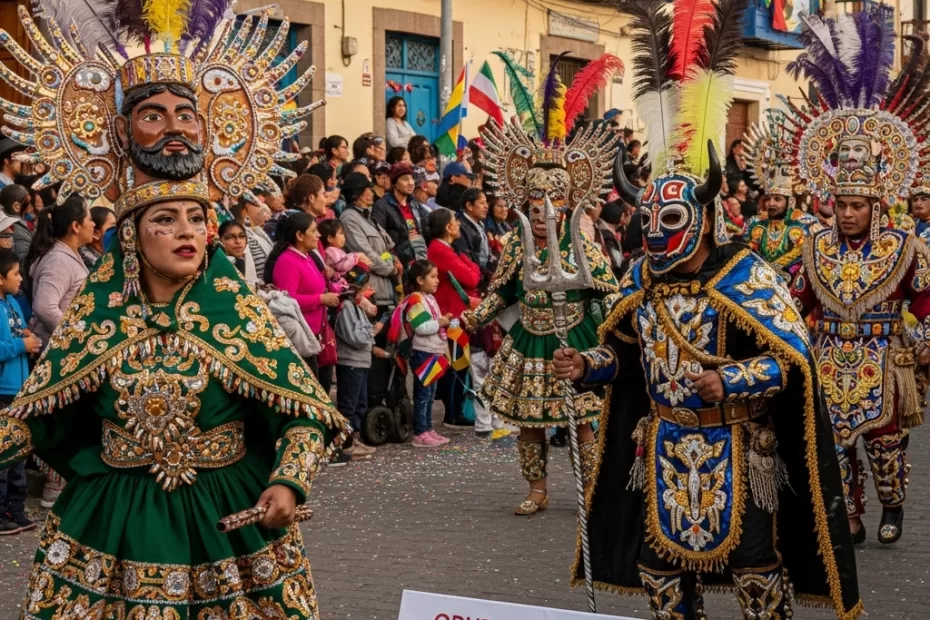
The heart of the Oruro Carnival lies in its traditional dances, each a vibrant narrative steeped in history, mythology, and cultural significance. There are over 50 distinct dance groups, or “fraternidades,” each specializing in a particular dance form. Perhaps the most iconic is the Diablada, or “Dance of the Devils.” This powerful performance depicts the eternal struggle between good and evil, with elaborately costumed devils battling archangels to the rhythm of booming drums. It’s a profound allegory of the triumph of the Virgin of Socavón over the Tío Supay, representing the syncretic blend of indigenous beliefs and Catholicism.
Another prominent dance is the Morenada, or “Dance of the Black Slaves.” This dance is a poignant tribute to the African slaves brought to Bolivia during colonial times, particularly those who worked in the mines. The heavy, rhythmic steps symbolize the arduous labor, while the elaborate masks, often depicting exaggerated features, are a caricature of the Spanish overseers. The Caporales is a more modern dance, energetic and athletic, often associated with the overseers of the African slaves, but now a popular expression of youthful vigor and pride. The Kallawayas, medicine men from the high Andes, perform a dance of healing, invoking ancient spirits and herbal wisdom. The Tobas dance, with its feathered headdresses and agile movements, represents the indigenous peoples of the Amazon rainforest, showcasing Bolivia’s diverse geography and cultures. Each of these folkloric dances, among many others, contributes to the carnival’s rich tapestry, offering insights into Bolivian identity and history, making the Oruro Carnival traditions truly unique.
Symbolism in Costumes and Masks
The traditional costumes and masks worn during the Oruro Carnival are not merely decorative; they are profound symbols, each element meticulously crafted to convey specific meanings and narratives. They are wearable art, embodying centuries of history, spirituality, and artistic expression. The creation of these outfits is a labor of love, often involving entire families and spanning months of intricate work with sequins, beads, feathers, and vibrant fabrics.
In the Diablada, the devil masks are masterpieces of craftsmanship, often weighing several pounds and featuring bulging eyes, fangs, and horns, sometimes topped with a toad, serpent, or lizard – animals sacred to the Uru people and associated with the underworld. These masks, combined with the elaborate costumes adorned with mirrors and metallic threads, are designed to both awe and intimidate, representing the forces of evil. The archangel costumes, in stark contrast, gleam with purity, often in white and gold, symbolizing divine intervention.
The Morenada costumes are equally striking, particularly the “moreno” dancers who wear enormous, heavy masks with exaggerated lips and dark skin, often topped with a helmet resembling a colonial Spanish helmet. Their elaborate capes and wide skirts, adorned with intricate designs, add to the imposing presence, all contributing to the portrayal of the oppressed miners. The Caporales costumes are characterized by their vibrant colors, high boots, and ornate hats, reflecting a more contemporary and energetic aesthetic. Even the smallest detail, from the color of a ribbon to the type of feather used, carries a specific meaning, making the costumes and masks central to the carnival’s storytelling and cultural representation. They are a powerful visual language, speaking volumes about the carnival significance and the deep reverence for Bolivian folklore.
Challenges Facing the Carnival
Despite its global recognition and undeniable cultural significance, the Oruro Carnival faces several contemporary challenges that threaten its integrity and long-term sustainability. One of the most pressing issues is commercialization. As the carnival’s popularity grows, so does the pressure to capitalize on its economic potential. This can lead to an overemphasis on tourism revenue at the expense of its spiritual and cultural roots. The proliferation of generic souvenirs, the commercial branding of events, and the increasing cost of participation can dilute the authentic experience and alienate local communities who feel their traditions are being commodified. Maintaining a balance between economic benefit and cultural preservation is a delicate act.
Another significant challenge is the impact of globalization and modern influences. While cultural exchange is beneficial, there’s a constant tension between evolving contemporary tastes and the desire to preserve traditional forms. Some fear that the introduction of modern music styles, simplified dance choreographies, or less authentic costume designs could erode the historical accuracy and symbolic depth of the carnival. Ensuring that younger generations remain committed to the rigorous training and traditional knowledge required for participation is crucial. Additionally, issues such as urban development, waste management during peak festival times, and the equitable distribution of benefits among all stakeholders present ongoing logistical and social challenges. Addressing these concerns requires a concerted effort from local authorities, cultural organizations, and the community to safeguard the carnival’s unique identity for future generations. The social impact of festivals can be both positive and challenging, requiring careful stewardship.
Conclusion
The Oruro Carnival stands as a magnificent embodiment of cultural diplomacy, a vibrant and dynamic testament to Bolivia’s rich heritage and enduring spirit. Far more than just a series of festive practices, it is a meticulously preserved and passionately performed cultural event that projects the essence of Bolivian identity onto the world stage. Through its intricate folkloric dances, symbolic costumes, and profound spiritual narratives, the carnival fosters intercultural dialogue and understanding, inviting global audiences to engage with a unique blend of indigenous cosmology and colonial history. It serves as a powerful instrument for cultural representation, showcasing Bolivia’s ethnic diversity and artistic expressions.
The carnival’s recognition as a UNESCO Masterpiece underscores its importance as a global cultural heritage site, one that actively promotes cultural exchange and community celebrations. While it faces challenges such as commercialization and the pressures of modernization, the dedication of its participants and the strong sense of community impact ensure its resilience. The future prospects for the Oruro Carnival hinge on a sustained commitment to cultural heritage preservation, balancing its economic potential with its profound spiritual and historical significance. As long as the drums beat and the dancers move, the Cultural diplomacy Oruro Carnival will continue to be a beacon, illuminating Bolivia’s soul for the world to see and appreciate, solidifying its place as one of the most significant Latin American festivals and a vital component of global cultural heritage.
Further Reading and Resources
For those eager to delve deeper into the fascinating world of the Oruro Carnival and its role in cultural diplomacy, the following resources offer excellent avenues for further exploration:
-
Books:
-
Masked Rituals of Bolivia by Eleanor B. Adams
-
Bolivia: Culture and Customs by Daniel W. Gade
-
The Andes: A Guide for Explorers by various authors (look for sections on Bolivian culture)
-
-
Academic Articles:
-
Journals specializing in Latin American studies, anthropology, and ethnomusicology often feature scholarly articles on the Oruro Carnival, its history, and its socio-cultural impact. Search databases like JSTOR or university libraries for specific research.
-
-
Websites:
-
UNESCO Culture Sector: Provides detailed information on the Oruro Carnival’s designation as a Masterpiece of Oral and Intangible Heritage of Humanity.
-
Bolivian Tourism Websites: Official tourism portals often offer comprehensive guides to the carnival, including practical information for visitors and historical context.
-
Documentary Films: Numerous documentaries have captured the spectacle and significance of the Oruro Carnival. Searching platforms like YouTube or educational streaming services can reveal compelling visual narratives.
-
Cultural Institutions and Museums: Websites of institutions dedicated to Latin American art and culture may feature exhibitions or resources related to Bolivian folklore and festivals.
-
Yo, if you’re in the Philippines and looking for a hassle-free casino login, grabphcasinologin might be worth a peek. Got in quick and played some slots. No major complaints. Here’s the link for ya: grabphcasinologin