
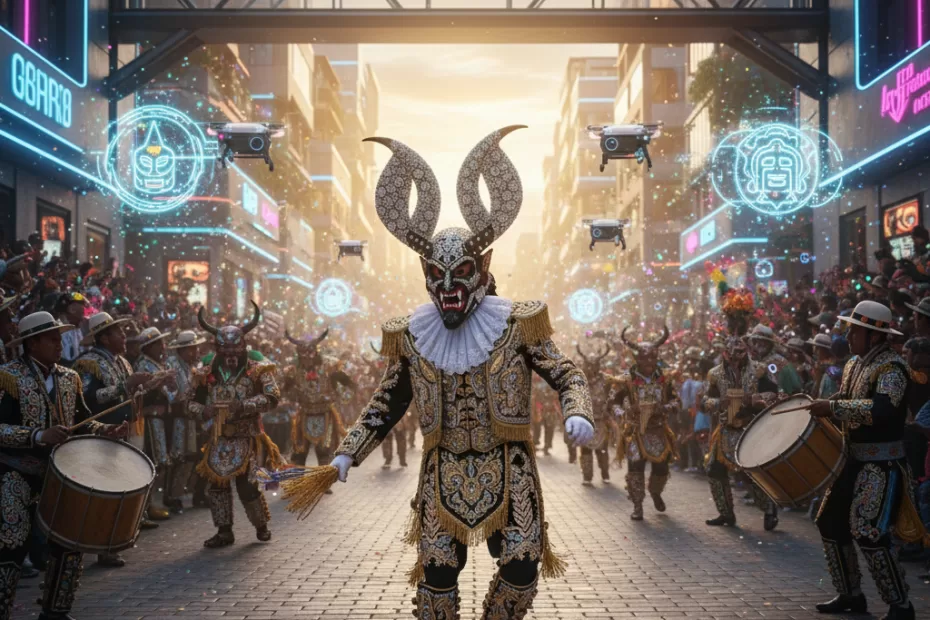
The Future of Oruro Carnival: A Cultural and Musical Evolution
The air in Oruro, Bolivia, crackles with an energy unlike any other during the weeks leading up to its famed carnival. A vibrant tapestry woven from ancient Andean traditions, colonial influences, and fervent Catholic beliefs, the Oruro Carnival is more than just a party; it’s a living, breathing spectacle of cultural heritage, a profound expression of Bolivian identity. As we look towards the coming decades, the question naturally arises: what does the future hold for this magnificent celebration? Will it retain its sacred essence amidst the winds of change, or will it transform into something entirely new? This article delves into the potential challenges and exciting opportunities that lie ahead for one of the world’s most captivating cultural events.
Introduction to Oruro Carnival
Imagine a city pulsating with rhythm, color, and devotion. This is Oruro during its annual carnival, a pre-Lenten festival that culminates in a grand procession known as the Peregrinación al Socavón. For days, the streets transform into an open-air stage where thousands of dancers and musicians perform intricate choreographies and powerful melodies, all in honor of the Virgen del Socavón, the patron saint of miners. The Oruro Carnival is not merely a local festivity; it is recognized by UNESCO as a Masterpiece of the Oral and Intangible Heritage of Humanity, a testament to its profound cultural significance and its role as one of the most important Bolivia festivals.
Its origins are deeply rooted in indigenous Andean traditions, particularly the Anata or Phujllay rituals, which honored Pachamama (Mother Earth) and the Tío Supay (Lord of the Underworld, often associated with the devil). With the arrival of the Spanish conquistadors, these ancestral beliefs gradually intertwined with Catholic practices, creating a unique syncretic celebration. Today, the carnival serves as a powerful symbol of cultural resilience and identity, showcasing the rich tapestry of Bolivian culture through its elaborate Oruro Carnival costumes, evocative Oruro music, and dynamic Oruro Carnival performances. It’s an immersive experience, inviting participants and spectators alike to connect with the spiritual and historical narratives embedded in every step and every note. The sheer scale and spiritual intensity of the Oruro Carnival events make it a benchmark for carnival celebrations worldwide, truly one of the most compelling cultural events in Bolivia.
Historical Significance of the Oruro Carnival
To truly understand the future of Oruro Carnival, one must first appreciate its deep historical roots. The city of Oruro, nestled high in the Andean mountains, was a crucial mining center during the colonial era, attracting indigenous laborers who brought with them their rich spiritual traditions. Long before the Spanish arrived, the indigenous peoples of the region celebrated rituals tied to the agricultural calendar and their reverence for nature. These Andean traditions included dances and offerings to deities like Pachamama and various apus (mountain spirits), often involving masks and elaborate attire to represent mythological figures.
When the Spanish introduced Catholicism, they attempted to suppress these indigenous practices, but often, the traditions simply adapted. Pagan deities were overlaid with Catholic saints, and ancient rituals found new expression within Christian festivals. The Tío Supay, for example, a protective yet fearsome deity of the mines, became conflated with the Christian devil, leading to the iconic Diablada (Dance of the Devils), a central feature of the carnival. This syncretism is a hallmark of Oruro traditions and explains much of the carnival’s unique character.
The Oruro Carnival history is also marked by resistance and cultural survival. Through centuries of colonial rule and subsequent republican periods, the carnival has been a space where indigenous and mestizo communities could assert their cultural identity, often subtly challenging dominant narratives. The dances tell stories of conquest, liberation, and the enduring spirit of the Bolivian people. The Morenada, for instance, while depicting African slaves brought to the mines, is also seen as a commentary on the suffering of all laborers under colonial oppression.
The formal recognition of the Oruro Carnival as a UNESCO heritage site in 2001 underscored its global importance and the need for its preservation. This designation brought both prestige and responsibility, placing the carnival on an international stage and highlighting its role in safeguarding intangible cultural heritage. This historical trajectory, from ancient rituals to a globally recognized cultural phenomenon, provides the essential context for contemplating the future of Oruro Carnival, as it grapples with balancing tradition and modernity.
Cultural Elements of Oruro Carnival
The Oruro Carnival is a kaleidoscope of cultural expressions, each element meticulously crafted and imbued with meaning. From the dazzling Oruro Carnival costumes to the pulsating Oruro music and the intricate dance in Bolivia, every aspect tells a story, perpetuating myths, history, and spiritual devotion.
Costumes and Their Symbolism
The sheer variety and extravagance of the Oruro Carnival costumes are breathtaking. Each conjunto (dance group) boasts unique attire, reflecting their specific dance form and the narrative it conveys. These aren’t just outfits; they are wearable art, rich in symbolism, color, and intricate detail.
The most iconic is undoubtedly the Diablada costume. Dancers don elaborate devil masks, often adorned with snakes, lizards, and grotesque features, representing the Tío Supay. The masks are typically vibrant, with dominant reds, greens, and golds, signifying power, wealth, and the underworld. The full costume includes richly embroidered capes depicting Christian saints and Andean symbols, along with ornate boots and gloves. The Diablada’s symbolism is complex: it represents the struggle between good and evil, with the Archangel Michael eventually triumphing over the devils, all while paying homage to the Tío for protecting miners.
Another prominent dance is the Morenada, characterized by its heavy, richly adorned costumes. Dancers wear wide-brimmed hats, often decorated with feathers, and voluminous skirts or trousers. The most striking feature is the matraca (rattle) and the dark-skinned mask with exaggerated features, symbolizing the African slaves who worked in the colonial mines. The heavy steps of the Morenada are said to mimic the arduous walk of these enslaved individuals, weighted down by chains and the high altitude. The bright colors and intricate embroidery on these costumes often depict scenes from colonial life or indigenous motifs.
The Caporales dance, while a more modern addition, has quickly become a favorite. Its costumes are flashy and energetic, with male dancers wearing high-heeled boots, wide-brimmed hats, and elaborate shirts, often adorned with bells and sequins. Female dancers wear short skirts, blouses, and sometimes long boots, all designed to emphasize dynamic movement. The Caporales represents the overseers of the enslaved Africans, but its modern interpretation is often more about pride, strength, and vibrant celebration.
Other notable costumes include the graceful Tobas, representing Amazonian indigenous groups with feathered headdresses and body paint; the elegant Kullawada, with its distinctive broad-brimmed hats and intricate weaving; and the Llamerada, honoring the llama herders with their traditional ponchos and slingshots. Each costume is a masterpiece, handcrafted by skilled artisans, and passed down through generations, embodying the spirit and cultural identity of the Oruro Carnival dancers. The meticulous attention to detail in these costumes highlights the profound respect for Oruro Carnival traditions and the stories they tell.
The Role of Music and Dance
Music and dance are the very soul of the Oruro Carnival, the pulsating heartbeat that drives the entire celebration. Without the vibrant Oruro music and the intricate dance in Bolivia, the carnival would lose its essence. The auditory and visual spectacle is an immersive experience, drawing everyone into its rhythm.
The music is a dynamic fusion of indigenous melodies and instruments blended with European brass bands. Traditional Andean instruments like the zampoña (panpipes), quena (flute), and charango (a small stringed instrument) are often heard in folk ensembles, particularly in dances like the Llamerada or Kullawada. However, the dominant sound during the main procession comes from massive brass bands, sometimes comprising hundreds of musicians, whose powerful horns, trombones, and drums provide the raw energy for the Diablada, Morenada, and Caporales. This carnival music is characterized by its driving rhythms, often repetitive yet hypnotic, designed to sustain dancers for hours along the parade route.
Each dance form has its unique musical accompaniment and choreography. The Diablada, for instance, is a powerful, energetic dance, with devils leaping and prancing, often forming intricate patterns and mock battles with the Archangel. Its music is fast-paced, reflecting the chaotic energy of the underworld and the struggle against evil. The Morenada, in contrast, is characterized by a slower, more deliberate, and heavy step, symbolizing the burden of the enslaved. The music is mournful yet majestic, with a distinctive bass drum beat that underpins the dancers’ heavy gait. The Caporales is perhaps the most outwardly exuberant, with its fast, acrobatic movements and infectious, upbeat rhythms. The dancers perform high kicks, turns, and intricate footwork, showcasing their agility and strength.
Beyond these major dances, numerous other conjuntos contribute to the rich tapestry of Oruro Carnival performances. The Tobas perform agile, almost tribal movements, evoking the Amazonian jungle. The Kullawada is a more refined, elegant dance, often performed by textile workers, with a characteristic spinning motion. The Sicuris play large panpipes, creating a haunting, ethereal sound. The sheer diversity of dance forms and musical styles reflects the multicultural heritage of Bolivia, making the Oruro Carnival a living museum of sound and movement. The continuous evolution of this carnival music, while rooted in tradition, also hints at the future of Oruro Carnival, as new sounds and interpretations emerge.
Modern Influences on Oruro Carnival
While the Oruro Carnival is deeply rooted in ancient traditions, it is not immune to the currents of modernity. Like any living cultural phenomenon, it adapts and evolves, incorporating contemporary trends and technologies that shape its reach, presentation, and even its artistic expressions. The future of Oruro Carnival will undoubtedly be defined by how it navigates these modern influences.
Fusion of Traditional and Modern Music
One of the most exciting developments in recent years has been the fusion of traditional Oruro music with modern genres. While the classic brass bands and folk ensembles remain the backbone of the carnival’s soundscape, younger generations of musicians and choreographers are experimenting with new sounds, creating a dynamic Oruro music evolution.
This fusion can manifest in several ways. Some bands incorporate electronic elements, synthesizers, and modern drum beats into traditional melodies, giving them a contemporary edge without losing their essential character. You might hear a Morenada rhythm underpinned by a strong electronic bassline, or a Diablada melody enhanced with modern orchestral arrangements. This blending attracts a younger audience and keeps the music fresh and relevant, ensuring the continued vitality of carnival music.
Furthermore, traditional instruments are finding new contexts. Charango or zampoña players might collaborate with rock bands or DJs, creating crossover genres that appeal to a global audience. This isn’t just about adding new instruments; it’s about reinterpreting the emotional and narrative core of the music through a modern lens. Some conjuntos are even commissioning original compositions that deliberately weave together historical Oruro music motifs with contemporary harmonies and instrumentation, pushing the boundaries of Oruro Carnival performances.
This musical evolution is crucial for the future of Oruro Carnival. It ensures that the music remains engaging for new generations, preventing it from becoming a static, historical artifact. By embracing innovation while respecting its roots, the carnival’s music can continue to thrive, attracting new talent and captivating diverse audiences, both locally and internationally. It’s a delicate balance, but one that is essential for the long-term vibrancy of this cultural spectacle.
The Impact of Social Media and Technology
The rise of social media and digital technology has profoundly reshaped how cultural events like the Oruro Carnival are experienced, shared, and preserved. This impact of technology on culture is a double-edged sword, presenting both immense opportunities and significant challenges for the future of Oruro Carnival.
On the one hand, social media platforms like Facebook, Instagram, TikTok, and YouTube have become powerful tools for global outreach. High-quality videos and photos of Oruro Carnival 2023 and previous years circulate instantaneously, reaching millions who might never have known about this Bolivian culture gem otherwise. This digital exposure boosts tourism, attracting international visitors eager to witness the spectacle firsthand. It also creates a global community of enthusiasts, fostering appreciation for Bolivian traditions and cultural identity in Bolivia. Dancers and conjuntos can use these platforms to share their stories, showcase their elaborate Oruro Carnival costumes, and connect with fans, building personal brands and promoting their artistry.
Live streaming has become a common feature of major Oruro Carnival events, allowing people worldwide to experience the grandeur in real-time. This not only expands the audience but also provides an invaluable archive of performances, contributing to the digital preservation of intangible cultural heritage. Virtual reality (VR) and augmented reality (AR) technologies could further revolutionize the experience, offering immersive virtual tours or interactive historical narratives, allowing users to “participate” in the carnival from anywhere in the world.
However, technology also brings challenges. The pursuit of viral content can sometimes overshadow the spiritual and cultural significance of the carnival. Dancers might prioritize “Instagrammable” moments over traditional choreography, or commercial sponsors might demand changes that dilute the authenticity of Oruro Carnival traditions. There’s also the risk of cultural appropriation, where elements of the carnival are taken out of context and commodified without proper understanding or respect. Furthermore, the sheer volume of digital content can make it difficult to discern authentic representations from superficial ones.
For the future of Oruro Carnival, it’s vital to harness technology strategically. This means using it not just for promotion, but for education and preservation. Digital archives, virtual museums, and online educational resources can help contextualize the carnival, explaining its symbolism and history to a global audience. By thoughtfully integrating technology, the Oruro Carnival can broaden its reach and ensure its legacy is understood and appreciated for generations to come, adapting to the future of festivals while safeguarding its core.
The Future: Challenges and Opportunities
The Oruro Carnival stands at a critical juncture, poised between its rich past and an evolving future. As it continues to gain international recognition and adapt to modern influences, it faces a unique set of challenges and opportunities that will shape its trajectory in the coming decades. Understanding these dynamics is key to safeguarding its essence while allowing for growth and innovation.
One of the primary challenges for the future of Oruro Carnival is preserving its authenticity and spiritual core amidst increasing commercialization and global tourism. As its fame grows, there’s an inevitable pressure to cater to tourist demands, which can sometimes lead to the dilution of traditional practices. The focus might shift from religious devotion and cultural expression to entertainment and profit. How can organizers ensure that the Peregrinación al Socavón remains a sacred pilgrimage, and not just a spectacle? This requires strong community leadership, clear guidelines for participants and vendors, and educational initiatives for visitors about the carnival’s true Oruro Carnival significance.
Another significant challenge is environmental sustainability. The sheer scale of the carnival, with thousands of participants and hundreds of thousands of spectators, generates considerable waste. The production of elaborate Oruro Carnival costumes and props also has an environmental footprint. Future efforts must focus on promoting eco-friendly practices, such as using sustainable materials, managing waste effectively, and encouraging responsible tourism. This includes addressing the impact of large crowds on local infrastructure and natural resources, ensuring that the carnival does not negatively affect the very environment that inspires many Andean traditions.
Infrastructure and logistics also present ongoing hurdles. Oruro is a relatively small city, and accommodating the massive influx of people requires robust planning for accommodation, transportation, sanitation, and security. As visitor numbers potentially grow, investment in sustainable infrastructure development will be crucial to ensure a safe, comfortable, and enjoyable experience for everyone, without overwhelming the local community.
Generational continuity and the transmission of knowledge are vital for maintaining the Oruro Carnival traditions. Younger generations, exposed to global cultures and digital entertainment, might find the rigorous demands of learning complex dances and music less appealing. There’s a risk that traditional skills, such as costume making, instrument crafting, and choreographic knowledge, could diminish. Opportunities lie in establishing formal and informal educational programs, workshops, and mentorship initiatives within conjuntos and schools to ensure these invaluable skills are passed down. Encouraging youth participation through innovative approaches that resonate with their interests, perhaps by incorporating modern elements into traditional practices, could be beneficial.
However, these challenges are paralleled by exciting opportunities for growth and enhancement.
One major opportunity lies in digital preservation and global educational outreach. Beyond simply promoting the carnival, technology can be leveraged to create comprehensive digital archives of Oruro Carnival history, music, costumes, and oral traditions. Virtual museums and interactive platforms can offer deeper insights into Oruro Carnival and mythology, allowing researchers, students, and enthusiasts worldwide to explore its complexities. Online courses or documentaries can educate a global audience about Bolivian culture and the Oruro Carnival significance, fostering greater understanding and respect. This could also generate new revenue streams through educational content and virtual experiences.
Sustainable tourism development is another key opportunity. By promoting responsible travel practices, encouraging visitors to engage respectfully with local communities, and supporting local artisans and businesses, the carnival can become a powerful engine for economic development that directly benefits the people of Oruro. This includes developing tour packages that offer authentic cultural immersion, focusing on the stories and people behind the spectacle, rather than just the spectacle itself. Emphasizing the carnival as one of the most significant cultural events in Bolivia can attract visitors seeking genuine cultural experiences.
There’s also immense potential for innovation within the Oruro Carnival performances themselves. While respecting core Oruro Carnival traditions, conjuntos can explore new choreographies, musical arrangements, and costume designs that push artistic boundaries while remaining true to the spirit of the carnival. Collaborations with contemporary artists, choreographers, and composers from Bolivia and beyond could introduce fresh perspectives and elevate the artistic quality of the performances, ensuring a dynamic Oruro music evolution. This keeps the carnival vibrant and prevents it from becoming stagnant.
Finally, the Oruro Carnival can serve as a powerful platform for promoting cultural identity in Bolivia and fostering national pride. By celebrating its diverse heritage, the carnival reinforces a sense of unity and belonging among Bolivians. It can also be a model for other Bolivia cultural festivals, demonstrating how ancient traditions can thrive in the modern world. The Oruro Carnival’s global recognition allows Bolivia to proudly showcase its unique cultural tapestry on the world stage, strengthening its image as a vibrant cultural destination.
The future of Oruro Carnival hinges on a delicate balance: embracing change without sacrificing its soul. By proactively addressing challenges and strategically capitalizing on opportunities, Oruro can ensure that its magnificent carnival continues to enchant, inspire, and spiritually enrich generations to come, evolving gracefully while firmly rooted in its profound heritage.
Conclusion: Celebrating the Oruro Carnival’s Legacy
As we’ve journeyed through the intricate layers of the Oruro Carnival, from its ancient Andean roots to its modern-day manifestations, one truth remains abundantly clear: this is more than just a festival. It is a profound expression of Bolivian culture, a vibrant tapestry woven from history, faith, mythology, and an unyielding spirit of celebration. Its recognition as a UNESCO heritage site underscores its global importance, positioning it as a beacon of intangible cultural heritage that deserves careful stewardship.
The Oruro Carnival significance lies not only in its dazzling Oruro Carnival costumes or the intoxicating Oruro music but in its ability to tell a story – a story of syncretism, resistance, and the enduring power of human belief. It’s where the Tío Supay meets the Virgen del Socavón, where indigenous Andean traditions blend seamlessly with Catholic devotion, creating a unique and compelling narrative that resonates deeply with participants and spectators alike. The dedication of the Oruro Carnival dancers, the skill of the musicians, and the meticulous craftsmanship behind every garment speak volumes about the profound respect for Oruro Carnival traditions.
Looking ahead, the future of Oruro Carnival is a dynamic landscape of both potential pitfalls and exciting possibilities. Challenges such as the pressures of commercialization, the imperative for environmental sustainability, and the need to preserve authentic Oruro Carnival traditions in an increasingly globalized world are real. However, these are counterbalanced by immense opportunities: leveraging technology for digital preservation and global outreach, fostering sustainable tourism that benefits local communities, and embracing artistic innovation within Oruro Carnival performances to ensure a lively Oruro music evolution. The impact of technology on culture, particularly through social media, offers unprecedented avenues for sharing this cultural gem with the world, while also posing questions about maintaining its sacred essence.
Ultimately, the vibrancy of the Oruro Carnival will depend on the collective commitment of its community, government bodies, and international supporters to navigate these complexities with foresight and respect. It requires a delicate dance between honoring the past and embracing the future, ensuring that the Oruro Carnival continues to be a living, breathing testament to cultural identity in Bolivia.
The Oruro Carnival is a legacy that transcends time, a powerful reminder of the human capacity for creativity, devotion, and communal celebration. As the rhythms of the Diablada and Morenada continue to echo through the streets of Oruro, they carry with them the hopes and dreams for a future where this magnificent cultural event continues to thrive, evolve, and inspire generations to come, keeping the spirit of Bolivia festivals alive and vibrant. It’s a celebration that invites everyone to witness, participate, and become a part of its ongoing, spectacular story.
Betchidocasino es mi secreto para ganar. Los bonos son generosos y la atención al cliente es de primera. Highly recommended! betchidocasino