
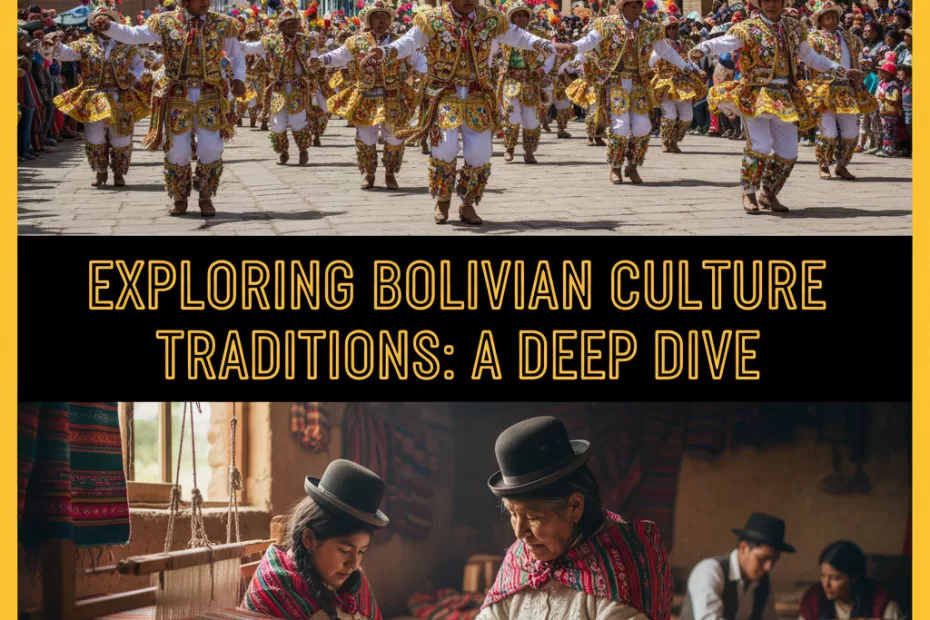
Exploring Bolivian Culture Traditions: A Deep Dive
Bolivia, a landlocked nation nestled in the heart of South America, is a vibrant tapestry woven from ancient indigenous heritage and colonial influences. Its rich cultural identity is a testament to centuries of history, resilience, and a profound connection to the land. When we talk about Bolivian culture traditions, we’re delving into a world where the past lives vibrantly in the present, shaping everything from daily customs to grand, spectacular festivals. This nation’s cultural diversity is truly remarkable, boasting over 36 recognized indigenous groups, each contributing unique threads to the national fabric.
From the majestic peaks of the Andes to the sprawling Amazon basin and the arid Chaco lowlands, Bolivia’s geography mirrors its human diversity. This has led to a fascinating array of regional traditions, dialects, music, and culinary practices. The strong indigenous influences, particularly from the Aymara and Quechua peoples, form the bedrock of much of Bolivian heritage, infused with elements introduced during Spanish colonial history. This blend creates a unique cultural landscape, where traditional customs are not merely relics of the past but living, evolving parts of community life. Understanding Bolivian culture means appreciating this intricate interplay, observing the traditional clothing, listening to the distinctive Bolivian music, and participating in the lively folk festivals that define its spirit. It’s a journey into the soul of a nation that proudly cherishes its ancestral roots while navigating the complexities of the modern world.
Historical Influences on Bolivian Traditions
To truly grasp the depth of Bolivian culture, one must look back at its rich historical context. Before the arrival of the Spanish, the Andean region was home to advanced civilizations whose legacies continue to shape indigenous traditions today. The Tiwanaku culture, predating the Inca Empire, left behind monumental architectural marvels and sophisticated spiritual beliefs that profoundly influenced subsequent societies. Their understanding of cosmology, agriculture, and social organization laid foundations that persist in various forms. Later, the Inca Empire expanded its vast domain into what is now Bolivia, bringing with it a highly structured society, an intricate road system, and a powerful religious system centered around the sun god, Inti. These pre-Columbian societies developed complex cultural practices, deep spiritual connections to Pachamama (Mother Earth), and communal living structures that emphasized reciprocity and harmony.
The arrival of the Spanish conquistadors in the 16th century marked a dramatic turning point, initiating a period of profound colonial history that irrevocably altered the social, political, and religious landscape. The Spanish introduced Catholicism, their language (Spanish), new agricultural practices, and European social hierarchies. However, they did not completely erase the existing indigenous traditions. Instead, a fascinating process of syncretism occurred, where indigenous beliefs and practices merged with Catholic rituals and iconography. For example, Catholic saints often became associated with ancestral deities, and Christian festivals incorporated elements of native ceremonies. This blend is evident in much of Bolivian heritage, where traditional customs often carry dual meanings, understood differently by various communities.
The colonial period also saw the exploitation of vast mineral resources, particularly silver from Potosí, which drew forced labor from indigenous populations and established a social structure that marginalized native peoples for centuries. Despite this oppression, indigenous groups steadfastly preserved their cultural identity, often through clandestine practices and oral traditions. The struggle for self-determination and recognition of indigenous influences has been a defining theme throughout Bolivian history, culminating in recent decades with significant advancements in indigenous rights and the revalorization of cultural heritage. Today, the echoes of both pre-Columbian grandeur and colonial impact are profoundly visible in the diverse Bolivian culture, making it a living museum of human history and cultural resilience.
Key Bolivian Festivals and Their Significance
Festivals are the pulsating heart of Bolivian cultural identity, serving as vibrant expressions of faith, community, and historical memory. These folk festivals are not just celebrations; they are profound cultural practices that reinforce social bonds, transmit traditional customs across generations, and offer a space for spiritual communion. From small village fiestas to massive national spectacles, Bolivian festivals are characterized by their elaborate costumes, energetic music, traditional dances, and a unique blend of Catholic and indigenous spiritual beliefs. They are essential for understanding the nation’s cultural heritage and its ongoing dialogue between ancient Andean traditions and colonial influences. These festive celebrations often mark agricultural cycles, religious holidays, or historical events, providing a powerful platform for cultural expression and collective identity.
Carnaval de Oruro
Perhaps the most famous and spectacular of all Bolivian festivals is the Carnaval de Oruro, recognized by UNESCO as a Masterpiece of the Oral and Intangible Heritage of Humanity. This grand celebration, held annually in the city of Oruro, is far more than just a party; it’s a profound spiritual event that encapsulates the syncretism at the core of Bolivian culture. Its origins trace back to pre-Columbian Andean traditions, honoring Pachamama and the Uru people’s veneration of the Tío Supay, the “Lord of the Underworld” or “Devil” of the mines. With the arrival of the Spanish, these indigenous beliefs merged with Catholic traditions, particularly the veneration of the Virgen del Socavón (Virgin of the Mines), becoming the patroness of the miners.
The Oruro Carnaval is a breathtaking display of traditional clothing, intricate masks, and powerful performances. The central event is a magnificent procession of thousands of dancers and musicians, performing over 50 different folk dances. The most iconic is the Diablada, or “Dance of the Devils,” where dancers, adorned in elaborate devil masks and costumes, represent the eternal struggle between good and evil, with the Archangel Michael ultimately triumphing over the seven deadly sins. Other prominent dances include the Morenada, a dance of African slaves who worked in the mines, characterized by heavy, ornate costumes and slow, rhythmic steps, and the Caporales, a more modern, energetic dance reflecting Afro-Bolivian influences. The Bolivian music accompanying these dances is equally diverse, featuring traditional instruments like panpipes and charangos alongside brass bands. The entire festival is a powerful re-enactment of history, spirituality, and cultural resistance, making the Oruro Carnaval an unparalleled expression of Bolivian heritage and indigenous influences.
Inti Raymi
While not as widely celebrated in Bolivia today as it is in neighboring Peru, Inti Raymi holds immense cultural significance, particularly for communities that strongly identify with their Inca heritage and Andean traditions. This ancient festival, meaning “Sun Festival” in Quechua, was the most important ceremony in the Inca Empire, dedicated to Inti, the Sun God, who was revered as the giver of life and the protector of the Inca people. Traditionally, it was celebrated at the winter solstice (June 21st in the Southern Hemisphere), marking the shortest day of the year and the beginning of the new agricultural cycle. Its purpose was to honor Inti and plead for his return and the bountiful harvest of the coming year.
During the Inca Empire, Inti Raymi was a lavish affair involving elaborate rituals, sacrifices, and grand processions led by the Sapa Inca himself. With the Spanish conquest, the festival was suppressed as part of the effort to impose Catholicism. However, the spirit of Inti Raymi and its underlying reverence for the sun and nature continued to live on in various clandestine forms and local variations within indigenous traditions. In recent decades, there has been a resurgence of interest in and celebration of Inti Raymi, especially in areas with strong indigenous populations, as a way to reaffirm cultural identity and reconnect with ancestral roots. While a full-scale re-enactment like Cusco’s is less common in Bolivia, smaller, localized ceremonies often take place, particularly in highland communities, emphasizing the spiritual connection to the cosmos, the earth, and the cycles of nature. These celebrations, though perhaps less grand, are vital cultural practices that help preserve the spiritual and philosophical foundations of Andean culture, reminding participants of their deep historical and spiritual ties to the land and the sun.
Unique Customs and Practices
Beyond the grand spectacle of festivals, Bolivian culture is rich with unique customs and practices that define daily life and community interactions. These social customs often reflect the deep-seated values of reciprocity, community, and respect for nature, passed down through generations. They are integral to the cultural identity of various indigenous groups and regional traditions, offering fascinating insights into the Bolivian way of life. From traditional healing practices to specific rituals for blessing homes or harvests, these unique customs are woven into the fabric of society, often blending ancient beliefs with more contemporary interpretations. They illustrate the ongoing vitality of Bolivian heritage and the ways in which people maintain their connection to their past.
One particularly striking aspect of Bolivian culture is the prevalence of Aymara and Quechua languages alongside Spanish, especially in the highlands. While Spanish is the official language, many communities continue to use their indigenous tongues, which carry nuances of thought and worldview that are distinct from Spanish. This linguistic diversity is a key component of the nation’s cultural diversity. Another common practice is the ch’alla, a blessing ritual performed for various occasions, from buying a new car to opening a new business or planting crops. It involves offering alcohol, coca leaves, and sometimes sweets or cigarettes to Pachamama or other deities, asking for good fortune and protection. These small, everyday acts of reverence underscore the enduring spiritual connection that many Bolivians feel towards their environment and ancestral beliefs, demonstrating how traditional customs are integrated into modern life.
The Cholitas and Their Cultural Impact
Among the most iconic and culturally significant figures in Bolivia are the Cholitas. These indigenous Aymara and Quechua women, distinguished by their unique traditional clothing and distinctive bowler hats, have become powerful symbols of resilience, cultural pride, and empowerment. For centuries, Cholitas faced discrimination and marginalization in Bolivian society, often relegated to domestic work or informal street vending. Their traditional attire, once a marker of lower social status, has been reappropriated and transformed into a powerful statement of cultural identity and strength.
The Cholita’s fashion is instantly recognizable and deeply symbolic. It typically includes a layered, wide skirt known as a pollera, a colorful embroidered shawl or manta, and the iconic bombín (bowler hat), which is said to have been introduced by British railway workers in the early 20th century. The way the hat is worn can even signal a woman’s marital status. Their long, braided hair, often adorned with tullmas (colorful tassels), completes the look. This traditional clothing is not merely attire; it is a declaration of heritage and a celebration of indigenous roots.
In contemporary Bolivian society, Cholitas have broken through traditional barriers and are increasingly visible and influential in all spheres of life. They are successful entrepreneurs, active participants in politics, respected professionals, and even celebrated athletes. A prime example is the phenomenon of the “Fighting Cholitas” (Cholitas Luchadoras), a group of Aymara women who perform Lucha Libre wrestling in La Paz. These women, dressed in their polleras, perform acrobatic feats and theatrical battles, captivating audiences and challenging stereotypes about indigenous women. Their powerful presence in the ring symbolizes their struggle against adversity and their triumphant assertion of identity. The cultural impact of the Cholitas is immense; they represent the enduring spirit of Bolivia’s indigenous groups, their ability to adapt and thrive, and their profound contribution to the nation’s vibrant cultural heritage. Their journey from marginalization to becoming revered icons is a testament to the strength and beauty of Bolivian customs and the ongoing evolution of its cultural landscape.
Traditional Bolivian Cuisine
Traditional Bolivian cuisine is a fascinating reflection of the nation’s diverse geography, rich historical context, and strong indigenous influences. It’s a culinary journey that takes you from the high Andean plateaus to the Amazonian lowlands, offering a delightful array of flavors, ingredients, and food-related customs. At its heart, Bolivian food is comfort food – hearty, flavorful, and often designed to provide sustenance in the high altitudes, making it a crucial element of Bolivian culture.
The foundation of many Bolivian dishes lies in indigenous staples like potatoes (Bolivia is home to thousands of varieties), corn, quinoa, and various chili peppers (ají). Spanish colonial history introduced ingredients such as rice, wheat, chicken, and beef, which were then skillfully integrated into existing culinary traditions. This fusion created a unique gastronomic profile that distinguishes Bolivian cuisine from its South American neighbors.
One of the most iconic Bolivian dishes is the Salteña, a savory baked pastry filled with a juicy stew of meat (chicken or beef), potatoes, peas, and sometimes a hard-boiled egg. Often enjoyed as a mid-morning snack, Salteñas are a beloved national treasure, and their preparation is a meticulous art. Another staple is Pique Macho, a generous platter piled high with bite-sized pieces of beef, sausage, fries, onions, locoto peppers, and sometimes hard-boiled eggs, all smothered in a savory sauce. It’s meant to be shared and is known for its hearty, spicy kick.
Soups also play a central role in Bolivian meals. Sopa de Maní (Peanut Soup) is a creamy, flavorful soup made from roasted peanuts, beef, and vegetables, often served with fries on top. It’s a comforting and surprisingly rich dish. For those seeking something more adventurous, Anticuchos are skewers of marinated beef heart, grilled to perfection and often served with a spicy peanut sauce and a potato. This street food delight is a testament to the resourcefulness and flavor profiles of traditional customs.
Food-related customs are deeply ingrained in Bolivian social life. Meals are often communal affairs, especially on Sundays, when families gather to share large, elaborate spreads. Markets are vibrant hubs where fresh produce, traditional spices, and prepared foods are sold, offering a sensory explosion of colors, aromas, and sounds. The act of sharing food, preparing traditional dishes for festive celebrations, and passing down recipes through generations are all integral parts of Bolivian heritage. Regional traditions also play a significant role; the highland cuisine tends to be heartier with more emphasis on potatoes and corn, while the lowlands incorporate more tropical fruits, fish, and yucca. From the humble api (a warm purple corn drink) to the celebratory lechón al horno (roast suckling pig), Bolivian cuisine offers a delicious and authentic taste of the nation’s diverse cultural identity and its rich history.
Conclusion and Future of Bolivian Traditions
Bolivian culture is a living testament to the enduring power of heritage, a vibrant mosaic where ancient indigenous traditions gracefully intertwine with the profound imprints of colonial history. From the breathtaking spectacle of the Oruro Carnaval, where devils dance alongside virgins, to the quiet dignity of the Cholitas, who have reclaimed their traditional clothing as a symbol of power, Bolivia offers a profound journey into a world rich with unique customs and deeply held beliefs. The Andean culture, with its reverence for Pachamama and the cosmos, continues to shape daily life, while the diverse regional traditions across the country contribute to an unparalleled cultural diversity.
The preservation of these Bolivian traditions is not merely an academic exercise; it is a vital act of cultural survival and identity for the nation. In a rapidly globalizing world, there are inherent challenges to maintaining traditional customs, languages, and cultural practices. The allure of modernity, economic pressures, and the influence of external cultures can sometimes threaten the continuity of these age-old ways of life. However, Bolivia has shown remarkable resilience. There is a growing national and international appreciation for its cultural heritage, driven by indigenous movements, government initiatives, and a burgeoning interest in Bolivia travel. Efforts to document traditional Bolivian music and dance, support indigenous groups in maintaining their languages, and promote local crafts and Bolivian cuisine are crucial steps in safeguarding this invaluable legacy.
The future of Bolivian culture traditions lies in the hands of its people, particularly the younger generations who are finding new ways to embrace and adapt their heritage. The pride in cultural identity is palpable, and there’s a strong desire to ensure that the wisdom and beauty of ancestral practices continue to thrive. As Bolivia moves forward, its rich tapestry of traditional customs, folk festivals, and spiritual connections will undoubtedly continue to evolve, demonstrating the dynamic and living nature of its cultural identity. It serves as a powerful reminder of the importance of honoring one’s roots and the profound enrichment that cultural diversity brings to the global human experience.
Hey, heard about q5betgameapk. Thinking about snagging the APK. Anyone tried it yet? Let me know if it’s worth the download!
[5304]TP777: The #1 Legit GCash Casino & Best Online Slots in the Philippines TP777 is the #1 legit GCash casino in the Philippines, offering the best online slots and a premier gaming experience. As one of the top-rated online gambling sites in the Philippines, we provide secure transactions and massive jackpots. Use the TP777 official login today to join the most trusted online casino Philippines platform and start winning big! visit: tp777