
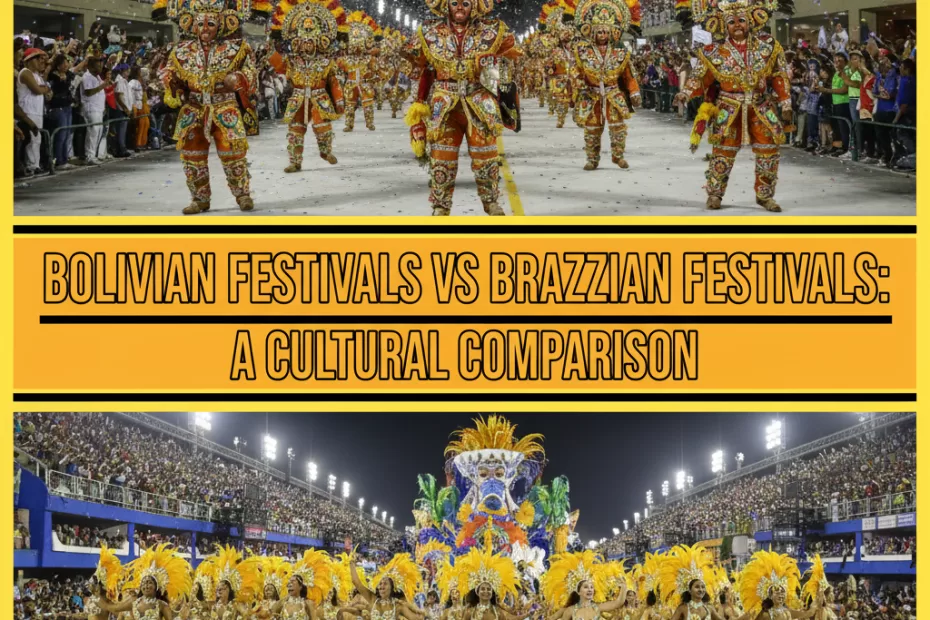
Bolivian Festivals vs Brazilian Festivals: A Cultural Comparison
South America is a continent brimming with vibrant cultural events, and at the heart of its diverse heritage lie the spectacular festivals of Bolivia and Brazil. While both nations share a rich tapestry of Latin American culture, their celebrations offer distinctly different flavors, reflecting unique histories, indigenous influences, and colonial legacies. Understanding the nuances of Bolivian festivals vs Brazilian festivals provides a fascinating glimpse into the soul of each country, revealing how festivity customs shape national identity and offer unforgettable cultural experiences for locals and travelers alike.
Introduction to Festivals in Bolivia and Brazil
Festivals are more than just parties; they are the pulsating heart of social and cultural life in both Bolivia and Brazil. They serve as powerful expressions of history, spirituality, and community, deeply ingrained in the fabric of everyday existence. In Bolivia, a country with a strong indigenous heritage, festivals often intertwine ancient Andean traditions with Catholic observances, creating a unique blend of spiritual devotion and joyful celebration. These cultural events are vital for preserving local customs, passing down stories, and reinforcing community bonds.
Brazil, on the other hand, is a melting pot of European, African, and indigenous influences, and its festivals reflect this incredible diversity. Brazilian celebrations are renowned for their exuberance, rhythm, and sheer scale, often involving massive public participation and elaborate artistic displays. From the global phenomenon of Carnaval to more regional celebrations, festivals in South America, particularly in Brazil, are a testament to the nation’s passion for music, dance, and collective joy. Both countries use these occasions to showcase their art and culture, inviting everyone to partake in their unique celebration traditions.
Major Festivals in Bolivia
Bolivia’s calendar is dotted with a multitude of festivals, each offering a window into the country’s rich heritage. Unlike the often massive, centralized events in Brazil, many Bolivian festivals are deeply rooted in specific communities, often with a strong emphasis on indigenous rituals and Catholic syncretism. Among the most prominent are the Oruro Carnival, the unique Alasitas festival, and the ancient Inti Raymi. These events are not just spectacles; they are living heritage festivals, vital to Bolivian culture and its people.
Oruro Carnival: A Colorful Spectacle
The Oruro Carnival stands as the undisputed king of Bolivian traditions and is a UNESCO Masterpiece of the Oral and Intangible Heritage of Humanity. Held annually in the city of Oruro, this incredible event is a profound expression of devotion, art, and culture. Its origins trace back to pre-Columbian Andean rituals dedicated to Pachamama (Mother Earth) and Supay (god of the Uru underworld), which later merged with Catholic traditions introduced by Spanish colonizers.
What makes Oruro Carnival truly unique is the “Diablada,” or Dance of the Devils. Thousands of elaborately costumed dancers, representing devils, angels, and various mythological figures, parade through the streets for days, performing intricate choreographies to live music. The costumes are masterpieces of craftsmanship, adorned with mirrors, jewels, and intricate embroidery. The central narrative revolves around the Archangel Michael’s triumph over the seven deadly sins, a powerful allegory presented through vibrant dance and music. Beyond the visual feast, the Oruro Carnival is a spiritual journey for many participants, a deeply personal and collective act of faith and cultural continuity. It is a prime example of ethnic festivals that combine religious fervor with ancient symbolism, drawing visitors from around the globe for a truly unique celebration.
Alasitas: A Unique Celebration
Moving away from the grand parades, the Alasitas festival offers a distinct and deeply charming insight into Bolivian culture. Celebrated primarily in La Paz on January 24th, Alasitas is a festival of abundance and wishes. The word “Alasitas” means “buy me” in Aymara, and the festival revolves around miniature versions of everyday objects. People purchase tiny houses, cars, money, food, and even academic degrees, believing that Ekeko, the Aymara god of abundance, will transform these miniatures into reality within the year.
The significance of Alasitas lies in its hopeful and often humorous approach to future prosperity. Families gather to have their miniature possessions blessed by a Yatiri (Aymara priest) or a Catholic priest, symbolizing a dual spiritual approach. It’s a truly heartwarming cultural experience, offering a glimpse into the everyday aspirations and beliefs of Bolivian people. Unlike the boisterousness of other festivals, Alasitas is more intimate and personal, a celebration of dreams and the power of intention, making it one of the most unique celebrations in the region.
Major Festivals in Brazil
Brazil, a country synonymous with celebration, hosts some of the world’s most famous festivals. These events are characterized by their scale, infectious energy, and the widespread participation of the public. While Carnaval takes center stage, other festivals like Festa Junina offer equally rich, though perhaps less globally recognized, cultural insights. These Latin American festivals are crucial to Brazilian identity, showcasing its diverse cultural heritage and boundless capacity for joy.
Carnaval: The Heart of Brazilian Culture
When one thinks of Brazilian festivals, Carnaval immediately comes to mind. This iconic celebration is not just a festival; it’s an institution, the very heart of Brazilian culture. While celebrated throughout the country, the most famous manifestations are in Rio de Janeiro, Salvador, and Olinda. Its history is a fascinating blend of European pagan festivities, Portuguese Catholic traditions, and African rhythmic influences, evolving over centuries into the spectacular event it is today.
In Rio, Carnaval is synonymous with the samba schools and their breathtaking parades in the Sambadrome. These schools, often representing local communities, spend an entire year preparing elaborate floats, dazzling costumes, and intricate samba choreographies, all competing for the coveted championship title. The energy is electrifying, the music infectious, and the sheer scale of the spectacle is unparalleled. Beyond the structured parades, street parties known as blocos erupt everywhere, with people dancing, singing, and celebrating freely.
Salvador’s Carnaval, on the other hand, is a more spontaneous, street-level affair, famous for its trio elétricos (massive trucks with sound systems) that carry musicians and singers through the crowds, creating an endless open-air party. Regardless of the city, Carnaval is a period where social hierarchies blur, inhibitions are shed, and the entire nation unites in a joyous, rhythmic expression of Brazilian identity. It’s an explosion of sound, color, and movement, embodying the very spirit of Brazilian culture and offering unparalleled festival experiences.
Festa Junina: Celebrating Brazilian Traditions
While Carnaval grabs international headlines, Festa Junina (June Festival) holds a special place in the hearts of Brazilians, particularly in the countryside. This festival, celebrated throughout June, honors Catholic saints like St. John the Baptist, St. Anthony, and St. Peter, but its origins are rooted in European midsummer festivities brought by the Portuguese. Unlike the coastal glamour of Carnaval, Festa Junina evokes a rustic, agrarian charm, celebrating harvest traditions and rural life.
The festivities are characterized by square dancing (quadrilha), bonfires, traditional games, and an abundance of delicious regional foods like corn-based dishes (pamonha, canjica), popcorn, and mulled wine (quentão). Participants dress in typical “caipira” (country bumpkin) attire, often with straw hats and painted freckles, adding to the playful atmosphere. The music is traditional forró, a lively genre perfect for dancing. Festa Junina offers a glimpse into a different facet of Brazilian culture – one of community, tradition, and simpler pleasures. It’s a family-friendly celebration, full of warmth and nostalgia, providing a beautiful contrast to the grand scale of Carnaval and highlighting the diversity of Latin American festivals.
Cultural Differences and Similarities
When comparing Bolivian festivals vs Brazilian festivals, several key differences and similarities emerge, shaped by their distinct histories, geographies, and cultural influences.
Indigenous Roots vs. African and European Blends:Bolivian festivals, particularly those in the Andean highlands, often have deep, visible indigenous roots. The reverence for Pachamama, the syncretic blend of Catholic saints with Andean deities, and the prominence of traditional Aymara and Quechua rituals are central. The Oruro Carnival, with its Diablada, directly references pre-Columbian myths and spiritual beliefs. This strong connection to ancient traditions gives Bolivian celebrations a profound spiritual and historical depth, often observed with solemnity alongside joy.
Brazilian festivals, while also incorporating indigenous elements, are more prominently characterized by their Afro-Brazilian and European influences. Carnaval’s samba rhythms and religious processions are direct descendants of African drumming and Portuguese Catholic traditions. Festa Junina, too, is a clear import from European agrarian celebrations. The blend is more a fusion of distinct external cultures rather than a continuous thread from ancient indigenous practices.
Scale and Public Participation:Brazilian festivals, especially Carnaval, are known for their massive scale, drawing millions of participants and spectators. They are often highly organized spectacles, particularly the parades, but also feature widespread, spontaneous public participation in street parties. The emphasis is often on collective joy and public performance.
Bolivian festivals, while some are large (like Oruro), often feel more community-focused and locally driven. The participation can be deeply personal and spiritual, with a strong emphasis on tradition and ritual within specific groups or families. While tourists are welcome, the core essence often revolves around local customs and the community’s heritage.
Music and Dance:Samba is the undeniable king of Brazilian festival music, instantly recognizable and deeply ingrained in the nation’s identity. Axé music and Forró also play significant roles. The dance is often energetic, sensual, and highly choreographed in formal parades, yet equally free-flowing in street parties.
Bolivian festival music is incredibly diverse, ranging from the powerful brass bands accompanying the Diablada to the haunting sounds of panpipes and charangos in Andean folk music. Dances often tell stories, with elaborate costumes and specific steps that have been passed down through generations, reflecting the rich tapestry of ethnic festivals in the country.
Despite these differences, both nations share a profound love for celebration, a vibrant use of color, and a deep respect for their cultural heritage. Both use festivals as a means of cultural expression, social cohesion, and a way to honor their history and beliefs. These cultural festivals South America-wide are essential for understanding the local customs and the broader Latin American culture.
Travel Tips for Festival-Goers
For those eager to dive into the vibrant world of Latin American festivals, a little planning goes a long way. Whether you decide to travel to Bolivia or travel to Brazil, preparing for these unique celebrations will enhance your festival experiences.
-
Plan Ahead, Book Early: Accommodation and transportation fill up quickly and prices skyrocket during major festivals. Book flights, hotels, and any organized tours months in advance, especially for events like Brazilian Carnaval or Oruro Carnival.
-
Understand the Local Customs: Do some research on the specific festival you plan to attend. For Bolivian festivals, understanding the spiritual significance and indigenous elements will deepen your appreciation. For Brazilian festivals, familiarize yourself with the music and dance styles. Respect local traditions and dress codes where applicable.
-
Stay Safe and Aware: Festivals are crowded, and while generally joyous, pickpocketing can be an issue. Keep valuables secure, avoid flashing expensive items, and be aware of your surroundings. Travel in groups if possible, especially at night.
-
Immerse Yourself: Don’t just be a spectator; participate! Learn a few basic phrases in Spanish (for Bolivia) or Portuguese (for Brazil). Try the local food and drinks, attempt a dance step or two, and engage with the locals. This is the best way to truly experience the cultural diversity and local customs.
-
Pack Appropriately: Comfortable shoes are a must, as you’ll likely be doing a lot of walking and dancing. Consider the climate – Bolivia’s high altitude can mean cool evenings, while Brazil is generally hot and humid.
-
Stay Hydrated and Energized: With long days of celebration, it’s easy to get tired. Drink plenty of water (especially at high altitudes in Bolivia) and eat regular meals to keep your energy up.
-
Be Flexible: While planning is good, sometimes the best festival experiences come from being open to spontaneous adventures. Embrace the unexpected!
These travel tips will help you navigate the excitement and immerse yourself fully in the rich tapestry of festival tourism.
Conclusion: Embracing Latin American Festivities
The comparison between Bolivian festivals vs Brazilian festivals reveals two distinct yet equally captivating worlds of celebration. Bolivia’s heritage festivals offer a profound connection to ancient indigenous traditions, often imbued with a spiritual depth and community focus that speaks to the country’s unique cultural heritage. From the devilish dancers of Oruro Carnival to the miniature wishes of Alasitas, Bolivian culture provides a deeply moving and authentic journey into Latin American culture.
Brazil, on the other hand, dazzles with its sheer scale, rhythmic energy, and vibrant fusion of African, European, and indigenous influences. Carnaval’s global allure and Festa Junina’s rustic charm showcase a nation brimming with passion, rhythm, and an unparalleled capacity for collective joy. These cultural events are not merely spectacles but vital expressions of national identity and celebration traditions.
Ultimately, both Bolivia and Brazil offer unique celebration traditions that enrich the global tapestry of art and culture. Exploring these festivals in South America provides an invaluable opportunity for cultural experiences, allowing travelers to witness firsthand the incredible diversity and vibrancy of Latin American culture. Whether drawn to the spiritual depth of the Andes or the electrifying rhythm of the samba, embracing these festivities promises unforgettable memories and a deeper understanding of these remarkable nations. So, pack your bags, open your mind, and prepare to be swept away by the magic of festivals around the world, especially those in Bolivia and Brazil.
Feeling lucky? crazywinmaya is the place to be!. I had some decent wins the other day, so it’s probably worth your time. Good luck chasing those jackpots!