
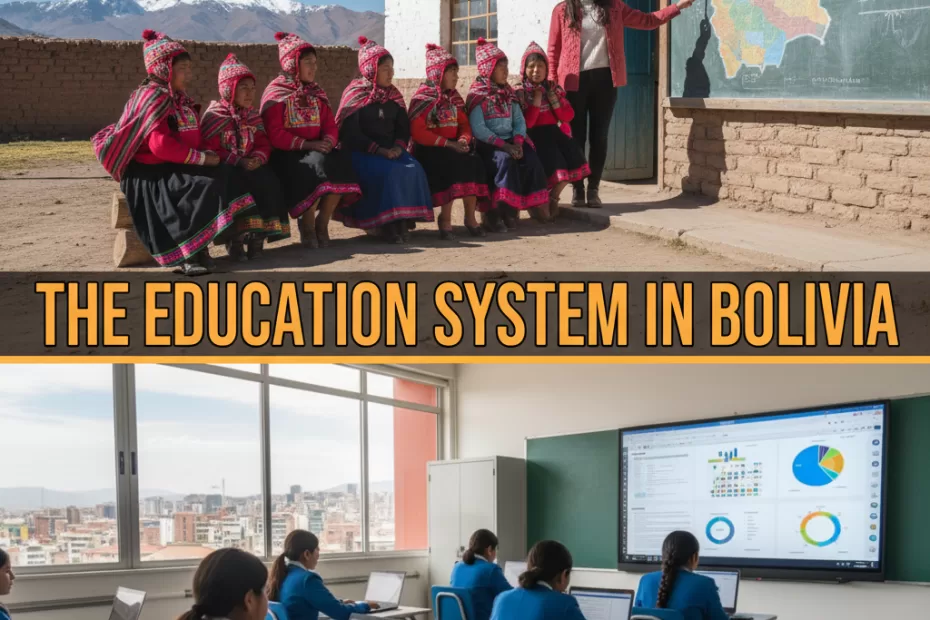
The Education System in Bolivia
Bolivia, a country rich in cultural diversity and breathtaking landscapes, possesses an education system that is as complex and evolving as its history. Understanding the education system in Bolivia offers a fascinating glimpse into the nation’s efforts to educate its diverse population, overcome significant challenges, and preserve its unique heritage. From the bustling urban centers to the remote Andean communities and Amazonian lowlands, schools are the bedrock of community life, striving to provide opportunities for all students in Bolivia. This article aims to provide a comprehensive overview, exploring the structure, challenges, and cultural nuances that define education in Bolivia, offering unique insights into how learning takes shape in this South American nation.
Overview of the Education System
The education system in Bolivia has undergone significant transformations, particularly in recent decades, driven by a national commitment to inclusivity and cultural relevance. Historically, the system was highly centralized and often overlooked the rich tapestry of indigenous languages and cultures present in the country. However, reforms, notably the Avelino Siñani-Elizardo Pérez Education Law of 2010, have aimed to decolonize education, promoting a plurinational, intercultural, and productive approach. This shift marks a pivotal moment in Bolivia education history, emphasizing not just academic achievement but also the preservation of indigenous knowledge and languages.
At its core, the Bolivia education overview reveals a structure divided into four main levels: initial (pre-school), primary, secondary, and tertiary (higher education). Education is constitutionally recognized as a fundamental human right, and the state is responsible for its provision. While public schools are the norm, particularly in rural areas, private institutions also play a role, predominantly in urban centers. The Ministry of Education oversees the national curriculum, teacher training, and overall educational policies in Bolivia. Funding for education largely comes from the national budget, supplemented by regional and municipal contributions, although securing adequate education funding Bolivia remains an ongoing challenge. The goal is to ensure that all Bolivian children and young people have access to quality education, regardless of their socioeconomic background or geographical location. This holistic approach seeks to foster critical thinking, cultural understanding, and practical skills, preparing students for both higher education and the workforce within the unique context of Bolivia.
Primary Education
Primary education in Bolivia, known as “Educación Primaria Comunitaria Vocacional,” is the foundational stage of a child’s academic journey. It typically spans six years, catering to children generally between the ages of six and twelve. This stage is compulsory and free in public institutions, reflecting the government’s commitment to universal access. The structure of primary education is designed to provide a broad general education, covering core subjects such as language and communication (Spanish and an indigenous language where applicable), mathematics, social sciences, natural sciences, arts, and physical education.
The curriculum for Bolivia primary schools has been significantly influenced by the 2010 education law, which introduced a “community-vocational” approach. This means that learning is not confined to textbooks but is often integrated with local community practices, traditional knowledge, and productive activities relevant to the region. For instance, in agricultural communities, students might learn about local farming techniques as part of their science or social studies classes. This cultural relevance is a key feature, aiming to make education more meaningful and applicable to the lives of students in Bolivia, fostering a sense of identity and belonging.
School enrollment Bolivia has seen improvements over the years, though disparities persist, particularly between urban and rural areas. While urban centers generally boast higher enrollment rates and better facilities, remote rural areas often face challenges related to infrastructure, availability of qualified Bolivian teachers, and access to Bolivia educational resources. Efforts are continually made to address these gaps, including the provision of school meals, educational materials, and programs to encourage attendance, especially for girls and indigenous children who historically faced greater barriers. The focus during primary education is on developing fundamental literacy and numeracy skills, alongside promoting values of respect, solidarity, and intercultural understanding, laying the groundwork for future learning and active participation in society.
Secondary Education
The transition from primary to secondary education in Bolivia marks a significant step in a student’s academic path. Secondary education, officially termed “Educación Secundaria Comunitaria Vocacional,” typically lasts for six years, divided into two cycles. The first cycle, often referred to as lower secondary, spans the first three years (equivalent to grades 7-9). The second cycle, or upper secondary, covers the final three years (grades 10-12). Upon successful completion of secondary education, students are awarded a “Bachillerato,” which is a prerequisite for entering higher education institutions.
During the first cycle of Bolivia secondary schools, students continue with a broad general education, building upon the foundations laid in primary school. The curriculum expands to include more specialized subjects, such as physics, chemistry, biology, history, geography, philosophy, and foreign languages (most commonly English). The emphasis remains on developing critical thinking, analytical skills, and a deeper understanding of various academic disciplines. This stage is crucial for helping Bolivia student demographics explore their interests and aptitudes before specializing further.
The second cycle introduces a more diversified curriculum, where students can begin to explore vocational pathways alongside academic subjects. This is where the “vocational” aspect of the current education law becomes more prominent. While there isn’t a rigid specialization track in the same way as some other countries, schools are encouraged to integrate productive and vocational components relevant to their local context. For example, a school in a mining region might offer insights into geology or mining safety, while one in an agricultural area might focus on sustainable farming practices. This approach aims to provide students with practical skills that can either prepare them for the workforce directly or complement their academic pursuits in higher education. The Bolivia school system at the secondary level strives to be comprehensive, ensuring that graduates are well-rounded individuals equipped with both knowledge and practical competencies. However, challenges related to teacher capacity, educational resources, and infrastructure, particularly in remote areas, continue to impact the quality and accessibility of secondary education across the nation.
Vocational Education
Vocational education in Bolivia plays a crucial role in providing practical skills and specialized training, directly addressing the needs of the labor market. While elements of vocational training are integrated into the primary and secondary curricula through the “Comunitaria Vocacional” approach, dedicated vocational education programs offer more in-depth and specific skill development. These programs are designed to equip individuals with the competencies required for various trades and technical professions, offering an alternative pathway for those who may not pursue traditional university degrees or who wish to enter the workforce directly.
Vocational training Bolivia is offered through a network of technical institutes, technological institutes, and vocational centers, both public and private. These institutions provide a wide array of courses ranging from agriculture, mechanics, electronics, and construction to tourism, gastronomy, computer science, and healthcare assistance. The duration of these programs can vary significantly, from short-term courses lasting a few months to more extensive technical careers that might span two to three years, often leading to a “Técnico Superior” (Higher Technician) degree.
A key advantage of vocational education is its focus on hands-on learning and practical application. Curricula are often developed in consultation with local industries and businesses, ensuring that the skills taught are relevant and in demand. This direct link to the labor market helps graduates find employment more readily, contributing to the country’s economic development. For many students in Bolivia, vocational education represents a pathway to economic independence and social mobility. It caters to a diverse group of learners, including secondary school graduates, those who may have left the traditional academic system early, and adults seeking to upgrade their skills or retrain for new careers. The government, through its educational policies in Bolivia, has been increasingly promoting vocational training as a vital component of the national education strategy, recognizing its potential to foster innovation, entrepreneurship, and a skilled workforce capable of meeting the evolving demands of Bolivia’s economy. While challenges exist in terms of modernizing equipment and ensuring adequate funding for these institutions, the role of vocational education is undeniably significant in shaping the future workforce and contributing to the overall development of the nation.
Tertiary Education
Tertiary education in Bolivia, commonly referred to as higher education, is the pinnacle of the academic journey and encompasses a diverse range of institutions and programs. This level of education is crucial for producing professionals, researchers, and leaders who contribute to the nation’s development across various sectors. The higher education Bolivia landscape includes both public and private universities, as well as technical and technological institutes that offer advanced vocational training.
Public universities are the backbone of the Bolivia university system. They are autonomous institutions, meaning they have a significant degree of self-governance in academic, administrative, and financial matters. This autonomy is a deeply valued principle, allowing universities to set their own curricula, research agendas, and admission policies, though they remain subject to national education frameworks. Admission to public universities is often competitive, typically requiring an entrance exam or a pre-university course. These universities offer a wide spectrum of undergraduate (licenciatura) and postgraduate (diplomado, maestría, doctorado) programs across fields like engineering, medicine, law, social sciences, humanities, and natural sciences. Many public universities also play a vital role in research and community outreach, addressing local and national development challenges.
Alongside public universities, private universities have grown in number, particularly in major urban centers. These institutions often offer more specialized programs and may have different admission criteria and tuition fees. While they provide additional options for students, concerns about education quality Bolivia can sometimes arise, leading to ongoing efforts by the Ministry of Education to regulate and accredit private institutions to ensure they meet national standards.
Technical and technological institutes, distinct from universities, offer shorter, career-focused tertiary education programs, leading to degrees such as “Técnico Superior.” These programs are typically two to three years in duration and provide specialized skills in areas like computing, industrial maintenance, healthcare technology, and tourism management. They serve as a crucial bridge between secondary education and direct entry into skilled professions, complementing the academic offerings of universities.
Challenges within higher education Bolivia include ensuring equitable access for students from all socioeconomic backgrounds, particularly those from rural and indigenous communities. Efforts are made through scholarships and support programs, but disparities persist. Furthermore, enhancing Bolivia academic performance and research output, improving infrastructure, and aligning curricula with global standards and national development needs are continuous priorities. The goal is to cultivate a dynamic and responsive higher education sector that empowers students to thrive in a complex world and contribute meaningfully to Bolivia’s future.
Challenges in the Education System
Despite significant reforms and ongoing efforts, the education system in Bolivia continues to grapple with a multitude of challenges that impact its effectiveness and equitable reach. These challenges are often multifaceted, rooted in socioeconomic disparities, geographical complexities, and historical legacies.
One of the primary concerns is access to education, particularly for students in remote rural areas and indigenous communities. While school enrollment Bolivia has improved, geographical isolation, lack of adequate transportation, and economic pressures on families to have children contribute to household labor can still prevent consistent attendance. Many public schools in these regions lack basic infrastructure, such as proper classrooms, sanitation facilities, and electricity, making the learning environment less conducive.
Quality of education is another significant hurdle. This is influenced by several factors, including the availability and training of Bolivian teachers. Many teachers, especially in rural settings, may lack specialized training in certain subjects or in intercultural bilingual education, which is crucial in a plurinational country. Teacher remuneration can also be an issue, leading to low morale or a lack of incentive to work in challenging locations. Furthermore, the quality of educational resources Bolivia provides varies widely. While urban schools might have access to some technology and modern materials, many rural schools still rely on outdated textbooks and limited teaching aids. This disparity contributes to uneven Bolivia academic performance across different regions and socioeconomic groups.
Education funding Bolivia remains a perennial challenge. Despite constitutional mandates and government investment, the sheer scale of needs often outstrips available resources. This impacts everything from school infrastructure and teacher salaries to the development of new curricula and the provision of essential learning materials. The reliance on public schools means that government funding is paramount, and any shortfalls can have widespread consequences.
Linguistic and cultural relevance also present unique challenges. While the Avelino Siñani-Elizardo Pérez Law aims to promote intercultural bilingual education, its effective implementation requires substantial resources, including the development of teaching materials in various indigenous languages and the training of bilingual teachers. Ensuring that the curriculum genuinely reflects the diverse cultures and knowledge systems of Bolivia, rather than merely translating a Western-centric model, is a complex undertaking.
Finally, retention rates and completion rates remain problematic, particularly at the secondary level. Factors such as early marriage, child labor, and the need for young people to contribute to family incomes can lead to students dropping out before completing their education. Addressing these Bolivia education challenges requires a holistic approach that goes beyond the classroom, involving social support programs, economic development initiatives, and continued investment in all aspects of the education system.
Cultural Influences on Education
Bolivia’s rich and diverse cultural tapestry profoundly influences its education system, shaping not only the curriculum but also pedagogical approaches and the overall learning environment. With over 36 recognized indigenous nations, the country’s plurinational identity is a cornerstone of its educational philosophy, particularly since the 2010 education reforms. This emphasis on cultural education Bolivia is a deliberate effort to counteract historical assimilationist policies and to celebrate the nation’s indigenous heritage.
One of the most significant cultural influences is the promotion of intercultural bilingual education (EIB). This approach acknowledges and values the diverse languages spoken across Bolivia, including Quechua, Aymara, Guarani, and many others, alongside Spanish. In many schools, especially in indigenous communities, education is delivered in both Spanish and the local indigenous language, aiming to strengthen students’ identity, preserve ancestral knowledge, and improve learning outcomes by teaching in their mother tongue. The curriculum is designed to integrate indigenous cosmologies, histories, and forms of knowledge, ensuring that students learn about their own cultural heritage alongside global perspectives.
The concept of “Vivir Bien” (Living Well), or Suma Qamaña in Aymara and Sumak Kawsay in Quechua, is another powerful cultural influence. This philosophy, deeply rooted in indigenous worldviews, emphasizes harmony with nature, community reciprocity, and collective well-being over individualistic pursuits. In the educational context, “Vivir Bien” promotes values such as solidarity, respect for elders and nature, collective work, and a holistic understanding of life. It encourages a pedagogical approach that fosters critical thinking about sustainable development, social justice, and community engagement, moving beyond purely academic achievements to encompass personal and communal flourishing.
Traditional practices and community involvement also play a vital role. In many rural and indigenous communities, schools are not just places of academic learning but also centers for cultural transmission and community gathering. Elders and community leaders often participate in school activities, sharing traditional stories, crafts, and knowledge. This integration helps to bridge the gap between formal schooling and traditional forms of learning, making education more relevant and connected to the students’ lived experiences. Bolivia education policies actively encourage this community participation, recognizing that education is a collective responsibility.
Furthermore, the curriculum often incorporates productive and vocational components that reflect local economic activities and cultural practices. For instance, in agricultural communities, students might learn about traditional farming methods or local crafts, connecting their studies to their cultural heritage and potential future livelihoods. This ensures that education is not detached from the practical realities and cultural context of the students. These cultural influences aim to create an education system that is not only academically rigorous but also culturally affirming, fostering a sense of pride, identity, and belonging among all students in Bolivia.
Comparative Analysis with Other Countries
Comparing the education system in Bolivia with that of another country, such as the United States, reveals both fascinating similarities in overarching goals and significant differences in structure, challenges, and cultural integration. This education comparison Bolivia highlights the unique trajectory and priorities of each nation.
In the United States, the education system is highly decentralized, with significant control at the state and local levels, leading to considerable variation in curricula, funding, and policies across districts. It typically consists of 12 years of compulsory schooling (K-12), followed by a vast and diverse higher education landscape of community colleges, public universities, and private institutions. The US system emphasizes standardized testing, individual achievement, and a broad range of extracurricular activities. Vocational training is often integrated into high schools or offered through community colleges. Education quality Bolivia, in comparison, is a more centralized system, with the Ministry of Education setting national policies and curricula, though recent reforms have pushed for regional and local relevance.
One key difference lies in cultural and linguistic integration. The US, while diverse, has historically struggled with integrating bilingual education effectively, often prioritizing English immersion. While there are efforts to support diverse student populations, the foundational curriculum is predominantly monocultural. In contrast, Bolivia’s system, particularly post-2010, explicitly embraces its plurinational and intercultural identity. Intercultural bilingual education is a cornerstone, aiming to preserve and promote indigenous languages and knowledge systems. This focus on Bolivia cultural education is a distinctive feature, reflecting a deliberate policy to affirm indigenous identity and decolonize education.
Access and equity present challenges in both countries, though the nature differs. In the US, disparities often relate to socioeconomic status, leading to significant gaps between well-funded suburban schools and underfunded urban or rural schools. In Bolivia, geographical isolation, poverty, and the historical marginalization of indigenous communities are major barriers to equitable access, especially in remote areas. While both nations grapple with education funding Bolivia, the scale of resources available is vastly different, with the US having a significantly larger budget per student.
Higher education in the US is characterized by a highly competitive and expensive private university sector alongside a strong public university system. Debt from student loans is a major concern for many. Bolivia university system, while also having private institutions, is predominantly public, with tuition fees being significantly lower or non-existent in public universities, aiming for broader accessibility. However, challenges in Bolivia include limited research capacity and infrastructure compared to leading US institutions.
Regarding Bolivia education statistics, while literacy rates have improved significantly in Bolivia, they still lag behind the US. Bolivia literacy rates have benefited from adult literacy programs, but the quality of academic performance remains a concern, particularly when compared internationally. The US faces its own challenges with academic performance, especially in subjects like mathematics and science, where it often ranks lower than other developed nations.
In summary, while both systems aim to educate their populations, the US tends towards decentralization and individualistic achievement within a predominantly English-speaking framework, albeit with growing multicultural awareness. Bolivia’s system, especially in its recent iterations, is more centralized but deeply committed to an intercultural, plurinational, and community-oriented approach, actively seeking to integrate indigenous cultures and languages. This comparative lens highlights the unique strengths and persistent challenges each country faces in shaping its educational future within the broader context of education in Latin America.
Future of Education in Bolivia
The future of the education system in Bolivia is characterized by a continued commitment to the principles of inclusivity, cultural relevance, and quality, while simultaneously addressing existing challenges and adapting to new global realities. The foundational reforms introduced by the Avelino Siñani-Elizardo Pérez Law of 2010 provide a strong framework, but the ongoing work lies in effective implementation and continuous improvement.
One key area for future development is the strengthening of teacher training and professional development. Enhancing the capacity of Bolivian teachers, particularly in intercultural bilingual methodologies and the integration of technology, is crucial for improving education quality Bolivia. This includes ensuring that teachers are well-equipped to teach in diverse linguistic contexts and to foster critical thinking and problem-solving skills relevant to the 21st century. Attracting and retaining talented educators in remote areas will also remain a priority, potentially through improved incentives and support systems.
Technological integration is another critical aspect of the future. While internet access and digital resources are still limited in many parts of Bolivia, there is a growing recognition of the potential of technology to bridge geographical gaps, provide access to vast educational resources, and modernize learning experiences. Future Bolivia education reforms will likely focus on expanding digital literacy, providing schools with necessary infrastructure, and integrating e-learning platforms, especially in response to global events that highlight the need for flexible learning modalities.
The curriculum will likely continue to evolve to ensure it remains relevant, responsive, and truly plurinational. This involves ongoing efforts to develop culturally appropriate materials in various indigenous languages and to deepen the integration of indigenous knowledge systems within all subject areas. The focus on “productive” education and vocational training Bolivia will also intensify, aiming to better align educational outcomes with the needs of the national and regional economies, fostering entrepreneurship and sustainable development. This means strengthening partnerships between educational institutions and local industries.
Furthermore, improving infrastructure and equitable access will remain central to the future outlook. This includes building new schools, renovating existing ones, and ensuring access to basic services like water, sanitation, and electricity in all educational establishments. Policies aimed at reducing dropout rates and increasing school enrollment Bolivia, particularly at the secondary level, will continue to be refined, possibly through stronger social safety nets and community engagement programs.
Finally, education funding Bolivia will need to be consistently prioritized to support these initiatives. Sustainable and increased investment will be essential for modernizing the system, supporting teachers, and ensuring that every student in Bolivia has the opportunity to receive a high-quality education. The future of education in Bolivia is thus a journey of continuous adaptation and commitment, striving to build a system that empowers all its citizens to thrive in a globalized yet culturally distinct world.
Conclusion
The education system in Bolivia is a dynamic and multifaceted entity, reflecting the nation’s rich cultural heritage, its commitment to social equity, and its ongoing efforts to overcome significant developmental challenges. From the foundational primary schools to the diverse offerings of higher education Bolivia, the system is designed to serve a plurinational society, emphasizing both academic rigor and cultural relevance. We’ve explored how the curriculum in Bolivia primary schools and Bolivia secondary schools integrates community and vocational aspects, preparing students not just for further study but also for active participation in their local economies and cultures.
The journey through vocational training Bolivia and the Bolivia university system highlights the country’s dedication to providing varied pathways for learning and professional development. Yet, as we’ve seen, the path is not without its obstacles. Bolivia education challenges, including issues of access, quality, teacher training, and consistent education funding Bolivia, are persistent. However, the nation’s proactive approach through reforms like the Avelino Siñani-Elizardo Pérez Law, which champions intercultural bilingual education and the philosophy of “Vivir Bien,” showcases a profound commitment to building a more inclusive and equitable educational future.
Understanding the education system in Bolivia offers invaluable insights into the country’s aspirations and its unique approach to nurturing its human capital. It underscores the importance of context-specific solutions, recognizing that effective education must be deeply rooted in the cultural, linguistic, and socioeconomic realities of its people. As Bolivia continues to evolve, its education system will undoubtedly remain a cornerstone of its development, striving to empower every student in Bolivia to realize their full potential and contribute to a vibrant and harmonious society.
Yo fam, EC777 is alright. Not the best, not the worst, just… there. Worth a peek ec777.