
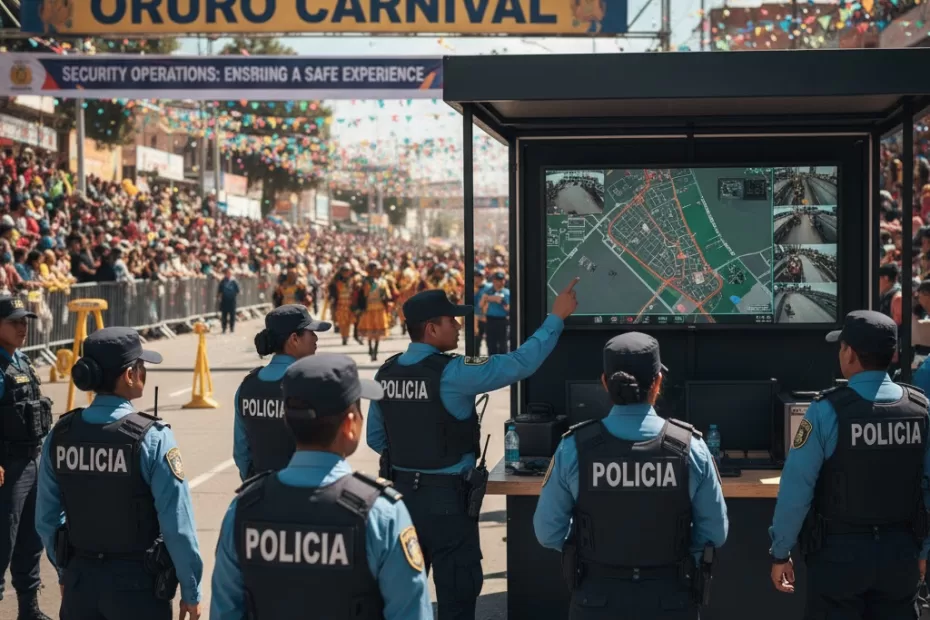
Security Operations at Oruro Carnival: Ensuring a Safe Experience
The Oruro Carnival, a UNESCO Masterpiece of the Oral and Intangible Heritage of Humanity, is more than just a festival; it’s a vibrant tapestry woven with centuries of tradition, faith, and exuberant celebration. Each year, this spectacular event in Bolivia draws hundreds of thousands of revelers, both local and international, to witness its dazzling parades, intricate dances, and rich cultural expressions. From the moment the first dance troupe steps out, to the final echoes of music fading, the carnival is a whirlwind of color, sound, and energy. However, with such immense popularity comes the significant responsibility of ensuring the safety and well-being of every participant and spectator. This isn’t a task taken lightly, and the security operations at Oruro Carnival are a testament to the meticulous planning and dedicated efforts required to manage such a massive public gathering.
For an event of this scale, robust security measures are not just an option but an absolute necessity. The sheer volume of people, combined with the dynamic and often unpredictable nature of large-scale festivities, presents unique challenges that demand a comprehensive and coordinated approach. This article delves deep into how authorities manage safety and crowd control during the festival, exploring the intricate layers of planning, execution, and continuous vigilance that go into making the Oruro Carnival a safe and unforgettable experience for everyone. We’ll examine the roles of various agencies, the specific protocols in place, and crucial safety tips for attendees, ensuring that the spirit of the carnival can thrive without compromise.
Overview of Oruro Carnival Security Operations
Ensuring a safe and enjoyable experience at the Oruro Carnival requires a multi-faceted approach to security, meticulously planned and executed by various agencies working in concert. The general security measures in place during the festival are comprehensive, designed to cover everything from crowd management to emergency response. At the forefront of these efforts is a significant police presence Oruro Carnival, with officers strategically deployed across the carnival route, key gathering points, and surrounding areas. These dedicated personnel are highly visible, serving as both a deterrent to potential issues and a readily available resource for attendees. Their responsibilities extend beyond maintaining order, encompassing traffic control, responding to incidents, and providing assistance to those in need.
Beyond the uniformed police, a broad spectrum of emergency services plays a crucial role. This includes dedicated teams from the fire department, medical emergency services, and civil defense units. These teams are stationed at various points along the parade route and within designated zones, equipped to respond swiftly to any medical emergencies, fires, or other unforeseen incidents. Temporary medical posts, staffed by doctors and nurses, are set up to provide immediate first aid and stabilize more serious conditions before transport to local hospitals. The coordination between these services is paramount, often facilitated by a central command center that monitors the entire event, allowing for rapid deployment and efficient resource allocation.
The Oruro Carnival protocols are developed well in advance of the festival, involving extensive planning meetings between municipal authorities, national police, health ministries, and local community leaders. These protocols outline everything from entry and exit points for spectators to designated safe zones, lost and found procedures, and communication strategies. Crowd control barriers are erected along the parade route to create clear separation between performers and spectators, preventing overcrowding and ensuring smooth flow. Security checkpoints are sometimes established at access points to monitor bags and prevent prohibited items from entering the carnival zones, further bolstering carnival event security.
Additionally, plainclothes officers are often integrated into the crowd, providing an unobtrusive layer of surveillance and intelligence gathering. This allows for early detection of suspicious activities or potential threats, enabling preventative action before incidents escalate. Public address systems are strategically placed to disseminate important safety announcements and instructions, ensuring that crucial information can reach a wide audience quickly. The local authorities Oruro also work closely with private security firms, especially for specific enclosed events or private viewing areas, adding another layer of professional oversight. The goal of these extensive security operations at Oruro Carnival is to create an environment where the vibrant energy of the festival can be enjoyed freely, knowing that a robust safety net is firmly in place. This holistic approach to carnival security overview is essential for managing the scale and complexity of such a significant cultural event.
Importance of Safety Measures at Oruro Carnival
The sheer scale and global appeal of the Oruro Carnival underscore the profound importance of safety measures at Oruro Carnival. This isn’t just about preventing accidents or crime; it’s about preserving the integrity of a cherished cultural heritage, protecting lives, and ensuring that the joyous spirit of the festival remains untarnished. For both the thousands of locals who participate year after year and the growing number of international tourists, robust Oruro Carnival security is the bedrock upon which the entire experience rests. Without it, the vibrant celebrations could quickly turn into chaos, undermining the very essence of what makes this carnival so special.
One of the primary reasons for stringent security is the protection of human life. Large crowds, especially in a festive environment, can present inherent risks such as stampedes, lost children, or medical emergencies exacerbated by density. Effective Oruro safety protocols, including clear ingress and egress routes, crowd flow management, and readily available emergency services, are vital to mitigate these risks. Knowing that medical personnel are on standby, and that there are clear procedures for what to do in an emergency, provides a crucial sense of reassurance for everyone attending. This community safety Oruro focus extends to ensuring that vulnerable populations, such as children and the elderly, are protected and can navigate the event safely.
For tourists, who might be unfamiliar with the local customs, language, or geographical layout, safety for tourists Oruro is particularly critical. A negative experience due to a security lapse can not only harm an individual but also damage the carnival’s reputation on the global stage. Comprehensive attendee safety tips Oruro and visible security presence help international visitors feel secure and confident as they immerse themselves in the festivities. This encourages more people to visit, boosting local tourism and the economy, which are significant benefits derived from a well-managed event. The provision of clear information, available in multiple languages, regarding safety guidelines Oruro Carnival, emergency contacts, and local assistance points is therefore indispensable.
Moreover, the carnival is a deeply significant Oruro cultural festival and a profound expression of faith and tradition. Preserving this cultural heritage requires an environment where participants can focus on their performances and spiritual devotion without fear. Dancers, musicians, and artisans invest countless hours in preparing for this event, and their ability to perform freely and safely is paramount. Any disruption due to security concerns could detract from the spiritual and artistic integrity of the celebrations. The Oruro cultural celebrations are a source of immense pride for the local community, and maintaining a secure environment ensures that these traditions can continue to be passed down through generations without interruption.
In essence, the investment in comprehensive safety measures Oruro Carnival is an investment in the carnival itself. It safeguards lives, protects cultural heritage, supports local tourism, and ensures that the Oruro Carnival continues to be a beacon of joy, tradition, and community spirit for years to come. It’s about creating a harmonious balance between unbridled celebration and responsible public management, allowing the magic of the carnival to unfold safely for all.
Key Security Protocols for Attendees
Attending the Oruro Carnival is an exhilarating experience, but to ensure it remains safe and enjoyable, every attendee plays a crucial role in adhering to key security protocols. While authorities implement broad Oruro Carnival security measures, individual vigilance and preparedness are equally important. One of the most fundamental safety guidelines Oruro Carnival is to always stay aware of your surroundings. Large crowds can be disorienting, so knowing who and what is around you can help prevent incidents. Avoid getting overly distracted by the spectacle to the point where you lose sight of your personal safety.
It’s highly recommended to travel in groups, especially at night or in very crowded areas. “Buddy systems” are incredibly effective; agree on a meeting point in case you get separated. Keep your valuables secure and out of sight. Wallets should be in front pockets, and bags worn across the body or secured. Better yet, only carry essentials and leave valuable jewelry or unnecessary documents at your accommodation. Pickpocketing can be a concern in any large crowd, so being proactive about securing your belongings is a simple yet effective deterrent. This forms a core part of carnival attendee advice.
Before heading out, familiarize yourself with the carnival route and potential exit points. Knowing the layout can be invaluable if you need to quickly move away from a congested area or locate an emergency service point. Pay attention to public announcements and follow instructions from local police Oruro and security personnel. They are there to help and guide the crowd, and their directives are crucial for maintaining order and responding to situations. Staying hydrated is also very important, especially under the Bolivian sun, and consuming alcohol responsibly is key to maintaining your awareness and control. Over-indulgence can make you a target and impair your judgment, increasing personal safety risks.
Another vital protocol is to have a communication plan. Ensure your phone is charged, and consider carrying a portable charger. Have a pre-arranged meeting spot and time with your group in case phones die or signal is lost. Share your itinerary with someone not attending the carnival, so they know your general whereabouts. If you encounter any suspicious activity or feel unsafe, trust your instincts and report it immediately to the nearest security official or police officer. Do not try to intervene yourself. These proactive steps are part of a comprehensive carnival safety checklist that every attendee should consider before diving into the festivities.
Emergency Contacts and Resources
Even with the best planning and personal vigilance, emergencies can happen. Knowing who to call and where to go is a critical component of Oruro event safety. It’s advisable to save these numbers in your phone before the carnival begins, and perhaps even write them down on a small card to carry with you, just in case your phone battery dies.
Here are some essential carnival emergency contacts and resources:
-
Police (Policía Boliviana): Dial 110. This is the primary number for all police emergencies and should be your first point of contact for any security concerns, theft, or disturbances.
-
Fire Department (Bomberos): Dial 119. For any fire-related incidents or emergencies requiring fire department assistance.
-
Ambulance/Medical Emergencies: While a specific national ambulance number might vary, calling 110 (Police) will generally connect you to emergency services who can dispatch medical aid. During the carnival, look for clearly marked temporary medical posts along the parade route.
-
Local Authorities Oruro (Municipalidad de Oruro): While not an emergency number, knowing the location of municipal information points can be helpful for lost and found, or general assistance. These points are usually well-marked and staffed during the carnival.
-
Your Embassy or Consulate: If you are an international tourist, have the contact information for your country’s embassy or consulate in Bolivia readily available. They can provide assistance with lost passports, legal issues, or other emergencies specific to foreign nationals.
-
Local Hospital Information: Familiarize yourself with the location of the main hospitals in Oruro. For instance, Hospital General San Juan de Dios is a key facility. Knowing its general direction can be useful if you need to direct an emergency vehicle or seek medical attention yourself.
Make sure to have these numbers accessible. Preparing for potential emergencies is a key part of responsible attendance and contributes significantly to overall Oruro safety.
What to Do in Case of an Emergency
Understanding the steps to take in an emergency situation is crucial for your safety and the safety of those around you. Being prepared can make a significant difference in how an incident unfolds.
If you find yourself in an emergency during the Oruro Carnival, here’s an outline of steps to follow:
-
Stay Calm and Assess the Situation: The first and most important step is to try and remain calm. Panic can cloud judgment. Quickly assess what type of emergency it is (medical, security, fire, lost person, etc.) and your immediate surroundings.
-
Ensure Your Immediate Safety: If there’s an immediate threat (e.g., a fight, a fire, a rapidly moving crowd), prioritize getting yourself and your group to a safe location. Move away from the immediate danger zone in a calm, controlled manner. Avoid running into the crowd, which can cause further panic or falls.
-
Alert Authorities: As soon as it is safe to do so, contact the appropriate emergency services using the numbers provided above. Clearly state your location, the nature of the emergency, and any relevant details. If you can’t make a call, seek out the nearest police officer, security personnel, or medical staff. They are highly visible and trained to respond.
-
Seek Medical Help (if needed): If it’s a medical emergency, either for yourself or someone else, try to locate the nearest temporary medical post or flag down a medical professional. If the person is seriously injured, do not move them unless they are in immediate danger. Provide first aid if you are trained and it is safe to do so.
-
Follow Instructions: Listen carefully to any instructions given by local authorities Oruro over public address systems or by security personnel. They have a broader view of the situation and their guidance is critical for managing the emergency effectively.
-
Find a Designated Safe Zone: Familiarize yourself with designated safe zones or evacuation points beforehand. These areas are typically away from the main parade route and are designed for gathering in an emergency.
-
Assist Others (if safe): If you can safely assist others, especially children, the elderly, or those with disabilities, do so. However, do not put yourself in further danger.
-
Report Lost Items/People: If you lose personal belongings or get separated from your group, report it to the nearest police officer. They can direct you to lost and found stations or assist in locating missing persons.
These steps are part of the broader festival emergency plans and contribute to an effective emergency response Oruro. By being prepared and knowing how to react, attendees significantly enhance their own safety and contribute to a more secure environment for everyone at the Oruro Carnival.
Role of Local Authorities in Carnival Security
The success of the Oruro Carnival, particularly concerning its safety and crowd control, hinges significantly on the unwavering commitment and meticulous planning of local authorities Oruro. Their contribution extends far beyond mere oversight; they are the architects and primary implementers of the comprehensive security framework that underpins the entire event. From the initial conceptualization stages to the final cleanup, the municipal government and its various departments play an indispensable role in ensuring a secure and harmonious celebration.
Long before the first dancer steps onto the route, the municipal government initiates extensive carnival preparations Oruro. This involves inter-agency meetings with national police, health services, civil defense, and other relevant bodies to develop a unified security strategy. They are responsible for designating the official parade route, establishing safe zones, and determining the placement of barriers, medical posts, and command centers. The municipal planning department works on logistics, including waste management, public sanitation, and ensuring adequate water and electricity supply throughout the carnival zones. These foundational elements are critical for preventing health crises and maintaining a functional environment amidst massive crowds.
The local police Oruro, under the jurisdiction and coordination with national forces, are the visible arm of carnival security. They are tasked with maintaining public order, managing traffic flow around the carnival circuit, and responding to incidents. Their presence is a crucial deterrent to crime and a source of reassurance for attendees. Officers are deployed in large numbers, often working extended shifts to cover the entire duration of the festival, which can last for several days of intensive activity. They manage access points, conduct patrols, and are the first responders to any security breaches or public disturbances. The coordination between municipal police and national forces is seamless, ensuring a unified approach to law enforcement.
Beyond law enforcement, other municipal departments contribute significantly. The health department, for instance, is responsible for setting up temporary medical facilities, ensuring the availability of emergency medical personnel, and implementing public health campaigns. These campaigns might include advice on hydration, sun protection, and responsible alcohol consumption, all aimed at preventing common carnival-related ailments. The civil defense unit focuses on disaster preparedness and response, coordinating efforts in case of major incidents like structural failures or mass evacuations, though thankfully such events are rare.
Furthermore, the local authorities are key in managing the social and cultural aspects of the carnival. They work with cultural associations and dance troupes, ensuring that the Oruro cultural festival traditions are respected and that the event runs smoothly from a logistical standpoint for all performers. This includes providing designated changing areas, rehearsal spaces, and ensuring the safety of cultural artifacts and costumes, which are often of immense value. Their involvement in Oruro cultural celebrations helps to preserve the authenticity and spiritual significance of the event while simultaneously providing a secure environment.
In essence, the local authorities act as the central nervous system for security operations at Oruro Carnival. Their comprehensive planning, resource allocation, and continuous oversight ensure that the various components of security work together cohesively. This dedication allows the Oruro Carnival to not only be a spectacular display of Bolivian culture but also a remarkably well-managed and safe public gathering, year after year.
Challenges Faced in Securing the Carnival
Securing an event as vast, dynamic, and culturally significant as the Oruro Carnival presents a unique set of challenges for security personnel and local authorities. While extensive planning goes into security operations at Oruro Carnival, the sheer scale and nature of the festival mean that unforeseen circumstances and inherent difficulties are always a factor. Understanding these security challenges Oruro Carnival helps appreciate the immense effort involved in ensuring public safety.
One of the most significant challenges is the immense crowd density. Hundreds of thousands of people converge on the relatively compact city of Oruro, creating bottlenecks and highly congested areas. Managing this human flow, especially during peak parade times, requires sophisticated crowd control techniques to prevent stampedes or crush injuries. Barriers must be robust, and clear pathways maintained for emergency services, which can be difficult when enthusiastic spectators spill over designated lines. The variable behavior of large crowds, often fueled by excitement and sometimes alcohol, adds another layer of unpredictability.
Geographical constraints also play a role. Oruro is situated at a high altitude (over 3,700 meters or 12,000 feet), which can exacerbate medical conditions for visitors unaccustomed to the thin air. This means medical emergency response needs to be even more vigilant and rapid, as minor health issues can quickly escalate. The urban layout, with its narrow streets and traditional architecture, while charming, can complicate the movement of emergency vehicles and the establishment of clear evacuation routes.
Another challenge lies in the sheer duration and intensity of the carnival. It’s not a single-day event; the main celebrations span several days, with pre-carnival activities occurring weeks in advance. Maintaining high levels of vigilance and personnel readiness over such an extended period is physically and mentally demanding for security forces. Fatigue can set in, and ensuring consistent alertness across all shifts is a constant operational hurdle.
The cultural context itself presents complexities. The carnival is a deeply rooted tradition, often involving spontaneous revelry and a blurring of lines between performers and spectators in certain areas. While this contributes to its unique charm, it can also make strict crowd control measures difficult to enforce without detracting from the authentic experience. Balancing the need for stringent cultural heritage security with the desire to preserve the carnival’s free-spirited nature requires delicate management.
Furthermore, communication can be a challenge. In such a noisy and crowded environment, relying solely on verbal commands or even public address systems can be insufficient. Ensuring that crucial information reaches everyone, especially in multiple languages for international tourists, requires diverse communication strategies. Technical issues with radio systems or mobile networks due to overload can also hinder rapid coordination among security teams.
The potential for petty crime, such as pickpocketing and minor theft, is always elevated in large crowds. While a strong police presence acts as a deterrent, the sheer number of people makes it impossible to prevent every incident. Identifying and apprehending offenders in a moving, dense crowd is extremely difficult. Ensuring the Oruro Carnival security is comprehensive enough to deter serious incidents while managing the everyday challenges of such a massive public gathering is an ongoing, complex task that demands continuous adaptation and resourcefulness from all involved local authorities Oruro and security personnel.
Safety Tips for Tourists at Oruro Carnival
For tourists embarking on the incredible journey to experience the Oruro Carnival, preparation is key to ensuring a safe and memorable trip. While security operations at Oruro Carnival are robust, individual vigilance and adherence to practical safety tips for tourists at Oruro Carnival will significantly enhance your experience. Bolivia offers a unique cultural immersion, but like any major travel destination, especially during a large festival, it pays to be informed and cautious.
Firstly, when planning your travel safety Oruro, consider arriving a few days before the main carnival events. This allows you to acclimatize to Oruro’s high altitude and get a feel for the city before the crowds swell. Hydrate constantly and avoid strenuous activities upon arrival to mitigate altitude sickness. Seek advice from your doctor regarding preventative measures for altitude sickness before you travel.
Prioritize securing your accommodation well in advance. Hotels and hostels fill up rapidly, and last-minute bookings can lead to less safe or inconvenient options. Ensure your chosen lodging is reputable and has good security. Once you’re in Oruro, make copies of your passport, visa, and other important documents. Keep the originals in a secure place at your accommodation and carry only the copies with you. This is a crucial aspect of Oruro travel safety.
When you venture out, practice smart money management. Carry only the cash you need for the day and keep it in a secure, hidden pouch or front pocket. Avoid displaying large amounts of money or expensive jewelry. Consider using a credit card for larger purchases, but be mindful of card skimmers. It’s also wise to inform your bank of your travel plans to prevent your cards from being flagged for suspicious activity.
Always be aware of your surroundings, especially in crowded areas. Pickpocketing is a common concern at large festivals. Keep your bag zipped and secure against your body. If you carry a backpack, wear it on your front in dense crowds. Avoid walking alone at night, especially in dimly lit or unfamiliar areas. Stick to well-lit, populated streets. If you’re out with a group, establish a meeting point and time in case you get separated. This is essential carnival attendee advice.
Regarding food and drink, be cautious. Drink only bottled water or beverages from sealed containers. Be wary of street food unless it looks freshly prepared and served from a clean stall. If consuming alcohol, do so in moderation to maintain your awareness and judgment. Never accept drinks from strangers, and always keep an eye on your own beverage.
Familiarize yourself with the local emergency numbers (Police: 110, Fire: 119, Medical: 110 for police who can dispatch medical aid) and the location of your country’s embassy or consulate in Bolivia. Have these contacts saved on your phone and written down. If you encounter any suspicious activity or feel threatened, immediately seek out a police officer or security personnel. Do not try to confront individuals yourself.
Finally, embrace the spirit of the carnival but do so responsibly. Participate in the traditions, enjoy the music and dance, but always prioritize your personal safety. A quick carnival safety checklist before you leave your accommodation each day can be invaluable:
-
Do I have my essential documents (copies) and emergency contacts?
-
Is my phone charged?
-
Do I have enough cash, securely stored?
-
Am I dressed appropriately and comfortably for the crowd and weather?
-
Do I know where I’m going and how to get back?
By following these practical tips, tourists can immerse themselves fully in the magic of the Oruro Carnival, confident in their personal Oruro safety and prepared for a truly unforgettable cultural experience.
Conclusion: The Importance of Security at Cultural Events
The Oruro Carnival stands as a magnificent testament to Bolivia’s rich cultural heritage, a vibrant spectacle that captivates hearts and minds with its deep-rooted traditions, dazzling costumes, and exhilarating music. However, the ability for this cherished event to unfold year after year, welcoming hundreds of thousands of participants and spectators from across the globe, is inextricably linked to the robust and meticulously executed security operations at Oruro Carnival. The narrative of the carnival is not just one of celebration and devotion, but also one of profound responsibility and dedicated logistical planning.
As we’ve explored, the array of safety measures Oruro Carnival encompasses everything from a pervasive police presence Oruro Carnival and readily available emergency services to intricate crowd control strategies and proactive attendee safety guidelines. These measures are not mere afterthoughts; they are the invisible scaffolding that supports the entire structure of the festival, ensuring that the focus remains on cultural expression and communal joy rather than on potential risks. The collaborative efforts of local authorities Oruro, national police, health professionals, and civil defense units form a comprehensive carnival security overview, designed to anticipate and mitigate challenges inherent in such a massive gathering.
The challenges faced, from managing immense crowd density in a high-altitude urban environment to sustaining vigilance over several days of intense activity, highlight the complexity of securing a festival of this magnitude. Yet, the continuous refinement of Oruro Carnival protocols and the unwavering commitment to Oruro event safety demonstrate a deep understanding of what it takes to protect both people and cultural heritage. For tourists, understanding and adhering to safety tips for tourists at Oruro Carnival is not just about personal protection; it’s about contributing to the collective safety and ensuring a harmonious experience for everyone.
Ultimately, the significance of effective security operations at cultural events like the Oruro Carnival cannot be overstated. They are crucial for preserving human life, protecting valuable cultural assets, fostering economic benefits through tourism, and maintaining the integrity and reputation of the festival itself. The Oruro Carnival history is rich with tradition, and the ongoing commitment to safety ensures that future iterations, such as Oruro Carnival 2025, will continue to be vibrant, secure, and accessible to all who wish to partake in this extraordinary cultural phenomenon. By prioritizing safety, the organizers and the community ensure that the spirit of the carnival, with its unique blend of indigenous beliefs and Catholic tradition, can continue to flourish, inspiring awe and wonder for generations to come. The security framework allows the magic to happen, transforming a potentially chaotic gathering into a testament to organized celebration and shared human experience.
Grandpashabet1860? I’ve heard whisperings. Seems like a new player on the scene. Always tread carefully with these newer sites, yeah? Do your homework before you drop any cash. Find it here: grandpashabet1860