
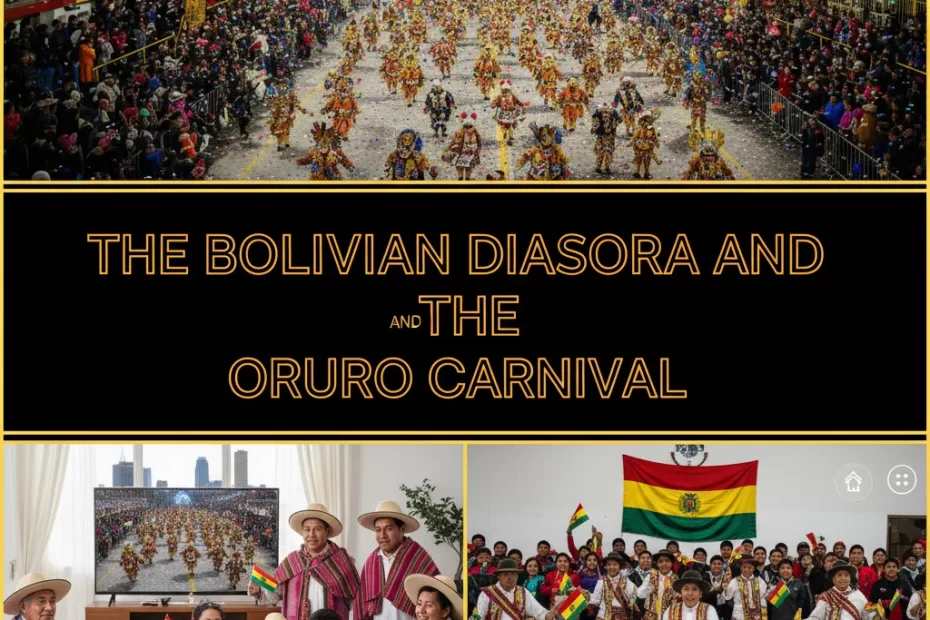
The Bolivian Diaspora and the Oruro Carnival
The pulsating rhythms of the Diablada, the intricate embroidery of the Morenada costumes, and the vibrant tapestry of color and sound define the Oruro Carnival – a spectacle so profound it has been recognized by UNESCO as a Masterpiece of the Oral and Intangible Heritage of Humanity. Yet, the reach of this extraordinary festival extends far beyond the high-altitude city of Oruro, Bolivia. Across continents, a dedicated and passionate network of Bolivians, collectively known as the Bolivian diaspora, tirelessly works to preserve, celebrate, and re-create the magic of their homeland’s most iconic festival. Their efforts not only keep ancient traditions alive but also forge powerful connections to their cultural roots, ensuring that the spirit of Oruro pulses strongly in cities worldwide, making the Bolivian diaspora and Oruro Carnival an inseparable narrative of cultural resilience and global identity.
Introduction to the Oruro Carnival
At its heart, the Oruro Carnival is more than just a party; it is a profound expression of Bolivian culture and spirituality, deeply rooted in a syncretic blend of indigenous Andean beliefs and Catholic traditions. Held annually in the weeks leading up to Ash Wednesday, this multi-day event transforms the mining city of Oruro into an unparalleled stage for folk dances, music, and elaborate costumes. Its significance lies in its powerful storytelling, where ancient deities like the Pachamama (Mother Earth) and Tío Supay (Lord of the Underworld, often associated with the devil in Catholic interpretations) converge with Catholic saints, particularly the Virgen del Socavón (Virgin of the Mineshaft), the patron saint of miners.
The carnival’s central narrative revolves around the triumph of good over evil, portrayed through a series of spectacular dance performances. In 2001, recognizing its unique blend of pre-Hispanic and colonial elements, its artistic value, and its role in preserving ancestral knowledge, UNESCO officially declared the Oruro Carnival a Masterpiece of the Oral and Intangible Heritage of Humanity. This prestigious designation solidified its status not just as a national treasure but as a global cultural phenomenon, drawing international attention and making it one of the most celebrated festivals in South America. For many, it offers a window into the rich tapestry of Bolivian festivals and serves as a primary driver for Bolivia tourism, inviting visitors to experience the vibrant heritage preservation firsthand.
Historical Context of the Oruro Carnival
The origins of the Oruro Carnival are as complex and layered as the costumes worn by its participants, stretching back centuries to pre-Columbian times. Before the arrival of the Spanish, indigenous Andean communities, particularly the Urus, celebrated annual rituals dedicated to Pachamama and the Wari (an ancient Andean god associated with the underworld and fertility), often involving masked dances and offerings. These early festive traditions were deeply intertwined with agricultural cycles and mining activities, reflecting the spiritual connection between the people and their land.
With the Spanish conquest and the subsequent evangelization efforts, these indigenous practices did not disappear but rather evolved, undergoing a process of syncretism. Catholic missionaries, finding it difficult to eradicate deeply ingrained beliefs, often superimposed Christian figures and narratives onto existing indigenous deities and rituals. Thus, the veneration of Pachamama became linked with the Virgin Mary, and the Wari, or Tío Supay, found parallels with the devil. The dances and music, while retaining their ancestral forms, began to incorporate elements of colonial Spanish culture, including instruments and costumes.
The city of Oruro itself played a crucial role in this evolution. Founded as a mining town, it became a melting pot of indigenous laborers, Spanish colonists, and later, mestizo populations. The harsh realities of mining life fostered a deep devotion to the Virgen del Socavón, believed to protect miners from the dangers of the underground. The carnival became a powerful outlet for both spiritual devotion and social commentary, allowing participants to express their cultural identity, grievances, and hopes through elaborate performances.
Over time, the Oruro Carnival history saw the emergence of various comparsas (troupes) and fraternidades (brotherhoods), each dedicated to a specific dance and its associated rituals. These groups became custodians of the carnival’s traditions, passing down intricate choreographies, musical arrangements, and costume designs through generations. The carnival’s evolution reflects the broader impact on Bolivian culture, serving as a living museum of its complex past, a vibrant celebration of its present, and a testament to the enduring spirit of its people. Its significance today is not just as a religious observance or a folk festival, but as a powerful symbol of national unity and a global beacon of cultural diversity.
The Role of the Bolivian Diaspora
The vitality of the Oruro Carnival is not solely confined to the geographical boundaries of Bolivia; it thrives globally, sustained by the unwavering dedication of the Bolivian diaspora. Scattered across the world, from bustling cities in the United States and Europe to neighboring South American countries, these communities play an indispensable role in preserving, promoting, and participating in their ancestral festive traditions. For Bolivians living abroad, the carnival transcends a mere event; it becomes a powerful conduit for maintaining their cultural identity and connection to their homeland.
The diaspora’s involvement manifests in various forms. Many strive to return to Oruro for the main carnival events, sometimes saving for years to make the pilgrimage. For those who cannot make the journey, they organize their own diaspora cultural events, replicating elements of the Oruro celebrations in their adopted countries. These gatherings, ranging from small community festivals to elaborate parades, serve as vital spaces for cultural exchange, allowing younger generations born abroad to connect with their heritage and for older generations to relive cherished memories. The commitment to heritage preservation is profound, demonstrating that distance cannot diminish the powerful pull of Bolivian traditions.
Their influence extends beyond mere participation. The diaspora often contributes financially to the fraternities in Oruro, helping to fund the creation of elaborate Oruro Carnival costumes, musical instruments, and logistical support for the main event. They are also instrumental in spreading awareness of the carnival’s UNESCO status and its rich Bolivian culture to a global audience, acting as cultural ambassadors. Through their efforts, the Bolivian diaspora ensures that the Oruro Carnival remains a living, evolving tradition, deeply rooted in its origins yet with a dynamic global presence.
Diaspora Communities and Their Contributions
Bolivian diaspora communities around the world have established vibrant networks dedicated to celebrating the Oruro Carnival. In places like Washington D.C., Los Angeles, Buenos Aires, São Paulo, Madrid, and Barcelona, you’ll find fraternidades and cultural associations meticulously organizing carnival events that mirror the grandeur of Oruro. These community festivals are not simply imitations; they are authentic expressions of Bolivian folklore adapted to new environments.
For instance, in Argentina, home to one of the largest Bolivian expatriate populations, annual entradas (parades) take place in various cities, featuring hundreds of carnival participants dressed in traditional Oruro Carnival costumes. These events, often held in parks or public squares, draw thousands of spectators and serve as a significant gathering point for the community. Here, the Diablada, Morenada, and Caporales dances are performed with the same passion and precision as they are in Oruro, accompanied by live brass bands playing traditional Bolivian music. The contributions are multifaceted:
-
Financial Support: Many diaspora members regularly send remittances or directly fund their specific fraternidades back in Oruro, ensuring the groups have the resources to craft new costumes, maintain instruments, and cover travel costs for musicians. This support is crucial for the continuity of the carnival.
-
Cultural Transmission: These communities actively teach younger generations the traditional dance performances, music, and the significance behind each ritual. Dance schools and cultural centers become hubs for learning the intricate steps and understanding the narratives embedded within each dance, from the Llamerada to the Tobas. This intergenerational transfer of knowledge is vital for heritage preservation.
-
Artistic Creation: Artisans within the diaspora, particularly those skilled in costume making, recreate the elaborate Oruro Carnival costumes, often sourcing materials from Bolivia or adapting local ones. This not only keeps the craft alive but also provides local communities with authentic attire for their own celebrations.
-
Advocacy and Awareness: Diaspora organizations actively promote the Oruro Carnival as a key aspect of Bolivia cultural heritage on an international stage. They organize exhibitions, workshops, and educational events to inform the wider public about the carnival’s history, its UNESCO status, and its profound cultural significance. These Bolivian diaspora stories are shared widely, fostering greater understanding and appreciation.
These efforts highlight a profound commitment to community involvement, demonstrating that the Oruro Carnival is not merely a local event but a global phenomenon sustained by a passionate and dedicated diaspora.
Cultural Exchange and Identity
The involvement of the Bolivian diaspora in the Oruro Carnival is a powerful testament to the enduring strength of cultural identity and the dynamic process of cultural exchange. For individuals and families living far from their ancestral lands, participating in carnival events—whether by traveling to Oruro or organizing local versions—serves as a crucial anchor to their heritage. It’s a vibrant, tangible way to reinforce what it means to be Bolivian, especially for younger generations who may have never lived in Bolivia.
Through the intricate dance performances, the elaborate Oruro Carnival costumes, and the shared music, diaspora members are able to connect with a collective memory and history. This active participation strengthens their sense of belonging and community, fostering a shared identity that transcends geographical borders. It provides a platform for ethnic celebrations, allowing Bolivians abroad to proudly display their unique culture and traditions within multicultural societies.
Moreover, the diaspora’s involvement promotes significant cultural exchange. When carnival events are organized in cities outside Bolivia, they naturally attract a diverse audience, including non-Bolivians interested in Latin American festivals and cultural diversity. These events become opportunities for dialogue and understanding, breaking down stereotypes and showcasing the richness of Bolivian culture. Local communities get a taste of Bolivian folklore, music, and festive traditions, leading to greater appreciation and sometimes even inspiring non-Bolivians to learn the dances or visit Bolivia.
This bidirectional exchange benefits both the diaspora and the host countries. For the diaspora, it allows them to share their heritage proudly, integrating their cultural practices into the broader social fabric while maintaining their distinctiveness. For the host countries, it enriches their cultural landscape, adding another vibrant thread to the tapestry of global traditions. The Oruro Carnival, through the lens of the diaspora, becomes a living example of how cultural practices can adapt, thrive, and serve as a powerful tool for identity affirmation and cross-cultural understanding in an increasingly interconnected world. The community involvement fostered by these events creates a strong sense of solidarity and purpose.
Significant Dances and Rituals of the Oruro Carnival
The Oruro Carnival is a kaleidoscope of movement, sound, and symbolism, brought to life through a diverse array of traditional dances, each with its own history, meaning, and intricate choreography. These dance performances are not mere entertainment; they are living narratives that reflect Bolivian history, indigenous beliefs, colonial influences, and the daily lives of its people, making them central to Bolivian festivals.
One of the most iconic and visually striking dances is La Diablada, or the Dance of the Devils. This dramatic dance represents the eternal struggle between good and evil, with the Archangel Michael leading a battle against a legion of devils, often accompanied by China Supay (female devils) and bears. The elaborate Oruro Carnival costumes are central to the Diablada, featuring terrifying masks with bulging eyes, horns, and fangs, adorned with mirrors, serpents, and spiders, representing the underworld. The dance steps are powerful and energetic, symbolizing the fight and the eventual submission of the devils to the Virgen del Socavón. It’s a prime example of the syncretism at the heart of the carnival, where pre-Hispanic beliefs about Tío Supay merge with Catholic depictions of the devil.
Another universally recognized dance is the Morenada, or the Dance of the Black Slaves. This melancholic yet visually stunning dance is a tribute to the African slaves brought to Bolivia during the colonial era to work in the mines. The dancers wear heavy, ornate costumes that can weigh up to 30 kg, often depicting barrels or grapes, symbolizing the burdens carried by the slaves. The characteristic mask of the Moreno (dancer) features exaggerated features, often with swollen tongues and large eyes, meant to represent the physical toll of mining and the high altitude. The slow, heavy, rhythmic steps evoke the arduous journey and suffering of the enslaved, while the sound of the matracas (rattles) mimics the chains. It’s a poignant reflection on a dark chapter of Oruro history and a celebration of resilience.
The Caporales is a more modern dance, emerging in the 1960s, but has rapidly become one of the most popular, especially among younger generations and the diaspora. It portrays the caporal, an overseer of African slaves, often depicted as a powerful, elegant figure. The male dancers wear elaborate, sequined costumes with large bells on their boots, while female dancers wear short skirts, embroidered blouses, and high heels. The movements are energetic, acrobatic, and highly stylized, showcasing both strength and grace. The Caporales are deeply rooted in Bolivian folklore and are a vibrant expression of contemporary Bolivian culture.
Other significant dances include:
-
Kullawada: A dance of weavers, characterized by circular formations and the rhythmic manipulation of spinning wheels.
-
Llamerada: The dance of llama herders, celebrating the pastoral life and the importance of llamas in Andean culture.
-
Waka Waka: A satirical dance depicting bullfighting, with dancers wearing cow heads.
-
Tobas: Representing the indigenous peoples of the Bolivian lowlands, characterized by feathered costumes and agile, jumping movements.
-
Pujllay: Originating from the Yampara culture, celebrating fertility and harvest with distinctive hats and large spurs.
Each of these carnival dances tells a unique story, contributes to the overall narrative of the Oruro Carnival, and plays a vital role in preserving Bolivia cultural heritage. The meticulous attention to detail in the costumes, the precision of the dance performances, and the profound spiritual significance of the rituals make the Oruro Carnival an unparalleled showcase of human creativity and devotion, a true highlight among Latin American festivals.
The Carnival’s Economic Impact
The Oruro Carnival is far more than a cultural and spiritual event; it is a powerful economic engine for the city of Oruro and, by extension, for Bolivia as a whole. The influx of both national and international visitors, including a significant contingent from the Bolivian diaspora, generates substantial revenue across various sectors, making the economic impact of festivals a critical aspect of their overall significance.
Tourism and Hospitality: During the carnival season, Oruro experiences a dramatic surge in tourism. Hotels, hostels, and guesthouses are booked months in advance, often at premium rates. Restaurants, cafes, and street food vendors see a massive increase in demand. Transportation services, from buses and taxis to private car rentals, are heavily utilized. This directly benefits local businesses and creates temporary employment opportunities for thousands of people, from cooks and waiters to guides and drivers. Many international visitors are drawn in by Bolivia travel guide recommendations, seeking to experience this UNESCO heritage festival firsthand.
Artisans and Craftsmen: The elaborate Oruro Carnival costumes are a cornerstone of the festival, and their creation is a year-round industry. Tailors, embroiderers, mask-makers, jewelers, and shoemakers are kept busy producing the intricate outfits, headpieces, and accessories. These artisans, often working with traditional techniques passed down through generations, are vital to the carnival’s aesthetic and economic sustainability. The demand for these specialized goods extends beyond the main event, with souvenir shops selling miniature costumes, masks, and other carnival-themed merchandise throughout the year.
Musicians and Performers: The carnival relies heavily on hundreds of brass bands and musical groups that accompany the dance fraternities. These professional and semi-professional musicians earn income through their performances, rehearsals, and the sale of their music. The creation and maintenance of musical instruments also support local craftsmen.
The Role of the Diaspora: The Bolivian diaspora plays a crucial role in amplifying this economic impact. Many diaspora members save diligently to return to Oruro for the carnival, investing directly in local businesses through accommodation, food, and souvenir purchases. Furthermore, as discussed earlier, they often contribute financially to their respective fraternidades, which in turn supports local artisans for costume production and musicians for performances. This financial flow from abroad is a significant boost to the local economy.
Beyond direct spending, the global visibility generated by the Oruro Carnival, particularly through media coverage and social media shared by both local and diaspora participants, serves as an invaluable marketing tool for Bolivia tourism. It showcases the country’s rich Bolivian culture and diverse attractions, potentially encouraging year-round tourism. The cultural diversity displayed in Oruro celebrations attracts people from all walks of life, contributing to its global appeal.
In essence, the Oruro Carnival is a vibrant example of how cultural heritage can be a powerful driver of economic development. It creates a robust ecosystem that supports traditional crafts, boosts local services, and provides income for countless individuals, reinforcing the symbiotic relationship between cultural preservation and economic vitality.
Personal Stories from the Diaspora
The statistics and descriptions only tell part of the story; the true heart of the Bolivian diaspora’s connection to the Oruro Carnival lies in the personal experiences and unwavering dedication of individuals. These Bolivian diaspora stories highlight the emotional ties, the sense of belonging, and the lengths to which people will go to maintain their cultural identity.
Take María Elena, for example, who left La Paz for Washington D.C. in the late 1980s. “When I first moved, I felt a piece of me was missing,” she recounts. “The sounds, the smells, the energy of carnival… it was in my blood.” For years, María Elena would watch grainy videos sent by family, longing for the vibrant Oruro celebrations. Then, she discovered a small Bolivian community group in Virginia organizing their own entrada for the Virgen del Socavón. “It wasn’t Oruro, but it was our Oruro,” she says with a teary smile. “We made our own Caporales costumes, practicing for months in community halls. My daughter, who was born here, learned the steps and fell in love with it. It was like bringing a piece of home to her, making sure she knew her heritage.” For María Elena, participating in these diaspora cultural events is not just about dancing; it’s about passing on a legacy, ensuring her children and grandchildren feel connected to Bolivian traditions.
Then there’s Javier, a second-generation Bolivian-American from Los Angeles. His parents immigrated from Oruro, and every year, the carnival was a sacred topic in their household. “My dad would tell us stories about the Diablada, how he’d dance until his feet bled, how the masks were blessed,” Javier explains. “I never saw the real thing until I was 22. My parents saved up, and we flew to Oruro. Stepping onto the streets, seeing thousands of people, hearing the music, it was overwhelming. I felt a connection to something ancient, something that had been living inside me through my parents’ stories.” Now, Javier is an active member of a Morenada troupe in California, traveling to different cities for ethnic celebrations. “It’s hard work, the costumes are heavy, the rehearsals are long, but when we perform, I feel my ancestors with me. It’s my way of honoring them and keeping our Bolivian culture alive.” His commitment to community involvement is palpable.
And consider the story of the Mamani family in Madrid. When they arrived in Spain, they found a thriving Bolivian community, complete with multiple fraternidades. The father, Ricardo, a skilled artisan, quickly found his niche. “Back home, I helped make masks for the Diablada,” he shares. “Here, the demand for Oruro Carnival costumes is huge for the local parades. It’s not just a job; it’s a way to contribute, to ensure our traditions are represented authentically. My children help me with the embroidery; they learn the symbolism of each stitch. It’s heritage preservation in action, right here in Spain.” His children, while fully integrated into Spanish society, proudly participate in the entrada each year, performing dance performances that resonate deeply with their dual identity.
These personal narratives underscore the profound emotional and cultural significance of the Oruro Carnival for the Bolivian diaspora. It’s a source of pride, a link to the past, and a vital tool for forging identity in a globalized world. Through their dedication, sacrifice, and joyful participation, these individuals ensure that the spirit of Oruro continues to illuminate corners of the world far from its Andean home, making these community festivals truly global events.
Conclusion: The Future of the Oruro Carnival and the Diaspora
The enduring connection between the Bolivian diaspora and the Oruro Carnival is a powerful testament to the resilience of culture and the profound human need for belonging. As we’ve explored, the carnival is not just a spectacular display of dance, music, and elaborate Oruro Carnival costumes; it is a living embodiment of Bolivian cultural heritage, a vibrant narrative of its history, and a sacred celebration of its spiritual beliefs. Its recognition as a UNESCO heritage festival underscores its global importance, attracting interest for Bolivia travel guide recommendations and drawing visitors seeking authentic Latin American festivals.
The role of the Bolivian diaspora has evolved from passive observers to active participants and passionate custodians of this tradition. Through their tireless efforts in organizing diaspora cultural events, contributing financially to fraternities in Oruro, and meticulously passing down dance forms and rituals to younger generations, they ensure the vitality and continuity of the carnival. These community festivals foster a strong sense of cultural identity and promote invaluable cultural exchange, bridging geographical divides and fostering understanding between different communities. The personal stories shared by individuals highlight the deep emotional resonance and the unwavering commitment to heritage preservation that motivates their involvement.
Looking ahead, the relationship between the Oruro Carnival and the diaspora is likely to grow even stronger. As global connectivity increases, so too does the potential for greater participation and influence from Bolivians abroad. Digital platforms will continue to play a crucial role in sharing Oruro celebrations, enabling virtual participation, and facilitating communication among fraternities worldwide. This allows for an even broader dissemination of Bolivian traditions and folklore, reaching new audiences and ensuring that the carnival’s significance is understood globally.
Challenges, of course, remain. The delicate balance between tradition and modernization, the financial demands of maintaining such an elaborate event, and the task of engaging younger generations in a rapidly changing world are ongoing considerations. However, the unwavering dedication of the diaspora, combined with the inherent power and beauty of the Oruro Carnival itself, suggests a vibrant future. The carnival will continue to be a dynamic space where ancient beliefs meet contemporary expressions, where cultural diversity is celebrated, and where the spirit of Bolivia thrives, both at home and across the globe. The economic impact of festivals like Oruro’s will continue to support local communities, while the cultural richness will inspire countless individuals for generations to come, ensuring that the dance performances and festive traditions remain a beacon of Bolivian pride and identity.
SA Gaming Vertical… Hmm, hadn’t heard of them before. Site looks professional enough and I saw a decent selection of games. Worth a shot if you’re after something new. Here’s the link: sagamingvertical!
Interesting article! Thinking about RTP and volatility really changes how you approach video poker. Seeing platforms like million88 link publish those stats is a huge step forward for transparency – makes strategy even sharper! 👍
The diaspora’s efforts demonstrate how cultural traditions function as powerful forms of global social capital. This resilience mirrors how modern communities maintain connection and structured engagement, whether through physical festivals or digital platforms like those found via ph5 download. A truly inspiring model of cultural IP preservation.
The diaspora’s commitment highlights how culture functions as a powerful global network. This dedication to preserving tradition, whether through ancient rituals or modern digital community hubs like luckymax ph club, speaks volumes about human resilience. Truly inspiring cultural architecture!
The diaspora’s efforts highlight how deep cultural roots create powerful, trans-border networks. This resilience is fascinating-it mirrors how global loyalty and accessibility, whether through ancient traditions or modern platforms like NUSTAR Rewards legit, keep communities connected. A powerful model of global identity!