
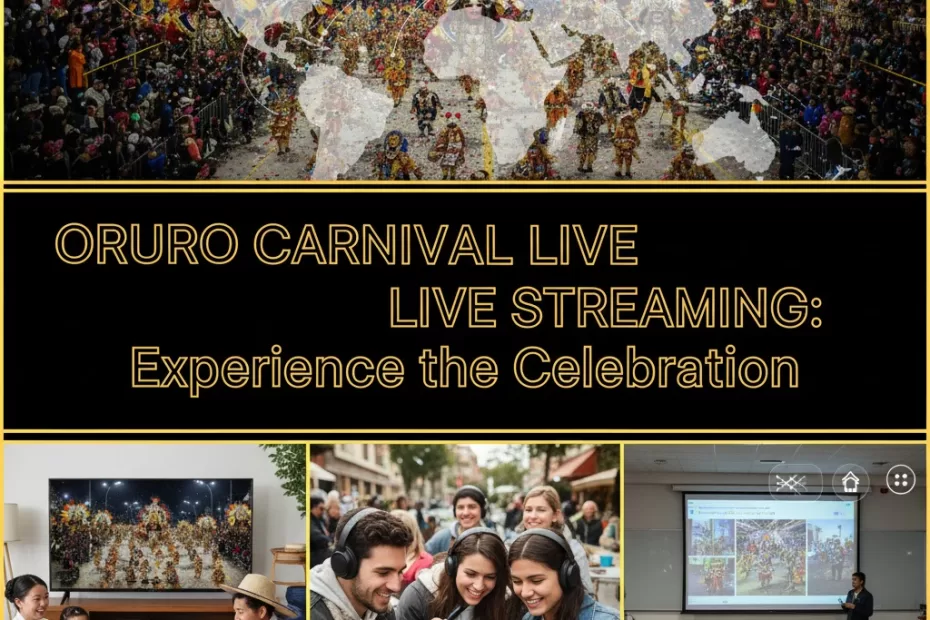
The Global Impact of Oruro Carnival
Deep in the heart of Bolivia, nestled in the altiplano, lies the city of Oruro, a place that comes alive each year with an explosion of color, sound, and fervent devotion. This is the stage for the Oruro Carnival, a celebration so profound and culturally rich that its influence extends far beyond the Andean peaks, resonating across the globe. More than just a party, this carnival is a vibrant testament to Bolivian culture, a living museum of history, faith, and indigenous traditions that captivates audiences and inspires cultural exchange worldwide. Its global impact is multifaceted, touching upon tourism, cultural preservation, and the very perception of Bolivia on the international stage.
Imagine a spectacle where thousands of dancers, adorned in intricate, dazzling costumes, move in unison to the rhythm of traditional music, telling stories that span centuries. This is the essence of Oruro, Bolivia, during its most famous annual event. The carnival is a powerful expression of cultural identity, showcasing a unique blend of pre-Columbian Andean beliefs and Catholic rituals, making it a truly unparalleled experience among global festivals. Its recognition as a UNESCO heritage event further solidifies its standing, drawing attention to the rich tapestry of traditions that define this incredible celebration.
Introduction to Oruro Carnival
The Oruro Carnival is not merely a street parade; it is an ancient ritual, a sacred pilgrimage, and a dazzling display of artistic and spiritual expression. Its origins are deeply rooted in the pre-Columbian era, where indigenous peoples, particularly the Uru, performed rituals to Pachamama (Mother Earth), Supay (the god of the underworld, later syncretized with the devil), and other Andean deities. With the arrival of the Spanish conquistadors and the imposition of Catholicism, these indigenous rites began to merge with Christian traditions. The result is a syncretic festival that, today, primarily honors the Virgen del Socavón (Virgin of the Mineshaft), the patron saint of miners, while still retaining profound connections to its ancestral past.
The carnival’s history is a fascinating journey through time, reflecting the resilience and adaptability of Bolivian culture. Legend has it that the Virgen del Socavón appeared to a group of miners in the 18th century, saving them from a collapsing mine. This miracle cemented her place as the protector of Oruro’s mining community and became a central figure in the carnival celebration. Over centuries, the festival evolved, incorporating elements from various indigenous groups and colonial influences, culminating in the grand spectacle we witness today.
At its core, the Oruro Carnival is a dramatic re-enactment of the battle between good and evil, with the Archangel Michael triumphing over the devil and his legions. This narrative is vividly brought to life through a series of traditional dances, each with its own specific meaning, costume, and musical accompaniment. The iconic Diablada, or Dance of the Devils, is perhaps the most recognizable, with its elaborate masks, horned figures, and intense choreography symbolizing the struggle against temptation. But the carnival encompasses a vast array of other dances, including the Morenada, Caporales, Llamerada, Kullawada, and Tobas, each contributing to the rich tapestry of Oruro traditions and storytelling.
The significance of the Oruro Carnival in Bolivian culture cannot be overstated. It is a time when the entire nation, and indeed, the world, turns its gaze towards this vibrant city. It’s an annual reaffirmation of cultural identity, a moment for communities to come together, celebrate their heritage, and pass on ancient customs to new generations. The intricate details of each costume, the precise steps of every dance, and the heartfelt devotion of the participants all speak volumes about the depth of this cultural expression. It’s a profound connection to history, a celebration of faith, and a powerful demonstration of the festive spirit that defines Bolivia.
Cultural Significance of the Oruro Carnival
The Oruro Carnival stands as a monumental pillar of cultural significance, not just for Bolivia, but for the entire world. Its recognition by UNESCO in 2001 as a Masterpiece of the Oral and Intangible Heritage of Humanity was a pivotal moment, elevating its status and drawing global attention to its unique blend of religious devotion, artistic expression, and historical depth. This designation wasn’t merely an award; it was an acknowledgment of the carnival’s crucial role in preserving Bolivian traditions and its profound cultural identity.
At the heart of the carnival’s cultural tapestry are its traditional dances, each a living narrative of the Andean worldview and colonial history. The Diablada, with its menacing devil masks, ornate costumes, and energetic movements, is a powerful depiction of the struggle between good and evil, a theme resonant across many cultures. Yet, in Oruro, it’s infused with indigenous symbolism, where the devils often represent the Tío Supay, the lord of the underworld and guardian of the mines, a figure both feared and respected by the miners. The Morenada, characterized by its heavy, slow steps and elaborate costumes symbolizing African slaves brought to the mines, tells a story of suffering and resilience, offering a poignant historical commentary. The Caporales, a more modern and energetic dance, showcases the dynamism of Bolivian youth while still drawing on historical figures. Then there are the Llamerada, honoring llama herders, the Kullawada, representing weavers, and the Tobas, depicting jungle tribes, among many others. Each dance group, or fraternidad, dedicates countless hours to rehearsing their choreography and perfecting their costumes, ensuring the authenticity and vibrancy of these cultural expressions.
These carnival traditions are not just performances; they are sacred acts of devotion and community involvement. The Oruro dancers spend months preparing, often making a promise (promesa) to the Virgen del Socavón to dance for three consecutive years as an act of faith and gratitude. This deep spiritual commitment underlies the entire celebration, transforming it from a mere spectacle into a profound spiritual journey for its participants. The collective effort involved, from the intricate embroidery of the carnival costumes to the meticulous planning of the processions, fosters a strong sense of community and shared purpose.
The carnival’s role in cultural preservation is paramount. In an increasingly globalized world, traditional cultures often face the threat of dilution or disappearance. The Oruro Carnival acts as a powerful antidote, providing a robust platform for the continuation and revitalization of ancient customs, languages, music, and dance forms. It ensures that indigenous knowledge and artistic skills are passed down through generations, keeping the flame of Bolivian cultural heritage brightly lit. The oral traditions, the intricate craftsmanship of the masks and costumes, the unique musical instruments, and the specific choreographies are all meticulously maintained and transmitted, safeguarding a precious legacy.
Furthermore, the carnival serves as a crucial bridge between different cultural groups within Bolivia and between Bolivia and the rest of the world. It’s a melting pot where diverse expressions of faith and heritage converge, fostering understanding and mutual respect. For international visitors, it offers an unparalleled window into the soul of Bolivia, challenging preconceived notions and showcasing the country’s rich cultural diversity. The festive spirit is infectious, breaking down barriers and creating a shared experience of joy and wonder. The global influence of the Oruro Carnival, therefore, extends beyond mere entertainment; it’s about fostering an appreciation for the complexity and beauty of human cultural expression, making it a vital component of festivals around the world. It inspires dialogue, encourages learning, and promotes a deeper understanding of cultural identity in a global context.
Economic Impact on Oruro and Beyond
The Oruro Carnival is far more than a cultural spectacle; it is a powerful economic engine that significantly boosts the local economy of Oruro and generates ripple effects across Bolivia. The influx of tourists, both national and international, transforms the city for several weeks, creating a surge in demand for services, goods, and accommodations. This annual event is a critical component of the region’s economic contribution, injecting vital revenue into various sectors and supporting countless livelihoods.
The preparations for the carnival begin months in advance, creating a year-round economic cycle. Artisans work tirelessly to craft the elaborate carnival costumes, masks, and musical instruments, providing employment and income for skilled craftspeople. Seamstresses, embroiderers, mask makers, and shoemakers all see increased demand for their specialized talents. These small businesses, often family-run, are the backbone of the carnival’s visual splendor and cultural authenticity, and their economic well-being is directly tied to the success of the event.
During the carnival week itself, the economic activity reaches its peak. Hotels, hostels, and guesthouses are fully booked, often at premium prices. Restaurants and food vendors experience a massive boom, serving traditional Bolivian cuisine and international fare to hungry revelers. Transportation services, from intercity buses to local taxis, are in high demand. Souvenir shops thrive, selling everything from miniature Diablada masks to traditional textiles, allowing visitors to take a piece of Bolivian culture home with them. Even seemingly minor services, like street vendors selling water, snacks, or small trinkets, benefit significantly from the increased foot traffic.
Beyond Oruro, cities like La Paz and Cochabamba also experience an economic uplift as travelers pass through, staying in hotels, eating in restaurants, and purchasing goods before or after their Oruro journey. The national airline and bus companies see a substantial increase in bookings, and the overall tourism sector across Bolivia benefits from the spotlight the carnival shines on the country. The Oruro Carnival, therefore, acts as a major tourist attraction, drawing attention to Bolivia as a whole and encouraging further exploration of its diverse landscapes and cultural offerings.
Tourism Growth Due to the Carnival
The Oruro Carnival is undeniably a magnet for tourism, driving significant growth in visitor numbers each year. While exact statistics can fluctuate, estimates often place the number of visitors during the carnival season in the hundreds of thousands, with a substantial portion coming from outside Bolivia. This surge in tourism has a profound impact on local businesses and the overall economic landscape of Oruro.
Local tourism agencies and tour operators experience their busiest period during the carnival. They offer packages that include accommodation, seating for the main parade, and guided tours, catering to both domestic and international visitors. The demand for these services creates seasonal employment opportunities, providing income for guides, drivers, and logistical support staff. For many in Oruro, the carnival represents their primary source of annual income, highlighting its critical role in the local economy.
Consider the hospitality sector: hotels in Oruro, which might otherwise have lower occupancy rates during certain times of the year, achieve 100% capacity for weeks leading up to and during the carnival. This allows them to invest in improvements, maintain staff, and contribute to local taxes. Similarly, restaurants see their daily revenue multiply, enabling them to purchase more ingredients from local farmers and suppliers, thus extending the economic benefits to agricultural communities.
The impact extends to informal sectors as well. Thousands of street vendors, often women from indigenous communities, set up stalls selling food, drinks, and handicrafts. This provides vital income for families who might otherwise struggle, underscoring the carnival’s role as a driver of inclusive economic growth. The festive spirit encourages spending, and visitors are often eager to support local artisans and businesses, appreciating the authenticity of the experience.
The carnival’s global influence as a major tourist attraction is growing, partly due to increased international awareness following its UNESCO designation and the rise of social media. Travelers seeking unique cultural experiences are increasingly adding Oruro to their itineraries, recognizing it as one of the most authentic and spectacular cultural festivals in the world. This sustained interest in Oruro traditions translates directly into continued economic benefits, ensuring the carnival’s legacy as both a cultural and economic powerhouse for Bolivia.
The Carnival’s Influence on Global Cultural Festivals
The Oruro Carnival, with its profound spiritual core and spectacular artistic expression, holds a unique position in the pantheon of global festivals. Its influence extends beyond Bolivia’s borders, inspiring other cultural celebrations and contributing to a broader appreciation of cultural diversity worldwide. As a UNESCO-recognized Masterpiece, it serves as a benchmark for cultural preservation and the vibrant reinterpretation of ancient traditions in a modern context.
One of the most significant ways the Oruro Carnival exerts its global influence is by showcasing a highly successful model of cultural syncretism. Its seamless blend of indigenous Andean traditions with Catholic beliefs offers a powerful example of how cultures can intertwine and evolve, creating something new yet deeply rooted in history. This fusion, particularly evident in the reverence for both Pachamama and the Virgen del Socavón, provides a rich case study for ethnomusicologists, anthropologists, and cultural practitioners globally. Other festivals around the world, grappling with similar historical overlays of colonialism and indigenous heritage, can draw lessons from Oruro’s ability to maintain authenticity while embracing change.
Moreover, the sheer scale and dedication of the Oruro dancers and musicians set a high standard for community involvement and artistic commitment. The months of rigorous practice, the intricate craftsmanship of the carnival costumes, and the deep spiritual promises made by participants highlight a level of engagement rarely seen. This dedication inspires cultural groups internationally, demonstrating the power of collective effort in preserving and celebrating cultural identity. The unique narrative structure, where each dance tells a specific story or represents a particular group, offers a blueprint for how cultural festivals can be more than just parades, transforming into living historical and mythological texts.
The global influence of the Oruro Carnival also manifests in increased interest in Andean culture. As more people become aware of the carnival, they are naturally drawn to learn more about Bolivia, its history, its people, and its rich tapestry of traditions. This leads to a greater appreciation for indigenous cultures, challenging stereotypes and fostering a more nuanced understanding of global heritage. The carnival acts as an ambassador for Bolivian culture, projecting an image of vibrancy, resilience, and profound artistic wealth.
Comparative Analysis with Other Major Festivals
To truly grasp the unique global impact of Oruro Carnival, it’s helpful to compare it with other well-known carnivals such as Rio Carnival in Brazil and Venice Carnival in Italy. While all three are iconic global festivals, they each possess distinct characteristics that highlight Oruro’s special place.
Rio Carnival: Often considered the largest carnival in the world, Rio is synonymous with hedonism, samba, and breathtaking parades featuring lavish floats and scantily clad dancers. Its primary focus is on celebration, music, and dance, with a strong emphasis on spectacle and entertainment. The samba schools, representing different neighborhoods, compete fiercely, pouring immense resources into their annual presentations. While it has historical roots, Rio’s carnival is largely a secular celebration of life and sensuality, drawing heavily from Afro-Brazilian culture. Its economic impact is enormous, driven by mass tourism and global media attention.
Venice Carnival: In stark contrast, the Venice Carnival evokes an air of aristocratic mystery and historical elegance. Known for its elaborate masks, ornate costumes, and sophisticated balls, it harks back to the city’s Renaissance past. The focus here is on anonymity, theatricality, and a sense of timeless romance. Participants often engage in historical re-enactments and parades, with the waterways of Venice providing a uniquely picturesque backdrop. While it attracts tourists seeking a refined and historical experience, its scale and popular participation are generally smaller than Rio’s.
Oruro Carnival: The Oruro Carnival stands apart from both Rio and Venice due to its profound spiritual and indigenous roots. Unlike Rio’s largely secular exuberance or Venice’s historical theatricality, Oruro is first and foremost a religious pilgrimage and an act of devotion to the Virgen del Socavón. Its festive spirit is deeply intertwined with sacred rituals and the re-enactment of ancient myths. The unique aspects of Oruro include:
-
Syncretic Spirituality: The carnival’s blend of Catholic devotion and pre-Columbian Andean beliefs is its defining characteristic. The Diablada dancers, for instance, are performing an act of faith, often fulfilling a three-year promise to the Virgin, a concept alien to the purely recreational nature of many other carnivals.
-
Indigenous Narrative: The dances are not just performances; they are living stories that convey historical narratives, social commentary, and mythological tales. Each dance form has specific cultural significance and often represents distinct indigenous groups and their traditions, offering a rich educational experience.
-
Authenticity and Community Involvement: While Rio and Venice have become highly commercialized, Oruro retains a strong sense of community involvement and authenticity. The carnival is primarily for the people of Oruro and Bolivia, with visitors invited to witness and partake in a genuine cultural phenomenon. The costumes are often handmade, and the participation is driven by devotion rather than solely by entertainment.
-
Cultural Preservation: Oruro’s UNESCO designation underscores its role as a crucial vehicle for cultural preservation. It actively transmits ancestral knowledge, music, and dance forms across generations, serving as a powerful counterpoint to cultural homogenization.
The Oruro Carnival’s global influence, therefore, lies not just in its spectacle, but in its ability to offer a deeply authentic, spiritually charged, and historically rich cultural experience. It is a powerful reminder that festivals can be profound expressions of cultural identity and heritage, providing a vital counter-narrative to more commercially driven celebrations. It inspires a different kind of cultural tourism, one that seeks deeper understanding and connection rather than just entertainment, thus enriching the global cultural landscape.
Environmental Considerations and Sustainability
As the Oruro Carnival continues to grow in global influence and attract increasing numbers of tourists, the imperative to address environmental considerations and ensure its long-term sustainability becomes paramount. Balancing the economic benefits and cultural preservation goals with ecological responsibility is a complex challenge, but one that is being actively tackled by local authorities, community organizations, and participants.
One of the primary environmental impacts of any large-scale festival is waste generation. The sheer volume of food and beverage containers, plastic packaging, and discarded carnival costumes and accessories can create significant waste management challenges. Efforts are being made to encourage responsible waste disposal, with increased placement of recycling bins and public awareness campaigns urging visitors and participants to minimize their environmental footprint. Some initiatives explore the use of biodegradable materials for certain items, though the tradition of elaborate, often synthetic, costume materials presents a unique hurdle.
Another area of concern is the consumption of natural resources, particularly water and energy, exacerbated by the large influx of people. Sustainable tourism practices are being promoted, encouraging hotels and local businesses to adopt eco-friendly operations, conserve water, and use energy-efficient lighting. The local economy benefits from the carnival, but this growth needs to be managed in a way that doesn’t overstrain Oruro’s infrastructure or natural environment.
The sustainable tourism aspect extends to protecting the delicate Andean ecosystem surrounding Oruro. While the carnival itself is urban, its draw brings visitors to the broader region, necessitating careful management of tourism in natural areas to prevent degradation. Promoting responsible travel, educating tourists about local environmental sensitivities, and supporting eco-tourism initiatives are all part of a broader sustainability strategy.
Cultural preservation itself plays a role in sustainability. By valuing traditional craftsmanship and promoting local artisans who create carnival costumes and masks, the carnival supports local economies and reduces reliance on mass-produced, often less sustainable, alternatives. Encouraging the reuse or respectful disposal of traditional items also contributes to a more sustainable cycle.
Efforts to ensure the carnival’s sustainability also involve community involvement. Local organizations are working to educate residents and participants about environmental best practices. There’s a growing understanding that the long-term viability of the Oruro Carnival, and its continued ability to showcase Bolivian culture, depends on a commitment to protecting the environment that hosts it. This includes addressing issues like noise pollution, managing crowd control in a way that respects local residents, and ensuring that the economic benefits are distributed equitably within the community. The goal is to develop strategies that allow the carnival to thrive as a major tourist attraction and cultural beacon, while simultaneously safeguarding the natural and social fabric of Oruro for future generations. This commitment to sustainable development is crucial for the carnival’s continued global influence and its legacy as a UNESCO heritage site.
Conclusion: The Future of Oruro Carnival
The Oruro Carnival stands as an unparalleled testament to the enduring power of cultural heritage, a vibrant celebration that transcends geographical boundaries and speaks to the universal human spirit. From its ancient origins rooted in indigenous Andean traditions to its current status as a UNESCO-recognized Masterpiece of the Oral and Intangible Heritage of Humanity, the carnival has evolved while steadfastly preserving its unique cultural identity. Its global impact is undeniable, influencing world perceptions of Bolivian culture, driving significant economic contributions to the local economy, and inspiring cultural exchange around the world.
We’ve explored how the Oruro Carnival serves as a crucial vehicle for cultural preservation, ensuring that the rich tapestry of Bolivian traditions, from the intricate Diablada masks to the rhythmic Morenada dances, is passed down through generations. The deep community involvement and spiritual devotion of the Oruro dancers are not merely performances but acts of faith and communal solidarity, setting it apart from many other global festivals. This unique blend of spirituality and spectacle has made it a major tourist attraction, drawing visitors eager to experience its authentic festive spirit and learn about its profound cultural significance.
The economic contribution of the carnival to Oruro and beyond is substantial, creating jobs, boosting local businesses, and fueling tourism growth during its peak season. This economic impetus underscores the carnival’s importance not just as a cultural event, but as a vital component of the region’s prosperity. Furthermore, its influence on other cultural festivals lies in its successful model of syncretism and its unwavering commitment to authenticity, offering valuable lessons for cultural practitioners worldwide.
Looking ahead, the future prospects of the Oruro Carnival in a global context are bright, yet they come with responsibilities. The ongoing efforts towards sustainable tourism and environmental considerations are critical to ensuring the carnival’s longevity. As its global influence continues to expand, managing waste, conserving resources, and fostering responsible travel practices will be paramount. The challenge lies in balancing increased global attention and economic opportunity with the imperative to maintain the carnival’s authenticity, cultural integrity, and environmental stewardship.
The Oruro Carnival is more than just an annual event; it is a living, breathing expression of Bolivian cultural identity, a powerful narrative told through dance, music, and devotion. As it continues to enchant and educate audiences globally, its role as a beacon of cultural diversity and a source of inspiration for festivals around the world will only grow. It is a reminder that in our interconnected world, celebrating and preserving unique cultural heritage is not just a local endeavor, but a global imperative, enriching the human experience for all. The festive spirit of Oruro will undoubtedly continue to resonate, inviting the world to witness a truly extraordinary celebration of life, faith, and tradition.
Okay, so I stumbled upon 7ffcom the other day. Pretty slick lookin’ site. Gave it a whirl, and it’s not bad at all, man. Give it a shot and see what you think! More info here: 7ffcom
Forget boring math; spin to win big! Discover how Raffle Wheel online casino makes every game thrilling and fair for everyone. Join now!
Technology is fascinating! When looking at sites like jile.homes, remember safety first. Always verify legality before playing any jile গেম. Responsible gaming knowledge is key, no matter the platform!
Honestly, the analysis here is sharp. I expected fluff, but this deep dive hits the mark. For more tactical reads, check out f188 link; it’s surprisingly solid stuff.
Honestly, the depth here is impressive, especially the focus on ‘competitive framework.’ It makes me reconsider some of the risks I usually overlook. For deeper security insights, check out laro77 vip. Smart analysis matters!