
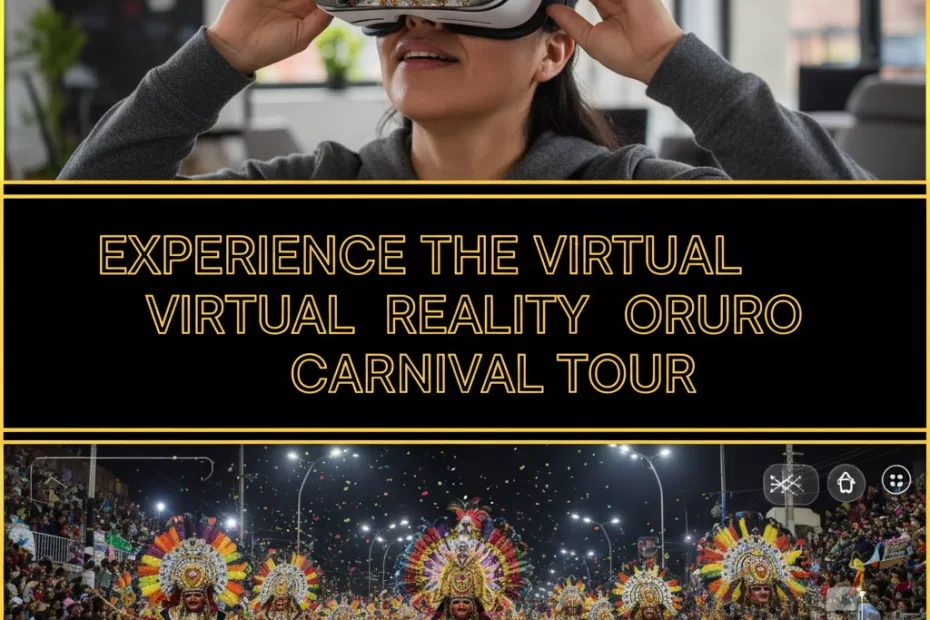
Experience the Virtual Reality Oruro Carnival Tour
Imagine stepping into a world where vibrant colors explode, rhythmic music fills the air, and ancient traditions come alive right before your eyes. Now, imagine doing all of this from the comfort of your home. Welcome to the future of cultural exploration with the Virtual Reality Oruro Carnival Tour. This innovative project offers an unparalleled opportunity to immerse yourself in one of the most spectacular and historically rich festivals on the planet: the Oruro Carnival in Bolivia. Far more than just a parade, this is a profound cultural immersion, a journey into the heart of Bolivian heritage, meticulously recreated for remote viewers through cutting-edge virtual reality technology.
For centuries, the Oruro Carnival has captivated hearts with its unique blend of indigenous Andean traditions and Catholic rituals, earning it a place as a UNESCO Masterpiece of the Oral and Intangible Heritage of Humanity. While attending in person is an unforgettable adventure, the reality of travel, logistics, and cost can be a barrier for many. This is where the virtual reality Oruro Carnival tour steps in, bridging the gap between desire and experience. It’s an invitation to witness the intricate dance of the Diablada, the solemn procession of the Virgin of Socavón, and the sheer joy of thousands of dancers and musicians, all without needing a passport. This virtual experience isn’t just about watching; it’s about feeling like you’re truly there, part of the crowd, breathing in the festive atmosphere, and understanding the deep cultural significance of every moment.
What is the Oruro Carnival?
The Oruro Carnival is not merely a party; it is a profound expression of Bolivian culture and one of the world’s most impressive cultural festivals. Held annually in the city of Oruro, Bolivia, it’s a monumental event that precedes Ash Wednesday, drawing hundreds of thousands of spectators and participants. At its core, the carnival is a vibrant syncretism of pre-Columbian Andean religious beliefs and Catholic traditions introduced by the Spanish conquistadors. Its history stretches back over 200 years, though its roots are far older, deeply intertwined with indigenous rituals honoring Pachamama (Mother Earth) and the Tío Supay (Uncle of the Mine), a deity associated with the underworld and mining.
The carnival’s central narrative revolves around the triumph of good over evil, personified by the Archangel Michael battling the seven deadly sins. This epic struggle is vividly portrayed through elaborate dance performances, particularly the iconic Diablada or “Dance of the Devils.” The Diablada is a mesmerizing spectacle featuring dancers in terrifying masks, often adorned with serpents, toads, and lizards – symbols from Andean cosmology – along with vibrant, intricately embroidered costumes. These dancers represent the devils emerging from the mines, eventually vanquished by the Archangel. But the Oruro Carnival is much more than the Diablada. It encompasses a vast array of traditional dances, each with its own story, costumes, and music. We see the elegant Morenada, representing African slaves brought to the mines; the spirited Caporales, a lively courtship dance; the graceful Llamerada, honoring llama herders; and many more, each contributing to the rich tapestry of Oruro traditions.
The entire Oruro Festival is a continuous explosion of sound and color, culminating in a grand procession that can last for over twenty hours, with more than 50 groups of folk dancers and musicians parading along a four-kilometer route. The atmosphere is electric, filled with devotion, joy, and a deep sense of community. The carnival is not just entertainment; it’s a spiritual journey, a communal prayer, and a powerful affirmation of identity for the people of Bolivia. It is considered a living cultural heritage, passed down through generations, embodying the spirit and resilience of the Andean people. The sheer scale and cultural depth of this event make it an ideal candidate for virtual reality tours, allowing a global audience to experience its magic and understand its significance in Bolivian culture without geographical limitations.
The Magic of Virtual Reality
Virtual reality, often abbreviated as VR, is a simulated experience that can be similar to or completely different from the real world. Unlike traditional media that you simply observe, VR immerses you within an artificial environment, making you feel as if you are physically present. This is achieved through specialized hardware, primarily VR headsets, which provide a wide field of view and block out the real world, combined with advanced software that renders lifelike 3D environments. The magic truly begins when high-resolution visuals are paired with spatial audio, creating a multi-sensory experience that tricks your brain into believing it’s somewhere else entirely.
When applied to cultural events like the Oruro Carnival, VR technology transforms passive viewing into active participation. Instead of watching a flat video of a parade, a virtual reality Oruro Carnival tour places you in the parade. You can “look” around 360 degrees, hear the drums beating from behind you, and feel the energy of the crowd as if you were standing right there on the streets of Oruro. This level of immersion is what truly enhances the experience. It’s not just about seeing; it’s about feeling present, about connecting with the atmosphere and the emotions of the event in a way that traditional documentaries or travel shows simply cannot achieve.
The power of VR lies in its ability to transport. For those who dream of Bolivia travel or wish to experience cultural festivals but are constrained by time, money, or physical limitations, virtual reality offers an incredible alternative. It transforms a distant dream into an accessible reality. By leveraging advanced camera technology and sophisticated rendering engines, VR projects are able to capture the intricate details of costumes, the nuances of dance movements, and the dynamic energy of the crowds, delivering them directly to your senses. This isn’t just a technological marvel; it’s a gateway to understanding and appreciating global cultural heritage on a deeply personal level. The immersive experiences offered by VR carnival tours redefine what it means to “attend” an event, making it more personal, more impactful, and infinitely more accessible.
Highlights of the Virtual Reality Tour
The virtual reality Oruro Carnival tour is meticulously designed to capture the essence and grandeur of this extraordinary Bolivian cultural festival. From the moment you don your VR headset, you are transported directly to the heart of Oruro, becoming an invisible spectator, free to roam and explore. The highlights are numerous, each carefully curated to provide a comprehensive and deeply immersive experience.
One of the foremost highlights is undoubtedly the Grand Parade of Pilgrimage. This is the centerpiece of the carnival, a continuous flow of thousands of dancers and musicians, each group representing a unique tradition and story. Through VR, you won’t just see the parade from a static viewpoint; you’ll experience it from multiple vantage points. Imagine standing on a balcony overlooking the main avenue, feeling the ground vibrate with the rhythm of the Morenada drums, or being virtually positioned right at street level, so close you can almost touch the intricate embroidery of a Diablada costume. The level of detail captured by the 360-degree cameras is astonishing, allowing you to appreciate the craftsmanship, the vibrant colors, and the sheer scale of the spectacle.
The tour places a significant emphasis on showcasing the diverse traditional dances. Each dance tells a story, and the VR experience allows you to witness these narratives unfold up close. You’ll have the opportunity to observe the menacing yet graceful movements of the Diablada dancers, their elaborate masks and devilish grins filling your field of view. You’ll feel the energetic sway of the Caporales, hear the distinct bells of the Kallawaya, and marvel at the elegance of the Waka Waka. The spatial audio ensures that the specific music and sounds associated with each dance surround you, enhancing the feeling of being truly present. This cultural immersion goes beyond mere observation; it’s an adventure into the very soul of Bolivian traditions.
Beyond the main parade, the virtual reality tour also delves into the rich cultural elements and rituals that define the Oruro Carnival. You might find yourself virtually inside the Sanctuary of the Virgin of Socavón, witnessing the solemn reverence of the dancers as they complete their pilgrimage and offer their devotion. The tour often includes segments exploring the history and mythology behind the carnival, perhaps taking you through virtual reconstructions of historical sites or offering insights into the symbolic meanings of the costumes and rituals. This contextual information deepens the appreciation of the spectacle, transforming it from mere entertainment into a profound educational journey.
Another incredible aspect is the ability to virtually interact with the environment and learn about the local culture. Some advanced VR carnival tours might offer interactive elements, allowing you to “click” on a dancer to learn about their costume, or on a landmark to hear its historical significance. While not fully interactive in the gaming sense, the ability to freely look around and choose your focus creates a personalized experience. You can spend as much time as you like fixated on a particular dance group, or let your gaze wander to the enthusiastic crowds, the street vendors, and the general festive atmosphere that permeates Oruro during this time.
The virtual reality Oruro Carnival tour is more than just a visual treat; it’s a sensory feast designed to transport you. It’s the thumping bass of the Diablada drums, the delicate melodies of Andean flutes, the excited chatter of the crowd, and the vibrant tapestry of colors that come together to create an unforgettable virtual travel experience. For anyone interested in cultural heritage, festivals, or simply seeking an extraordinary adventure, these immersive experiences offer a truly unique gateway to the heart of Bolivia.
How to Prepare for the Tour
Embarking on a virtual reality Oruro Carnival tour is an exciting prospect, and a little preparation can significantly enhance your immersive experiences. Unlike physical travel to Bolivia, you won’t need to worry about flights, hotels, or packing luggage, but there are a few technical and practical considerations to ensure a smooth and enjoyable journey into Bolivian culture.
First and foremost, you’ll need the right equipment. The cornerstone of any virtual reality experience is a VR headset. There’s a range of options available, from more accessible mobile-based headsets (like Google Cardboard or Samsung Gear VR, though these offer a more basic experience) to standalone headsets (such as Oculus Quest 2/3, Pico 4) and high-end PC-tethered systems (like Valve Index, HTC Vive). For the best virtual reality tours, a standalone or PC-tethered headset is highly recommended, as they offer superior resolution, wider fields of view, and more precise tracking, which are crucial for truly immersive experiences. Ensure your headset is fully charged or properly connected if it’s PC-tethered.
Secondly, a stable and fast internet connection is paramount. Virtual reality content, especially high-resolution 360-degree video, requires significant bandwidth to stream smoothly without buffering or loss of quality. A strong Wi-Fi connection is ideal. If your internet is prone to fluctuations, consider downloading the tour content beforehand if that option is available, though many virtual reality tours are primarily streaming-based.
Once your equipment and internet are sorted, think about your physical environment. While you won’t be physically moving around Oruro, you’ll be turning your head and looking in all directions. Ensure you have enough clear space around you to comfortably rotate, without bumping into furniture or walls. A comfortable chair that allows for easy swiveling is often a good choice. Dimming the lights in your room can also help reduce distractions and deepen the sense of immersion, making it easier to forget your real surroundings and truly feel transported to the carnival.
What to expect from the virtual reality Oruro Carnival tour is also important. These are not typically interactive games where you control an avatar. Instead, they are high-quality 360-degree video experiences designed to place you as an observer within the event. Expect stunning visuals, authentic sounds, and a feeling of being present amidst the vibrant carnival parades. Some tours might include narration or informational overlays to explain the significance of what you’re seeing, enriching your understanding of the Oruro traditions and cultural heritage. Be prepared for a sensory overload in the best possible way! The sheer scale of the Oruro Festival, the intricate details of the costumes, and the powerful rhythms of the music are all amplified in VR.
Finally, consider using high-quality headphones. While most VR headsets have built-in audio, dedicated headphones, especially over-ear ones, can significantly enhance the spatial audio experience. Hearing the drums approach from your left, the cheers from your right, and the distant music from behind you adds another layer of realism and depth to the virtual travel experience, truly making you feel like you’re part of the action in Bolivia. By taking these simple steps, you’ll be perfectly poised to dive into the heart of the Oruro Carnival and enjoy an unforgettable virtual adventure.
Reviews and Testimonials
The Virtual Reality Oruro Carnival Tour has consistently garnered enthusiastic praise from users across the globe, highlighting its unparalleled ability to transport and educate. The feedback frequently emphasizes the tour’s immersive qualities, its breathtaking visuals, and its profound impact on understanding Bolivian culture. These testimonials paint a vivid picture of the transformative power of virtual reality tours.
“I’ve always dreamed of visiting Bolivia and experiencing the Oruro Carnival, but life just got in the way,” shares Sarah, a 34-year-old from London. “The VR tour was absolutely mind-blowing. I felt like I was right there, dodging confetti and cheering with the crowd. The Diablada dancers were so close; I could see every detail on their masks. It wasn’t just watching; it was being there. A truly unforgettable virtual travel experience!” Her words resonate with many who find the virtual reality Oruro Carnival tour a perfect gateway to cultural immersion.
Mark, a 50-year-old history enthusiast from New York, added, “I’ve studied the Oruro Festival for years, but seeing it in VR brought it to life in a way books never could. The historical context provided within the tour was excellent, and being able to look around 360 degrees really helped me grasp the scale of the carnival parades. The audio quality was superb; you could truly feel the rhythm of the music. It’s an incredible tool for understanding cultural heritage.” His testimonial underscores the educational value and depth offered by these immersive experiences.
“As someone who struggles with mobility, physical travel to such a vibrant, crowded event like the Oruro Carnival would be impossible,” explains Maria, a 62-year-old from Buenos Aires. “This virtual reality tour gave me the chance to witness something I never thought I would. The colors, the energy, the devotion – it was all so real. I even shed a tear during the procession to the Virgin of Socavón. It’s more than just tourism; it’s a gift of experience.” Maria’s review highlights the incredible accessibility and emotional connection fostered by the VR carnival.
A younger user, 22-year-old tech enthusiast Alex, commented, “I was skeptical at first, but the VR technology used for this Oruro Carnival tour is top-notch. The resolution was crisp, and the transitions were seamless. It really felt like I was moving through the streets of Oruro. It’s definitely the coolest way to explore cultural festivals without leaving your couch. Highly recommend it for anyone interested in virtual reality tours and discovering new adventures.” Alex’s feedback emphasizes the technical prowess and engaging nature of the project.
These testimonials consistently praise the virtual reality Oruro Carnival tour for its ability to deliver authentic, high-quality immersive experiences. Users appreciate the opportunity to connect with Bolivian culture, witness the spectacular carnival parades, and experience the adventure and entertainment of the Oruro Festival, all while overcoming geographical and physical barriers. The reviews confirm that this VR carnival is not just a technological gimmick but a genuinely enriching cultural journey.
Why Choose Virtual Reality for Cultural Tours?
The advent of virtual reality has revolutionized many industries, and tourism, particularly cultural tourism, stands to gain immensely. While nothing can entirely replicate the scent of street food or the physical jostle of a crowd, choosing virtual reality for cultural tours like the Oruro Carnival offers a multitude of distinct advantages that often outweigh the challenges of physical attendance. It presents an opportunity to differentiate and expand access to global cultural heritage.
One of the most compelling reasons to opt for virtual reality tours is accessibility. Traditional travel to distant cultural festivals like the Oruro Carnival requires significant financial investment for flights, accommodation, and local expenses. It also demands a substantial time commitment, often weeks away from work and home. For many, these barriers make physical attendance an impossible dream. Virtual reality eliminates these obstacles, making the vibrant traditions of Bolivia accessible to anyone with a VR headset and an internet connection, regardless of their geographical location, economic status, or physical mobility. This democratizes cultural immersion, allowing a broader audience to experience the Oruro Festival.
Secondly, VR offers an unparalleled level of detail and personalization. In a crowded physical parade, your view might be obstructed, or you might miss crucial moments. With a virtual reality Oruro Carnival tour, you are often given the “best seat in the house,” or even multiple best seats. You can pause, rewind, and re-watch specific dance performances, focus on the intricate details of a Diablada costume, or simply take your time to absorb the atmosphere without the pressure of moving with the crowd. This control over your perspective enhances understanding and appreciation of the cultural heritage. It allows for a deeper dive into Oruro traditions than a fleeting physical visit might permit.
Furthermore, virtual reality tours can provide educational context and historical insights that are difficult to convey in the chaos of a live event. Many VR carnival experiences integrate narration, historical facts, and cultural explanations directly into the immersive environment. You might learn about the origins of the Morenada dance or the symbolism behind the masks of the Diablada as you are witnessing them. This layered approach enriches the experience, turning mere observation into a profound learning opportunity about Bolivian culture and carnival history.
Another significant advantage is safety and comfort. Attending large cultural festivals can sometimes involve navigating crowded streets, dealing with varying weather conditions, and facing potential logistical challenges. A virtual reality Oruro Carnival tour offers the same breathtaking spectacle from the safety and comfort of your own home, eliminating these concerns. You can experience the adventure of the carnival without any of the potential discomforts, allowing for a pure focus on the entertainment and cultural experience.
Finally, virtual travel experiences are inherently sustainable. They reduce the carbon footprint associated with international travel and minimize the impact of large tourist crowds on local infrastructure and delicate cultural sites. For destinations like Oruro, which cherish their traditions, responsible tourism is key, and VR offers a way to share the festival globally without overwhelming the local community or environment. It’s an innovative approach to tourism in Bolivia that respects both the culture and the planet.
In essence, while VR may not fully replace the sensory richness of being physically present, it offers a powerful, accessible, educational, and sustainable alternative for cultural immersion. It opens up the world of cultural festivals like the Oruro Carnival to millions who would otherwise never have the chance to witness its magic, making it a vital tool for global cultural exchange and understanding.
Virtual Reality Technology Behind the Tour
The seamless and breathtaking immersion offered by the Virtual Reality Oruro Carnival Tour is not magic, but rather the result of sophisticated virtual reality technology working in harmony. Creating such a lifelike virtual travel experience demands cutting-edge equipment and meticulous post-production, ensuring every detail of the Oruro Festival is captured with fidelity. This section will dive into the technical backbone that makes these virtual reality tours possible, further differentiating them from standard video content.
At the heart of capturing the vibrant carnival parades are advanced 360-degree cameras. These aren’t your everyday cameras; they are often professional-grade rigs equipped with multiple lenses (sometimes six or more) strategically placed to capture every angle simultaneously. These cameras are capable of recording in extremely high resolutions, often 8K or even higher, which is crucial for VR. The higher the resolution, the sharper and more realistic the image appears when stretched across a user’s entire field of view in a VR headset. These cameras are often mounted on stable platforms or even drones to capture dynamic, sweeping shots of the Oruro Carnival, providing perspectives impossible for a human to achieve.
Beyond visuals, spatial audio technology plays an equally critical role in creating truly immersive experiences. Imagine being surrounded by the sounds of the carnival – the rhythmic drums, the blaring trumpets, the cheers of the crowd, the distinct bells of certain dance groups – all coming from their accurate directions. This is achieved using specialized 360-degree microphones that record sound from all directions. During post-production, this audio is then mixed and encoded to respond to the user’s head movements. So, if you turn your head to look at a Diablada group, their music will sound as if it’s coming from directly in front of you, even if they were originally to your left. This spatial audio is what truly tricks the brain into believing it’s present in Oruro, elevating the virtual reality Oruro Carnival tour from a visual spectacle to a full sensory adventure.
The raw footage from these cameras and microphones is then fed into powerful stitching and rendering software. Multiple video feeds from the 360-degree camera rig must be seamlessly stitched together to create a single, continuous panoramic video. This process requires significant computational power and expertise to avoid visible seams or distortions. Once stitched, the video undergoes color correction, stabilization, and further optimization for VR playback. This is where the magic of creating a truly photorealistic and stable virtual environment takes place, ensuring the vibrant colors of Bolivian culture are accurately represented.
For interactive elements or more complex virtual environments, game engines like Unity or Unreal Engine might be employed. While many virtual reality tours are primarily 360-degree video, some projects might integrate computer-generated elements to enhance the experience, allow for guided pathways, or provide interactive information overlays. This allows for a blend of real-world footage with digitally created content, offering a more dynamic and engaging VR carnival experience.
Finally, efficient streaming and delivery platforms are essential. High-resolution VR content is data-intensive. The technology must ensure that this content is delivered to the user’s VR headset with minimal latency and maximum quality, adapting to varying internet speeds. This involves advanced compression techniques and optimized streaming protocols. The goal is to make the virtual reality Oruro Carnival tour as accessible and smooth as possible for the end-user, regardless of their geographical location.
In essence, the technology behind the virtual reality Oruro Carnival tour is a sophisticated blend of hardware and software engineering. It’s about capturing reality with extreme precision and then recreating it within a virtual space, tricking the senses into believing that the user is truly amidst the incredible sights and sounds of one of the world’s greatest cultural festivals. This dedication to VR technology is what ensures a truly immersive and unforgettable cultural immersion.
FAQs about the Virtual Reality Oruro Carnival Tour
Navigating a new virtual travel experience often comes with questions. Here are some common queries about the Virtual Reality Oruro Carnival Tour, providing concise answers to help you prepare for your immersive adventure into Bolivian culture.
Q: What equipment do I need to experience the Virtual Reality Oruro Carnival Tour?A: You will need a compatible VR headset (e.g., Oculus Quest, HTC Vive, Valve Index, or a mobile VR viewer) and a stable internet connection for streaming the content. High-quality headphones are also recommended for optimal spatial audio immersion.
Q: Is the tour live or pre-recorded?A: The Virtual Reality Oruro Carnival Tour is typically a pre-recorded, high-quality 360-degree video experience, allowing for optimal production values, multiple viewpoints, and consistent availability. While live VR streaming is possible, pre-recorded content ensures the best visual and audio fidelity.
Q: How long is the virtual reality tour?A: The duration can vary, but most comprehensive virtual reality tours of the Oruro Carnival range from 60 to 120 minutes, often broken into chapters or segments focusing on different aspects of the carnival parades and Oruro traditions. Some may offer shorter highlights reels or extended, multi-part series.
Q: Can I interact with the virtual environment?A: While primarily a 360-degree video experience, some virtual reality tours may include limited interactive elements, such as clickable information hotspots or the ability to choose different viewing perspectives. It is generally designed for immersive observation rather than active gameplay.
Q: Is the tour available in multiple languages?A: Many virtual reality tours, especially those aiming for global reach, offer narration and subtitles in several languages to enhance cultural immersion and accessibility for a wider audience. Check the specific tour’s details for language options.
Q: How much does the Virtual Reality Oruro Carnival Tour cost?A: Pricing varies depending on the provider, the length, and the production quality of the tour. Some may be free as promotional content, while others might be a one-time purchase or part of a subscription service for virtual reality tours.
Q: Is this a suitable experience for children?A: The Virtual Reality Oruro Carnival Tour is generally suitable for most ages, though parental guidance is advised for very young children due to the intensity of VR and the potentially overwhelming nature of large festivals. The content itself is family-friendly and celebrates cultural heritage.
Q: What if I experience motion sickness in VR?A: While modern VR experiences are designed to minimize motion sickness, some individuals may still be sensitive. Tips include taking breaks, using a fan for airflow, ensuring a comfortable environment, and starting with shorter viewing sessions.
Q: Does the tour cover the entire Oruro Festival?A: The tour aims to provide a comprehensive overview of the Oruro Carnival, focusing on its main highlights like the grand parades, key dances (e.g., Diablada), and significant rituals. It strives to capture the essence and spirit of the entire Oruro Festival experience.
Q: Where can I purchase or access the Virtual Reality Oruro Carnival Tour?A: Access typically involves downloading an application from your VR headset’s store (e.g., Oculus Store, SteamVR) or through dedicated virtual travel experiences platforms. Specific providers will detail their distribution channels.
Conclusion: Why You Shouldn’t Miss This Experience
The Virtual Reality Oruro Carnival Tour represents a monumental leap forward in how we connect with global cultural heritage. It’s more than just a technological marvel; it’s a bridge that brings the vibrant, pulsating heart of Bolivian culture directly into your living room. For anyone with a curiosity for travel, a passion for cultural festivals, or simply a desire for an extraordinary adventure, this immersive experience is an absolute must-not-miss.
The Oruro Carnival is a spectacle of unparalleled grandeur, a living testament to centuries of tradition, faith, and artistic expression. Its rich history, the mesmerizing dance of the Diablada, the kaleidoscope of intricate costumes, and the infectious rhythms of the music create an atmosphere that is truly unique. For years, this incredible Oruro Festival remained a distant dream for many, confined by geographical and logistical barriers. Now, thanks to the power of virtual reality tours, those barriers have crumbled.
Through the virtual reality Oruro Carnival tour, you are not merely an observer; you become a participant in a profound cultural immersion. You’ll feel the energy of the carnival parades, witness the solemn devotion of the pilgrims, and marvel at the artistry that defines Oruro traditions. This virtual travel experience offers an intimate perspective, allowing you to appreciate the nuances of each dance, the symbolism behind every mask, and the sheer joy that radiates from every performer. It’s an opportunity to learn, to be entertained, and to connect with a culture that is both ancient and vibrantly alive.
Furthermore, choosing this virtual reality Oruro Carnival tour isn’t just about personal enjoyment; it’s about embracing a new, sustainable form of tourism in Bolivia. It allows the world to celebrate and understand this invaluable cultural heritage without overburdening the local community or environment. It’s an accessible adventure, an educational journey, and a truly unforgettable entertainment experience, all rolled into one.
So, whether you’re a seasoned traveler looking for your next cultural fix, an armchair explorer dreaming of distant lands, or simply someone eager to experience the cutting edge of VR technology, the Virtual Reality Oruro Carnival Tour promises an encounter like no other. Don’t let this chance to immerse yourself in one of the world’s most spectacular festivals pass you by. Step into your headset, and let the magic of Oruro transport you.
Galera, brazinno777 é nova pra mim. Alguém sabe se os saques são rápidos e se tem muita variedade de jogos? Tô procurando um site novo pra me divertir. Espiem só: brazinno777
Basic strategy really shifts your perspective – it’s not just luck! Seeing how quickly you can get started with a uujl game, with options like GCash, makes learning even easier. Definitely a smoother entry point for new players! 👍
It’s great to see platforms prioritizing responsible gaming! A tiered VIP system, like with 55bmw vip, can encourage mindful play, alongside things like quick verification-important for peace of mind. Let’s keep the fun sustainable!
This truly highlights the shift toward the experiential economy. The success of VR immersion, whether cultural or entertainment-based, relies on meticulous detail and high engagement. It’s fascinating how the principles of deep user immersion-like those found in advanced digital platforms, such as a jilitt 2026 slot-are now applied to preserving global heritage. A powerful model for future content creation!
This is a fascinating look at digital cultural preservation. The technology proves that the deepest human desire-experiencing the extraordinary-can be met virtually. It speaks to the power of immersive design, whether recreating ancient carnivals or optimizing engagement within sophisticated digital ecosystems like the jl59 app casino. A true blend of art and tech!
This perfectly illustrates the ‘Experience Economy.’ VR doesn’t just preserve culture; it monetizes global access. It shows how digital platforms, whether for historical immersion or simply for entertainment, are fundamentally redefining how we engage, much like the digital world accessed via filbet com.
This highlights how deeply immersive technology can redefine ‘experience.’ The successful translation of cultural heritage into VR proves that digital escapism is a powerful human need, a principle that applies equally to advanced virtual environments or highly engaging platforms like 3888 angel number ক্যাসিনো.
Cân nhắc góc độ tài chính khi xem xét các nền tảng này là tối quan trọng; đừng chỉ nhìn vào sự đa dạng trò chơi như phần mô tả về kuving game. Hãy ưu tiên quản lý rủi ro vốn nhé!
Curious about e-sports betting angles? The platform sounds solid, but I need to check out the odds structure first. Maybe I’ll look into arena plus ph download after reviewing this. 🤔