
Andean Syncretism at Oruro Carnival
The Oruro Carnival, a vibrant spectacle recognized by UNESCO as a Masterpiece of the Oral and Intangible Heritage of Humanity, is far more than just a party; it’s a living testament to the profound cultural blending known as Andean syncretism. Every year, this Bolivian festival transforms the high-altitude city of Oruro into a kaleidoscope of colors, sounds, and ancient traditions, offering a unique window into the heart of Andean culture. It’s a place where the sacred and the profane dance in unison, where indigenous beliefs gracefully intertwine with colonial influences, creating a festive atmosphere unlike any other.
What is the Oruro Carnival?
The Oruro Carnival is one of South America’s most significant cultural festivals, drawing hundreds of thousands of participants and spectators annually. Its roots trace back over 2,000 years to pre-Columbian Andean rituals, which later fused with Catholic traditions introduced during the Spanish conquest. The carnival celebrations are primarily dedicated to the Virgin of Socavón (the patron saint of miners) and Pachamama (Mother Earth), embodying a deep spiritual connection that underpins all the revelry. The Oruro Carnival history showcases a remarkable resilience of indigenous cultures to preserve their identity even under colonial pressures, evolving into the grand display we see today. This UNESCO heritage event is not merely a parade; it’s a pilgrimage, a fervent expression of faith and community that culminates in a two-day main procession featuring thousands of dancers and musicians.
The Importance of Andean Syncretism
Andean syncretism is the cornerstone of the Oruro Carnival, representing the fusion of indigenous Andean spiritual beliefs with the Catholic faith imposed by Spanish colonizers. Rather than outright replacing native traditions, the indigenous people often adopted new symbols and rituals, subtly integrating them into their existing worldview. This process allowed ancient beliefs to survive, often disguised behind Christian iconography, creating a rich tapestry of cultural heritage that is distinctly Bolivian. The carnival serves as a powerful annual reaffirmation of this unique cultural identity, where ancient deities and Christian saints share veneration.
Historical Background
The historical background of Andean syncretism is deeply rooted in the pre-Hispanic cultures of the Andes. Before the arrival of the Spanish, indigenous communities revered a pantheon of deities associated with natural elements, mountains (apus), and the earth (Pachamama). The arrival of the Spanish in the 16th century brought Catholicism, and with it, an attempt to convert the native populations. However, the indigenous peoples found ingenious ways to preserve their spiritual practices. For instance, the Virgin Mary became associated with Pachamama, and Christian saints often took on the attributes of local spirits or mythological figures. This historical significance is visible in every aspect of the Oruro Carnival, from its music to its most symbolic dances.
Cultural Blending in the Carnival
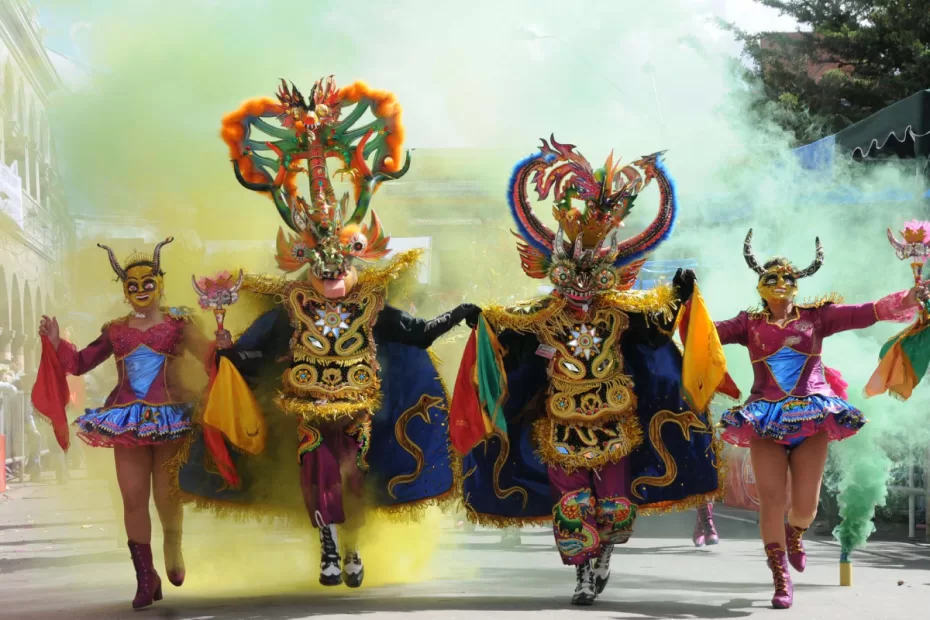
The cultural blending in the Oruro Carnival is evident in every thread of its fabric. The most famous example is the association of the Virgin of Socavón with Supay, the Lord of the Uru underworld, who later became equated with the Christian devil. The carnival’s main dance, the Diablada, or “Dance of the Devils,” dramatically illustrates this blend. Dancers, representing devils, angels, and various mythological creatures, perform elaborate choreographies, ultimately paying homage to the Virgin. This blending extends to the traditional music, where European instruments like trumpets and trombones are played alongside indigenous flutes and drums, creating a unique soundscape that defines the festive atmosphere. It’s a vibrant expression of Andean spirituality and cultural diversity.
Key Features of the Carnival
The Oruro Carnival is a sensory explosion, captivating visitors with its intricate details and overwhelming energy. The main parades are the focal point, but every element contributes to the overall experience.
Colorful Costumes and Masks
One of the most striking aspects of the carnival is the extraordinary array of Oruro Carnival costumes and masks. Each costume is a work of art, meticulously crafted and laden with symbolism. The Diablada masks, for example, are elaborate, often featuring terrifying visages with fangs, horns, and bulging eyes, adorned with serpents and toads—symbols of the underworld. Other folk dances feature equally stunning attire, from the elegant, sequined dresses of the Morenada to the vibrant feathers of the Caporales. These costumes and masks are not mere adornments; they are essential cultural expressions, conveying narratives, identities, and spiritual beliefs that have been passed down through generations.
Traditional Dances
The heart of the Oruro Carnival lies in its traditional dances. Over 50 different dance groups, each representing a specific region or historical tradition, participate. The most iconic is the Diablada, a powerful representation of the battle between good and evil, deeply steeped in Andean rituals and Christian narratives. Other popular folk dances include the Morenada, which depicts the suffering of African slaves brought to the mines; the Caporales, a high-energy dance with elaborate jumps and kicks; and the Llamerada, a more tranquil dance honoring llama herders. Each dance tells a story, accompanied by traditional music played by live bands, creating a rhythmic pulse that permeates the entire city.
The Pilgrimage to the Shrine of Socavón
Central to the spiritual significance of the Oruro Carnival is the Oruro pilgrimage to the Shrine of Socavón. On the Saturday of the main parade, thousands of dancers, after hours of performing through the streets, make their final approach to the sanctuary of the Virgin of Socavón. This final leg of the journey is performed on their knees, a profound act of devotion and penance. It’s a deeply moving moment that underscores the religious fervor and the spiritual core of the Oruro traditions, where the festive atmosphere gives way to solemn reverence.
Sustainable Practices in the Carnival
Preserving the integrity of the Oruro Carnival is crucial, and efforts are increasingly focused on sustainable cultural practices. Local communities and cultural organizations are working to ensure that the festival remains authentic while managing its growth. This includes promoting local artisans who create the elaborate costumes and masks, thus supporting traditional crafts and livelihoods. Community involvement is key to maintaining the spirit of the carnival, ensuring that its rich heritage is passed on to future generations.
Challenges and Threats to Tradition
Despite its UNESCO status, the Oruro Carnival faces several challenges. Modernization and commercialization pose threats to the authenticity of certain traditions, with a risk of dilution of its profound cultural meanings. Environmental factors, such as waste management during the massive event, also require careful consideration. Balancing the influx of tourism with the preservation of local customs and the delicate ecosystem of the Andean highlands is an ongoing effort for Oruro cultural events organizers.
How to Experience the Oruro Carnival
Experiencing the Oruro Carnival is an unforgettable adventure, but it requires some planning. It’s a vibrant, chaotic, and deeply spiritual event that offers a true immersion into Bolivian traditions.
Best Time to Visit
The carnival typically takes place over the weekend before Ash Wednesday, usually in February or early March. This timing is fluid and depends on the liturgical calendar, so checking specific dates well in advance is essential. The main parade on Saturday is the highlight, but the entire week leading up to it, and the Sunday following, are filled with various celebrations, concerts, and cultural expressions.
Travel Tips and Recommendations
For travelers wishing to attend, booking accommodations in Oruro well in advance is paramount, as the city fills up quickly. La Paz is another option for accommodation, with many tour operators offering day trips to Oruro. Be prepared for high altitudes; Oruro sits at over 3,700 meters (12,000 feet), so acclimatization is important. Dress in layers, as weather can vary, and bring sun protection. Secure your spot along the parade route early, or consider purchasing seats in the grandstands for the best views. Embracing local customs and being respectful of the spiritual aspects of the carnival will enhance your experience. These Bolivia travel tips ensure you’re ready for an incredible journey into one of the world’s most spectacular carnival celebrations.
Conclusion
The Andean syncretism Oruro Carnival is a powerful embodiment of cultural resilience and spiritual fusion. It’s a living museum of Bolivian folklore, where ancient indigenous beliefs and colonial Catholic traditions dance together in a spectacular display of faith, art, and community. More than just a festival, it’s a profound declaration of cultural identity, inviting the world to witness the vibrant heart of Andean culture and its enduring legacy.
Looking for an alternative link for Sv388? I’ve been using sv388link and it’s been working out great. No problems accessing the site so far. Check here: sv388link