
Introduction
Oruro Carnival as Bolivia’s Premier Cultural Celebration
Every February, the high-altitude city of Oruro becomes the vibrant epicenter of Bolivia’s cultural universe. The Oruro Carnival, or *Carnaval de Oruro*, isn’t just another festival—it’s an explosion of colors, traditions, rhythms, and emotions that carries centuries of history in every dance step and costume. More than 400,000 people, including dancers, musicians, and visitors, gather to witness this spectacular celebration. At its core, this event represents a blend of indigenous spirituality and Catholic traditions, creating a unique narrative of devotion and artistic expression.
While many nations boast of colorful carnivals, Oruro’s version stands out for its spiritual depth and commitment to preserving folklore. It’s an authentic Bolivian expression, deeply rooted in indigenous customs like those of the Uru, Aymara, and Quechua peoples. With a religious undertone paying homage to the Virgin of Candelaria (also known as the Virgen del Socavón), the festival weaves together pre-Columbian rituals with Christian elements—an unbroken cultural chain dating back over 200 years.
UNESCO Recognition and Global Significance
In 2001, the Oruro Carnival received one of the most prestigious accolades a cultural event can earn: it was proclaimed a “Masterpiece of the Oral and Intangible Heritage of Humanity” by UNESCO. This recognition validated the festival’s universal value and placed it on the global map alongside other cultural marvels.
What this means economically is massive. UNESCO’s label not only attracts curious academics and cultural enthusiasts but also serious international tourists who actively seek out world heritage experiences. As such, Oruro doesn’t just host a carnival—it hosts a globally significant event, drawing attention from media houses, tourism boards, researchers, and tour operators from around the world.
Purpose of the Article
The purpose of this article isn’t just to marvel at the artistic splendor of the Oruro Carnival—it’s to dig deeper into its **economic significance**. How does this annual spectacle affect the local and regional economy? What ripple effects does it create in jobs, tourism, trade, and infrastructure? How can this cultural asset be leveraged for long-term economic development while preserving its authenticity? These are the questions this article will explore.
By examining both direct and indirect impacts, as well as the challenges and opportunities tied to the event, we aim to present a comprehensive picture of how a cultural tradition can serve as a powerful engine of economic growth.
Cultural and Historical Value of the Oruro Carnival
Indigenous and Religious Roots of the Carnival
Long before the arrival of Spanish colonizers, the indigenous communities of the Andean altiplano practiced rituals and ceremonies centered around nature, mining deities like *El Tío*, and mother earth, *Pachamama*. These practices were not mere spiritual observances—they were deeply woven into the social and economic life of the people. Ceremonial dances, masks representing ancestral spirits, and processions marked key events in the agrarian calendar.
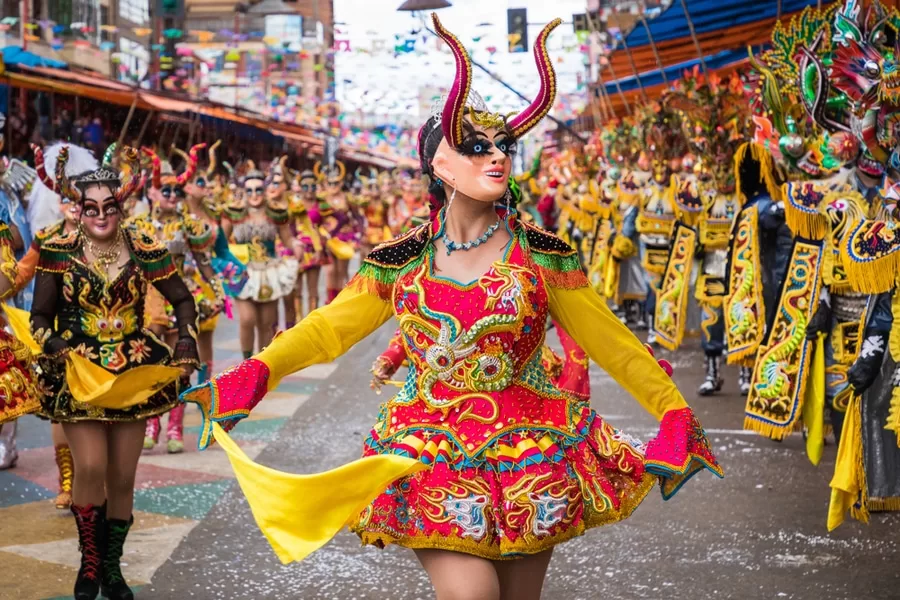
When Catholicism was introduced during colonization, these indigenous beliefs didn’t disappear; they merged with the Christian narrative. The Oruro Carnival evolved into a syncretic celebration blending the adoration of the Virgen del Socavón with older beliefs. The most famous dance of the carnival, the **Diablada (Dance of the Devils)**, symbolizes the fight between good and evil—a dramatization that appeals to both indigenous myth and Catholic doctrine.
This unique fusion gives the Oruro Carnival its soul. It’s not just entertainment—it’s a ritualistic reaffirmation of identity. For many Bolivians, participating in or even watching the carnival is a spiritual journey.
Cultural Identity and National Pride
Every costume, melody, and movement in the carnival tells a story. From the Morenada to the Caporales, each dance comes from a specific region and tells of colonial oppression, Afro-Bolivian resilience, or indigenous pride. The festival acts as a living museum, preserving centuries of history in kinetic form.
For Bolivia, a country with diverse ethnic groups and regional tensions, the Oruro Carnival is a unifying event. It’s where regional identities are proudly displayed yet collectively celebrated under the Bolivian flag. This makes the event not only important for Oruro but vital for national cohesion and cultural diplomacy.
International visitors don’t just witness a festival—they are immersed in a cultural narrative that’s rare in its authenticity and intensity. This connection to heritage is a massive draw for cultural tourists, academics, and even film crews, all of whom contribute economically.
Folklore and Spiritual Appeal for Tourists
Why do people fly across oceans for this carnival? It’s not just the music and costumes—it’s the spiritual magnetism. Many tourists report feeling emotionally moved by the processions, especially the dramatic entrance of dancers to the **Sanctuary of the Virgin of Socavón**. This is where dance becomes prayer, and rhythm becomes devotion.
Spiritual tourism is growing globally, and the Oruro Carnival sits at the intersection of that trend. For visitors who want more than sun and sand, this festival offers a soul-stirring, culturally enriching experience. That emotional and cultural pull translates into economic value. Tourists stay longer, spend more on authentic experiences, and often return or promote the destination to others.
Direct Economic Impact
Temporary Job Creation Across Key Sectors
The Oruro Carnival acts as a temporary economic engine, jumpstarting job markets across multiple sectors. For a city that normally operates at a quieter pace, the influx of hundreds of thousands of visitors demands an immediate and robust labor force. In the months leading up to the event and especially during the festival week, thousands of jobs are created—most of them temporary but essential.
From hotel staff to tour guides, waiters, cooks, costume designers, street vendors, and security personnel, the range of employment opportunities is vast. Local government agencies ramp up their staffing to handle permits, logistics, and public services, while private businesses aggressively hire to meet rising demand. Even students and retirees often find part-time gigs during this period, offering an inclusive economic benefit across different demographics.
Moreover, the event encourages **entrepreneurial activity**, with many locals turning their homes into temporary accommodations or selling food and drink in pop-up stalls. The carnival essentially turns the entire city into a marketplace. While these jobs may only last a few weeks, they provide crucial income boosts for thousands of families and stimulate broader economic circulation within the community.
Boom in Hospitality and Food Services
Perhaps no sector sees a more dramatic surge during the carnival than **hospitality and food services**. Hotels in Oruro are typically booked out months in advance, and even then, the demand far outweighs the supply. This leads to a flourishing informal accommodation sector where residents rent out rooms, apartments, or even single beds at premium prices.
Restaurants, cafés, and street food vendors experience a windfall. With an influx of tourists, dancers, and performers, the demand for traditional Bolivian dishes like *salteñas*, *anticuchos*, and *api con pastel* skyrockets. Local cuisine becomes part of the cultural experience that visitors actively seek out, giving an added layer of exposure to Bolivian gastronomy.
Temporary food courts are erected across the city, and food trucks line the main parade routes. Even more importantly, many small-scale food businesses, which usually cater to local clientele, get a rare chance to serve an international audience. This exposure often leads to **business expansion** or long-term customer loyalty.
Local Retail Surge During the Festival
Retailers, both formal and informal, witness a significant spike in sales during the Oruro Carnival. From souvenir shops and costume vendors to electronics and mobile recharge stalls, every merchant finds an opportunity to cash in on the increased foot traffic. Local artisans selling handwoven textiles, ceramics, and jewelry benefit immensely from tourists looking for authentic mementos.
Shopping isn’t limited to traditional crafts, though. General merchandise like bottled water, sunscreen, hats, and umbrellas—essential items for surviving the long days under the highland sun—see brisk sales. Local markets and mini-supermarkets often report record-high revenues during the carnival week.
In addition to direct sales, many retailers also engage in **strategic partnerships** with performers and dance groups. Costume suppliers, in particular, enjoy a booming business as they cater to thousands of dancers who require intricate, often custom-made outfits. These relationships can become year-long contracts, extending the economic benefit well beyond the carnival days.
Indirect Economic Impact
Handicrafts, Masks, and Costume Industries
The elaborate costumes and masks featured in the Oruro Carnival aren’t just eye candy—they’re big business. The traditional outfits worn by dancers can cost hundreds, sometimes thousands, of dollars. These are hand-crafted by local artisans who specialize in embroidery, metalwork, leatherwork, and textile production.
Artisans typically begin work months in advance, producing everything from ornate devil masks to richly embroidered capes and boots. This extended production timeline creates a stable flow of income for workshops that might otherwise struggle during off-peak seasons. The carnival thus serves as a **lifeline for artisanal crafts**, helping preserve traditional skills and sustaining niche industries.
Moreover, many artisans export their creations to dance troupes in other Bolivian cities or even to Bolivian communities abroad. The demand extends beyond the local market, contributing to **export revenue** and putting Oruro’s craftsmanship on the global stage. Some workshops have grown from home-based operations to full-fledged small enterprises with apprentices and multiple employees—all thanks to the recurring demand generated by the carnival.
Expansion of the Tourism Supply Chain
The economic ripple effect of the Oruro Carnival spreads through the entire **tourism supply chain**. Tour operators, transport services, translators, and local guides all see significant upticks in business. Car rental agencies, bus companies, and even airlines report increased bookings, especially those connecting La Paz, Cochabamba, and Sucre to Oruro.
This surge in tourism-related activity strengthens the local travel ecosystem. New travel agencies pop up each year offering customized carnival packages. Local guides who might normally serve sporadic tourists during the year find themselves fully booked for weeks. Many even specialize in **cultural interpretation**, offering deeper insights into the significance of the dances, rituals, and historical context of the carnival.
These auxiliary industries help create a more robust and diversified tourism offering. Instead of simply attending the parade, visitors can now experience pre-carnival workshops, costume trials, backstage tours, and guided museum visits. This enhanced tourism model encourages **longer stays** and **higher spending**, increasing the overall economic return per visitor.
Growth of Informal and Micro-Enterprises
While large hotels and established businesses benefit greatly from the carnival, so too do **micro-entrepreneurs and informal traders**. The barriers to entry are low—almost anyone with a product or service can participate. You’ll find locals selling everything from bottled water and handmade souvenirs to face paint and mobile charging services.
This grassroots economic activity has a democratizing effect. It allows marginalized groups—such as women, indigenous communities, and low-income families—to directly engage in and benefit from the tourist economy. For many, the income generated during carnival week represents a significant portion of their annual earnings.
In recent years, we’ve also seen an uptick in **digital micro-businesses** related to the event. For example, locals have begun offering curated photography services for tourists, livestreaming services for international viewers, and even mobile apps providing parade schedules, maps, and costume descriptions. These micro-initiatives showcase how tradition and innovation can intersect in profitable ways.
Tourism Flow and Foreign Exchange
Visitor Statistics: National and International Reach
Each year, the Oruro Carnival draws an impressive crowd, both nationally and internationally. Conservative estimates suggest that the event welcomes over 400,000 attendees, including approximately **50,000 to 70,000 international visitors** from neighboring countries like Chile, Argentina, and Peru, as well as long-haul travelers from Europe, North America, and even Asia.
This flood of visitors is remarkable for a city like Oruro, which has a population of around 250,000 people. During the carnival period, the population essentially doubles, and this surge puts the city in the spotlight both domestically and abroad. It also gives Bolivia a rare global tourism asset—one that is capable of drawing in travelers not just for leisure, but for **cultural enrichment and spiritual exploration**.
What’s particularly notable is that many of these visitors are not just tourists—they’re “experience seekers.” These are individuals who go beyond sightseeing; they actively participate, dress in traditional outfits, join dance workshops, and even sponsor local troupes. Their extended stay and high level of engagement translate to higher spending per capita compared to typical leisure tourists.
Additionally, Bolivian expatriates often return during the carnival, bringing with them international money and frequently acting as ambassadors for the festival abroad. Their return boosts local spending, not only during the carnival but also in the pre- and post-event periods.
Foreign Exchange Contribution to GDP
The economic contributions of the Oruro Carnival go far beyond ticket sales and local spending. International visitors bring in **foreign currency**, providing a critical infusion of hard cash into the regional and national economy. The foreign exchange earnings generated during this brief period are significant enough to make a noticeable impact on Bolivia’s tourism GDP.
Businesses that cater to tourists often transact in U.S. dollars or euros, especially for accommodation, guided tours, and curated cultural experiences. Currency exchanges, banks, and ATMs see a marked increase in usage, and the inflow of foreign currency helps stabilize local markets.
It is estimated that the carnival generates **millions of U.S. dollars in tourism revenue** annually, a sizable portion of which comes from foreign visitors. These earnings ripple across multiple sectors—from transportation and entertainment to artisanal production and digital services.
In turn, these foreign exchange inflows help support **economic diversification**. Local businesses reinvest in infrastructure, product development, and staff training, all of which elevate the region’s tourism quality. The Oruro Carnival, therefore, doesn’t just bring in money; it builds capacity and resilience in the local economy.
Branding Oruro as a Global Tourism Destination
The Oruro Carnival is more than a festival—it’s a **branding opportunity** for the city and the country. With UNESCO recognition and rising international media coverage, Oruro has positioned itself as one of the world’s premier destinations for cultural tourism.
This branding pays dividends year-round. Travel blogs, social media influencers, and documentary filmmakers often focus on the carnival, creating a digital footprint that continuously attracts new visitors. Tour agencies use footage from the event to market Bolivian packages, while embassies and cultural organizations promote the carnival at global expos and tourism fairs.
Oruro’s growing reputation also inspires **infrastructure investments**. Local authorities, recognizing the global attention, are more likely to invest in roads, public spaces, and digital infrastructure to support tourism. This improves not only the experience for visitors but also the **quality of life for residents**.
In essence, the carnival functions as both an economic generator and a **branding tool**, establishing Oruro as a place where tradition thrives and modern opportunity grows.
Challenges and Opportunities
Strain on Urban Infrastructure
While the economic benefits of the Oruro Carnival are immense, the city faces considerable **infrastructure challenges** during the event. The sudden population surge stretches local resources to the limit. Roads become congested, public transportation is overwhelmed, and water and sanitation systems face serious strain.
Accommodations are another critical pain point. Even with the informal sector stepping in, the demand for lodging far exceeds the supply. Many visitors are forced to stay in neighboring cities and commute, putting additional pressure on regional transport networks. Moreover, mobile connectivity, internet bandwidth, and power supply often fall short during peak times, disrupting both locals and tourists.
Public health services are similarly taxed. Temporary clinics, additional emergency personnel, and mobile health units are required to manage everything from minor injuries to alcohol-related incidents. Trash accumulation, noise pollution, and overuse of public facilities also raise concerns among residents.
Addressing these issues will require **sustainable urban planning**, increased investment in infrastructure, and year-round coordination between public and private sectors. Without these improvements, the city risks diminishing the quality of the tourist experience and potentially losing long-term visitors.
Environmental and Social Sustainability Concerns
The environmental footprint of the Oruro Carnival cannot be ignored. Massive crowds generate mountains of waste, much of it non-biodegradable. Plastic bottles, food wrappers, disposable utensils, and costume materials often litter the streets. Waste management systems, already under pressure, struggle to keep up.
Noise and air pollution are also concerns. With hours of parades, amplified music, and dense traffic, both residents and the environment bear a burden. The **carbon emissions** from increased vehicle usage, including long-distance travel to and from Oruro, contribute to the city’s ecological challenges.
On the social side, the commercialization of the event sometimes clashes with its **spiritual origins**. Critics argue that excessive focus on profit can dilute the sacred aspects of the carnival, transforming it from a religious-cultural event into a commercial spectacle.
To combat these trends, there’s a pressing need for **eco-friendly policies**, such as banning single-use plastics, promoting public transport, and encouraging sustainable tourism education. Cultural custodians and local authorities must also work together to maintain the **spiritual integrity** of the event while embracing economic growth.
Year-Round Cultural Tourism as a Growth Strategy
Despite its global appeal, the economic benefits of the Oruro Carnival are largely concentrated in one short window. This creates a **feast-or-famine cycle** for many local businesses. To ensure more consistent income and economic resilience, there’s a strong case for developing **year-round cultural tourism**.
The city of Oruro is rich in history, architecture, museums, and artisanal markets. By promoting these assets beyond carnival season, local authorities can attract a steady flow of cultural tourists. Workshops on traditional dance, mask-making classes, folklore storytelling nights, and monthly processions are just a few of the possibilities.
Moreover, the success of the carnival creates a platform for **festival tourism packages** throughout Bolivia. By connecting Oruro to other cultural destinations like Potosí, Sucre, and La Paz, the government and tour operators can create multi-city experiences that extend visitor stays and increase spending.
This strategic shift toward year-round tourism also opens up **employment and investment opportunities**, reducing dependence on seasonal income. If implemented thoughtfully, it ensures that the cultural economy continues to thrive long after the last dance is performed.
Conclusion
Recap of Cultural and Economic Importance
The Oruro Carnival is far more than a vibrant display of costumes and dances—it’s a cultural heartbeat that pulses through Bolivia every year, bringing people together in celebration, devotion, and identity. Recognized by UNESCO as an Intangible Cultural Heritage of Humanity, it preserves centuries of indigenous and religious traditions that are still alive in every drumbeat and every step of the Diablada.
Yet the festival’s brilliance isn’t limited to cultural expression alone. Economically, the Oruro Carnival is a juggernaut. It fuels local employment, supports hundreds of small and medium-sized enterprises, boosts tourism, and injects millions into the regional economy. From hotels and food vendors to costume makers and tour guides, nearly every economic sector in Oruro feels the impact—and most importantly, benefits from it.
This fusion of **heritage and economic utility** shows that tradition is not only something to be preserved—it can be harnessed for growth, opportunity, and development. For Oruro, the carnival is both its soul and its breadwinner.
Economic Outlook Through Sustainable Tourism
Looking forward, there’s massive potential to build on the current success. However, sustainable planning will be key. The economic benefits must be weighed against the environmental and infrastructural costs. Better waste management, expanded lodging capacity, smarter transportation planning, and eco-friendly practices can ensure that Oruro continues to welcome visitors without sacrificing the integrity of its culture or the comfort of its residents.
Efforts must also be made to **diversify the tourism calendar**, offering experiences throughout the year that build on the carnival’s legacy. Cultural workshops, community tourism, religious pilgrimages, and folklore festivals can keep the economic engine running beyond February.
With the right policies and community participation, the Oruro Carnival can evolve from a seasonal economic windfall into a **sustainable economic foundation** for the entire region.
Harmony Between Heritage and Development
Ultimately, the Oruro Carnival represents a powerful example of how culture and economy can thrive side by side. It’s a living story of resilience, creativity, and celebration—a story that continues to be told every year, not just in dances and processions, but in jobs, incomes, and opportunities.
By protecting the cultural core of the carnival while embracing smart growth strategies, Oruro can chart a course where heritage and prosperity walk hand in hand. That’s not just good for business—it’s good for Bolivia.
FAQs
1. How much revenue does the Oruro Carnival generate for Bolivia?
The Oruro Carnival generates several million U.S. dollars annually, with significant contributions from both domestic and international tourism. While exact figures vary each year, estimates place its impact at over \$20 million during peak years, with foreign exchange playing a major role.
2. Who benefits the most economically from the Oruro Carnival?
A wide range of individuals and sectors benefit, including local hotels, food vendors, transport services, artisans, tour operators, and even informal traders. Artisans and costume makers especially see sustained demand in the lead-up to the carnival.
3. Is the Oruro Carnival only beneficial during the festival period?
Primarily, yes—but there’s growing recognition of the need to extend economic benefits beyond the festival week. Year-round cultural tourism and follow-up events can help maintain the economic momentum sparked by the carnival.
4. What challenges does Oruro face in hosting such a large event?
The city struggles with infrastructure overload, waste management issues, accommodation shortages, and environmental degradation during the event. There’s also concern about the commercialization of a deeply spiritual celebration.
5. How can tourists support sustainable practices during the carnival?
Visitors can support sustainability by choosing eco-friendly accommodations, avoiding single-use plastics, respecting local traditions, and supporting authentic local artisans and small businesses instead of mass-produced souvenirs.
Another week, another chance with xosotayninh! Hopefully, my numbers will align this time. Keeping my fingers crossed! Results at xosotayninh.