
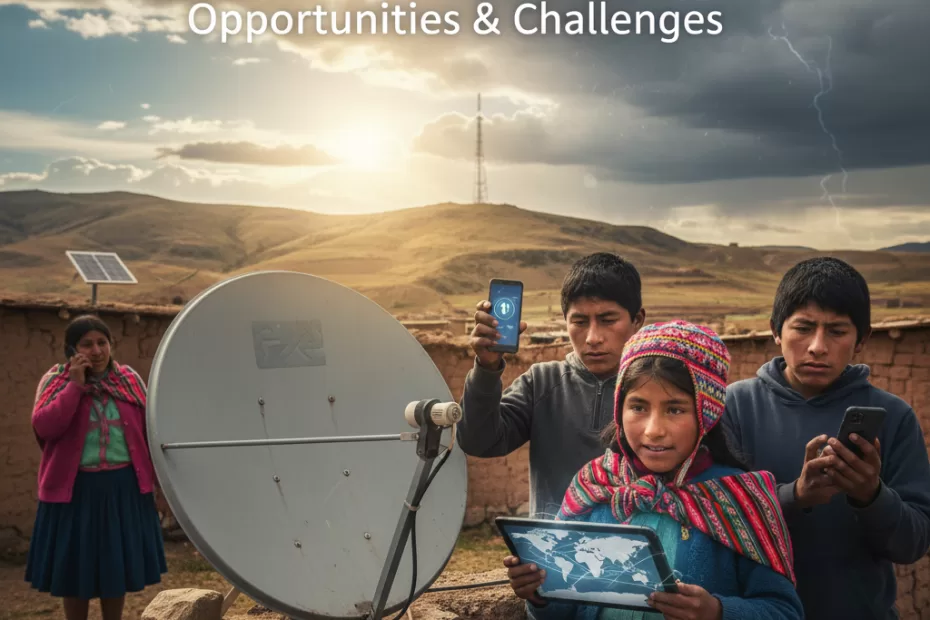
Exploring Internet Access in Rural Bolivia: Opportunities & Challenges
Bolivia, a land of breathtaking Andean peaks, vast Amazonian rainforests, and expansive altiplano, is a nation rich in cultural diversity and natural beauty. However, this same geographical grandeur presents significant hurdles when it comes to connecting its population, especially those living in remote rural communities, to the global digital highway. While urban centers often enjoy relatively stable internet connectivity, the landscape for internet in rural Bolivia remains a complex tapestry of challenges and nascent opportunities. Bridging this digital divide is not merely about convenience; it’s about fostering education, economic growth, healthcare access, and social inclusion for millions.
The push for greater internet accessibility across the nation is a critical component of Bolivia rural development, aiming to unlock the potential of communities that have historically been left behind in the digital revolution. Understanding the current state, the types of internet available, the persistent challenges, and the promising future prospects is essential to grasping the full picture of internet in Bolivia and the ongoing efforts to ensure everyone has a fair shot at digital access.
Current State of Internet Connectivity in Rural Bolivia
The reality of internet connectivity in rural Bolivia is, for many, a stark contrast to the experience in its major cities. While places like La Paz, Santa Cruz, and Cochabamba have seen considerable improvements in broadband access over the past decade, with fiber optic networks and 4G mobile internet becoming increasingly common, the reach of this modern internet infrastructure often dwindles dramatically once you leave metropolitan areas.
Many rural communities still grapple with either non-existent or extremely limited internet services Bolivia. The existing telecommunications in Bolivia infrastructure is predominantly geared towards urban populations, leaving large swathes of the countryside underserved. This creates a significant digital divide Bolivia, where access to information, educational resources, and economic opportunities remains heavily skewed. For residents in these remote areas Bolivia, even basic internet speed can be a luxury, and internet reliability is often a constant concern.
The primary backbone of internet in rural Bolivia has historically relied on older technologies, or simply, nothing at all. DSL (Digital Subscriber Line) services, where available, are often slow and dependent on aging copper wire infrastructure designed for voice calls, not high-speed data. Mobile internet, while more widespread due to the expansion of 3G and 4G networks by major internet providers, frequently suffers from inconsistent coverage, especially in mountainous or densely forested regions. Signal strength can be weak, and data caps are often restrictive and expensive for the average rural household.
This lack of robust internet infrastructure impacts daily life profoundly. Farmers struggle to access market prices or agricultural best practices. Students find it hard to complete online assignments or access digital learning materials. Small businesses are unable to leverage e-commerce platforms to expand their reach. Healthcare providers in rural clinics miss out on telemedicine opportunities that could connect them with specialists in urban centers. The absence of reliable internet access perpetuates cycles of disadvantage, hindering the overall progress of Bolivia technology adoption and economic diversification in these regions.
The government and various organizations have recognized this disparity, initiating programs to extend connectivity. However, the sheer scale of the challenge – covering a vast and geographically diverse country with a dispersed population – means progress is often slow and incremental. While there’s a growing awareness of the importance of digital connectivity, turning that awareness into widespread, affordable internet access for every rural community remains a monumental task. The journey towards comprehensive rural connectivity is ongoing, marked by both determined efforts and persistent obstacles.
Types of Internet Available
In the quest for internet in rural Bolivia, residents and communities often find themselves navigating a limited menu of internet options. Unlike urban areas where fiber optic and high-speed cable internet are becoming standard, rural connectivity typically relies on a mix of older technologies and more recent innovations designed to overcome geographical limitations. Understanding these types of internet services Bolivia is key to appreciating the current landscape and future potential.
Traditionally, the most common forms of internet access in less remote rural areas have included:
-
DSL (Digital Subscriber Line): Where landline phone infrastructure exists, DSL can offer internet access over copper telephone lines. However, its speed is highly dependent on the distance from the local exchange, making it often slow and unreliable in truly remote settings. Furthermore, the installation and maintenance of this landline infrastructure in challenging terrain are costly, limiting its expansion.
-
Mobile Internet (3G/4G): This has become one of the most prevalent forms of internet in Bolivia, even in some rural areas, thanks to the expansion of cellular networks by major internet providers like Entel, Tigo, and Viva. Users access the internet via their smartphones or through mobile hotspots. While it offers mobility and can be deployed more easily than fixed-line solutions, coverage can be spotty outside of populated areas, and data plans can be expensive, often with restrictive data caps, making it less suitable for heavy usage or multiple users. The internet speed can also vary wildly depending on signal strength and network congestion.
-
Fixed Wireless Access (FWA): This technology uses radio signals to provide broadband access from a central tower to individual antennas at homes or businesses. It’s often used by smaller, local internet providers to serve communities beyond the reach of traditional wired networks. FWA can offer better speeds than DSL in some cases, but it requires line-of-sight to the tower and can be affected by weather conditions or geographical obstructions.
Each of these options has its own set of advantages and disadvantages, but for many deeply rural communities, even these choices are either unavailable, unaffordable, or simply too unreliable to meet modern digital needs. This persistent gap highlights the urgent need for alternative, more robust connectivity solutions that can genuinely bridge the digital divide.
Satellite Internet: A Game Changer?
Amidst the challenges of terrestrial internet infrastructure, satellite technology has emerged as a truly transformative force for internet in rural Bolivia, particularly in remote areas Bolivia. For communities where laying fiber optic cables or building cell towers is economically unfeasible or geographically impossible, satellite internet offers a lifeline, providing broadband access from space.
Historically, satellite internet in Bolivia was often characterized by high latency (due to the geostationary orbit of satellites), expensive equipment, and relatively slow speeds. However, a new generation of low Earth orbit (LEO) satellite constellations, most notably Starlink Bolivia, is fundamentally changing this perception.
Starlink, developed by SpaceX, operates thousands of satellites much closer to Earth, drastically reducing latency and significantly increasing internet speed compared to traditional satellite systems. This means a much more responsive and usable internet experience, capable of supporting video calls, online learning, and cloud-based applications that were previously impractical with satellite connections.
The introduction of Starlink Bolivia has the potential to be a genuine game changer for rural connectivity. Its ability to provide high-speed, low-latency internet anywhere with a clear view of the sky bypasses the need for extensive ground infrastructure. This means that isolated villages in the Andes, communities deep within the Amazon, or remote settlements on the altiplano can potentially gain access to modern internet services that are comparable to those found in urban centers.
The impact of such technology extends far beyond mere browsing. For education, it means students in remote schools can access a wealth of online resources, participate in distance learning, and develop digital literacy skills crucial for the future. In healthcare, telemedicine becomes a viable option, connecting rural clinics with specialists and enabling faster diagnostics and consultations. Economically, it opens doors for small businesses to engage in e-commerce, access global markets, and utilize digital tools for efficiency, contributing significantly to Bolivia rural development.
However, even with its immense potential, satellite internet in Bolivia, particularly services like Starlink, faces its own set of hurdles. The initial cost of the necessary user terminal (dish) can be a significant barrier for low-income rural households, even if the monthly service fees become more competitive over time. Furthermore, regulatory frameworks and import logistics for such advanced technology need to be smooth to ensure widespread adoption. Despite these challenges, the advent of advanced satellite technology represents one of the most promising internet options for finally bringing reliable, high-speed internet to every corner of rural Bolivia, offering a pathway to truly universal digital access.
Challenges to Internet Access
Despite the clear benefits and burgeoning technologies, the path to universal internet access in rural Bolivia is fraught with significant internet challenges. These obstacles are often intertwined, creating a complex web that makes solutions difficult and expensive. Addressing them requires a multi-faceted approach involving government, private sector, and community efforts.
Geographical Barriers
Bolivia’s diverse and often extreme geography is perhaps the single most formidable barrier to developing comprehensive internet infrastructure. The country is a land of dramatic contrasts, encompassing the towering peaks and vast plateaus of the Andes, the dense, humid jungles of the Amazon basin, and the semi-arid Chaco plains.
-
Andean Highlands (Altiplano and Valleys): The rugged mountainous terrain makes the deployment of traditional wired infrastructure, such as fiber optic cables, incredibly challenging and prohibitively expensive. Laying cables across steep slopes, through rock, or over high-altitude passes requires specialized equipment, extensive labor, and often encounters environmental hurdles. Even fixed wireless solutions can be hampered by line-of-sight issues caused by hills and mountains. The dispersed nature of communities in these areas means that the cost per connection becomes exceptionally high, making it unattractive for commercial internet providers seeking a return on investment.
-
Amazonian Lowlands: In the eastern lowlands, dense rainforests, vast rivers, and challenging climate conditions (high humidity, heavy rainfall) pose a different set of problems. Cutting through jungle for cable laying is environmentally destructive and logistically complex. The frequent flooding of rivers can damage infrastructure, and the sheer remoteness of many indigenous communities makes access difficult for maintenance and installation teams. The lack of existing road networks further complicates the transport of equipment and personnel.
-
Dispersed Population: Unlike countries with concentrated populations, Bolivia’s rural population is often spread across small, isolated villages. This low population density means that extending internet infrastructure to each community requires significant investment for a relatively small number of potential customers, further deterring private sector investment.
These geographical realities mean that traditional methods of expanding internet in Bolivia are simply not viable for many areas. This is where technologies like satellite internet, which can bypass the need for ground-based infrastructure, become crucial for achieving rural connectivity. However, even satellite solutions require ground equipment installation and maintenance, which can still be challenging in these remote locations. The physical landscape of Bolivia truly dictates the pace and nature of internet growth in its rural heartland.
Affordability and Cost Issues
Even when internet services are technically available, the cost of internet often presents an insurmountable barrier for many rural Bolivians, exacerbating the digital divide. Affordability is a critical factor that determines whether connectivity translates into actual digital access.
-
High Cost of Services: Internet providers in Bolivia, especially those offering services in less competitive rural markets, often charge higher prices for lower speeds compared to urban areas. This is partly due to the higher operational costs associated with serving remote locations, including transport, maintenance, and the limited economies of scale. For families in rural communities, where average incomes are significantly lower than in cities, these prices can be simply out of reach. An internet package that might seem reasonable in a city could consume a substantial portion of a rural family’s monthly budget, forcing them to choose between connectivity and other essential needs.
-
Cost of Equipment: For satellite internet, and even for some fixed wireless solutions, there’s a significant upfront cost for equipment – the dish, modem, and installation. While the monthly service fee might be manageable for some, the initial investment can be a substantial hurdle for low-income households or community organizations. Without subsidies or financing options, this initial capital outlay can prevent many from accessing the technology, regardless of its availability.
-
Limited Competition: In many rural areas, there is a lack of competition among internet providers, or sometimes only one provider offers any service at all. This lack of choice can lead to higher prices and lower service quality, as providers face less pressure to innovate or offer competitive rates.
-
Economic Disparities: The fundamental economic disparities between urban and rural Bolivia play a huge role. Rural economies are often dominated by subsistence agriculture or small-scale informal businesses, which generate lower and less stable incomes. This makes it difficult for rural residents to afford not only internet services but also the devices (smartphones, computers) needed to utilize that connectivity effectively. Even if internet in rural Bolivia becomes more widespread, if it’s not affordable internet, it won’t truly bridge the digital divide.
-
Data Caps and Overage Charges: Many mobile internet plans, which are often the only option in some rural areas, come with strict data caps. For activities like online learning or video calls, these caps can be quickly exhausted, leading to expensive overage charges or a complete cut-off of services until the next billing cycle. This limits the utility of the internet for educational, professional, or entertainment purposes, forcing users to constantly monitor their data usage.
Addressing affordability requires innovative solutions, including government subsidies, community-led initiatives to share costs, and the development of more tailored, low-cost internet options that meet the specific needs and economic realities of rural Bolivians. Without tackling the cost barrier, even the most advanced technology will fail to deliver truly equitable digital access.
Future Prospects for Internet in Rural Bolivia
Despite the persistent challenges, the future prospects for internet in rural Bolivia are looking increasingly promising. A combination of technological advancements, renewed government focus, and innovative community-driven solutions are converging to create a more hopeful outlook for rural connectivity. The recognition that digital access is a fundamental enabler for social and economic development is driving efforts to bridge the digital divide.
The increasing global awareness of the importance of universal broadband access, coupled with the rapid evolution of technology in Bolivia and beyond, means that solutions that were once deemed impossible or too expensive are now becoming viable. This shift is crucial for fostering Bolivia rural development and ensuring that no community is left behind in the digital age.
One of the most significant shifts is the growing emphasis on a multi-pronged approach rather than relying on a single solution. This means leveraging the strengths of different technologies—satellite for the most remote, fixed wireless for moderately rural, and continued expansion of mobile networks—to create a comprehensive strategy for internet services Bolivia. Furthermore, there’s a greater understanding that simply providing connectivity isn’t enough; the internet needs to be affordable, reliable, and relevant to the specific needs of rural communities.
The discussions around internet growth in Bolivia are no longer just about infrastructure, but also about digital literacy, local content creation, and sustainable business models for rural internet providers. This holistic view is essential for ensuring that future investments truly translate into meaningful digital access and empower rural populations to harness the full potential of the internet.
Government Initiatives and Investments
The Bolivian government has recognized the critical importance of improving internet access in rural areas and has initiated several programs and investments aimed at bridging the digital divide. These government initiatives are crucial for laying the groundwork for widespread rural connectivity, especially where private sector investment alone might not be sufficient due to the high costs and lower profit margins associated with serving remote areas.
One of the primary vehicles for these efforts has been the National Telecommunications Company (Entel), which is state-owned. Entel has played a significant role in expanding both mobile and fixed-line internet infrastructure across the country, often reaching areas that private companies have overlooked. Its mandate includes a social component to ensure universal access, which translates into projects to extend fiber optic backbones to provincial capitals and expand mobile coverage to rural communities. Entel’s ongoing expansion of 4G and even nascent 5G networks is gradually improving internet speed and reliability in more accessible rural locations.
Beyond direct infrastructure development, the government has also focused on regulatory frameworks and telecom policies designed to promote rural internet access. This includes:
-
Universal Access Funds: These funds, often financed by contributions from telecommunications companies, are specifically earmarked for projects that expand internet services to underserved and unserved areas. They can be used to subsidize infrastructure development, provide connectivity to public institutions like schools and health centers, or offer subsidies for end-user equipment.
-
Tax Incentives and Subsidies: The government may offer incentives to private internet providers to encourage them to invest in rural infrastructure, reducing the financial risk associated with these projects. This could include tax breaks, preferential licensing, or co-financing agreements.
-
Digital Inclusion Programs: These programs often go beyond mere connectivity, focusing on providing digital literacy training, distributing low-cost devices, and establishing community telecenters where residents can access computers and internet services at affordable rates. The aim is not just to provide internet in Bolivia, but to ensure people know how to use it effectively.
-
Infrastructure Sharing Policies: Promoting policies that encourage or mandate infrastructure sharing among different internet providers can reduce the overall cost of deployment, especially in challenging geographical areas. This avoids redundant infrastructure and maximizes the use of existing assets.
-
Support for Satellite Technology: Recognizing the unique advantages of satellite technology for remote areas, the government is also exploring ways to integrate and support these solutions. This could involve streamlining import regulations for satellite equipment, negotiating favorable terms with providers like Starlink Bolivia, or subsidizing the cost of satellite terminals for schools and health posts in the most isolated regions.
Furthermore, Bolivia’s participation in regional initiatives and international partnerships also plays a role. Collaborating with neighboring countries on fiber optic backbone projects or seeking funding from international development banks can provide additional resources and expertise for large-scale internet infrastructure projects. These government initiatives are essential for creating an enabling environment that fosters significant internet growth and ensures that the benefits of digital connectivity reach all citizens, regardless of where they live.
Community Solutions and Innovations
While government initiatives and large-scale infrastructure projects are vital, some of the most inspiring and effective progress in improving internet in rural Bolivia comes from the ground up: community solutions and grassroots innovations. These efforts often leverage local knowledge, resources, and a strong sense of collective purpose to overcome connectivity challenges.
-
Community Networks (Redes Comunitarias): This model involves local communities taking ownership of their internet access. Instead of waiting for large internet providers, communities, often with the support of NGOs or technical experts, build and manage their own local wireless networks. They might establish a central access point, perhaps connected via satellite internet or a distant fixed wireless link, and then distribute the signal throughout the village using Wi-Fi or other wireless technologies. This approach not only provides affordable internet but also fosters local technical capacity and empowers residents. These networks are often designed to be sustainable, with low monthly fees covering operational costs, making them a true example of affordable internet tailored to local economic realities.
-
Shared Access Points and Telecenters: In many rural communities, individual household internet connections might still be too expensive. To address this, telecenters or shared access points have become popular. These are public spaces, often located in schools, community halls, or municipal buildings, where residents can access computers and internet services for a nominal fee or even for free. These centers often become hubs for digital literacy training, allowing people to learn basic computer skills and how to navigate the internet. They are crucial for promoting digital access where individual subscriptions are not yet feasible.
-
Local Internet Service Providers (ISPs): Smaller, local internet providers are emerging, often run by entrepreneurs within or near rural areas. These ISPs are typically more agile and better understand the specific needs and challenges of their communities than larger national companies. They might use a mix of fixed wireless, satellite internet, or even microwave links to bring connectivity to underserved towns and villages. Their focus on specific local markets can lead to more tailored and responsive internet services Bolivia.
-
Solar-Powered Solutions: Given the often unreliable or non-existent electricity grid in many remote areas Bolivia, integrating solar power into internet infrastructure is a crucial innovation. Solar-powered base stations, access points, and even individual satellite terminals can ensure continuous connectivity even without traditional power sources, enhancing internet reliability. This approach also aligns with sustainable development goals for Bolivia rural development.
-
Partnerships and NGOs: Non-governmental organizations (NGOs) and international development agencies play a vital role in supporting community-led initiatives. They often provide funding, technical expertise, training, and equipment to help communities establish and sustain their internet solutions. These partnerships are critical for sharing best practices and scaling up successful models of community internet solutions.
-
Mobile Internet Sharing: In areas with limited mobile signal, communities sometimes pool resources to install signal boosters or small repeaters, extending the reach of existing mobile internet networks. While not a complete solution, it represents an innovative way to maximize available internet options.
These community-driven approaches highlight the resilience and ingenuity of rural Bolivians in their quest for digital access. By empowering local communities to take an active role in their connectivity, these innovations not only provide internet but also build social capital and foster a sense of ownership, ensuring that the solutions are sustainable and truly meet local needs. They are a testament to how creative problem-solving can complement larger government and private sector efforts to bridge the digital divide.
Conclusion
The journey to achieve universal internet access in rural Bolivia is undeniably complex, marked by formidable geographical barriers, significant affordability issues, and the inherent challenges of infrastructure development in remote areas. Yet, as we’ve explored, it’s also a journey brimming with opportunities, propelled by technological advancements, dedicated government initiatives, and inspiring community-driven solutions.
The current state of internet in rural Bolivia reveals a stark digital divide, where many communities remain disconnected from the wealth of information and opportunities that the internet provides. Traditional internet options like DSL and basic mobile internet often fall short in terms of speed, reliability, and coverage. However, the advent of advanced satellite technology, particularly services like Starlink Bolivia, represents a pivotal shift, offering a viable pathway to high-speed, low-latency broadband access even in the most isolated corners of the country. This satellite internet in Bolivia is proving to be a game changer, bypassing the need for extensive terrestrial infrastructure and offering unprecedented rural connectivity.
Addressing the internet challenges requires a concerted effort. Geographical barriers, from the rugged Andes to the dense Amazon, necessitate innovative deployment strategies and robust, resilient internet infrastructure. The high cost of internet services and equipment demands creative solutions for affordable internet, including subsidies, shared access models, and competitive pricing.
Looking to the future, the prospects for internet growth in Bolivia are increasingly positive. Government initiatives and investments are crucial for expanding national fiber optic backbones, supporting state-owned internet providers like Entel, and implementing policies that encourage rural internet access. Equally vital are the community internet solutions and innovations that empower local residents to build and manage their own networks, ensuring that connectivity is not only available but also relevant and sustainable for their unique needs. These grassroots efforts, often supported by NGOs, demonstrate the power of collective action in fostering digital access.
Ultimately, improving internet access in rural Bolivia is more than just a technological endeavor; it’s a fundamental step towards equitable Bolivia rural development. It unlocks educational opportunities, enhances healthcare services through telemedicine, stimulates local economies through e-commerce, and strengthens social cohesion by connecting families and communities. While significant work remains, the confluence of evolving technology in Bolivia, strategic investment, and community resilience offers a clear path towards a future where every Bolivian, regardless of their location, can participate fully in the digital world. The ongoing commitment to bridging this digital divide will define much of Bolivia’s progress in the years to come, transforming lives and fostering a more inclusive and prosperous nation.
jljl888register, the registration process was smoother than I expected. Worth a look: jljl888register