
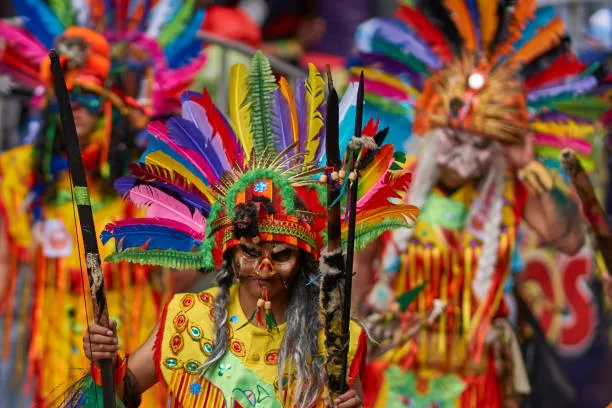
Indigenous Roots of Oruro Carnival
The air in Oruro, Bolivia, crackles with an energy unlike anywhere else when its world-renowned Carnival erupts. Far more than just a party, the Oruro Carnival is a profound tapestry woven from centuries of history, a vibrant celebration that pulsates with the ancient heart of Andean culture. To truly understand its magic is to delve into the deep indigenous roots of Oruro Carnival, recognizing how pre-Columbian traditions, spiritual beliefs, and colonial encounters converged to create one of South America’s most extraordinary cultural festivals. This isn’t merely a spectacle; it’s a living, breathing testament to the enduring spirit and rich indigenous heritage of the Bolivian people, a grand narrative told through music, dance, and elaborate costumes.
Overview of Oruro Carnival
Nestled high in the Bolivian Andes, the city of Oruro transforms annually into a kaleidoscope of color, sound, and movement for its famous Carnival. Recognized by UNESCO as a Masterpiece of the Oral and Intangible Heritage of Humanity, the Oruro Carnival is celebrated over several days leading up to Ash Wednesday, typically in late February or early March. This timing, just before the Christian season of Lent, is itself a fascinating hint at the syncretic nature of the festival. What begins with an anointing ceremony and culminates in a grand procession known as the Entrada is a complex interplay of Catholic devotion and ancient Andean cosmology. Millions flock to Oruro Bolivia to witness this unparalleled display of traditional dances, intricate costumes, and fervent devotion. Beyond its visual splendor, the Carnival serves as a powerful expression of collective identity, a space where communities reaffirm their indigenous heritage and pass down generations of cultural knowledge. It is a defining element of Bolivian celebrations, drawing travelers interested in cultural anthropology and unique festive events from across the globe.
Historical Background
The rich Oruro Carnival history is a compelling narrative of survival, adaptation, and cultural fusion. Its origins are not singular but multifaceted, born from a complex interplay between the spiritual practices of ancient indigenous Bolivian cultures and the transformative, often forceful, impact of Spanish colonization. Understanding this historical layering is key to appreciating the profound depth of the Carnival’s traditions and its unique place among festivals in South America. The festival acts as a living timeline, tracing the evolution of local customs from pre-Columbian rituals to their modern, globally recognized form.
Pre-Columbian Influences
Long before the arrival of the Spanish, the Andean region around Oruro was home to various indigenous groups, most notably the Uru people, who possessed a sophisticated spiritual worldview and distinct local customs. For these ancient cultures, the mountains, lakes, and mines were not merely geographical features but sacred entities imbued with divine power. Central to their indigenous spirituality was the reverence for Pachamama (Mother Earth), the life-giver, and Supay, the lord of the Ukhu Pacha (the underworld or inner earth), who was also considered the protector of the mines and their mineral wealth.
Early indigenous festivals and rituals were intrinsically linked to agricultural cycles, mining activities, and the appeasement of these powerful deities. Annual ceremonies were held to ensure bountiful harvests, safe mining operations, and protection from natural disasters. Music, dance, and offerings were integral to these rites, often performed in specific sacred spaces. The Uru people, in particular, had a strong connection to the Lake Poopó region and the surrounding mountains, which they believed were inhabited by formidable spirits. Their mythology, which included tales of a powerful demon figure and a protective mother figure, laid a crucial foundation for the narrative elements that would later become central to the Oruro Carnival traditions. These pre-Columbian influences are the bedrock upon which the entire festival is built, offering a glimpse into the enduring power of Andean culture and its spiritual practices. The annual cycle of these indigenous festivals was deeply ingrained in the fabric of society, providing a rhythm of life that persisted despite external pressures.
Spanish Colonial Impact
The arrival of the Spanish conquistadors in the 16th century brought a dramatic shift to the Andean landscape. With them came Catholicism, which they sought to impose upon the indigenous populations, often through coercive means. This clash of cultures profoundly influenced the development of the Oruro Carnival. The Spanish, unable to entirely suppress deeply ingrained indigenous rituals, often resorted to a strategy of syncretism. They merged existing indigenous festivals with Christian feast days, effectively “baptizing” pagan practices with Catholic names and symbols.
In Oruro, this process was particularly evident. The Uru’s reverence for Supay, the lord of the underworld and mines, was demonized and equated with the Christian devil. Their ancient agricultural rites and offerings to Pachamama were slowly woven into Christian celebrations like Candlemas (February 2nd), dedicated to the Virgin Mary. Legend has it that in 1789, a mural of the Virgin Mary mysteriously appeared in a mining shaft in Oruro. This event led to the establishment of the Sanctuary of the Virgen del Socavón (Virgin of the Mineshaft), who became the patron saint of miners and the spiritual heart of the Oruro Carnival.
Indigenous people continued their traditional dances and rituals, but often under the guise of paying homage to the Virgin. The vibrant, often rebellious, expressions of indigenous spirituality became masked, quite literally, behind Catholic iconography. This period saw the emergence of a unique cultural anthropology where Andean beliefs and European Catholicism began to coexist, albeit sometimes uneasily. The colonial period thus shaped the Oruro Carnival timeline, transforming ancient indigenous festivals into a complex, layered celebration that simultaneously honors Christian saints and ancient Andean deities, a testament to the resilience of indigenous heritage.
Indigenous Rituals and Dances
At the heart of the Oruro Carnival’s mesmerizing spectacle lie its traditional dances and rituals, each telling a story, preserving a piece of history, and embodying the soul of indigenous Bolivian cultures. These Oruro Carnival dances are far more than mere performances; they are sacred acts, prayers in motion that connect participants to their ancestors, their land, and their spiritual beliefs. The sheer diversity and intricate symbolism of these dances are a testament to the rich ethnic diversity in Bolivia and the enduring power of its cultural heritage.
The Diablada Dance
Perhaps the most iconic and visually striking of all Oruro Carnival dances is the Diablada, or “Dance of the Devils.” Its origins are deeply rooted in the indigenous mythology of the Uru people and their encounters with colonial Catholicism. According to Uru legend, the benevolent Ñusta (a princess-like figure) saved the Uru people from the wrath of Huari, a powerful and malevolent deity of the underworld, often depicted as a monstrous toad, snake, or lizard. When the Spanish arrived, Huari was readily equated with the Christian devil, and Ñusta with the Virgin Mary, particularly the Virgen del Socavón.
The Diablada dance is a dramatic re-enactment of this eternal struggle between good and evil, a vibrant morality play performed in the streets. Dancers, known as diablos, wear elaborate, terrifying masks adorned with horns, fangs, and bulging eyes, often intricately carved and painted. Their costumes are richly embroidered with serpents, toads, and other symbols representing the underworld. Leading the troupe are figures like Lucifer and Supay, accompanied by a host of lesser devils. Opposing them are the archangel Saint Michael, resplendent in white, who ultimately defeats the forces of evil.
The rhythm of the Diablada is powerful and insistent, driven by brass bands and percussion. The choreography is characterized by energetic leaps, turns, and a distinctive “devil’s step.” Beyond its visual appeal, the Diablada origins are a profound expression of indigenous spirituality and Bolivian folklore. It represents the triumph of faith, the ongoing battle against temptation, and the deep connection between the miners and their patroness, the Virgin of Socavón, who protects them from the dangers of the underground. This dance is a cornerstone of Oruro Carnival traditions, drawing immense crowds and embodying the spiritual core of the festival.
Moreno Dance and Its Cultural Significance
Another profoundly significant dance, and one that speaks volumes about the ethnic diversity in Bolivia, is the Morenada, or “Dance of the Black Slaves.” While its exact origins are debated, it is widely believed to have emerged from the experiences of enslaved African people brought by the Spanish to work in the silver mines of Potosí and Oruro, often under brutal conditions. The dance serves as a poignant, if complex, representation of their suffering, resistance, and eventual cultural integration.
The Morenos (dancers) wear incredibly heavy, ornate costumes that can weigh up to 30 kg, adorned with beads, sequins, and intricate embroidery. Their distinctive masks feature exaggerated, often sad, facial features, large bulging eyes, and thick lips, symbolizing the African laborers. The most striking element, however, is the matraca, a large wooden rattle that the dancers shake rhythmically, creating a sound reminiscent of the chains worn by the enslaved people or the grinding of ore in the mines. The slow, deliberate, and often trudging steps of the Morenada also evoke the arduous journey and back-breaking labor endured by these individuals.
The Moreno dance significance extends beyond a mere historical re-enactment. It is a powerful expression of cultural memory, acknowledging the role of African descendants in shaping Bolivian society and their contribution to South American cultural heritage. The dance also carries elements of satire, mocking the Spanish overseers, and a sense of longing for freedom. Over time, the Morenada has evolved, incorporating elements of indigenous Andean culture and becoming a beloved and integral part of Oruro Carnival traditions. It highlights the syncretic nature of Bolivian celebrations, where different cultural streams merge to form a rich and complex whole, a true testament to the resilience and adaptability of the human spirit.
Beyond the Diablada and Morenada, numerous other traditional dances grace the Oruro Carnival, each with its own story and cultural significance. The Kallawaya, for instance, honors traditional healers, while the Llamerada pays tribute to llama herders, reflecting the pastoral life of the Andes. The Tinku is a ritual combat dance, symbolizing the ancient practice of ritualistic fighting for Pachamama, while the Caporales reflects the influence of Afro-Bolivian culture and its vibrant energy. Each of these Oruro Carnival dances, and many others, contributes to the unparalleled richness of the festival, transforming the streets into a living museum of Bolivian folklore and indigenous heritage.
Cultural Significance of the Carnival
The Oruro Carnival transcends its identity as a mere annual celebration; for indigenous communities, it is a profound affirmation of their identity, a powerful link to their ancestors, and a vital mechanism for cultural preservation. Its cultural significance lies in its ability to fuse diverse historical and spiritual narratives into a cohesive, vibrant whole, making it one of the most important cultural events in Bolivia and indeed, among festivals in South America.
At its core, the Carnival is a grand act of devotion and thanksgiving. The culmination of the procession at the Sanctuary of the Virgen del Socavón highlights the deep Catholic faith that has merged with indigenous spirituality. Dancers, after hours of intense performance, kneel before the Virgin, offering their devotion and requesting blessings for the coming year. This act symbolizes the ongoing dialogue between the Christian and Andean cosmologies, where the Virgin is revered alongside Pachamama and the benevolent aspects of Supay.
For the indigenous communities, participating in the Oruro Carnival traditions is a powerful way to transmit cultural knowledge across generations. Children learn the dances, the music, and the stories from their elders, ensuring that Bolivian indigenous rituals and the intricate symbolism of the costumes are not lost. It reinforces community bonds, as families and neighborhoods spend months preparing their elaborate outfits, practicing their choreography, and organizing their musical ensembles. This collective effort fosters a strong sense of belonging and shared heritage.
Moreover, the Carnival serves as a space for creative expression and a subtle form of resistance. Through the masks, dances, and satirical elements, indigenous Bolivian cultures have historically found ways to express their experiences, critique colonial power structures, and celebrate their resilience. The vibrant costumes and energetic performances are not just for show; they are living prayers, expressions of gratitude, and invocations for prosperity and protection. The festival becomes a collective memory, a tangible connection to the past that informs the present and shapes the future. It is a powerful testament to the enduring indigenous heritage and cultural significance of the Andean people, a living archive of local customs and beliefs.
Modern Adaptations and Global Recognition
While deeply rooted in ancient traditions, the Oruro Carnival has not remained static. It has undergone significant modern adaptations, evolving in response to changing social dynamics and, notably, gaining immense global recognition. This evolution has presented both opportunities and challenges, as the festival navigates the delicate balance between preserving its indigenous roots and accommodating a burgeoning international audience.
The most significant milestone in its modern history came in 2001 when UNESCO declared the Oruro Carnival a “Masterpiece of the Oral and Intangible Heritage of Humanity.” This prestigious recognition thrust the Carnival onto the world stage, solidifying its status as a major cultural event and attracting unprecedented levels of Oruro tourism. The designation acknowledged the Carnival’s unique blend of pre-Columbian and colonial influences, its rich artistic expressions, and its role in preserving indigenous heritage.
This global attention has led to increased investment in infrastructure, improved organization of Carnival events, and greater efforts to promote the festival internationally. However, it has also sparked discussions about commercialization and the potential impact on the authenticity of the traditions. Organizers and communities work tirelessly to ensure that while the Carnival is accessible to visitors, its sacred aspects and cultural significance remain paramount. Efforts are made to educate tourists about the deeper meanings behind the dances and rituals, encouraging respect for the local customs rather than simply viewing it as a spectacle.
Technological advancements have also played a role. Social media and high-quality videography now allow the Oruro Carnival experience to reach audiences worldwide, further cementing its place among prominent festivals in South America. This increased visibility has fostered a renewed sense of pride among Bolivians and has encouraged younger generations to actively participate in and continue the Oruro Carnival traditions. Balancing tradition with modernity, and local reverence with global appeal, remains an ongoing, dynamic process, ensuring the Carnival’s continued vibrancy and relevance in the 21st century. It’s a living example of how cultural anthropology can observe traditions adapting while retaining their core identity.
Visitor Information
Experiencing the Indigenous Roots of Oruro Carnival firsthand is an unforgettable journey into the heart of Bolivian culture. For those planning to attend this incredible festival, a little preparation goes a long way to ensure a safe, enjoyable, and culturally enriching Oruro Carnival experience.
Best Times to Visit
The Oruro Carnival is a movable feast, directly linked to the Christian liturgical calendar. It always takes place the weekend before Ash Wednesday, which marks the beginning of Lent. This typically falls in late February or early March. The main procession, known as the Entrada, occurs on the Saturday of Carnival weekend, but the celebrations and related Carnival events often begin several days earlier and continue through the following Monday and Tuesday with smaller parades and traditional activities.
To fully immerse yourself, plan to arrive at least a few days before the main Saturday procession to soak in the pre-Carnival atmosphere, witness smaller local ceremonies, and secure your spot. Accommodation and transportation fill up rapidly, so early booking is not just recommended, it’s essential – often six months to a year in advance. This is crucial for anyone interested in festival travel tips for such a popular event.
Travel Tips for Attendees
Attending the Oruro Carnival is an adventure, and being well-prepared will enhance your experience significantly:
-
Book Early: As mentioned, secure your flights, buses, and especially accommodation in Oruro well in advance. Hotels and hostels are limited and prices skyrocket during Carnival. Consider staying in nearby cities like Cochabamba or La Paz and taking a special Carnival bus if Oruro itself is fully booked, though this will involve longer travel times on the day of the main event.
-
Tickets for Seating: To get a good view of the main procession, you’ll need to purchase grandstand seating tickets. These are usually sold months in advance and can be bought through tour operators or sometimes directly from local vendors. Be wary of scalpers and aim for reputable sources. Standing room along the route is free but can be extremely crowded.
-
Altitude Sickness: Oruro sits at an elevation of approximately 3,700 meters (12,140 feet) above sea level. Give yourself a day or two to acclimatize upon arrival. Drink plenty of water, avoid alcohol and heavy meals initially, and consider coca tea (a traditional Andean remedy) to help with symptoms.
-
Stay Hydrated and Sun Protected: The Andean sun is intense, even if the air feels cool. Wear a wide-brimmed hat, sunglasses, and high-SPF sunscreen. Drink lots of water throughout the day.
-
Safety and Valuables: Like any major festival, pickpocketing can be an issue. Be vigilant, keep your valuables secure and out of sight, and avoid carrying large sums of cash. It’s best to leave important documents in your accommodation.
-
Respect Local Customs: The Carnival is a deeply spiritual and cultural event. Be respectful of participants, their costumes, and the rituals. Ask for permission before taking close-up photos of individuals, especially during sacred moments. Dress modestly when visiting churches or participating in more solemn events.
-
Prepare for Water and Foam Fights: A common and joyous tradition, especially among younger attendees, is to spray water and foam. You might want to bring a waterproof bag for your electronics and be prepared to get wet!
-
Comfortable Footwear: You’ll be doing a lot of walking and standing, so comfortable shoes are a must.
-
Embrace the Energy: The Oruro Carnival is an explosion of sound, color, and emotion. Allow yourself to be swept up in the festive atmosphere, engage with the local people, and savor every moment of this incredible South American cultural heritage celebration.
By following these festival travel tips, you’re sure to have an incredible and memorable time exploring the indigenous roots of Oruro Carnival.
69pkr is alright. It’s straightforward and does what it says on the tin. Nothing fancy, but it gets the job done. Check it out here: 69pkr