
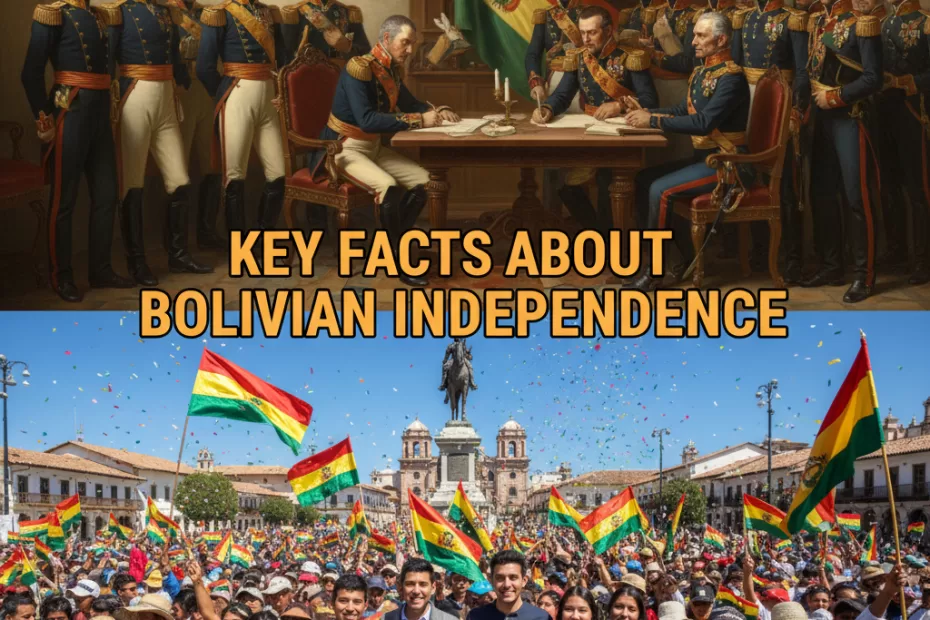
Key Facts About Bolivian Independence
The story of Bolivia’s independence is a rich tapestry woven with threads of fervent resistance, strategic military campaigns, and the enduring spirit of a people yearning for self-determination. Far from a simple declaration, it was a protracted and often brutal struggle that reshaped the geopolitical landscape of South America and left an indelible mark on the nation’s identity. Understanding the key facts about Bolivian independence offers not just a glimpse into a pivotal historical moment but also illuminates the complex origins of a vibrant cultural heritage. From the early stirrings of rebellion against Spanish colonial rule to the final decisive battles that secured its liberation, Bolivia’s journey to freedom is a compelling narrative of perseverance, sacrifice, and the birth of a new republic.
This article delves into the essential aspects of this transformative period, exploring the historical background that set the stage for revolution, the critical events and figures that shaped the independence movement, and the profound social, economic, and political impact that reverberated through the nascent nation. We will also examine the vibrant cultural significance of Independence Day celebrations and shed light on some often-overlooked facets of this monumental achievement, including the crucial role played by indigenous peoples and the arduous path to international recognition. By exploring these facets, we aim to provide a comprehensive understanding of Bolivia’s independence, a cornerstone of its national story.
Historical Background of Bolivia
To truly grasp the significance of Bolivian independence, we must first journey back to its colonial roots, a period spanning nearly three centuries that profoundly shaped the region’s destiny. Before the arrival of the Spanish, the territory that would become Bolivia was a vital part of the vast Inca Empire, known as Qullasuyu. This indigenous civilization boasted sophisticated administrative, agricultural, and social structures, with a rich cultural heritage that predated European contact by centuries. The Inca presence left an enduring legacy, influencing local customs, languages, and the deep connection of indigenous peoples Bolivia to their ancestral lands.
However, the late 15th and early 16th centuries brought a dramatic shift with the Spanish conquest of South America. The arrival of the conquistadors, driven by a thirst for gold and silver, quickly led to the subjugation of the Inca Empire and its successor states. The Spanish established control over the region, which they named Alto Perú (Upper Peru), incorporating it into the Viceroyalty of Peru. This marked the beginning of Colonial Bolivia, a period characterized by intense exploitation of natural resources and indigenous labor.
The discovery of massive silver deposits at Cerro Rico in Potosí in 1545 transformed the region into one of the most economically important centers of the Spanish Empire. Potosí rapidly grew into one of the largest cities in the world, its mines fueling the Spanish crown’s coffers and, tragically, costing the lives of millions of indigenous laborers through forced servitude under the mita system. This brutal exploitation created immense wealth for Spain but sowed deep seeds of resentment and social unrest among the indigenous population and, increasingly, among the criollos (people of Spanish descent born in the Americas) who felt marginalized by peninsular Spanish rule.
Administratively, Alto Perú was governed by the Audiencia de Charcas, established in 1559, which held significant judicial and administrative authority, effectively making it a semi-autonomous region within the larger Viceroyalty. However, its economic output was primarily directed towards Lima, the capital of the Viceroyalty of Peru, and ultimately to Spain. The colonial system was rigid, characterized by a strict social hierarchy that placed peninsular Spaniards at the top, followed by criollos, mestizos (mixed European and indigenous ancestry), and at the very bottom, indigenous peoples and enslaved Africans. This system, coupled with heavy taxation, trade restrictions, and a lack of political representation for local elites, fostered a growing sense of injustice and a yearning for greater autonomy.
Throughout the colonial period, there were numerous localized uprisings and rebellions, particularly among indigenous communities, protesting the mita system and other forms of exploitation. Figures like Túpac Amaru II in the late 18th century, whose rebellion spanned across Peru and Alto Perú, and Túpac Katari, who led a significant siege of La Paz, became symbols of resistance. While these early revolts were ultimately suppressed with brutal force, they served as powerful precursors to the broader independence movement that would sweep across the continent in the early 19th century. The historical events of this era laid the groundwork for a profound desire for liberation, setting the stage for the dramatic struggle for Bolivian independence.
The Road to Independence
The path to Bolivian independence was a tumultuous and prolonged journey, deeply intertwined with the broader Latin American wars of independence. The late 18th century saw a growing intellectual movement across the Americas, influenced by the Enlightenment and the successful revolutions in the United States and France. Criollo elites, despite their privileged position compared to indigenous and mestizo populations, felt increasingly stifled by Spanish mercantilist policies and the lack of political power. They desired greater control over their own destinies and the economic resources of their lands.
The spark that ignited the full-scale independence movement came from an unexpected source: Europe. Napoleon Bonaparte’s invasion of Spain in 1808, and his subsequent placement of his brother Joseph on the Spanish throne, created a power vacuum and a crisis of legitimacy across the Spanish Empire. Loyalties were divided; while some remained loyal to the deposed King Ferdinand VII, others saw an unprecedented opportunity to break free from colonial rule. This period of political upheaval in Spain directly fueled the formation of local juntas (governing councils) in the Americas, ostensibly to rule in the name of the king but often serving as de facto organs of self-governance.
Alto Perú became one of the earliest epicenters of this revolutionary fervor. On May 25, 1809, in Chuquisaca (modern-day Sucre), a popular uprising deposed the president of the Audiencia de Charcas, marking what many consider the “first cry for freedom” in South America. This was followed shortly after, on July 16, 1809, by a more radical revolt in La Paz, led by Pedro Domingo Murillo. Murillo and his compatriots formed a Junta Tuitiva (Protective Junta), explicitly declaring separation from Spain and advocating for continental independence. Though these early attempts were brutally suppressed by royalist forces from Lima and Buenos Aires, and Murillo was executed, they lit an unquenchable flame of resistance.
Over the next 15 years, Alto Perú became a fiercely contested battleground, caught between the advancing armies from the United Provinces of the Río de la Plata (Argentina) to the south and the powerful royalist stronghold in Peru to the north. This strategic position meant that the region endured relentless warfare, with royalist and patriot forces constantly clashing. The Republiquetas, independent guerrilla groups formed by local leaders, played a crucial role during this period, harassing royalist supply lines and maintaining pockets of resistance in the countryside. These groups, often comprising a mix of criollos, mestizos, and indigenous fighters, embodied the spirit of the Bolivian revolution, demonstrating remarkable resilience against overwhelming odds.
The protracted nature of the conflict and the shifting fortunes of war meant that a definitive declaration of independence remained elusive for years. The final push for liberation came with the arrival of the formidable armies of Simón Bolívar and Antonio José de Sucre, who had successfully liberated Venezuela, Colombia, and Ecuador. Their campaigns in Peru were decisive. Following the crucial victories at the Battle of Junín in August 1824 and, more significantly, the Battle of Ayacucho in December 1824, the backbone of Spanish royalist power in South America was broken.
With Peru largely liberated, General Sucre advanced into Alto Perú in early 1825. He found a region exhausted by war but ready for self-governance. On April 6, 1825, Sucre issued a decree calling for a general assembly of delegates from the provinces of Alto Perú to decide their own future. The assembly convened in Chuquisaca, and after extensive deliberations, on August 6, 1825, they formally declared the independence of Alto Perú from Spain. This historic date, chosen to commemorate Bolívar’s victory at Junín, marked the birth of a new nation. The assembly initially named the new republic “República Bolívar,” in honor of the Liberator, a name later modified to “Bolivia.” This declaration was not merely a political act; it was the culmination of decades of struggle, sacrifice, and an unwavering desire for self-determination, fundamentally altering the trajectory of South American independence.
Key Figures in the Independence Movement
The success of the Bolivian independence movement, like many other Latin American independence efforts, was largely attributable to the visionary leadership and military prowess of several pivotal figures. Their dedication, strategic brilliance, and unwavering commitment to the cause of freedom were instrumental in overcoming the formidable power of the Spanish Empire.
Undoubtedly, the most towering figure in the broader South American independence movement, and by direct extension, Bolivia’s, was Simón Bolívar. Hailed as El Libertador, Bolívar was a Venezuelan military and political leader who played a central role in the establishment of Venezuela, Bolivia, Colombia, Ecuador, Peru, and Panama as sovereign states, independent of Spanish rule. His strategic genius and unwavering determination were crucial in the final campaigns that swept royalist forces from the continent. Bolívar’s vision extended beyond mere liberation; he dreamed of a unified Gran Colombia, a grand confederation of independent nations. While his vision for a united South America ultimately proved elusive, his military campaigns, particularly the victories at Junín, directly paved the way for Alto Perú’s liberation. He was initially hesitant about Alto Perú becoming a separate nation, preferring its integration into Peru or a larger confederation. However, bowing to the will of the people and the strategic realities, he ultimately supported its independent status and even drafted its first constitution, lending his name to the newly formed republic. His influence on Bolivia’s foundation is immeasurable, cementing his status as a national hero.
Another indispensable figure was Antonio José de Sucre, a brilliant Venezuelan general and Bolívar’s most trusted lieutenant. Sucre’s military acumen was evident throughout the campaigns, culminating in the decisive Battle of Ayacucho in December 1824, where his forces delivered a crushing blow to the last major Spanish royalist army in South America. This victory effectively sealed the independence of Peru and cleared the path for the liberation of Alto Perú. Sucre then led the patriot army into Alto Perú, where he was welcomed as a liberator. It was Sucre who, following Bolívar’s instructions, convened the assembly that declared Bolivia’s independence on August 6, 1825. He became the first president of Bolivia, serving from 1825 to 1828. His brief presidency was marked by efforts to establish a stable government, reform the economy, and implement a new constitution. Sucre’s integrity, military genius, and commitment to the newly independent nation earned him deep respect, though his tenure was challenging amidst the nascent republic’s political instability.
Beyond these two titans, other local figures also contributed significantly to the Bolivian revolution. While not always leading grand armies, individuals like Juana Azurduy de Padilla and her husband Manuel Ascencio Padilla were legendary guerrilla leaders. Operating in the rugged terrain of Alto Perú, they organized and led montoneros (irregular cavalry and guerrilla forces) composed of indigenous peoples and mestizos, harassing Spanish forces for years. Juana Azurduy, recognized for her exceptional bravery and military skill, even fought while pregnant and continued to lead after her husband’s death. Her story, a testament to the fierce local resistance, underscores the widespread participation in the independence movement beyond the major generals. Though these local heroes often faced immense personal loss and political marginalization after independence, their contributions were vital in sustaining the fight and preventing the royalists from completely consolidating control, laying crucial groundwork for the final victories of Bolívar and Sucre. Their collective efforts ensured that the dream of freedom for Bolivia became a reality.
Major Battles and Conflicts
The struggle for Bolivian independence was punctuated by numerous battles and skirmishes, each contributing to the slow, arduous erosion of Spanish colonial power. While the region was a constant battleground for over a decade, a few major engagements stand out as particularly pivotal in shaping the ultimate outcome of the Latin American wars of independence and, consequently, Bolivia’s freedom.
One of the most significant engagements that directly impacted Bolivia’s future was the Battle of Junín, fought on August 6, 1824, in the highlands of Peru. Although not fought on what is now Bolivian soil, this battle was a crucial precursor to the final liberation of Alto Perú. Led by Simón Bolívar himself, the patriot cavalry, without firing a single shot (relying solely on sabers and lances), delivered a stunning defeat to the Spanish royalist cavalry. This victory significantly boosted the morale of the independence forces and severely weakened the royalist grip on Peru, opening the way for further advances. The date of this battle was later chosen as Bolivia’s Independence Day, highlighting its symbolic importance even if geographically distinct.
The truly decisive blow to Spanish power in South America came with the Battle of Ayacucho, fought on December 9, 1824, in the plains near Ayacucho, Peru. This was the culminating battle of the South American independence wars. Under the brilliant command of Antonio José de Sucre, the patriot army, though outnumbered, achieved a resounding victory against the main Spanish royalist army. The battle resulted in the capture of the Spanish Viceroy and the surrender of the bulk of the Spanish forces, effectively ending Spanish colonial rule in South America. The terms of the capitulation at Ayacucho stipulated that all remaining Spanish forces in Peru, including those in Alto Perú, would lay down their arms. This victory was the final military act that cleared the path for Alto Perú to determine its own destiny, leading directly to its declaration of independence a few months later.
While Junín and Ayacucho were the grand-scale, decisive battles of the broader campaign, the region of Alto Perú itself witnessed countless smaller, yet fiercely fought, engagements. The Republiquetas — independent guerrilla strongholds — were constantly engaged in a protracted and brutal war of attrition against royalist forces. These localized conflicts, often overlooked in grand historical narratives, were vital in draining Spanish resources, tying up royalist troops, and maintaining a constant state of rebellion that prevented the full consolidation of colonial power. Leaders like Ignacio Warnes, Vicente Camargo, and the aforementioned Juana Azurduy de Padilla led these bands, fighting battles in remote valleys and mountains, keeping the flame of the Bolivian revolution alive. These were battles of endurance, local knowledge, and unwavering spirit.
Finally, the Battle of Tumusla, fought on April 1, 1825, is often cited as the last battle of the South American wars of independence on Bolivian soil. While the main royalist forces had already been defeated at Ayacucho, a remnant under General Pedro Antonio Olañeta continued to resist in Alto Perú. Olañeta, a royalist general who had initially rebelled against the liberal Spanish government, was eventually defeated by his own former subordinate, Colonel Carlos Medinaceli Lizarazu, at Tumusla. Olañeta was mortally wounded in this engagement. This final skirmish removed the last significant royalist military presence in the territory, solidifying the military aspect of Bolivia’s independence and ensuring that when the assembly convened in August, it did so without the immediate threat of Spanish military intervention. These major battles, alongside the countless smaller conflicts, underscore the immense human cost and the relentless struggle that characterized Bolivia’s long and arduous journey to freedom.
Impact of Independence on Bolivia
The declaration of independence on August 6, 1825, marked a profound turning point for Bolivia, ushering in an era of self-governance but also presenting a myriad of challenges that would shape the nation for decades to come. The impact of independence on Bolivia was multifaceted, affecting its social fabric, economic structure, and political landscape in significant and often complex ways.
Socially, the formal end of Spanish colonial rule ostensibly dismantled the rigid caste system that had defined society for centuries. The peninsular Spaniards, who had occupied the highest echelons of power, were largely replaced by criollo elites. However, while the rhetoric of independence often spoke of equality and liberty, the reality was that deep-seated social inequalities persisted. Indigenous peoples, who had formed the backbone of the labor force and contributed significantly to the independence movement through guerrilla warfare, often found their situation unchanged or, in some cases, worsened. They continued to face discrimination, land dispossession, and economic exploitation, as the new criollo-led governments largely failed to implement meaningful reforms to address their grievances. The promise of a truly egalitarian society remained largely unfulfilled, leading to ongoing social tensions and occasional uprisings throughout the 19th century. The abolition of the mita system was a significant change, but new forms of labor exploitation often took its place. The social impact of independence was thus a mixed bag, offering formal liberation but struggling with practical equity.
Economically, independence brought both opportunities and considerable disruption. The colonial economy had been heavily reliant on the extraction of silver from Potosí, with established trade routes and administrative structures geared towards serving the Spanish crown. With independence, these structures collapsed or were severely disrupted. The loss of guaranteed markets in Spain and the instability of war led to a decline in mining output in some areas, though silver and later tin continued to be vital exports. The nascent republic struggled to establish a stable and diversified economy. Infrastructure was poor, internal trade was difficult, and the new nation faced the challenge of competing in a global market without the protective mechanisms of the colonial system. Bolivia’s landlocked status, a consequence of later conflicts, further complicated its economic development, making access to international trade routes expensive and difficult. The economic impact was characterized by a shift from a royally controlled mercantilist system to an often chaotic, liberalizing economy that struggled to find its footing and generate widespread prosperity.
Politically, independence launched Bolivia into a period of intense instability and nation-building. The initial years were marked by frequent coups, civil wars, and the rise of caudillos – charismatic military strongmen who often seized power through force. The ideals of republicanism and democratic governance, championed by Bolívar and Sucre, proved challenging to implement in a society with little prior experience in self-rule and deep divisions among its elites. Border disputes with neighboring countries, particularly Peru and Chile, became a recurring feature of Bolivian politics, eventually leading to costly wars that resulted in significant territorial losses, including its access to the Pacific Ocean. The political changes were profound, transitioning from a centralized colonial administration to a sovereign republic. However, this transition was fraught with challenges, as the new political class struggled to forge a stable national identity and effective governing institutions amidst regional rivalries and external pressures. The legacy of these early political struggles continues to influence Bolivian politics, underscoring the enduring complexity of establishing a stable democracy in the wake of colonial rule.
Cultural Significance of Independence Day
Bolivia Independence Day, celebrated annually on August 6th, is far more than just a public holiday; it is a vibrant and deeply meaningful cultural celebration that resonates throughout the nation. This day commemorates the formal declaration of independence from Spanish rule in 1825, marking the birth of the Republic of Bolivia. For Bolivians, it is a powerful affirmation of national identity, a moment to reflect on their unique heritage, and a joyous occasion to celebrate the freedom and liberation hard-won by their ancestors.
The celebrations for Independence Day are extensive and varied, reflecting the rich tapestry of Bolivian culture. They typically begin well in advance of August 6th, with preparatory events and patriotic displays across cities and towns. On the day itself, the capital city of Sucre, the historical site of the declaration, often hosts the most significant official ceremonies, attended by the President and other high-ranking government officials. However, every community, from the bustling metropolises like La Paz and Santa Cruz to the smallest rural villages, participates in its own unique way.
One of the most prominent features of Independence Day is the grand military parade. Soldiers, police, and various civic organizations march through the streets, showcasing national pride and discipline. Schools also play a vital role, with students participating in their own parades, often dressed in traditional attire or school uniforms, carrying Bolivian flags, and performing patriotic songs and dances. These parades are not just a display of military might or civic organization; they are a collective expression of Bolivian heritage and unity, a visible reminder of the sacrifices made for freedom.
Beyond the official ceremonies, the day is filled with festive cultural celebrations Bolivia. Traditional music, such as cuecas, diabladas, and morenadas, fills the air, often accompanied by lively street dances. People gather with families and friends to enjoy traditional Bolivian cuisine, which varies significantly by region but universally includes hearty dishes like salteñas, picante de pollo, and fricasé. Markets buzz with activity, and public spaces are adorned with the vibrant colors of the Bolivian flag – red, yellow, and green. Many communities organize cultural festivals, showcasing local crafts, music, and dance forms, further reinforcing the connection between independence and the rich diversity of Bolivian culture.
The cultural significance of Independence Day extends beyond mere festivities. It serves as a crucial annual reminder of the Bolivian revolution and the long, arduous struggle for national sovereignty. It is a day for historical reflection, acknowledging the roles of key figures like Simón Bolívar and Antonio José de Sucre, as well as the countless unsung heroes, including indigenous leaders and guerrilla fighters, who contributed to the nation’s birth. The day helps to reinforce the narrative of a nation forged in resistance and defined by its resilience.
Furthermore, Independence Day is a moment for Bolivians to reaffirm their commitment to the principles of self-determination and national unity. Despite historical challenges and ongoing social and political complexities, the celebration fosters a sense of collective identity and pride in being Bolivian. It is a time when the nation pauses to honor its past, celebrate its present, and look forward to its future, ensuring that the legacy of independence remains a living, breathing part of the Bolivian spirit. The vibrant celebrations underscore that the memory of liberation is not just a historical fact but a deeply ingrained and continually cherished aspect of the national consciousness.
Unique Aspects of Bolivian Independence That Are Often Overlooked
While the broad strokes of Bolivian independence align with other South American independence movements, several unique aspects often get less attention, offering a more nuanced understanding of this pivotal historical period. These lesser-known facts and stories contribute to the distinctiveness of Bolivia’s journey to sovereignty, setting it apart from its neighbors and highlighting the complex interplay of internal and external forces.
One striking and often overlooked aspect is the sheer duration and intensity of the struggle within Alto Perú itself. While countries like Argentina and Chile achieved independence earlier with relatively fewer internal royalist strongholds, Alto Perú remained a fiercely contested battleground for over 15 years, earning it the moniker “the Upper Peruvian battlefield.” This prolonged conflict meant that the region suffered immense human and economic costs, arguably more than any other part of the continent. The constant back-and-forth between patriot and royalist forces, the persistent guerrilla warfare, and the brutal reprisals on both sides left a deep scar on the landscape and its people. This extended period of conflict shaped a resilient, albeit war-weary, population, and contributed to the initial instability of the new republic.
Another unique element is the almost accidental nature of Bolivia’s creation as a separate state. Simón Bolívar, the architect of much of South America’s independence, initially envisioned Alto Perú either as part of Peru or as a component of a larger Gran Colombian confederation. It was the strong will of the local criollo elites, who feared being subsumed by Lima or Buenos Aires, and the strategic maneuvering of General Sucre, that ultimately led to the decision for Alto Perú to declare itself a fully independent republic. The assembly that convened in Chuquisaca had three options: join Peru, join the United Provinces of the Río de la Plata, or declare complete independence. The decision to forge their own path, against some of Bolívar’s initial preferences, speaks volumes about the burgeoning sense of a distinct Alto Peruvian identity and a desire for self-determination that transcended the broader continental designs of the Liberators.
Furthermore, the naming of the country itself is a unique tribute. The assembly, in a gesture of profound respect and gratitude, decided to name the new nation after Bolívar – “República Bolívar,” later shortened to Bolivia. This direct naming after a living figure was an unprecedented honor in the newly independent Americas and symbolized the deep admiration and acknowledgment of Bolívar’s pivotal role in their liberation. It also highlighted the unique relationship between the Liberator and this specific territory, distinguishing Bolivia from other nations that adopted more geographically or historically descriptive names.
The early political experiments, particularly the “Bolivarian Constitution” drafted by Simón Bolívar for the new republic, also present a unique historical artifact. This constitution was highly centralized and included a lifetime presidency, a concept that reflected Bolívar’s fears of anarchy and his belief in strong leadership but was ultimately viewed with suspicion by many republican idealists across the continent. While it only lasted a few years in Bolivia, its existence at the very outset of the nation’s life provides insight into the complex political philosophies and anxieties that characterized the post-independence period in Latin America. These unique aspects, from the prolonged struggle to the very naming and initial constitutional framework, underscore the distinctiveness of Bolivia’s journey to sovereignty within the broader context of South American independence.
Influence of Indigenous Peoples
The role and influence of indigenous peoples in the Bolivian independence movement are profound yet often marginalized in traditional historical narratives. Far from being passive observers, indigenous communities were active participants, their struggles against colonial oppression predating and often intertwining with the criollo-led independence movement. Understanding their contributions is crucial for a complete picture of Bolivia’s liberation.
For centuries leading up to independence, indigenous peoples in Alto Perú endured severe exploitation under the Spanish colonial system, particularly through the dreaded mita system of forced labor in the silver mines of Potosí. This systemic oppression fueled numerous localized uprisings and acts of resistance long before the criollo elites began their organized push for independence. Figures like Túpac Amaru II and Túpac Katari in the late 18th century led massive indigenous rebellions across the Andes, challenging Spanish authority on a scale that deeply shook the colonial administration. These early revolts, though ultimately suppressed, demonstrated the fierce desire for freedom and self-governance among indigenous populations and served as a powerful precedent for future resistance.
When the criollo-led independence movement gained momentum in the early 19th century, indigenous peoples became an indispensable part of the patriot forces. They formed the backbone of the Republiquetas, the independent guerrilla bands that operated in the rugged terrain of Alto Perú. These montoneros, often led by figures like Juana Azurduy de Padilla, relied heavily on the numerical strength, local knowledge, and resilience of indigenous fighters. Their intimate familiarity with the Andean landscape allowed them to conduct effective hit-and-run tactics, harass Spanish supply lines, and maintain pockets of resistance for years, tying up significant royalist resources. Without their sustained participation, the criollo armies would have faced an even more formidable challenge.
However, the relationship between indigenous peoples and the criollo independence leaders was complex and often paradoxical. While indigenous communities fought valiantly for liberation, their motivations often differed from those of the criollos. For many indigenous peoples, independence was not just about breaking from Spain but also about reclaiming their ancestral lands, restoring traditional forms of governance, and ending all forms of exploitation and discrimination. They sought a deeper social transformation than many criollo elites were willing to concede.
Tragically, despite their crucial contributions to the Bolivian revolution, indigenous peoples often found themselves marginalized in the post-independence era. The new criollo-dominated governments largely failed to address their fundamental grievances. Land reforms were slow or non-existent, and new forms of exploitation often replaced the old. The promise of equality and citizenship enshrined in republican ideals rarely extended to indigenous communities in practice. This historical oversight led to continued struggles for land rights, political representation, and cultural recognition throughout the 19th and 20th centuries, highlighting a significant unfinished agenda of Bolivian independence. The influence of indigenous peoples was undeniably critical to achieving independence, yet their full liberation and integration into the new nation remained, for a long time, an aspiration rather than a reality. Their enduring cultural heritage and resilience, however, continue to be a defining characteristic of Bolivia.
International Recognition
The declaration of independence by Bolivia on August 6, 1825, was a momentous act of self-determination, but it was only the first step in establishing the new republic on the global stage. Gaining international recognition was a crucial and often challenging process, essential for Bolivia to secure its sovereignty, engage in international trade, and protect its territorial integrity. The path to widespread international acceptance was gradual, reflecting the complex geopolitical landscape of the early 19th century.
Initially, the most significant obstacle to recognition came from Spain, the former colonial power. Spain steadfastly refused to acknowledge the independence of its former colonies for many years, viewing them as rebellious provinces. This stance was driven by national pride, a desire to reclaim lost territories, and a reluctance to accept the irreversible decline of its empire. It wasn’t until 1847, more than two decades after its declaration, that Spain formally recognized Bolivia’s independence. This delay meant that for a considerable period, Bolivia, like other newly independent Latin American nations, operated without full legitimacy in the eyes of its former ruler, complicating diplomatic relations and international trade.
However, other newly independent nations in Latin America were quicker to acknowledge Bolivia’s sovereignty. Countries like Gran Colombia (which then included Venezuela, Colombia, Ecuador, and Panama), Peru, and the United Provinces of the Río de la Plata, having themselves recently broken free from Spanish rule, understood the imperative of mutual recognition. Their diplomatic support provided crucial early legitimacy for Bolivia on the continent. Simón Bolívar, as a leading figure in the independence movement, played a vital role in advocating for the recognition of the new republic he helped create.
Recognition from major European powers and the United States was a more protracted affair, driven by a mix of political ideology, economic interests, and strategic considerations. Great Britain, with its burgeoning industrial economy and interest in new markets, was among the first European powers to extend recognition to the new Latin American republics, though it did so cautiously and gradually. Britain’s pragmatic approach prioritized trade opportunities over upholding the old monarchical order. France and other European monarchies were generally more hesitant, often torn between sympathy for the Spanish crown and the economic allure of trade with the new nations. Their recognition typically came later, often after observing the stability and viability of the new republics.
The United States, having itself gained independence from colonial rule, expressed a degree of ideological sympathy for the Latin American independence movements. However, its recognition of the new republics, including Bolivia, was also a calculated move. The Monroe Doctrine, declared in 1823, signaled the U.S.’s intention to prevent further European colonization in the Americas, indirectly supporting the independence of the new nations. The U.S. recognized Bolivia in 1848, a year after Spain, reflecting its own internal political dynamics and its developing foreign policy.
The process of international recognition of Bolivia was not merely a formality; it was a critical step in consolidating the nation’s sovereignty. It allowed Bolivia to establish diplomatic relations, negotiate treaties, secure loans, and participate in the global economy. Without recognition, a nation exists in a precarious state, vulnerable to external pressures and lacking the full rights and protections of international law. The gradual but ultimately successful acquisition of international recognition underscored the enduring nature of Bolivia’s independence and its establishment as a legitimate member of the community of nations, albeit one facing significant challenges in its early years.
Conclusion
The journey to Bolivian independence is a multifaceted and compelling chapter in South American history, marked by sustained struggle, profound sacrifice, and the unwavering determination of its people. From the deep-seated grievances born of Spanish colonization and the brutal exploitation of its vast silver resources, to the early indigenous rebellions and the ultimate triumph of the criollo-led independence movement, Bolivia’s path to freedom was long and arduous. The key facts about Bolivian independence reveal a nation forged in the crucible of war, where the strategic brilliance of figures like Simón Bolívar and Antonio José de Sucre converged with the fierce local resistance of guerrilla leaders and indigenous communities.
The declaration on August 6, 1825, ushered in an era of self-governance, yet it also presented formidable challenges. The social impact of independence, while formally dismantling the colonial caste system, often perpetuated inequalities, particularly for indigenous populations who had contributed so much to the struggle. Economically,
Anyone know where I can snag the latest pk33gamedownload? Heard they’ve got some sweet new options. Planning to download it here pk33gamedownload