
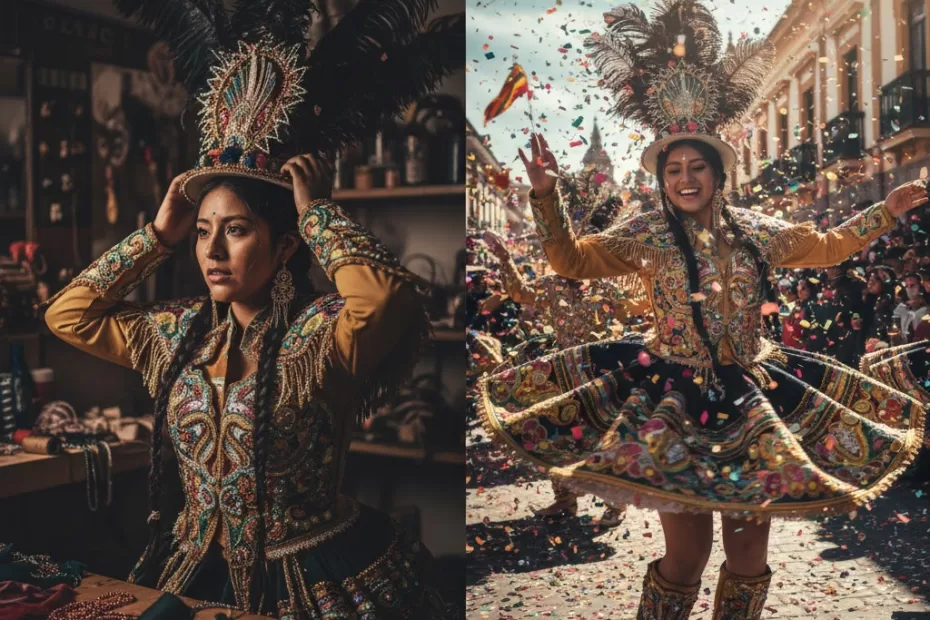
Life of a Dancer at Oruro Carnival
Introduction to Oruro Carnival
Nestled high in the Bolivian Andes, the city of Oruro awakens each year with a spectacle unlike any other: the Oruro Carnival. Far more than just a party, this UNESCO-recognized Masterpiece of the Oral and Intangible Heritage of Humanity is a profound expression of Andean traditions, religious devotion, and a testament to Bolivia’s rich cultural heritage. For days, the streets of Oruro transform into a pulsating kaleidoscope of color, sound, and movement, drawing hundreds of thousands of spectators and participants from across the globe.
At its heart, the Oruro Carnival is a syncretic festival, blending ancient indigenous rituals honoring Pachamama (Mother Earth) and Supay (the Uru god of the underworld, later syncretized with the devil) with Catholic traditions celebrating the Virgen del Socavón, the patron saint of miners. This unique fusion creates a spiritual and artistic tapestry that is both deeply reverent and exuberantly joyous. The carnival’s magnetic appeal lies not only in its grand scale and visual splendor but in the palpable energy that emanates from its core—the dancers. These dedicated individuals are the living pulse of the festival, their tireless performances telling stories that span centuries, embodying the very essence of Bolivian culture. Their vibrant Oruro festival experiences become the collective memory of a nation.
The Role of Dancers in Oruro Carnival
To understand the Oruro Carnival is to understand the integral role of its dancers. They are not merely performers; they are custodians of tradition, storytellers without words, and the vibrant lifeblood that courses through the festival’s veins. Each year, tens of thousands of dancers, organized into over 50 “conjuntos” or folkloric groups, dedicate themselves to upholding the integrity and spirit of this monumental event. From the intricate steps of the Diablada to the rhythmic sway of the Morenada, their every movement is steeped in history and meaning.
The importance of dancers in Oruro Carnival cannot be overstated. They are the primary medium through which the carnival’s narratives—of good versus evil, of conquest and resistance, of labor and devotion—are expressed. Their commitment extends far beyond the days of the festival itself, encompassing months of rigorous Oruro Carnival preparations, intense rehearsals, and significant personal sacrifice. It is through their collective effort that the carnival maintains its authenticity and continues to be a powerful symbol of national identity and pride. The sheer dedication of these carnival dancers Bolivia brings the streets alive, making it a truly immersive experience for all. Their passion transforms the city into the world’s largest open-air theater, showcasing the profound depth of Bolivian folk dances.
History and Origins of Oruro Carnival
The roots of the Oruro Carnival stretch back millennia, predating the arrival of the Spanish conquistadors. The indigenous Uru people, one of the oldest ethnic groups in the Andes, held spiritual ceremonies to honor their deities, including Supay, the god of the underworld, and Pachamama. These early rituals, often involving music and dance, were deeply connected to agricultural cycles and the mining activities that defined the region.
With the Spanish conquest in the 16th century, Catholic evangelization efforts sought to suppress indigenous beliefs. However, rather than disappearing, these ancient traditions subtly merged with Christian practices. The Spanish introduced figures like the Virgin Mary and saints, and indigenous deities were often syncretized with Catholic figures. Supay, for example, became associated with the Christian devil, leading to the iconic “Dance of the Devils” or Diablada. The Virgen del Socavón, the patron saint of Oruro’s miners, became the central figure of devotion, with the carnival culminating in a pilgrimage to her sanctuary.
The carnival as we know it today began to take shape in the 18th and 19th centuries, with the emergence of organized dance groups and the formalization of the pilgrimage. The late 19th and early 20th centuries saw a significant growth in the number of dance groups, each representing different social strata, ethnic groups, and regions, contributing to the rich tapestry of Oruro Carnival traditions. In 2001, UNESCO officially recognized the Oruro Carnival, cementing its status as a global cultural treasure and acknowledging its profound historical and cultural significance Oruro. This recognition further propelled the festival onto the international stage, attracting more visitors eager to witness this unique blend of spiritual and festive celebration.
Traditional Dances and Their Meanings
The Oruro Carnival is a living museum of Bolivian folk dances, each telling a unique story and reflecting different facets of the nation’s history and cultural identity. From the fierce theatricality of the Diablada to the elegant melancholy of the Morenada, these dances are not merely entertainment but profound cultural expressions. The Oruro Carnival experience is deeply intertwined with understanding the narratives woven into each performance, making the carnival dances explained a crucial part of appreciating the festival.
Diablada: The Dance of the Devils
The Diablada, or “Dance of the Devils,” is arguably the most iconic and visually striking dance of the Oruro Carnival. It is a dramatic representation of the eternal struggle between good and evil, deeply rooted in the mining culture of Oruro and the syncretism of indigenous beliefs with Catholicism. The dance depicts the Archangel Michael leading a battle against a legion of devils, often accompanied by figures representing the seven deadly sins. The devils, with their elaborate, terrifying masks and intricate costumes, symbolize the dangers and temptations of the mines, while the Archangel represents divine protection.
Dancers preparing for the Diablada undergo an intense physical and spiritual journey. The Oruro dancer life dedicated to this particular dance is characterized by months of rigorous training, focusing on stamina, precise footwork, and synchronized movements. The heavy costumes and masks demand immense physical endurance, as dancers must perform for hours on end, often at high altitudes. Beyond the physical, there’s a deep spiritual commitment. Many dancers participate as a form of devotion to the Virgen del Socavón, fulfilling a “promesa” or promise made in exchange for blessings or protection. The Diablada dance is not just a performance; it’s a prayer in motion, a powerful expression of faith and cultural identity.
Morenada: The Dance of the Black Slaves
The Morenada, or “Dance of the Black Slaves,” is another central and deeply symbolic dance of the Oruro Carnival. Its origins trace back to the colonial era, specifically to the arrival of African slaves brought by the Spanish to work in the silver mines of Bolivia. The dance is a poignant and often melancholic portrayal of the arduous conditions and suffering endured by these enslaved people.
The dancers wear distinctive costumes, including large, intricately decorated masks with exaggerated features, often depicting an African face with bulging eyes and thick lips, symbolizing the enslaved. The “matracas,” or rattles, carried by the dancers, are said to represent the chains of the slaves, while their heavy, broad steps mimic the slow, laborious walk of those burdened by mining labor or the movement of grapes in wine production. The iconic “Rey Moreno” (Black King) leads the procession, often adorned with a spectacular crown.
The Morenada is a powerful testament to Bolivian culture and history, serving as a reminder of a dark chapter while also celebrating resilience and cultural fusion. Dancers dedicated to the Morenada spend countless hours perfecting their steps, ensuring that the historical context and emotional weight of the dance are respectfully conveyed. It’s a dance that resonates deeply with themes of struggle, identity, and the enduring spirit of a people.
Costumes: A Dancer’s Pride
In the Oruro Carnival, costumes are far more than mere attire; they are works of art, imbued with cultural significance, spiritual meaning, and countless hours of meticulous craftsmanship. Each costume tells a story, reflects a character, and represents a significant investment of time, money, and passion. For a dancer, their costume is a source of immense pride, a tangible link to tradition, and a vital element of their performance. The elaborate dance costumes Oruro are truly a spectacle to behold.
The creation of these costumes is a year-round endeavor, involving skilled artisans, embroiderers, jewelers, and mask-makers. Families often pass down costume elements through generations, or commission new pieces that can cost thousands of dollars. The materials used are often rich and vibrant—velvets, satins, sequins, beads, metallic threads, and intricate embroidery create dazzling effects as dancers move under the Andean sun.
Take the Diablada costumes, for instance. The devil masks are masterpieces of papier-mâché, often weighing several pounds, adorned with horns, snakes, frogs, and other mythological symbols, each painted with fierce expressions. The costumes themselves are heavily embroidered with images of serpents, dragons, and other infernal creatures, often featuring mirrors to ward off evil. The Archangel Michael’s costume, in contrast, is typically adorned with feathers, gold, and silver, symbolizing purity and divine power.
Morenada costumes are equally impressive. The “caretas” (masks) are designed to evoke the features of African slaves, often with melancholic or resigned expressions. The dancers wear layers of heavy textiles, often with large, bell-shaped skirts or trousers adorned with intricate embroidery and often depicting scenes of grapes or mining. The enormous “sombreros” (hats) or crowns are often decorated with feathers, jewels, and mirrors.
Beyond the aesthetics, the costumes serve a practical purpose. Their weight and design influence the dancers’ movements, contributing to the unique rhythm and style of each dance. They are also powerful symbols of community spirit and collective identity. When a dancer dons their costume, they are not just putting on clothes; they are embodying history, tradition, and a deep connection to their cultural heritage UNESCO. The costume design Bolivia is a testament to the nation’s artistic prowess.
The Experience of Being a Dancer
The life of a dancer in Oruro Carnival is one of profound dedication, physical challenge, and immense joy. It’s a journey that begins long before the carnival weekend and continues to resonate long after the final steps are danced. This intense commitment shapes not only the individual but also reinforces the strong bonds within the Oruro community spirit.
Preparation and Training
For the thousands of individuals who participate, Oruro Carnival preparations are a year-long cycle. While the most intense phase typically begins three to four months before the main event, the commitment starts much earlier. Dancers, often organized into “fraternidades” or brotherhoods, gather for weekly rehearsals, often taking place in open spaces or rented halls. These sessions are grueling, lasting for hours, as dancers meticulously practice their steps, synchronize their movements, and build the stamina required for the arduous procession.
Physical training is paramount. Dancers must be able to perform for up to 20 hours straight over the main carnival days, navigating the city’s streets at an altitude of over 3,700 meters (12,000 feet). This demands incredible cardiovascular fitness and muscular endurance. Many dancers supplement their group rehearsals with personal training, ensuring they are in peak condition. The weight of some costumes, especially the Diablada masks and Morenada outfits, adds another layer of physical demand, turning the dance into an athletic feat.
But the preparation isn’t just physical; it’s deeply emotional and spiritual. For many, dancing at Oruro is a sacred vow, a “promesa” to the Virgen del Socavón. This spiritual dimension fuels their dedication, helping them push through exhaustion and pain. The rehearsals are also a time for cultural immersion, as elders and experienced dancers pass down the intricate history and meanings behind each step and gesture. This cultural heritage UNESCO event requires a deep understanding from its participants.
Community and Camaraderie
Perhaps one of the most heartwarming aspects of the Oruro dancer life is the profound sense of community and camaraderie that blossoms among participants. The fraternidades are more than just dance groups; they are extended families, bound by shared passion, tradition, and mutual support.
During rehearsals and throughout the carnival, dancers forge unbreakable bonds. They encourage each other, share meals, celebrate milestones, and offer comfort during moments of exhaustion. The shared experience of rigorous training, the collective pride in their performance, and the spiritual connection to the Virgen del Socavón create a powerful sense of belonging. This Oruro community spirit is palpable, a vibrant network of relationships that sustains the carnival year after year.
Many dancers have participated since childhood, following in the footsteps of parents and grandparents. This intergenerational participation strengthens family ties and ensures the continuity of traditions. “It’s in my blood,” one dancer might say in a hypothetical dancer interview Oruro, explaining how their family has danced Diablada for three generations. “The pain, the sweat, it’s all worth it when you see the joy on people’s faces and feel the spirit of the Virgin.” Another might mention, “My best friends are in my Morenada group. We train together, we celebrate together, we’re a family. The carnival is our biggest reunion.”
This collective spirit is what truly elevates the Oruro Carnival from a mere festival to a profound cultural phenomenon. It’s a testament to how shared passion and dedication can foster deep human connections, making the challenging journey of a carnival dancer an incredibly rewarding one. The sense of belonging is a core element of the Oruro festival experiences, making it a truly unique event among cultural festivals in Bolivia.
Impact of Oruro Carnival on Local Culture
The Oruro Carnival is not just a transient event; it is an enduring force that profoundly shapes the local culture, economy, and identity of Oruro. Its influence permeates every aspect of city life, making it the heartbeat of the region. This grand celebration of Andean traditions has a ripple effect that extends far beyond the days of festivity.
Culturally, the carnival acts as a powerful preserver and promoter of Bolivian culture and heritage. It ensures the continuity of indigenous Uru traditions, the syncretic religious practices, and the rich tapestry of Bolivian folk dances. Each year, new generations are introduced to the history, meanings, and techniques of the dances, ensuring that these invaluable cultural assets are not lost to time. Schools and cultural organizations often integrate carnival education into their curricula, fostering a deep appreciation for local traditions Oruro from a young age. The carnival reinforces a strong sense of collective identity and pride among the Oruro community, offering a vibrant platform for cultural expression.
Economically, the carnival is a vital engine for Oruro. It generates significant income through tourism, attracting both national and international visitors who spend on accommodation, food, transportation, and souvenirs. This influx of visitors creates temporary and permanent employment opportunities across various sectors, from hospitality to craft production. The demand for elaborate costumes, musical instruments, and accessories supports a thriving local artisan industry, providing livelihoods for thousands of craftspeople, tailors, embroiderers, and mask-makers throughout the year. The Oruro Carnival preparations alone stimulate a substantial portion of the local economy.
Socially, the carnival strengthens community bonds and fosters a spirit of unity. The dance fraternities, as mentioned, function as social support networks, offering a sense of belonging and mutual aid. The collaborative effort required to organize and execute such a massive event encourages cooperation and civic engagement. It provides a platform for different social groups to interact and celebrate together, transcending everyday distinctions.
Furthermore, the UNESCO recognition has elevated Oruro’s profile on the global stage, positioning it as a key destination for cultural tourism in Bolivia. This international attention encourages investment in infrastructure, preservation efforts, and sustainable tourism practices, ensuring the carnival’s longevity and continued impact. The Oruro Carnival is a testament to the dynamic interplay between tradition and modernity, a festival that continuously reinvents itself while remaining deeply rooted in its ancient origins, a true jewel of Bolivia travel.
Conclusion: The Everlasting Spirit of Oruro Carnival
The Oruro Carnival is more than just a festival; it is a profound journey into the heart of Bolivian culture, a vibrant tapestry woven from ancient traditions, spiritual devotion, and an undeniable human spirit. At its core, the life of a dancer in Oruro Carnival embodies this intricate blend, showcasing unparalleled dedication, physical prowess, and an unwavering commitment to cultural preservation. From the months of demanding Oruro Carnival preparations to the exhilarating final steps, these carnival dancers Bolivia are the living vessels through which centuries of history and meaning are conveyed.
They are the guardians of the Diablada’s dramatic battle between good and evil, the poignant storytellers of the Morenada, and the vibrant threads that connect the past to the present. Their elaborate dance costumes Oruro are not just garments but masterpieces of local craftsmanship and cultural symbolism. Through their shared struggles in training and their triumphant performances, they forge an unbreakable Oruro community spirit that resonates throughout the city.
The Oruro Carnival’s enduring legacy, recognized by UNESCO, lies in its ability to adapt and thrive, constantly drawing new generations into its embrace while staying true to its profound historical and cultural significance Oruro. It is a powerful reminder of the resilience of indigenous traditions, the beauty of cultural fusion, and the universal language of dance. As the final notes fade and the last confetti settles, the spirit of the Oruro Carnival doesn’t vanish; it simply recedes into the collective memory, waiting patiently to burst forth once more, carried forward by the passion and dedication of its extraordinary dancers. Their commitment ensures that this magnificent celebration of Bolivian culture and cultural heritage UNESCO will continue to captivate hearts and minds for generations to come.
Been hearing buzz about 188jl. What’s the honest opinion? Good odds? Easy payouts? Don’t hold back!
Great article! The focus on user experience in mobile gaming is spot on. Platforms like 55bmw vip legit are really raising the bar with quick registration & VIP perks – makes a difference! Definitely a growing market.