
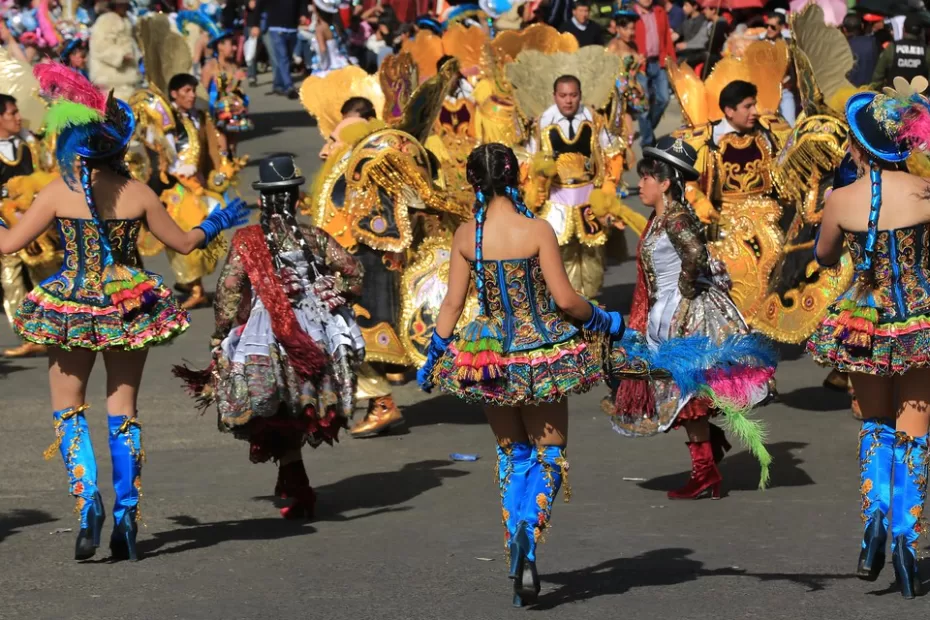
Morenada Dance: A Vibrant Bolivian Tradition
Deep in the heart of South America, where the Andes reach for the sky and ancient cultures thrive, lies a mesmerizing spectacle of sound and movement: the Morenada dance Bolivia. More than just a series of steps, this traditional dance is a living, breathing tapestry woven with threads of history, resilience, and profound cultural expression. It’s a powerful symbol of Bolivian identity, celebrated with unparalleled passion and dazzling artistry, captivating anyone fortunate enough to witness its grandeur.
What is Morenada Dance?
At its core, Morenada is a traditional Bolivian dance that portrays the arduous journey and suffering of African slaves brought to the high-altitude mines of Bolivia during the colonial era. The very name “Morenada” stems from “Moreno,” meaning “dark-skinned,” referencing the African heritage it seeks to commemorate. This powerful folkloric dance is characterized by its distinctive slow, heavy, and melancholic rhythm, which is believed to emulate the slow, deliberate steps of shackled slaves, their feet dragging under the weight of chains and the thin air of the altiplano.
The dance features a rich array of characters, each with symbolic meaning, and is performed to traditional Bolivian music, often played by brass bands that create an incredibly resonant and moving soundscape. It’s a dance that tells a story, a vibrant historical narrative brought to life through intricate Morenada choreography and elaborate Morenada costumes. While its origins are steeped in sorrow, the dance has evolved into a powerful celebration of cultural heritage, a testament to endurance, and a joyful expression of community and national pride. It’s an indispensable part of Morenada culture, a cornerstone of Bolivian traditions, and a truly unique dance style that stands out among the world’s cultural celebrations.
The History of Morenada Dance
The intricate dance history of Morenada is a fascinating journey, deeply intertwined with Bolivia’s colonial past and the enduring legacy of African slaves. While its exact origins are debated among historians and folklorists, the prevailing theory points to the 17th century, linking the dance to the arrival of African slaves brought by Spanish colonizers to work in the silver mines of Potosí and other regions of Bolivia. The high altitude and harsh conditions of the mines were brutal, and the slow, deliberate steps of the Morenada are widely interpreted as a symbolic representation of the slaves’ suffering, their heavy chains, and the difficult ascent through the mountainous terrain.
Initially, these movements might have been an organic expression of their plight, perhaps even a form of spiritual resistance or a way to cope with their hardships. Over time, indigenous communities, who also suffered under colonial rule, adopted and adapted these expressions, incorporating them into their own cultural celebrations and rituals. This fusion of African and indigenous elements is crucial to understanding the evolution of Morenada dance.
By the 19th and early 20th centuries, as Bolivia gained independence and began to forge its national identity, Morenada started to transform from a raw, somber remembrance into a more formalized and theatrical dance. The characteristic Morenada costumes, with their exaggerated features and heavy masks, began to take shape, adding layers of symbolism and spectacle. The dance also started to incorporate elements that satirized the Spanish colonizers, particularly through characters like the “Caporal,” who often represented the overseer.
In the mid-20th century, with the rise of folkloric movements and the increasing importance of cultural expression in post-revolutionary Bolivia, Morenada gained significant prominence. It moved from local community gatherings to national stages, becoming a central feature of major Morenada events and festivals, most notably the Carnival of Oruro. This period saw the standardization of Morenada choreography, the formation of large dance troupes, and the widespread recognition of Morenada as a quintessential Bolivian dance.
Today, the Morenada history reflects a complex narrative of oppression, adaptation, and ultimate triumph. It stands as a powerful testament to the resilience of the human spirit and a vibrant cultural heritage that continues to evolve while honoring its profound roots. It’s a living piece of dance history, constantly reinterpreted by new generations who learn Morenada and carry its traditions forward, ensuring its enduring legacy in Bolivia and beyond.
Cultural Significance of Morenada
The Morenada dance holds an unparalleled cultural significance in Bolivia, serving as far more than just entertainment. It is a profound cultural expression, a vibrant thread in the fabric of Bolivian traditions, and a powerful symbol of national identity and resilience. Its role in Bolivian culture and celebrations is multifaceted, touching upon history, community, and spiritual belief.
Firstly, Morenada acts as a historical narrative, a living memory of the African slaves who were brought to work in the mines. While the dance’s interpretation has broadened over time, its core symbolism of struggle and endurance remains. The slow, heavy steps, the pained expressions of some masks, and the melancholic traditional Bolivian music all serve as a powerful reminder of this often-overlooked aspect of Bolivia’s past. By performing Morenada, dancers and spectators alike engage in a collective act of remembrance and respect for those who suffered. This deep historical connection makes it a central part of Bolivia folklore and a treasured piece of cultural heritage.
Secondly, Morenada is a unifying force within Bolivian society. It transcends social and economic divides, bringing people together in a shared celebration of their heritage. During major festivals like the Carnival of Oruro, thousands of dancers from various Morenada communities and brotherhoods (“fraternidades”) spend months preparing, practicing Morenada choreography, and perfecting their elaborate Morenada costumes. This collective effort fosters a strong sense of belonging, camaraderie, and mutual pride. The dance becomes a communal endeavor, strengthening social bonds and reinforcing a shared cultural identity.
Moreover, the Morenada dance is intimately linked with religious devotion, particularly in festivals dedicated to the Virgin Mary, such as the Virgen del Socavón in Oruro. Many dancers participate not just for cultural pride but also as a form of penitence, a plea for blessings, or an expression of gratitude. The physical exertion and sacrifice involved in performing the dance, especially at high altitudes and for extended periods, are seen as offerings. This spiritual dimension adds another layer of profound Morenada significance, elevating it beyond mere performance to a sacred ritual.
The intricate Morenada costumes themselves carry immense symbolic weight. The “Rey Moreno” (Moreno King) mask, with its bulging eyes and often exaggerated features, represents the suffering and the power of the enslaved. The “achachi” or “viejo” (old man) character, often with a large, elaborate mask, symbolizes wisdom and the elders of the community. The “cholitas” or “cholas” (indigenous women) dancers, with their elegant polleras (layered skirts) and mantas (shawls), embody grace and the strong matriarchal figures in Bolivian society. Even the heavy bells worn by some dancers, known as “matracas,” are said to mimic the sound of rattling chains or the creaking of mining machinery, or even to ward off evil spirits.
In essence, Morenada is a vibrant cultural expression that encapsulates Bolivia’s complex history, its diverse social fabric, and its deep spiritual roots. It’s a dynamic and evolving traditional dance that continues to resonate with powerful messages of remembrance, community, and unwavering spirit, making it one of the most cherished and recognized dance styles and cultural celebrations in the nation.
Health Benefits of Practicing Morenada Dance
Beyond its profound cultural and historical significance, practicing Morenada dance offers a remarkable array of health benefits, both physical and mental. Engaging in this traditional dance is a holistic activity that can significantly contribute to overall well-being, making it an excellent form of exercise and a rich cultural experience.
Physically, Morenada is a demanding dance, particularly given the high altitudes at which it is often performed in Bolivia. The slow, heavy steps, which might appear deceptively simple, require immense stamina, muscle strength, and endurance. Dancers often perform for hours, sometimes days, during festivals, navigating long routes through city streets. This rigorous activity provides an excellent cardiovascular workout, strengthening the heart and lungs, and improving circulation. The consistent movement helps to build and tone leg muscles, core strength, and overall body coordination. The characteristic Morenada rhythm, though slow, demands sustained effort, leading to improved muscular endurance and stamina over time. Regular participation can also enhance flexibility and balance, reducing the risk of falls and improving agility. The dance benefits are tangible, contributing to a healthier and more active lifestyle.
Mentally and emotionally, the health benefits of dance, and specifically Morenada, are equally compelling. The discipline required to learn Morenada choreography and execute the steps in sync with a large group fosters mental focus and concentration. Memorizing sequences and staying in time with the traditional Bolivian music stimulates cognitive function and can improve memory. The communal aspect of Morenada is incredibly powerful; dancing as part of a “fraternidad” or dance community provides a strong sense of belonging and social connection. This camaraderie helps combat feelings of isolation and loneliness, promoting positive mental health.
Furthermore, dance is a well-known stress reliever. The physical exertion releases endorphins, natural mood elevators that can reduce anxiety and depression. The expressive nature of Morenada, allowing dancers to embody a historical narrative and convey emotion through movement, can be incredibly cathartic. It provides an outlet for creative expression and an opportunity to connect with one’s cultural heritage on a deeply personal level. This cultural expression, combined with the physical activity, leads to a significant boost in self-esteem and confidence. Successfully mastering the dance techniques and performing in front of an audience can be incredibly empowering.
For individuals looking to improve their physical fitness, mental clarity, and emotional well-being, learning Morenada offers a unique and culturally enriching pathway. It’s an opportunity to engage in a challenging yet rewarding activity that nourishes both the body and the soul, proving that the Morenada significance extends far beyond its historical roots to touch upon contemporary health and wellness.
How to Learn Morenada Dance
Embarking on the journey to learn Morenada dance is an exciting way to connect with Bolivian culture and experience the joy of this traditional dance firsthand. While mastering its nuances takes dedication, there are several avenues available for aspiring dancers.
The most authentic and immersive way to learn Morenada is to join a “fraternidad” (brotherhood or dance troupe) in Bolivia. These groups are the heart of Morenada culture, and they often welcome new members, even foreigners, who are genuinely interested in learning. In cities like La Paz, Oruro, and Cochabamba, you’ll find numerous fraternidades preparing year-round for major Morenada events and festivals. Joining one of these groups provides direct access to experienced instructors, a supportive dance community, and the chance to participate in rehearsals and performances. This is where you’ll truly grasp the intricate Morenada choreography, the specific dance techniques, and the profound Morenada traditions.
If traveling to Bolivia isn’t immediately feasible, many Bolivian communities around the world have established cultural centers and dance groups dedicated to preserving and teaching their traditions. Major cities with significant Bolivian diaspora populations – such as Washington D.C., Los Angeles, Buenos Aires, or Madrid – often have groups that teach various Bolivian dance styles, including Morenada. A quick online search for “Bolivian dance classes” or “Morenada dance group” in your local area might yield promising results. These groups offer a fantastic opportunity for dance education, allowing you to learn Morenada steps and rhythms while connecting with a local dance community.
For those who prefer to start independently, online resources can be a great first step. YouTube is an invaluable platform, hosting numerous videos of Morenada performances, tutorials, and even full festival parades. Searching for “learn Morenada,” “Morenada steps tutorial,” or “Morenada choreography” can provide visual guides to the basic movements. While these videos can help you understand the fundamental Morenada rhythm and basic dance techniques, they cannot fully replicate the experience of learning from a live instructor or being part of a group. However, they are excellent for familiarizing yourself with the dance before committing to classes.
When learning, pay close attention to the characteristic slow, heavy steps, the subtle body movements, and the way dancers use their arms and shoulders. The Morenada rhythm is crucial; it’s often described as a march, requiring a deliberate and grounded approach. Don’t be discouraged by the perceived simplicity of the steps; true mastery lies in the nuanced execution and the ability to convey the dance’s emotional depth.
Whether you choose to join a fraternidad, find a local group, or begin with online tutorials, approaching Morenada dance with an open mind and a respectful attitude towards its cultural heritage will enrich your learning experience. It’s not just about learning steps; it’s about understanding a story, embracing a community, and celebrating a vibrant piece of Bolivia folklore.
Morenada Dance Costumes and Music
The Morenada dance is a feast for the senses, and its visual splendor is largely due to its elaborate Morenada costumes, while its emotional depth is carried by its distinctive traditional Bolivian music. Both elements are integral to the dance’s identity and its powerful cultural expression.
The Morenada costumes are arguably some of the most intricate and heavy in all of Bolivian dance styles. They are designed not just for aesthetic appeal but also to convey deep symbolism related to the dance’s historical narrative. The most iconic costume is that of the “Rey Moreno” (Moreno King) or “Achachi” (Old Man), worn by male dancers. This outfit features a massive, often grotesque mask with bulging eyes, a prominent tongue, and sometimes a long, pointed nose. These features are believed to represent the suffering, exhaustion, and sometimes the caricature of the African slaves or even their Spanish overseers. The masks are incredibly heavy, made from plaster or fiberglass, and can weigh several pounds, adding to the dancer’s physical challenge and symbolic burden. The rest of the costume includes a large, ornate hat adorned with feathers and jewels, a voluminous cape intricately embroidered with images of animals, landscapes, or historical scenes, and heavy boots. Many male dancers also wear “matracas,” large wooden rattles that create a distinctive, rhythmic sound, often interpreted as the rattling of chains.
Female dancers, particularly the “Cholas” or “Cholitas,” wear equally stunning, though different, Morenada costumes. Their attire is a stylized version of the traditional dress of indigenous Aymara women, featuring multiple layers of voluminous, pleated skirts called “polleras,” often in vibrant colors. They wear elegant embroidered blouses, a delicate shawl (“manta”) draped over their shoulders, and a distinctive bowler hat (“bombín”) perched atop their heads. Their outfits are completed with intricate jewelry, often made of silver, and comfortable but ornate shoes. The grace and elegance of the Cholitas contrast beautifully with the more imposing figures of the male dancers, representing the strength and beauty of Bolivian women.
The traditional Bolivian music that accompanies Morenada dance is equally distinctive and essential. It is typically performed by large brass bands, often comprising dozens of musicians playing trumpets, trombones, tubas, saxophones, and percussion instruments. The sound is powerful, resonant, and often melancholic, perfectly complementing the slow, heavy steps of the dancers. The Morenada rhythm is characterized by its deliberate pace, a steady 2/4 or 4/4 time signature that evokes a marching feel. This rhythm is believed to emulate the slow, painful shuffle of chained slaves, and it’s what gives Morenada its unique, hypnotic quality.
The melodies are often repetitive yet deeply moving, designed to be easily recognizable and to carry the emotional weight of the dance’s narrative. The brass instruments create a rich, full sound that can fill entire plazas, creating an immersive experience for both dancers and spectators during Morenada events. The interplay between the visual spectacle of the costumes and the auditory experience of the music creates a truly unforgettable cultural celebration, making Morenada one of Bolivia’s most cherished and vibrant traditions.
Famous Morenada Festivals in Bolivia
Bolivia is a land of vibrant cultural celebrations, and Morenada dance takes center stage in some of the country’s most spectacular Morenada festivals. These events are not just performances; they are profound expressions of faith, history, and community, attracting thousands of dancers and millions of spectators from around the globe.
The Carnival of Oruro: Without a doubt, the most famous and grandest stage for Morenada is the Carnival of Oruro. Recognized by UNESCO as a Masterpiece of the Oral and Intangible Heritage of Humanity, this annual festival is a breathtaking display of folkloric dance, devotion, and cultural heritage. Morenada is one of the most prominent dance styles performed during the carnival, with hundreds of “fraternidades” (dance troupes) parading continuously for hours, sometimes days, along a meticulously planned route. Dancers, adorned in their elaborate Morenada costumes, perform the slow, rhythmic steps, often as a form of pilgrimage and devotion to the Virgen del Socavón (Virgin of the Mine Shaft). The sheer scale, the vibrant colors, the powerful traditional Bolivian music, and the palpable energy make Oruro’s Carnival an unparalleled experience to witness Morenada dance Bolivia in its full glory. It’s a key example of how Bolivia events bring communities together in celebration.
Gran Poder Festival in La Paz: Another incredibly significant Morenada event is the Fiesta del Gran Poder (Festival of the Great Power) in La Paz. This festival, also growing in international recognition, is a massive urban celebration dedicated to the Lord of Great Power (Señor del Gran Poder). While many dance styles are featured, Morenada holds a central position, showcasing the strong presence of Aymara culture in the capital city. The parade in La Paz is known for its incredible length, with thousands of dancers and musicians filling the streets, creating an electrifying atmosphere. The Gran Poder is a testament to the economic and cultural vibrancy of La Paz’s popular classes, who invest heavily in their Morenada costumes and performances as an act of faith and a display of social standing. It’s a powerful demonstration of Morenada significance in an urban context.
Carnival Chapaco in Tarija: While Oruro and La Paz are the epicenters, Morenada is also performed in other regions, adapting to local traditions. The Carnival Chapaco in Tarija, for instance, has a distinct flavor, though Morenada troupes from other regions sometimes participate, bringing their unique dance styles and Morenada choreography to the southern valleys. While not as dominant as in the altiplano, its presence showcases the dance’s widespread appeal and integration into various Bolivian traditions.
Local Patron Saint Festivals: Throughout Bolivia, countless smaller, local festivals celebrating patron saints feature Morenada performances. These community-based celebrations are often more intimate but equally fervent, allowing smaller dance communities to showcase their dedication and skill. These events are crucial for preserving Morenada culture at a grassroots level, ensuring that the younger generations learn Morenada and carry forward the traditions. From the Andean highlands to the valleys, these local “fiestas” provide continuous opportunities to experience the living heritage of Bolivian dance.
Attending any of these Morenada festivals offers an unforgettable immersion into Bolivia folklore and its rich cultural heritage. Each festival provides a unique context for understanding the dance’s evolution, its spiritual connections, and its enduring power to unite and inspire.
Conclusion: Embrace the Spirit of Morenada
The Morenada dance Bolivia is far more than just a series of steps; it is a profound journey through history, a vibrant expression of cultural resilience, and a testament to the enduring spirit of a nation. From its poignant origins recalling the arduous plight of African slaves in the colonial mines to its current status as a magnificent symbol of Bolivian identity, Morenada encapsulates a rich tapestry of human experience. We’ve explored its complex dance history, its deep Morenada significance in Bolivian culture and celebrations, and the incredible physical and mental health benefits of dance that come from embracing its unique rhythm.
The elaborate Morenada costumes, with their symbolic masks and intricate details, tell stories without words, while the powerful traditional Bolivian music, played by large brass bands, stirs the soul. Witnessing Morenada events at famous Morenada festivals like the Carnival of Oruro or the Gran Poder in La Paz is an experience that transcends mere observation; it’s an immersion into a living, breathing piece of cultural heritage.
Whether you’re drawn to its historical narrative, its artistic beauty, or the opportunity to learn Morenada and connect with a vibrant dance community, there’s a world of discovery awaiting you. Morenada is a celebration of life, a remembrance of the past, and a joyful embrace of the present. It invites everyone, regardless of age or background, to feel its rhythm, understand its symbolism, and appreciate the profound cultural expression it represents. So, take a moment to explore this magnificent folkloric dance, and allow yourself to be captivated by the vibrant, resilient, and utterly unforgettable spirit of Morenada.
Heard some buzz about baazplay and decided to give it a look. Not bad, not bad at all! Seems like a decent place to unwind and kill some time. Go give it a try! Go here: baazplay
phgaming https://www.rephgaming.net