
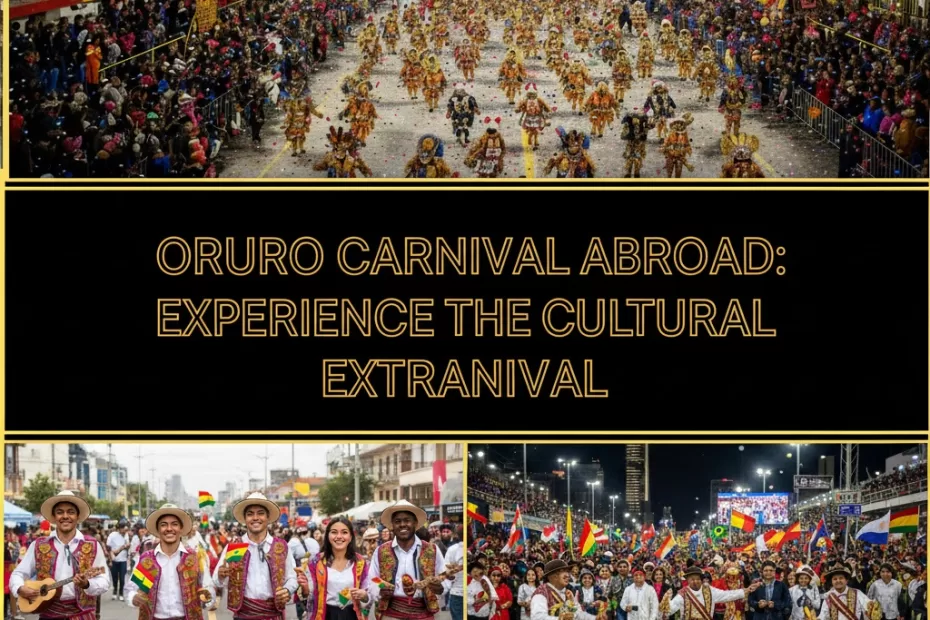
Oruro Carnival Abroad: Experience the Cultural Extravaganza
The Oruro Carnival is much more than just a festival; it’s a living, breathing testament to Bolivia’s rich cultural heritage, a vibrant tapestry woven from indigenous traditions, colonial history, and fervent devotion. Recognized by UNESCO as a Masterpiece of the Oral and Intangible Heritage of Humanity, this grand celebration draws thousands to the high-altitude city of Oruro each year, transforming its streets into a dazzling spectacle of dance, music, and elaborate carnival costumes. But the spirit of Oruro isn’t confined to its Andean origins. Far beyond the Bolivian borders, communities of Bolivian descent and cultural enthusiasts worldwide keep the flame of the Oruro Carnival alive, ensuring that its pulsating rhythms and profound cultural significance resonate across continents. This article delves into the heart of this extraordinary festival, exploring its roots, its dazzling features, and, crucially, how the magic of the Oruro Carnival abroad continues to thrive, fostering community and preserving a unique cultural identity for generations.
What is the Oruro Carnival?
At its core, the Oruro Carnival is an annual religious and cultural festival held in Oruro, Bolivia, known globally as one of the largest and most spectacular cultural festivals in South America. It’s a profound expression of Bolivian culture, characterized by a unique blend of indigenous Andean beliefs and Catholic traditions, a syncretism that has evolved over centuries. The Carnival is primarily dedicated to the Virgen del Socavón (Virgin of the Mineshaft), the patron saint of miners, and is celebrated over ten days leading up to Ash Wednesday, with the main pilgrimage procession occurring on the Saturday before.
The significance of the Oruro Festival extends far beyond mere entertainment. It’s a deeply spiritual event, a pilgrimage where thousands of dancers and musicians pay homage to the Virgin, seeking blessings and offering gratitude. This event is a powerful demonstration of faith, resilience, and cultural pride, reflecting the historical struggles and enduring spirit of the Bolivian people. The Oruro Carnival history is deeply intertwined with the region’s mining heritage and the enduring presence of pre-Hispanic traditions. It’s a time for communal celebration, where families gather, old friendships are renewed, and the younger generation is immersed in the vibrant traditions of their ancestors.
The main event, the Entrada (entrance or procession), is a marathon of dance and music, lasting over 20 hours and covering several kilometers. During this time, more than 50 different dance groups, comprising tens of thousands of dancers and musicians, parade through the city streets. Each group performs its specific dance, characterized by intricate choreographies, symbolic movements, and stunning carnival costumes. The sheer scale and energy of this event are awe-inspiring, making it a bucket-list item for many interested in Latin American traditions and authentic cultural experiences. Through these dance performances and festive gatherings, the Oruro Carnival vividly narrates stories of good versus evil, indigenous cosmology, and the profound connection between humanity and the Andean landscape, embodying the very essence of Bolivia festivals.
History of the Oruro Carnival
The history of the Oruro Carnival is a fascinating journey through time, demonstrating remarkable cultural resilience and adaptation. Its roots stretch back long before the arrival of the Spanish conquistadors, deeply embedded in the pre-Hispanic traditions of the Andean altiplano. The Uru people, one of the oldest ethnic groups in the region, celebrated rituals dedicated to Pachamama (Mother Earth), Supay (the lord of the underworld, often depicted as a devil figure, also known as Tio Supay), and other indigenous deities associated with mountains, water, and fertility. These ancient ceremonies were vital for ensuring good harvests, protection, and prosperity, particularly for the mining communities that thrived in the Oruro region.
When the Spanish arrived in the 16th century, they brought Catholicism and sought to suppress indigenous religious practices. However, rather than erasing these traditions entirely, a process of syncretism began. Indigenous beliefs and rituals were cleverly interwoven with Christian symbols and narratives. For instance, the figure of Supay, the indigenous god of the underworld and mines, became associated with the Christian devil. The reverence for Pachamama found its parallel in the veneration of the Virgin Mary, particularly the Virgin of Socavón, who became the patroness of Oruro’s miners. This strategic fusion allowed indigenous practices to survive under the guise of Christian worship.
The dance in Oruro, particularly the iconic Diablada (Dance of the Devils), is a prime example of this syncretism. While its elaborate devil masks and movements might seem purely folkloric today, they originally represented the struggle between good and evil, with the Archangel Michael eventually triumphing over the seven deadly sins personified by the devils. This narrative provided a “Christian” framework for what were essentially indigenous rituals of appeasing the spirits of the mines. Over the centuries, other dances like the Morenada, Caporales, and Llamerada emerged, each telling its own story related to the region’s history, social struggles, and cultural identity.
The official recognition and structure of the modern Oruro Carnival began to take shape in the late 18th and early 19th centuries, evolving from localized street celebrations and religious processions into a more organized festival. The construction of the Sanctuary of the Virgin of Socavón in the 18th century solidified her central role in the carnival. By the 20th century, the Oruro Carnival had grown significantly, attracting participants and spectators from across Bolivia and beyond. Its declaration as a “Masterpiece of the Oral and Intangible Heritage of Humanity” by UNESCO in 2001 underscored its profound global importance, acknowledging its unique blend of religious devotion, artistic expression, and historical depth. This rich cultural heritage continues to inspire and unite Bolivian communities worldwide, making the Oruro Carnival significance a cornerstone of their identity.
Key Features of the Oruro Carnival
The Oruro Carnival is a sensory explosion, a spectacle where every element—from the thunderous music to the intricate dance steps and dazzling carnival costumes—tells a story. Understanding these key features is essential to appreciating the depth of this Bolivian culture celebration.
Dance Performances: The Heartbeat of the Carnival
The sheer variety and symbolism of the dance performances are perhaps the most captivating aspect of the Oruro Carnival. Over 50 distinct dance groups participate, each preserving a unique piece of Bolivian folklore and history.
-
La Diablada (Dance of the Devils): This is the most iconic dance, representing the eternal struggle between good and evil. Dancers wear elaborate devil masks with grotesque features, horns, and often serpents, adorned with mirrors and jewels. The choreography depicts the Archangel Michael battling Lucifer and the Seven Deadly Sins, culminating in the triumph of good. It’s a powerful display of religious syncretism and a central part of the Oruro pilgrimage.
-
La Morenada: One of the most popular and visually striking dances, the Morenada depicts the suffering of African slaves brought to work in the Bolivian mines. Dancers wear heavy, often silver-studded costumes and distinctive masks with exaggerated features, representing the physical burdens and the longing for freedom. The slow, heavy steps mimic the arduous walk of the chained slaves.
-
Los Caporales: A more modern and energetic dance, Caporales emerged in the 1960s and quickly gained immense popularity. It’s inspired by the caporales or overseers of the African slaves, who were often of mixed heritage. Dancers wear brightly colored, elaborate costumes with bells on their boots, performing vigorous jumps and synchronized movements. It’s a dynamic expression of power and pride.
-
La Llamerada: This dance pays homage to the llama herders of the altiplano. Dancers wear traditional indigenous clothing, often carrying small woven bags and staffs, mimicking the movements of shepherds and their llamas. It celebrates the deep connection between the Andean people and their environment, particularly the vital role of camelids in their sustenance.
-
Los Tinkus: Originating from ritualistic combat between communities in the northern Potosí region, Tinkus is a fierce and powerful dance. Dancers wear traditional attire, including helmets adorned with feathers, and perform aggressive, chest-pounding movements. While the real ritual combats are highly regulated or symbolic now, the dance retains its raw energy and spirit of communal strength.
-
Los Tobas: This dance represents the indigenous peoples of the Bolivian lowlands, particularly those from the Amazon basin. Dancers wear feathered headpieces, body paint, and carry spears, performing energetic, athletic movements that evoke hunting and tribal rituals. It’s a vibrant contrast to the highland dances, showcasing Bolivia’s diverse geography and cultures.
-
Suri Sikuri: This elegant and rhythmic dance features large, circular feather hats (suri) and the haunting melodies of sikus (panpipes). It embodies the grace and spiritual connection of the Andean people to their natural surroundings and ancestral music.
Each dance group spends months, sometimes even a full year, practicing their choreographies, perfecting their steps, and ensuring their costumes are impeccable. These dance performances are not just entertainment; they are living prayers, expressions of identity, and a profound connection to the Oruro traditions.
Carnival Costumes: A Feast for the Eyes
The carnival costumes are arguably one of the most visually stunning aspects of the Oruro Carnival. They are elaborate, meticulously crafted, and deeply symbolic, each detail contributing to the narrative of the dance.
-
Diablada costumes: These are perhaps the most intricate, featuring large, fearsome masks made of plaster, papier-mâché, or fiberglass, adorned with mirrors, jewels, and painted details. The suits are often made of velvet or satin, embroidered with serpents, dragons, and other mythical creatures, sparkling with sequins and metallic threads. The weight of these costumes, especially the masks, is considerable, adding to the dancers’ endurance challenge.
-
Morenada costumes: Known for their heavy, voluminous skirts and ornate capes, often covered in intricate silver or gold embroidery depicting historical scenes or symbols. The masks are usually dark-skinned, with exaggerated features, and often include a small hat. The distinctive clanking sound of the matracas (ratchets) carried by the dancers adds to the unique auditory experience.
-
Caporales costumes: These are characterized by their vibrant colors, often sequined and embroidered. Male dancers wear wide-brimmed hats, elaborate shirts, and bell-covered boots that create a rhythmic jingle with every powerful leap. Female dancers wear short skirts, blouses, and often high boots, all adorned with glittering embellishments.
-
Tinku costumes: Reflecting their origin, these costumes are robust and earthy. Male dancers wear a montera (a square-shaped helmet often decorated with feathers), woven ponchos, and traditional pants. Female dancers wear layered skirts (polleras) and intricately woven shawls (mantas).
The creation of these costumes is a significant undertaking, often involving skilled artisans who dedicate months to their craft. They are not merely garments but works of art, imbued with cultural meaning and personal devotion.
Music: The Soundtrack of Devotion
The music of the Oruro Carnival is as diverse and powerful as its dances. Live brass bands accompany almost every dance group, their booming sounds filling the streets with an infectious energy.
-
Brass Bands: Comprising trumpets, trombones, tubas, and percussion instruments, these bands play traditional Bolivian rhythms and melodies, often with a distinct Andean flair. The sheer volume and coordination of dozens of these bands playing simultaneously create an immersive, electrifying atmosphere.
-
Traditional Instruments: While brass bands dominate, traditional instruments like the siku (panpipes), quena (Andean flute), and charango (a small stringed instrument) are also integral, especially in dances like the Suri Sikuri and Llamerada, adding layers of authentic Andean soundscapes.
-
Lyrics: Many songs tell stories of the carnival’s history, the Virgin of Socavón, social commentary, or simply celebrate the joy of the festival. The music is a constant, driving force, propelling the dancers forward on their arduous pilgrimage and inspiring spectators to join in the festive gatherings.
Together, the dance performances, stunning carnival costumes, and pulsating Oruro music create an unforgettable sensory experience, making the Oruro Carnival a truly unique and powerful celebration of Bolivian folklore and cultural heritage.
Experiencing Oruro Carnival Abroad
The vibrant spirit of the Oruro Carnival isn’t confined by geographical borders; it transcends oceans and continents, finding new life in communities across the globe. For Bolivians living outside their homeland, celebrating the Oruro Carnival abroad is a powerful way to maintain cultural identity, connect with their roots, and share their rich traditions with a wider audience. These community celebrations are not just parties; they are vital cultural exchanges and acts of preservation, ensuring that the essence of Bolivian culture continues to thrive for future generations.
Bolivian diaspora communities, driven by a deep sense of nostalgia and cultural pride, meticulously organize their own versions of the carnival. These events often mirror the grandeur and devotion of the original, albeit on a smaller scale. They feature dedicated dance groups, complete with authentic carnival costumes, who practice for months to perfect their choreographies. The air fills with Oruro music, and the streets, whether in a bustling city park or a community hall, come alive with the colors and sounds reminiscent of Oruro itself. These festive gatherings become focal points for the community, drawing together families, friends, and anyone interested in Latin American traditions.
The motivation behind these international cultural events is multifaceted. For many, it’s a way to teach children and grandchildren about their heritage, ensuring that Oruro traditions are passed down. It’s a chance to relive cherished memories of carnivals past in Bolivia and to foster a sense of belonging in a new land. Moreover, these celebrations serve as cultural showcases, introducing the intricate beauty of Bolivian folklore to people from diverse backgrounds, fostering understanding and appreciation for a culture that might otherwise remain unseen. The “Oruro Carnival abroad” isn’t merely an imitation; it’s an evolving expression of a living culture, adapting to new environments while fiercely guarding its core identity.
Oruro Carnival Events Worldwide
From the Americas to Europe, and even further afield, the Oruro Carnival events have become significant fixtures on the international festival calendar for Bolivian communities. While not on the same monumental scale as the original, these celebrations are imbued with the same passion, devotion, and cultural richness.
In the United States, cities with large Bolivian populations, such as Washington D.C., Los Angeles, Miami, and New York, host impressive Oruro Carnival celebrations. These often include parades featuring various dance groups like Diablada, Morenada, and Caporales, complete with elaborate costumes and live bands. For instance, the “Carnaval de Oruro en Washington D.C.” often draws thousands, transforming a section of the city into a mini-Oruro. Dance academies and cultural associations play a pivotal role in organizing these events, training dancers, and ensuring the authenticity of the performances.
Argentina is home to one of the largest Bolivian expatriate communities, and as such, its Oruro Carnival events are particularly vibrant. Buenos Aires, in particular, sees numerous celebrations, often centered in neighborhoods with a strong Bolivian presence. These can range from large-scale parades to intimate community festivals and dance showcases that meticulously recreate the spirit of the Bolivian original. The barrios come alive with music and dance, offering a taste of authentic Bolivian culture.
In Spain, particularly in cities like Madrid and Barcelona, Bolivian communities organize their own versions of the carnival. These often coincide with local cultural festivals or occur around the traditional carnival dates. The celebrations typically feature dance groups performing in public squares or community centers, attracting both Bolivian expatriates and curious locals. These events are crucial for maintaining ties to the homeland and for promoting Bolivian culture within Europe.
Brazil, despite having its own world-renowned carnivals, also hosts Oruro Carnival celebrations, especially in border towns and cities with Bolivian communities. While the style might blend with local carnival influences, the core Oruro traditions remain central. Similarly, other Latin American countries like Chile and Peru, which share cultural ties and borders with Bolivia, also see significant Oruro Carnival events, often with cross-border participation.
Even in places like Australia and Japan, where Bolivian communities are smaller, dedicated groups strive to organize cultural showcases and dance performances, demonstrating the global reach and enduring appeal of the Oruro Carnival. These international festivals are not just about spectacle; they are about fostering a sense of belonging, celebrating shared heritage, and keeping the flame of Bolivian cultural significance burning brightly, no matter how far from Oruro the participants may be. Each event, whether grand or modest, contributes to the global tapestry of Oruro Carnival abroad, ensuring its traditions continue to evolve and inspire.
Cultural Significance of the Carnival
The Oruro Carnival abroad holds immense cultural significance, extending far beyond the joyous spectacle of dance and music. For Bolivian diaspora communities, it’s a powerful anchor, a means of preserving their rich cultural heritage and reinforcing their identity in foreign lands.
Firstly, it serves as a crucial link to the homeland. For those who have migrated, the carnival provides a tangible connection to Bolivia, evoking memories, traditions, and a sense of shared history. It’s a moment when the community can collectively remember and celebrate where they come from, helping to mitigate the feelings of displacement or cultural loss often experienced by immigrant populations. This connection is vital for maintaining mental and emotional well-being within the diaspora.
Secondly, the carnival is an unparalleled tool for cultural preservation and transmission. In an age of globalization, where traditional cultures can sometimes be diluted, Oruro Carnival abroad acts as a vibrant educational platform. Children and grandchildren born outside Bolivia might not have direct experience with the carnival in Oruro, but through these local celebrations, they learn the dances, understand the symbolism of the carnival costumes, internalize the Oruro music, and grasp the stories embedded in each performance. This active participation ensures that Oruro traditions are not just remembered but actively lived and passed down, fostering a strong sense of pride in their Bolivian culture. Dance groups often become intergenerational spaces where elders teach the youth, reinforcing familial and community bonds.
Thirdly, these international cultural events facilitate cultural exchanges. While primarily for the Bolivian community, these celebrations often attract local residents from the host countries, as well as people from other Latin American backgrounds. This interaction allows for a beautiful exchange of cultures, where Bolivian folklore is introduced to new audiences, breaking down stereotypes and fostering mutual understanding. Non-Bolivians get a glimpse into the depth and vibrancy of Latin American traditions, enriching the cultural landscape of the host city. This global outreach enhances the Oruro Carnival significance on a worldwide stage.
Moreover, the process of organizing and participating in Oruro Carnival events abroad strengthens community bonds. The months of practice, costume making, and event planning require immense collaboration and dedication. These festive gatherings become focal points for social cohesion, uniting people around a common purpose and shared heritage. They provide opportunities for networking, mutual support, and the creation of new friendships, solidifying the fabric of the Bolivian community in their adopted homes.
Finally, the Oruro Carnival abroad is a powerful statement of cultural resilience and adaptation. It demonstrates that culture is not static; it travels, evolves, and adapts while retaining its core essence. These celebrations are living proof that the spirit of Oruro can flourish anywhere, transforming ordinary streets into stages for extraordinary expressions of faith, history, and identity. The emphasis on community festival aspects ensures that these cultural expressions are not just performances but integral parts of the community’s ongoing life.
Travel Tips for Attending the Carnival in Bolivia
For those captivated by the allure of the Oruro Carnival and dreaming of experiencing its grandeur firsthand in Bolivia, careful planning is essential. Attending this UNESCO-recognized masterpiece is an unforgettable adventure, but a few practical travel tips can make your journey smoother and more enjoyable.
1. Plan and Book Early (Very Early!):The Oruro Carnival is one of Bolivia’s biggest events, attracting tens of thousands of visitors.
-
Accommodations: Hotels and hostels in Oruro book up months in advance, often a year ahead, and prices skyrocket. Start looking for lodging at least 6-12 months out. Consider staying in Cochabamba or La Paz and taking a bus or train to Oruro for the main days, though this adds travel time.
-
Transportation: Buses and trains to Oruro also fill up quickly. Secure your tickets well in advance, especially for the Friday, Saturday, and Sunday of the carnival weekend. Roads can become congested, and public transport overloaded.
-
Grandstand Seats: To get the best view of the main procession (the Entrada on Saturday), you’ll need a grandstand seat (gradería). These are often sold through tour operators or local vendors starting weeks before the event. Expect to pay a premium, but it’s worth it for comfort and an unobstructed view.
2. Understanding the Timing:The carnival officially runs for ten days leading up to Ash Wednesday.
-
Main Events: The most important days are the Saturday (the Entrada or main procession, lasting over 20 hours) and Sunday (the Corso del Carnaval, a more relaxed parade with some repeat performances and informal celebrations).
-
Pre-Carnival Events: If you arrive earlier in the week, you can catch various pre-carnival events, including smaller parades, traditional dances in plazas, and local festivities, which offer a more intimate glimpse into Oruro traditions.
3. What to Pack:Oruro is located at an altitude of approximately 3,700 meters (12,140 feet), so the weather can be unpredictable.
-
Layers: Days can be warm and sunny, but evenings and mornings are chilly. Pack layers, including warm sweaters, a jacket, and a rain poncho (February is still rainy season).
-
Comfortable Shoes: You’ll be doing a lot of walking and standing. Comfortable, closed-toe shoes are a must.
-
Sun Protection: The sun at high altitude is intense. Bring a wide-brimmed hat, sunglasses, and high-SPF sunscreen.
-
Altitude Sickness Medication: Consult your doctor about preventative measures for altitude sickness (soroche). Coca leaves or tea are traditional remedies available locally.
4. Safety and Local Customs:
-
Beware of Pickpockets: Like any large festival, pickpocketing can be an issue. Keep valuables secure and out of sight. Don’t flash expensive jewelry or electronics.
-
Stay Hydrated and Eat Well: Drink plenty of water to combat altitude sickness and stay energized. Try local street food, but choose vendors that look clean and popular.
-
Respect the Culture: The Oruro Carnival is a deeply religious and cultural event. Be respectful of participants, their costumes, and the sacred elements of the celebration. Ask permission before taking close-up photos of individuals, especially during religious moments.
-
“Water and Foam Play”: Be aware that during the carnival, especially on Sunday, it’s customary for people to playfully spray water, foam, or throw balloons filled with water. If you don’t want to participate, try to stay clear of areas where this is happening, or embrace it with good humor!
-
Alcohol Consumption: While alcohol is consumed, especially during the celebrations, excessive public intoxication is frowned upon and can make you a target for petty crime.
-
Cash: Have small denominations of Bolivian Bolivianos (BOB) for street vendors, snacks, and small purchases, as not all places accept cards.
5. Transportation Within Oruro:During the carnival, many streets are closed to traffic. Be prepared to walk extensively. Taxis are available but will be more expensive and may not be able to get you directly to your destination due to road closures.
Attending the Oruro Carnival in Bolivia is an immersive experience into the heart of Latin American traditions and Bolivian folklore. With these travel tips, you’ll be better prepared to navigate the festivities and fully appreciate the grandeur of this spectacular cultural event, making your Oruro tourism adventure truly memorable.
The Future of the Oruro Carnival
The Oruro Carnival, a dynamic and evolving cultural phenomenon, stands at a fascinating crossroads as it navigates the complexities of globalization, technology, and shifting societal landscapes. Its future promises both continued growth and significant challenges, reflecting its evolving role as a global cultural ambassador.
One undeniable trend is the growing international recognition of the Oruro Carnival significance. Thanks to its UNESCO designation and increased global travel, more international visitors are discovering this unique Latin American tradition. This rise in Oruro tourism brings economic benefits to the region, supporting local artisans, musicians, and hospitality services. However, it also presents challenges related to managing crowds, preserving authenticity, and preventing over-commercialization that could dilute the spiritual and cultural essence of the festival. Balancing economic development with cultural integrity will be a key task for organizers and local authorities.
Digitalization and social media are playing an increasingly crucial role in the carnival’s global presence. Live streams, viral videos, and online cultural showcases allow the Oruro Carnival abroad to reach audiences far beyond physical attendance. This digital footprint helps spread Bolivian culture, attracting new interest and fostering connections among the diaspora. It also provides a platform for documenting the carnival, creating a rich archive of its history and evolution. Virtual celebrations and online dance competitions could become more prevalent, allowing wider participation and engagement regardless of geographical barriers, particularly in times when physical gatherings are restricted.
The Bolivian diaspora will continue to be a vital force in shaping the future of the Oruro Carnival. As communities abroad grow and become more established, their celebrations will likely gain further prominence and sophistication. These community festivals serve as crucial cultural bridges, ensuring the survival of Oruro traditions and adapting them to new contexts. The exchange of ideas, choreographies, and costume designs between Oruro and its international counterparts could lead to exciting innovations while maintaining respect for traditional forms. This ongoing dialogue between the homeland and the diaspora strengthens the overall fabric of Bolivian folklore.
However, the carnival also faces internal challenges. Issues such as generational engagement, the impact of climate change on the altiplano environment (affecting resources and traditional livelihoods), and the need for sustainable practices in costume production and waste management are important considerations. There’s also a continuous debate about maintaining the historical and religious purity of the carnival against the pressures of modernization and commercial sponsorship. Ensuring that the Oruro pilgrimage and its deep spiritual roots remain central, rather than being overshadowed by spectacle, is a constant effort.
The Oruro Carnival’s future will likely involve a delicate dance between tradition and innovation, local pride and global reach. It will continue to be a powerful symbol of Bolivian identity, a source of spiritual renewal, and a vibrant example of how cultural heritage can not only endure but also flourish in an interconnected world. The increasing number of Oruro Carnival events and international cultural events underscores its potential for growth and its enduring power to unite people through shared celebration and a profound appreciation for cultural significance.
Conclusion: Embracing the Spirit of Oruro Carnival
The Oruro Carnival is far more than just a magnificent spectacle; it is a profound expression of Bolivian culture, a living narrative of history, faith, and the enduring spirit of its people. From its ancient pre-Hispanic origins, intertwined with the veneration of Pachamama and Supay, to its syncretic evolution under colonial influence, culminating in the fervent devotion to the Virgen del Socavón, the carnival embodies a unique cultural heritage. Its key features – the mesmerizing dance performances like the Diablada and Morenada, the breathtakingly intricate carnival costumes, and the pulsating Oruro music – collectively form an unforgettable sensory experience that celebrates Bolivian folklore in its most vibrant form.
Crucially, the spirit of this extraordinary festival is not confined to the high altitudes of Oruro. The phenomenon of the Oruro Carnival abroad demonstrates the remarkable resilience and passion of Bolivian communities worldwide. In cities across the United States, Argentina, Spain, and beyond, expatriates and cultural enthusiasts meticulously recreate the magic of Oruro, organizing parades, dance groups, and festive gatherings. These international cultural events serve as vital conduits for cultural preservation, ensuring that Oruro traditions are passed down through generations, fostering a strong sense of identity, and offering cultural exchanges that enrich both the diaspora and their host nations. The Oruro Carnival events held globally are a testament to the enduring power of culture to unite and inspire, regardless of geographical distance.
For those contemplating the ultimate cultural adventure, attending the carnival in Bolivia offers an unparalleled immersion into Latin American traditions. While requiring careful planning regarding travel tips, accommodation, and understanding local customs, the experience of witnessing the Oruro pilgrimage firsthand is truly transformative. It allows one to grasp the deep Oruro Carnival significance, feeling the collective devotion and joy that permeates every street and every dance step.
Looking ahead, the Oruro Carnival faces both exciting opportunities and challenges. Its growing global recognition, amplified by digital platforms, promises wider appreciation and sustained Oruro tourism. Yet, it also demands a delicate balance to preserve its authenticity against the pressures of commercialization and modernization. The continued dedication of Bolivian communities and international partners will be essential in navigating this future, ensuring that the carnival remains a vibrant, evolving masterpiece of intangible heritage.
Whether you experience it amidst the bustling streets of Oruro or through the dedicated community celebrations of the Oruro Carnival abroad, engaging with this incredible cultural festival is an invitation to witness a living tradition. It’s an opportunity to connect with a rich history, marvel at artistic expression, and embrace the joyous, spiritual heart of Bolivian culture. The Oruro Carnival is a testament to humanity’s capacity for creativity, faith, and the enduring power of cultural identity – a celebration that truly transcends borders and generations.
Checked out 192betslots. Not bad! They’ve got a wide selection of slots, some I’ve never seen before. Worth a look if you’re hunting for something new to play. Remember to bet responsibly!
The global spread of Oruro highlights how cultural identity acts as a powerful, unifying narrative. This deep human need for ritual and collective experience is fascinating-a resonance that transcends physical boundaries, much like how modern digital platforms maintain engagement, whether through nn77 games.
The resilience of cultural traditions, like the Oruro Carnival, highlights how deeply community identity is maintained. It’s a powerful lesson in digital engagement-the need for scalable platforms to keep global diasporas connected. For those seeking immersive digital experiences, checking out the 99wim app download can be a great start.
Interesting analysis! The focus on playful design, like with pokebet88 vip, really stands out – it’s not just about serious gaming, but the experience. Registration seems streamlined too, crucial for new players!
The fund flow analysis suggests careful vetting; don’t rush decisions. For a solid overview, check out jyjili com. It seems comprehensive for exploring digital entertainment options safely abroad.