
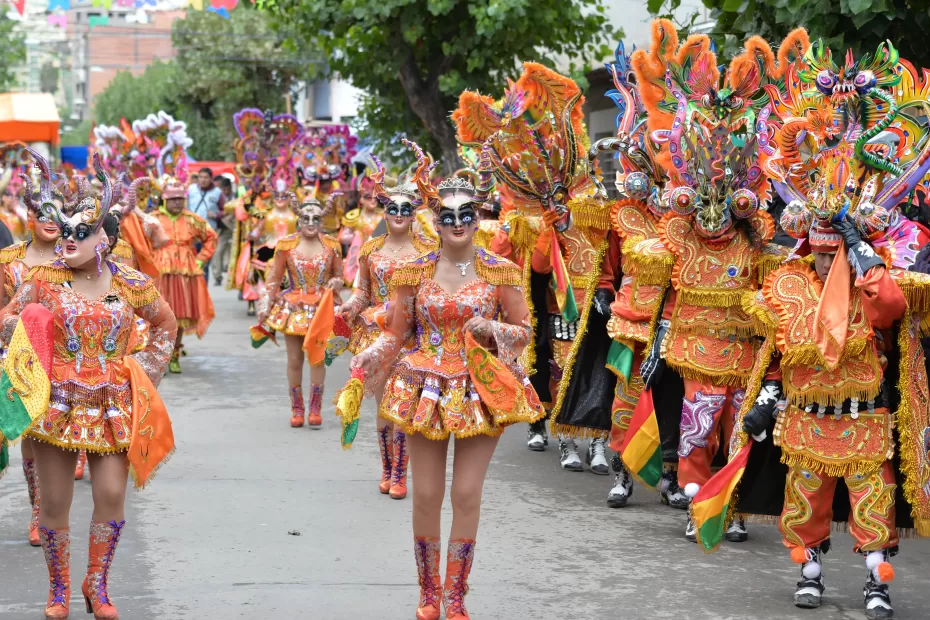
Oruro Carnival Costumes: A Colorful Tradition
The air in Oruro, Bolivia, crackles with an energy unlike anywhere else in the world as the annual Oruro Carnival approaches. This UNESCO-recognized Masterpiece of the Oral and Intangible Heritage of Humanity is not merely a festival; it’s a living tapestry woven from centuries of history, faith, and vibrant artistic expression. At the heart of this spectacular celebration are the Oruro Carnival costumes, an astonishing display of creativity, symbolism, and meticulous craftsmanship that tells the story of Bolivia’s rich cultural heritage. These elaborate ensembles transform participants into mythical creatures, historical figures, and representations of indigenous culture, making the carnival a truly unforgettable experience for anyone interested in Bolivian cultural festivals and traditional dance.
Introduction to the Oruro Carnival
The Oruro Carnival is one of the grandest and most significant cultural events in Bolivia, drawing hundreds of thousands of spectators and participants each year. Its roots stretch back over 2,000 years to pre-Hispanic Andean traditions, blending indigenous rituals honoring Pachamama (Mother Earth) and the Tío Supay (Uncle of the Mine, an underworld deity) with Catholic beliefs introduced by Spanish colonizers. This unique syncretism is a defining characteristic of Oruro culture and its carnival celebrations.
The festival officially spans ten days, culminating in the main pilgrimage on the Saturday before Ash Wednesday. However, preparations and smaller carnival events begin weeks, even months, in advance. The central event is the entrada, a grand parade where over 50 dance groups, comprising tens of thousands of dancers and musicians, perform intricate choreographies along a four-kilometer route. This massive procession is not just entertainment; it’s a pilgrimage of faith to the Sanctuary of the Virgin of Socavón, the patron saint of miners, demonstrating the profound religious significance embedded within the festivities. The Oruro Carnival history is a fascinating journey through time, showcasing the enduring spirit and adaptability of Bolivian folklore. It’s a powerful expression of ethnic diversity in Bolivia, reflecting the country’s complex past and vibrant present.
The Importance of Costumes in the Carnival
In the Oruro Carnival, costumes are far more than mere attire; they are the soul of the celebration, embodying the narratives, beliefs, and identities of the various dance groups. Each costume, with its specific design, colors, and embellishments, carries deep symbolism and cultural relevance, transforming the wearer into a living representation of a story or spirit. These aren’t just outfits for a party; they are powerful tools of expression, connecting the present generation to ancient traditions and historical costumes. The festival attire is integral to the performance, enhancing the movements of the traditional dance and conveying the character’s essence to the audience.
The elaborate nature of these Oruro Carnival costumes reflects the dedication and passion of the participants. Dancers often save for years to afford their costumes, which can cost thousands of dollars, seeing it as an investment in their cultural identity and faith. The act of donning these ethnic costumes is a transformative experience, allowing individuals to shed their everyday selves and become part of a larger, mystical narrative. This deep personal investment underscores the Oruro Carnival significance, making it a profound cultural and spiritual journey for those involved. Through these vibrant displays, the carnival parades become moving works of art, each step and swirl of fabric telling a tale.
Types of Costumes Worn
The sheer variety of Oruro Carnival costumes is astounding, with each dance group, or conjunto, showcasing a distinct style and story. While there are countless variations, some of the most iconic include:
-
The Diablada (Dance of the Devils): This is arguably the most famous and visually striking of all Oruro Carnival costumes. The Diablada represents the struggle between good and evil, with elaborately horned devil masks (caretas) being its most recognizable feature. These masks are often grotesque, featuring bulging eyes, fangs, and serpents, symbolizing the seven deadly sins. The costumes themselves are vibrant, typically red, adorned with sequins, mirrors, and intricate embroidery depicting dragons, toads, and other mythical creatures. The devils are led by Lucifer and the China Supay (female devil), who wear even more extravagant outfits. Saint Michael the Archangel, with his gleaming armor and feathered wings, represents the forces of good, ultimately triumphing over evil. This traditional Bolivian dress is a powerful visual allegory.
-
The Morenada (Dance of the Black Slaves): This dance pays homage to the African slaves brought to Bolivia during colonial times to work in the silver mines. The Morenada costumes are heavy, often weighing over 60 pounds, symbolizing the arduous labor and chains endured by the slaves. Dancers wear large, ornate masks with exaggerated features, often depicting a grim expression, and carry a matraca (a rattle) that mimics the sound of chains. The costumes are richly decorated with embroidery, beads, and often feature a large, bell-shaped skirt. The Rey Moreno (Moreno King) wears the most opulent costume, often with a large, feathered headdress. This historical costume serves as a poignant reminder of a challenging period in Oruro history.
-
The Caporales (Dance of the Overseers): Energetic and visually dynamic, the Caporales dance originated in the Yungas region and represents the overseers of the African slaves, often depicted as powerful and authoritarian figures. The male Caporales wear high-heeled boots with large bells (cascabeles), wide-brimmed hats adorned with feathers, and colorful, embroidered shirts and pants. The female Caporales wear short, flowing skirts, decorated blouses, and often carry small whips. The vibrant colors and athletic movements make this one of the most popular and modern interpretations of carnival costumes, captivating audiences with its lively rhythm.
-
The Suri Sicuris (Dance of the Ostriches): This ancient indigenous dance from the Aymara culture is characterized by its magnificent and enormous headdresses made from the feathers of the suri (Andean ostrich). These circular headdresses can be several feet in diameter and are incredibly heavy, requiring immense strength and balance from the dancers. The rest of the costume is simpler, often made of woven textiles, allowing the elaborate feathered headwear to be the focal point. This costume highlights the deep connection to nature and the animal kingdom within Bolivian folklore.
-
The Tobas: Representing the indigenous Tobas people from the Bolivian Chaco region, this dance is characterized by its energetic jumps and warrior-like movements. The costumes feature intricate feather work, often in vibrant blues, reds, and yellows, symbolizing the rainforest and its creatures. Dancers wear headdresses adorned with feathers, body paint, and carry spears or bows, evoking a sense of primal power and connection to their ancestral lands. These ethnic costumes are a powerful tribute to Bolivia’s diverse indigenous populations.
Beyond these prominent examples, there are numerous other dance groups, each with their unique festival attire, including the Llamerada (llama herders), Kullawada (spinners), Waca Waca (bullfight), and the Tinkus (ritual combat). Each costume design contributes to the grand spectacle, adding layers of meaning and visual splendor to the Oruro Carnival traditions.
Craftsmanship Behind the Costumes
The creation of Oruro Carnival costumes is an art form in itself, a testament to the skill, patience, and dedication of Bolivian artisans. This artisan costume making is often a multi-generational craft, with techniques and designs passed down through families. It’s a year-round endeavor for many, as the elaborate nature of the costumes demands significant time and meticulous attention to detail.
The process begins with the design phase, where bordadores (embroiderers) and mascareros (mask makers) collaborate with dance groups to create new interpretations or faithfully recreate traditional designs. Materials are carefully selected, often imported from various parts of the world. Rich velvet, satin, and brocade fabrics form the base, while sequins, beads, mirrors, intricate gold and silver threads, and precious stones are used for embellishment. Natural materials like feathers – particularly from pheasants, peacocks, and macaws – are essential for headdresses and capes, adding dramatic flair and movement. Leather, metal, and plaster are commonly used for mask making, which is a highly specialized skill.
The bordadores are the unsung heroes of the carnival, spending countless hours meticulously hand-sewing thousands of sequins and beads onto fabric. Their work is incredibly intricate, often incorporating complex patterns that tell stories or depict mythological figures. Mask makers, on the other hand, sculpt the initial forms, often from plaster or clay, then mold them in papier-mâché or fiberglass. These masks are then painstakingly painted, adorned with hair, glass eyes, and various embellishments to bring their characters to life. The weight and complexity of these masks mean that they are not only works of art but also engineering marvels, designed to be worn for hours during the arduous parade.
The commitment to this craft is immense. Artisans often work in small workshops, where the air is filled with the hum of sewing machines and the scent of paint and glue. For many, it’s not just a livelihood but a passion, a way of preserving and promoting Bolivian culture. The pride they take in their work is evident in every stitch and brushstroke, ensuring that each Oruro Carnival costume is a unique masterpiece, ready to dazzle the world during the carnival events.
Cultural Significance of the Carnival
Beyond the dazzling array of Oruro Carnival costumes and the infectious rhythms of the music, the carnival holds profound cultural significance for the people of Bolivia. It is a powerful expression of collective identity, a space where indigenous traditions and Catholic beliefs merge in a vibrant display of syncretism. The entire festival is, at its core, a devotional act, a pilgrimage to the Virgin of Socavón. Dancers perform not just for entertainment, but as an offering, a promise (promesa) made to the Virgin, often in exchange for blessings or protection. This spiritual dimension elevates the carnival far beyond a mere party, making it a sacred obligation for many participants.
The carnival serves as a crucial mechanism for the preservation and transmission of cultural heritage Bolivia. Through the meticulous recreation of historical costumes, traditional dance forms, and ancient music, younger generations are connected to their ancestors and the rich tapestry of Oruro history. It fosters a strong sense of community involvement, as families, neighborhoods, and entire regions come together to prepare for the festivities. Dance groups practice for months, strengthening social bonds and reinforcing a shared cultural identity. This preparation period is as important as the carnival itself, building anticipation and solidarity.
Furthermore, the Oruro Carnival is a testament to the resilience of indigenous cultures. Despite centuries of colonial influence, native traditions, deities, and worldviews have not only survived but have been integrated into the dominant Catholic framework. The reverence for Pachamama and the Tío Supay remains strong, subtly woven into the fabric of the Christian celebration. This blend of beliefs is a unique characteristic of Oruro culture and many festivals in South America. The carnival also plays a vital role in Bolivia tourism, attracting visitors from around the globe eager to witness this unparalleled cultural spectacle and experience the diverse ethnic costumes and traditions.
How to Experience the Oruro Carnival
Experiencing the Oruro Carnival is an immersion into the heart of Bolivian culture, a sensory overload of color, sound, and emotion. To make the most of your visit, careful planning is essential.
When to Go: The main carnival parade typically takes place on the Saturday before Ash Wednesday, usually in February or early March. The preceding Friday night features the Convite, a smaller rehearsal parade. The Sunday following the main parade sees more performances, and Monday is dedicated to the “Day of the Devil and the Moreno,” a final, more informal celebration. Check specific dates for the year you plan to attend, as they vary annually.
Getting There: Oruro is located about three hours south of La Paz by bus. During carnival season, transportation can be heavily booked, so it’s advisable to book bus tickets well in advance. Some tour operators offer organized trips from La Paz, which can simplify logistics.
Accommodation: Hotels in Oruro fill up incredibly fast and prices skyrocket during the carnival. Book your accommodation months in advance, or consider staying in La Paz and taking a day trip, though this means missing some of the evening festivities. For Bolivia travel, especially during peak season, flexibility and early booking are key.
Viewing the Parade:
-
Grandstands (graderías): These are the most comfortable way to watch the parade. Seats in the grandstands can be purchased in advance, often through tour operators or local vendors. Prices vary widely depending on location and proximity to the main stages. Be prepared for long hours in the sun, so bring hats, sunscreen, and water.
-
Standing Areas: There are limited free standing areas, but these get incredibly crowded, and views can be obstructed.
-
Safety: The carnival is a joyous event, but crowds can be immense. Be aware of your belongings, avoid flashing valuables, and stay hydrated. It’s advisable to go with a group if possible.
Oruro Festival Tips:
-
Dress Appropriately: While the atmosphere is festive, remember that much of the carnival has religious significance. Dress comfortably in layers, as temperatures can fluctuate.
-
Hydration and Snacks: The parade route is long, and facilities can be scarce. Carry water and snacks.
-
Photography: Bring extra batteries and memory cards! The Oruro Carnival costumes are incredibly photogenic. However, always be respectful when taking photos of participants, especially during their devotional moments.
-
Embrace the Culture: Don’t just observe; engage! Try local foods, listen to the music, and let the energy of the carnival wash over you. It’s a unique opportunity to witness traditional Bolivian dress and experience the vibrant cultural events in Bolivia firsthand.
-
Learn a Few Phrases: Basic Spanish phrases will enhance your experience and help you interact with locals.
Attending the Oruro Carnival is an unforgettable adventure, offering a deep dive into the heart of Bolivian folklore and a chance to witness one of the world’s most spectacular carnival parades. From the intricate mask making to the rhythmic traditional dance, every aspect contributes to a truly immersive cultural experience.
Conclusion
The Oruro Carnival costumes are much more than mere garments; they are living testaments to Bolivia’s rich history, profound cultural significance, and unwavering spiritual devotion. Each sequin, feather, and stitch tells a story, weaving together indigenous beliefs with colonial influences, and transforming the streets of Oruro into an unparalleled canvas of human expression. From the menacing grandeur of the Diablada to the poignant symbolism of the Morenada, these elaborate ensembles are the beating heart of one of the most spectacular festivals in South America.
The dedication of the artisans, the passion of the dancers, and the deep-rooted Oruro Carnival traditions all contribute to making this cultural gem a truly unique experience. It is a powerful display of community involvement, a vibrant celebration of ethnic diversity in Bolivia, and a vital link to the country’s cultural heritage. For anyone seeking an authentic and mesmerizing journey into Bolivian culture, witnessing the Oruro Carnival is an absolute must. Come and explore the vibrant Oruro Carnival costumes, feel the rhythm of the traditional dance, and immerse yourself in a celebration that truly bridges the past and the present.
Anyone played pk999game before? Looking for recommendations. Let me know if it’s worth the hype! pk999game