
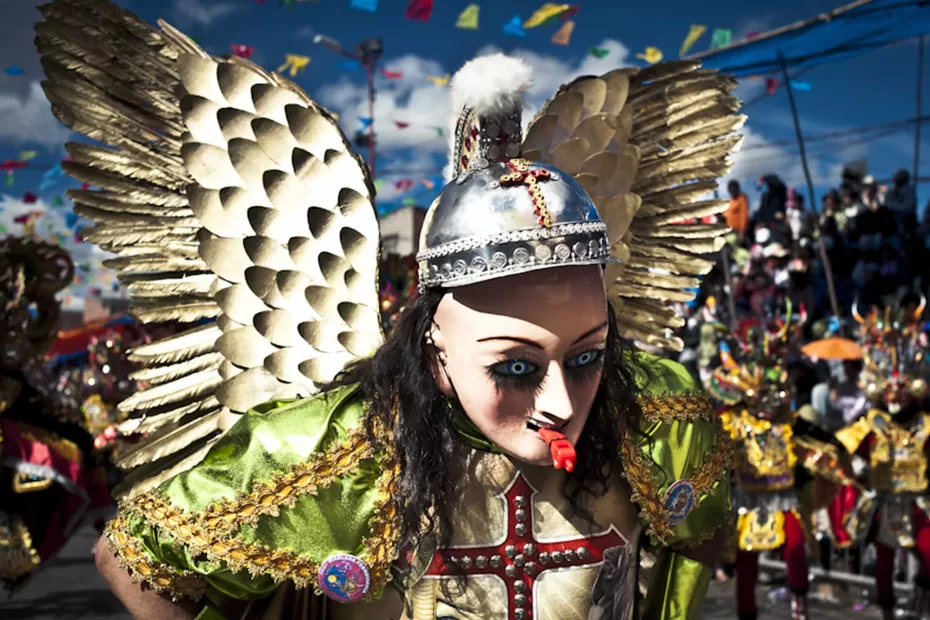
The Diablada Dance at Oruro Carnival
The air in Oruro, Bolivia, crackles with an almost palpable energy each year as the city prepares for its renowned carnival. At the heart of this spectacular celebration, a dance unlike any other unfolds: the Diablada, or “Dance of the Devils.” This isn’t just a performance; it’s a living, breathing tapestry woven from indigenous spirituality, colonial history, and fervent Catholic devotion. To witness the Diablada dance at Oruro Carnival is to step into a world where ancient myths collide with Christian narratives, creating a vibrant spectacle of sound, color, and movement that captivates all who behold it. It’s a cornerstone of Bolivian traditions and a powerful expression of its unique cultural identity, drawing visitors from across the globe to experience its profound cultural significance.
Introduction to the Diablada Dance
The Diablada dance is arguably the most emblematic and visually striking performance of the Oruro Carnival, a UNESCO Masterpiece of the Oral and Intangible Heritage of Humanity. At its core, this elaborate Bolivian dance is a dramatic representation of the eternal struggle between good and evil, deeply intertwined with the region’s mining heritage and its veneration of the Virgin of Socavón (the Virgin of the Mines). Its origins are complex, a fascinating blend of pre-Hispanic Andean rituals, particularly those honoring the Supay (a figure often associated with both the underworld and fertility in indigenous beliefs), and the Catholic traditions introduced during Spanish colonization.
When you see the Diablada dancers, you’re immediately struck by their elaborate, often fearsome, masks and opulent costumes. These aren’t merely decorative; they tell stories, embodying characters that range from the Archangel Michael, leading the forces of good, to a host of devils, bears, and other mythical figures representing both temptation and the untamed forces of nature. The dance is a powerful narrative, a kind of morality play enacted through intricate choreography and pulsating Andean music. It’s a central pillar of Bolivia culture, a testament to the resilience and adaptability of its people, and a profound expression of faith and identity that makes the Oruro festival an unforgettable experience. This traditional dance is more than just entertainment; it’s a ceremonial offering, a plea for protection, and a vibrant celebration of life itself, embodying the spirit of cultural diversity that defines the nation.
History of the Diablada Dance
The roots of the Diablada dance stretch deep into the pre-Columbian past of the Andean region, long before the arrival of the Spanish conquistadors. Indigenous communities, particularly the Uru people, inhabited the area now known as Oruro and practiced rituals honoring Pachamama (Mother Earth) and the Supay, a complex deity of the underworld, often associated with mineral wealth and the spirits of the mines. These ancient rites involved elaborate dance styles and offerings, seeking favor and protection from the powerful spirits dwelling beneath the earth. This early form of folkloric dance laid the groundwork for what would become the Diablada.
With the arrival of the Spanish in the 16th century and the subsequent exploitation of the rich silver mines of Potosí and Oruro, the cultural landscape began to shift dramatically. European Catholicism was imposed, leading to a fascinating process of syncretism. Indigenous deities and rituals were not entirely abandoned but rather merged with Christian figures and practices. The Supay, once a revered, ambiguous figure, was reinterpreted through the lens of the Christian devil. The traditional dance forms adapted, incorporating new elements and narratives.
The specific form of the Diablada dance began to crystallize in Oruro, a city built upon the wealth of its mines. Miners, facing dangerous conditions, continued their ancestral appeals to the Supay for protection, now often conflating it with the Christian devil. The legendary tale of the Virgin of Socavón, who is said to have appeared to a miner in a cave (socavón), further cemented the religious dimension. The dance evolved into a dramatic representation of Archangel Michael’s triumph over the seven deadly sins, personified by various devils, all culminating in a plea to the Virgin.
By the 18th and 19th centuries, the dance had become an integral part of the Oruro Carnival events. Brotherhoods (fraternidades) of dancers, often composed of miners and their families, formed to perform the Diablada, passing down the choreography, music, and costume-making traditions through generations. This rich dance history reflects centuries of cultural exchange and adaptation, making the Diablada a powerful symbol of Bolivian cultural heritage and a truly unique traditional dance that continues to evolve while honoring its deep historical roots. Each step, each beat of the drum, echoes the long and complex journey of a people who have learned to blend their ancient beliefs with new ones, creating a magnificent celebration of life, faith, and survival.
Cultural Significance of the Oruro Carnival
The Oruro Carnival is far more than just a party; it is a profound expression of Bolivian culture and a cornerstone of the nation’s identity. Recognized by UNESCO as a Masterpiece of the Oral and Intangible Heritage of Humanity, it stands as one of the most important cultural festivals in the world, drawing hundreds of thousands of participants and spectators each year. For the local community of Oruro, the carnival is a sacred event, a time of spiritual renewal, communal bonding, and a vibrant demonstration of their rich traditions. It’s a period when the city truly comes alive, transforming into a grand stage for performing arts and a living museum of Andean folklore.
The carnival itself is a spectacular display of cultural diversity, featuring a multitude of traditional dance styles, each with its own history and meaning. While the Diablada dance is the most iconic, other performances like the Morenada, Caporales, Tinkus, and Tobas also contribute to the rich tapestry of the Oruro celebrations. These dance performances are not just for show; they are deeply embedded in the social and spiritual fabric of the community. They are a way to honor ancestors, give thanks to the Virgin of Socavón, and celebrate the agricultural cycles and the bounty of Pachamama. The preparations for the carnival begin months in advance, involving meticulous planning, costume creation, and rigorous dance practice, all fostering a strong sense of unity and shared purpose among the participants. The entire event serves as a powerful reminder of the enduring strength of Bolivian traditions and the pride its people take in their unique heritage. It’s a true Latin American festival, brimming with energy and profound meaning, showcasing the very best of Bolivia’s vibrant cultural landscape.
Thematic Elements of the Dance
The thematic elements of the Diablada dance are a captivating blend of pre-Hispanic religious beliefs and Catholic dogma, creating a powerful narrative of good versus evil and redemption. At its core, the dance re-enacts the story of the Archangel Michael’s battle against Lucifer and the seven deadly sins. This Christian narrative is seamlessly interwoven with indigenous cosmology, where the Supay, the lord of the underworld and guardian of the mines, holds a complex, ambivalent position—both feared and revered.
The dance begins with the Archangel Michael, resplendent in his armor, leading the forces of good. He confronts Lucifer, the principal devil, who represents temptation and chaos. Around Lucifer dance a retinue of lesser devils, each often symbolizing one of the seven deadly sins: pride, greed, lust, envy, gluttony, wrath, and sloth. These devil figures are not purely evil; they also embody the raw, untamed forces of nature and the dangers inherent in the mining profession, a deeply significant aspect of Oruro’s identity.
Other characters also populate the Diablada, enriching its thematic depth. The bear (oso) and the condor (cóndor) represent indigenous animals and forces of the Andean landscape, often serving as guardians or tricksters. The China Supay, or female devil, adds another layer of complexity, embodying seduction and the dual nature of power. The ultimate resolution of the dance sees the devils defeated by Archangel Michael, who then guides them to kneel before the image of the Virgin of Socavón, symbolizing their conversion and the triumph of good. This act of devotion is a central part of the Oruro traditions, reflecting the deep faith of the miners who rely on the Virgin’s protection. The entire spectacle is a moving testament to syncretism, where seemingly disparate beliefs coalesce into a coherent and deeply meaningful cultural expression, underscored by the rhythmic beats of Andean music and the vibrant energy of the performing arts.
Costumes and Masks in the Diablada Dance
The costumes and masks worn by the Diablada dancers are arguably the most iconic and visually arresting aspects of this traditional dance, each a masterpiece of craftsmanship and symbolism. These elaborate carnival costumes are not merely attire; they are vital components of the narrative, bringing the characters to life with stunning detail and vibrant colors.
The devil masks are the most striking. Crafted from papier-mâché, plaster, or fiberglass, they are often grotesque and fearsome, featuring bulging eyes, fangs, horns, and serpents. Each detail carries meaning: the serpents symbolize the underworld, the toads represent the mines, and the lizards evoke the dry, high-altitude landscapes of the Andes. The colors are bold and intense, with red, green, and gold predominating. The weight of these masks, sometimes up to 15 pounds, requires immense strength from the Diablada dancers, adding to the challenge and dedication of their performance.
Beyond the masks, the devil costumes are equally intricate. Made from rich fabrics like velvet and satin, they are adorned with intricate embroidery, sequins, beads, and metallic threads. These embellishments often depict mythical creatures, pre-Hispanic symbols, and Christian imagery, further emphasizing the syncretic nature of the dance. Capes are a prominent feature, often depicting scenes of good triumphing over evil, or religious figures. The dancers also wear high boots, often embellished, and carry intricately decorated staffs or tridents.
In contrast, the Archangel Michael’s costume is regal and luminous, typically featuring gleaming armor, a helmet adorned with feathers, and a sword or shield. His attire emphasizes purity, strength, and divine authority, standing in stark contrast to the flamboyant, often menacing, devils. The China Supay dancers wear more seductive and elegant costumes, often with shorter skirts and elaborate headpieces, reflecting their role as temptresses.
The creation of these traditional costumes and masks is a highly specialized art form, passed down through generations of artisans in Oruro. It involves countless hours of meticulous work, from sculpting the mask molds to hand-stitching the intricate embroidery. Each costume is a unique work of art, contributing to the overall grandeur and visual impact of the Diablada dance, making it a truly unforgettable part of the Oruro festival and a vibrant display of cultural heritage.
The Experience of Watching the Diablada Dance
Witnessing the Diablada dance at the Oruro Carnival is an immersive, sensory overload that will stay with you long after the final notes fade. It’s an experience that transcends mere observation, pulling you into the heart of Bolivian culture and its rich tapestry of traditions. From the moment the first rhythmic drumbeats echo through the streets, you’ll feel an electric energy that courses through the crowd and dancers alike.
The spectacle begins early in the morning, with thousands of Diablada dancers, organized into distinct fraternidades or brotherhoods, making their way through the main parade route. The sheer scale is breathtaking: endless lines of devils, angels, bears, and other characters moving in synchronized, powerful steps. The ground literally vibrates under the collective stomping of boots, a primal rhythm that connects you to the ancient earth and the spirits it holds.
As the dancers pass, you’ll be enveloped by a symphony of sounds. The brass bands, an integral part of Andean music, play rousing, often melancholic, melodies that accompany the dancers. The clash of cymbals, the blare of trumpets, and the deep thrum of drums create a powerful soundscape that is both celebratory and deeply spiritual. Interspersed with the music are the shouts and chants of the dancers, adding to the raw, visceral energy of the performance.
Visually, the carnival costumes are a kaleidoscope of color and intricate detail. The sunlight glints off sequins, metallic threads, and polished masks, creating a dazzling display. Each passing group tells its own story through its particular choreography and costume variations, showcasing the incredible diversity within this single dance style. You’ll witness the dramatic confrontations between Archangel Michael and Lucifer, the playful antics of the bears, and the seductive allure of the China Supay. The dedication of the Diablada dancers is palpable; they perform with an intensity that speaks volumes about their faith and commitment to this cultural heritage. For anyone interested in cultural events, travel, or the performing arts, this is an unparalleled opportunity to delve deep into the heart of Latin American festivals, offering a truly authentic glimpse into Bolivia travel and the vibrant spirit of festivals in Bolivia. The air is thick with anticipation, joy, and a profound sense of shared history, making it a truly unforgettable encounter with Bolivia’s living traditions.
Best Viewing Spots at the Carnival
To truly immerse yourself in the spectacle of the Diablada dance and the Oruro Carnival, choosing the right viewing spot is crucial. The main parade route stretches for several kilometers through the streets of Oruro, offering various vantage points, each with its own advantages. Planning ahead is key, as millions flock to this renowned Oruro festival.
One of the most popular and coveted spots is along the main avenue, Avenida Cívica. This area often features grandstands (graderías) that offer elevated seating, providing an excellent overview of the dance performances as they unfold. While tickets for these seats can be expensive and sell out quickly, they offer comfort and an unobstructed view, making them ideal for photographers or those who want to fully appreciate the intricate formations and choreography. Booking these well in advance, sometimes months prior to the carnival, is highly recommended through official channels or reputable tour operators specializing in Bolivia travel.
Another prime location is near the Sanctuary of the Virgin of Socavón. This is where the dancers conclude their long journey, performing their final, most fervent acts of devotion. The emotional intensity here is incredibly high, making it a deeply moving experience. While finding a good spot can be challenging due to the crowds, being present for this culmination of faith and performance is unforgettable. Arriving extremely early on the main day (Saturday) is essential if you plan to view from this area, or consider booking accommodation with a balcony overlooking the route if available.
For a more casual, yet still vibrant, experience, you can find standing room along various stretches of the route. Be prepared for dense crowds, but this also offers a chance to be right amidst the energy, feeling the music and the movement up close. It’s advisable to secure a spot early in the morning, bring plenty of water, snacks, and sun protection, as the carnival can last all day. Some local businesses along the route also offer private viewing balconies for a fee, which can provide a more comfortable and unique perspective of the Oruro celebrations. No matter where you choose to watch, be sure to keep your belongings secure and respect the local customs, allowing yourself to be swept away by the magic of this incredible Bolivian dance.
Conclusion: The Enduring Legacy of the Diablada Dance
The Diablada dance at Oruro Carnival is more than just a vibrant cultural event; it is a profound testament to the resilience, creativity, and spiritual depth of the Bolivian people. From its ancient pre-Hispanic origins, honoring the spirits of the earth and mines, to its syncretic evolution under colonial influence, merging indigenous beliefs with Catholic narratives, the Diablada stands as a living chronicle of Bolivia’s complex history and rich cultural heritage. Its recognition by UNESCO as a Masterpiece of the Oral and Intangible Heritage of Humanity underscores its global significance and its enduring value as a symbol of cultural diversity.
The spectacle of the Diablada dancers, with their awe-inspiring carnival costumes and fearsome masks, continues to captivate audiences from around the world. It’s a powerful display of performing arts, where every step, every musical note, and every intricate detail of the attire tells a story of struggle, faith, and ultimately, redemption. This traditional dance is a vibrant celebration of life, a ceremonial offering to the Virgin of Socavón, and a dramatic re-enactment of the eternal battle between good and evil.
Beyond the visual splendor and the rhythmic Andean music, the Diablada dance fosters a strong sense of community and identity among the people of Oruro. Generations have dedicated themselves to preserving and perpetuating this folkloric dance, ensuring that its rich dance history and profound cultural significance continue to thrive. As a cornerstone of the Oruro Carnival, the Diablada dance invites us to explore the depths of Bolivian traditions, to understand the intricate interplay of belief systems, and to marvel at the power of human expression. Its legacy is not just in its spectacular dance performances, but in its ability to connect the past with the present, and to unite people in a shared celebration of their unique and vibrant cultural identity. The Diablada truly is an unforgettable journey into the heart of Bolivia.
Spent a few hours on wc99game last night. Graphics are good and gameplay is engaging. A fun way to wind down after work. Definitely give it a shot. wc99game
777phl casino https://www.777phl.org
BD336Casino is one of my regulars. Easy to use with a great live casino selection. I’ve spent hours playing blackjack there. If you’d like to try your luck press here: bd336casino
Alright, 99exchlive, let’s see what you got! Heard some whispers, gonna give it a whirl. Fingers crossed for some wins! Check it out: 99exchlive
Apkfb168, downloading now! Hope this app doesn’t drain my battery too fast. Ready to win big! Get the app from apkfb168