
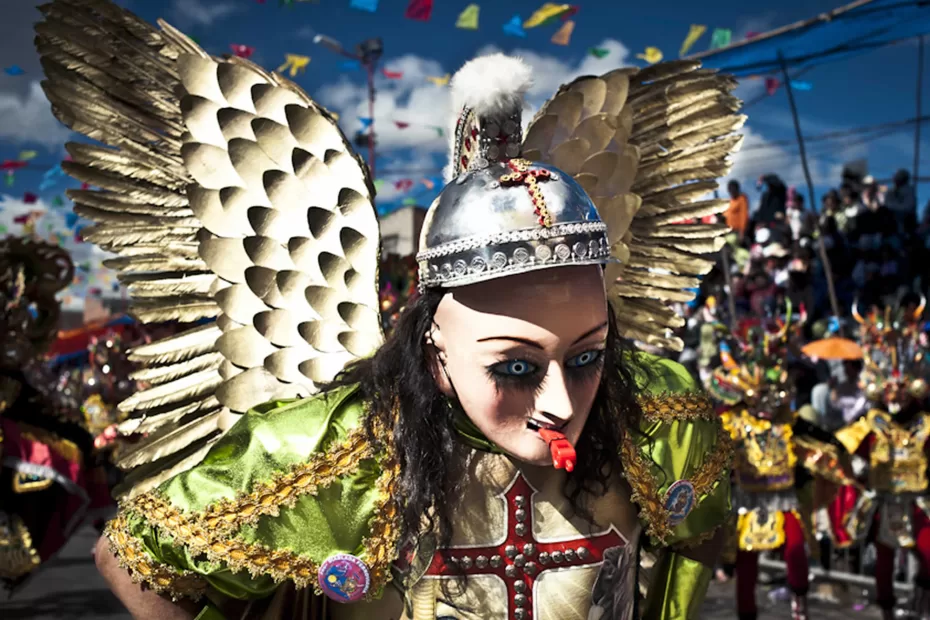
The Enchanting Music of the Diablada
Imagine a vibrant kaleidoscope of colors, intricate costumes, and a pulsating energy that reverberates through ancient streets. This is the essence of the Diablada, a traditional dance and cultural phenomenon deeply rooted in Andean culture, particularly in Bolivia. At the heart of this mesmerizing spectacle lies its equally captivating soundtrack: the music of the Diablada. Far from being mere background noise, this music is the lifeblood of the dance, a powerful narrative voice that tells tales of good versus evil, indigenous beliefs, and colonial influences. It’s a sonic journey that transports listeners to the very soul of a people, embodying centuries of history, faith, and artistic expression. Understanding the rhythms that accompany the Diablada means delving into a rich tapestry of sounds, instruments, and cultural significance that has shaped generations.
Introduction to Diablada Music
The music of the Diablada is an integral component of one of Latin America’s most iconic folkloric traditions. Originating primarily from the mining city of Oruro, Bolivia, this unique genre is synonymous with the grandeur of the Oruro Carnival, a UNESCO Masterpiece of the Oral and Intangible Heritage of Humanity. At its core, Diablada music is a powerful blend of indigenous Andean melodies, Spanish colonial influences, and a distinct military band aesthetic that gives it its characteristic grandeur and intensity. It’s a sound designed to accompany the elaborate, often heavy Diablada costumes worn by the dancers, providing both the rhythmic foundation and the emotional depth necessary for their dramatic movements.
This powerful and evocative music serves multiple roles in cultural celebrations. It is not just entertainment; it is a spiritual conduit, a historical archive, and a rallying cry for cultural identity. The pounding drums and soaring wind instruments create an atmosphere of both reverence and revelry, reflecting the dual nature of the Diablada dance itself—a representation of the struggle between good and evil, the devil and the archangel Michael. For many, it’s the soundtrack to their heritage, a constant presence during significant cultural events and a source of immense pride. The distinct sound of Bolivian music, particularly in this genre, showcases a remarkable cultural diversity that continues to thrive and evolve.
Historical Background of the Diablada
To truly appreciate the music of the Diablada, one must first understand its deep historical roots. The Diablada, or “Dance of the Devils,” is a syncretic expression that emerged from the fusion of pre-Hispanic Andean beliefs and the Catholic traditions introduced by Spanish colonizers. Long before the arrival of the Europeans, indigenous communities in the Andean region honored Pachamama (Mother Earth) and Supay (a god of the Uru people, often associated with the underworld and mines, later conflated with the Christian devil). When the Spanish arrived, they sought to convert the indigenous populations, often by superimposing Christian figures and narratives onto existing local deities and rituals. This complex interplay gave birth to the Diablada.
The dance, and consequently its music, began to take its recognizable form in the mining communities of Oruro. The harsh realities of mining life, coupled with the dangers of the underground, made the figure of Supay—the lord of the underworld who also protected the miners and their valuable resources—particularly significant. The Diablada provided an outlet for these beliefs, allowing miners to appease Supay while simultaneously incorporating elements of Christian morality plays. Over time, particularly from the late 19th and early 20th centuries, as Bolivia gained independence and sought to define its national identity, the Diablada became a powerful symbol of national pride and cultural heritage.
The evolution of the music mirrors this historical journey. Early forms likely relied heavily on indigenous instruments like panpipes (zampoñas) and flutes (quenas), accompanied by simple percussion. As European influences permeated, brass instruments and more structured compositions began to be incorporated, transforming the sound into the grand, orchestral style we recognize today. This blend of indigenous and European musical traditions created a unique soundscape, reflecting the complex history of a nation. The history of Diablada is therefore not just a story of dance, but a profound narrative of cultural adaptation, resistance, and the enduring power of folkloric traditions to tell a people’s story across generations. It’s a testament to how traditional dances and the music that accompanies them can evolve while retaining their core identity and significance.
Key Features of Diablada Music
The music of the Diablada is instantly recognizable for its powerful, dynamic, and often dramatic character. It’s a sound that commands attention, perfectly matched to the elaborate movements and imposing figures of the dancers. Several key features define this unique musical genre, making it a cornerstone of Andean culture and a fascinating subject for ethnomusicology.
One of the most defining aspects is the instrumentation. Diablada ensembles are typically large, often resembling military bands, and feature a robust mix of wind and percussion instruments.
-
Brass Instruments: Trumpets, trombones, tubas, and saxophones form the melodic and harmonic backbone. Their powerful sound carries across large festival grounds, providing the grand, majestic quality characteristic of Diablada music. They often play soaring, often melancholic, melodies that evoke both triumph and a sense of ancient mystery.
-
Woodwind Instruments: While brass is prominent, traditional Andean woodwinds like the zampoña (panpipes) and quena (notched flute) are still integral, particularly in more traditional or fusion pieces. They add a distinctly indigenous flavor, often providing counter-melodies or textural elements that ground the music in its Andean roots.
-
Percussion: This is where the rhythmic heart of the Diablada truly beats. Large bass drums (bombos), snare drums, cymbals, and various smaller percussion instruments (such as matracas – ratchets, often carried by the dancers themselves) drive the infectious, often complex rhythms. The relentless, driving beat is essential for the dancers, dictating their steps and the energy of their performance. The sound of the drums is the pulse of the Diablada festival, a constant reminder of the energy and passion involved.
The typical rhythms of Diablada music are characterized by their strong, often syncopated beat, usually in a 2/4 or 4/4 time signature. These rhythms are designed for marching and the specific, powerful steps of the Diablada dancers. There’s a particular emphasis on the downbeat, giving the music a grounded, almost stomping quality that perfectly matches the heavy, deliberate movements of the performers in their elaborate Diablada costumes. The tempo can vary, from stately and processional to fast and furious, building excitement and intensity. This traditional music style is not just about melody; it’s about the rhythmic drive that compels movement and evokes a primal energy.
Unique characteristics also set Diablada music apart. There’s a distinct blend of minor keys and modal scales that give the music its often dramatic and melancholic feel, even in celebratory contexts. This interplay of sadness and joy, struggle and triumph, is a hallmark of many indigenous music traditions and resonates deeply with the themes of the Diablada. Furthermore, the music often features call-and-response patterns between different sections of the band, creating a dynamic interplay that keeps listeners engaged. The arrangements are often complex, showcasing the skill of the musicians and composers who craft these pieces. It’s a form of folk music that has been refined and elevated over centuries, becoming a sophisticated art form that continues to captivate audiences worldwide. The blend of historical music influences and contemporary interpretations makes it a vibrant example of music history in action.
The Role of Diablada Music in Cultural Festivals
The music of the Diablada is far more than just background noise; it is the animating spirit of cultural festivals, particularly the globally renowned Oruro Carnival. Its role is multifaceted, serving as a powerful catalyst for community engagement, a vehicle for spiritual expression, and a vibrant symbol of cultural identity. Without its distinctive rhythms and melodies, the Diablada dance, and indeed the entire festival, would lose its very essence.
During festivals like the Oruro Carnival, the music of the Diablada is the heartbeat that propels the entire celebration. From the moment the first note strikes, it sets the pace and tone for the traditional dances. The powerful brass sections and relentless percussion create an immersive soundscape that fills the streets, drawing spectators into the spectacle. It dictates the dancers’ intricate steps, their dramatic turns, and the collective energy of the thousands of Diablada performers. The music is a constant companion to the elaborate Diablada costumes, making the heavy, often cumbersome outfits seem to float with a supernatural grace.
Beyond its role in dictating the dance, the music carries immense cultural significance for the community. It acts as a powerful mnemonic device, evoking shared memories, histories, and spiritual beliefs. For many, hearing the first strains of a Diablada melody during carnival season stirs deep feelings of belonging and pride. It reinforces the community’s connection to its ancestors and its rich cultural heritage. The music facilitates a collective experience, transforming individual participants and observers into a unified body celebrating their traditions. It’s a form of carnival music that transcends mere entertainment, becoming a profound expression of communal identity and resilience.
Moreover, Diablada music serves as a living archive of the region’s history. Each note, each rhythm, carries echoes of indigenous rites, colonial encounters, and the enduring spirit of the Bolivian people. It’s an oral tradition passed down through generations of musicians, ensuring that the stories and values embedded within the melodies continue to resonate. The sheer scale of Diablada celebrations, with multiple fraternities (groups of dancers and musicians) performing simultaneously, showcases the incredible diversity within this musical genre, all while reinforcing a shared cultural identity. These music festivals are not just performances; they are profound cultural events that reaffirm the strength and vitality of Andean culture and its folkloric traditions.
Famous Diablada Songs and Compositions
While the Diablada is primarily known for its visual spectacle, its musical repertoire boasts numerous iconic songs and compositions that are deeply ingrained in the collective consciousness of the Bolivian people and beyond. These pieces are not merely tunes; they are anthems that evoke powerful emotions, tell stories, and embody the spirit of the Diablada. While many Diablada compositions are traditional and often attributed to the collective cultural memory rather than a single composer, certain pieces have achieved legendary status, performed annually by countless bands during the Oruro Carnival and other Diablada celebrations.
One of the most universally recognized and beloved Diablada pieces is “El Diablo Mayor” (The Elder Devil). This composition is often considered an unofficial anthem of the Diablada, characterized by its majestic brass fanfares, driving percussion, and a melody that perfectly captures the dramatic entry of the lead devil dancer. Its themes revolve around the power and presence of Supay, embodying both awe and a touch of playful menace. The music swells and diminishes, mirroring the theatrical movements of the devil, and often features intricate call-and-response sections between different instrument groups. Its cultural relevance lies in its ability to instantly transport listeners to the heart of the carnival, symbolizing the very essence of the Diablada.
Another significant composition is “Los Diablos de Oruro” (The Devils of Oruro). This piece often features a more intricate rhythmic structure, showcasing the virtuosity of the percussion section while the wind instruments carry a melody that is both stirring and deeply rooted in Andean scales. Its themes often celebrate the specific traditions of Oruro and the pride associated with its unique Diablada festival. This song is a staple in the repertoire of many traditional Diablada ensembles, and its performance is a highlight of any Diablada celebration, echoing through the streets and inspiring dancers to greater feats of endurance.
More contemporary compositions also emerge, often drawing inspiration from these classic themes while incorporating modern musical sensibilities. While specific names might be less universally known outside Bolivia, the style often maintains the grandeur and rhythmic drive of traditional Diablada music. These pieces often feature more complex harmonic structures and sometimes even incorporate elements from other genres of Bolivian music, creating a vibrant blend of the old and new.
The themes explored in Diablada music are rich and varied. They frequently touch upon:
-
The struggle between good and evil: A central theme of the dance itself, reflected in melodies that shift from minor keys (evoking the devil) to more triumphant major chords (representing the archangel Michael).
-
Indigenous reverence for Pachamama and Supay: Many melodies carry an ancient, almost spiritual weight, connecting back to pre-Hispanic beliefs.
-
The arduous life of miners: A subtle undercurrent of resilience and hard work often permeates the music, a nod to its origins in the mining communities.
-
National pride and cultural identity: The music is a powerful expression of Bolivian identity, celebrating its unique cultural heritage and folkloric traditions.
These famous Diablada songs and compositions are more than just musical pieces; they are living narratives that encapsulate the history, spirituality, and vibrant cultural life of the Andean people, ensuring the music of the Diablada continues to resonate deeply.
Influence of Diablada Music on Contemporary Artists
The powerful and distinct sound of Diablada music, with its rich history and cultural significance, has not remained confined to traditional festivals. Its unique blend of indigenous melodies, European brass band aesthetics, and driving rhythms has captured the imagination of contemporary artists, both within Bolivia and internationally. This influence manifests in various ways, from direct sampling and adaptation to subtle thematic and rhythmic inspirations that enrich modern musical landscapes.
Many contemporary Bolivian musicians, recognizing the profound cultural heritage embedded in Diablada music, actively seek to reinterpret and fuse it with modern genres. Artists working in folk-rock, Andean new age, and even electronic music often incorporate elements like the characteristic syncopated percussion patterns, the soaring brass motifs, or the melancholic quality of Andean wind instruments. This helps to introduce the music of the Diablada to new audiences, ensuring its relevance in an ever-evolving music scene. By doing so, they not only pay homage to their roots but also contribute to the ongoing evolution of Bolivian music, showcasing its incredible cultural diversity. This fusion helps to preserve traditional music while allowing it to adapt and thrive.
Beyond Bolivia, the global interest in Latin American folklore and world music has also led to Diablada’s influence spreading. Ethnomusicologists and world music producers have highlighted the genre, leading to its sounds being incorporated into film scores, documentaries, and even pop music by artists looking for unique sonic textures. The dramatic flair and rhythmic intensity of carnival music, in general, and Diablada, in particular, offer a rich palette for creative exploration. This cross-cultural exchange helps to foster a greater understanding of indigenous music and its global impact.
The influence extends beyond direct musical elements to the very concept of “music and identity.” For many contemporary artists, exploring Diablada music is a way to connect with their heritage, to express their cultural identity, and to make a statement about the importance of preserving folkloric traditions in a globalized world. It’s a source of pride and a powerful symbol of resilience. The vibrant energy of Diablada celebrations often serves as inspiration for artists to create works that are both deeply personal and universally resonant.
Moreover, the elaborate Diablada costumes and the theatricality of the dance itself often inspire visual artists, fashion designers, and performance artists, creating a holistic artistic ecosystem where music, dance, and visual arts continually feed into each other. This broader cultural impact ensures that the spirit of the Diablada, propelled by its enchanting music, continues to inspire and influence new generations of creators across various artistic disciplines, solidifying its place in music history.
Interviews with Local Musicians
To truly grasp the soul of the music of the Diablada, one must hear from those who live and breathe it—the local musicians who dedicate their lives to mastering its intricate rhythms and powerful melodies. We spoke with several seasoned Diablada performers and emerging talents from Oruro, each offering unique insights into their passion and the genre’s enduring appeal.
“For me, playing Diablada music is more than just a performance; it’s a spiritual journey,” shares Don Ricardo Mamani, a veteran trombonist who has played in Oruro’s most prestigious Diablada fraternities for over forty years. “When I put my horn to my lips, I feel the spirits of my ancestors guiding my breath. The Diablada festival is our moment to connect with our past, to honor Supay, and to celebrate our resilience as a people. The music is our prayer, our story. You can’t just play the notes; you have to feel the weight of centuries behind them.” Don Ricardo emphasizes the physical demands, too: “Those long parades, sometimes 18 hours of playing while marching—it takes immense stamina. But the crowd’s energy, their cheers, that’s what keeps us going. It’s a shared experience, a collective heartbeat.”
Younger musicians echo this sentiment, albeit with a fresh perspective. Isabella Quispe, a talented percussionist in her mid-twenties, sees herself as a bridge between generations. “My grandfather played the bombo, my father played the snare, and now I’m here, bringing a new energy to the drums,” she explains. “We respect the traditional rhythms, absolutely. But we also experiment, adding subtle modern flourishes, always within the spirit of the Diablada. We want to keep the music alive, to make it exciting for my generation. It’s about preserving our cultural heritage, but also letting it breathe and grow.” Isabella also highlights the rigorous training involved. “It’s not just about playing an instrument; it’s about understanding the entire dance, the Diablada costumes, the symbolism. We study the history of Diablada intensely, because the music tells that story.”
Another musician, Carlos “El Charango” Flores, a multi-instrumentalist who sometimes incorporates the charango into Diablada-inspired fusion pieces, offers a broader view. “The music of the Diablada is a perfect example of cultural diversity in sound. You have the indigenous wind instruments, the Spanish brass, African-influenced percussion—it’s a melting pot. When I compose, I often start with a traditional Diablada rhythm, then explore how a charango or even a guitar might interact with it, creating something new but still deeply rooted in our Bolivian music.” He believes that these musical explorations are crucial for the genre’s longevity. “We can’t just repeat what’s been done. We must innovate, respectfully, to ensure the music and identity of the Diablada continues to resonate with future generations. It’s living folk music, not a museum piece.”
These insights reveal a deep reverence for the past, coupled with a vibrant commitment to keeping the music of the Diablada alive and evolving. For these musicians, every note played is a reaffirmation of their identity, a celebration of their community, and a powerful contribution to the ongoing narrative of Latin American folklore.
Conclusion: The Future of Diablada Music
The music of the Diablada stands as a towering testament to the resilience, creativity, and profound cultural heritage of the Andean people. From its syncretic origins blending indigenous beliefs with colonial influences to its current status as a vibrant cornerstone of Bolivian identity, this powerful genre has captivated hearts and ignited spirits for centuries. We’ve journeyed through its historical evolution, explored its distinctive instrumentation and rhythms, witnessed its pivotal role in grand cultural events like the Oruro Carnival, and acknowledged its compelling influence on contemporary artists.
The importance of preserving Diablada music for future generations cannot be overstated. It is more than just a collection of melodies and beats; it is a living historical document, an auditory chronicle of struggles, triumphs, and unwavering faith. Efforts by ethnomusicologists, cultural institutions, and dedicated local musicians are crucial in documenting, teaching, and promoting this unique art form. By supporting these initiatives, we ensure that the intricate rhythms, the soaring brass, and the powerful percussive drive continue to resonate, inspiring new dancers and musicians to carry the torch.
As we look to the future, the music of the Diablada faces both challenges and exciting opportunities. Global interest in traditional music and cultural diversity offers avenues for wider recognition and appreciation. However, it also demands a delicate balance between innovation and authenticity. The insights from local musicians highlight this dynamic tension: a desire to experiment and evolve while remaining deeply rooted in the genre’s foundational elements and cultural significance. This ongoing dialogue between tradition and modernity is vital for keeping Diablada music a living, breathing entity rather than a static relic of the past.
Ultimately, the future of Diablada music lies in the hands of its practitioners and its audience. By fostering a deep appreciation for its origins, celebrating its current vibrancy, and encouraging its respectful evolution, we can ensure that the enchanting sounds of the Diablada continue to echo through the mountains and valleys of the Andes, captivating hearts and minds for generations to come, enriching the global tapestry of music history and cultural expression. It remains a powerful symbol of identity, a vibrant expression of folkloric traditions, and a truly unforgettable part of the world’s musical landscape.
Hey guys! Trying to figure out 365juanlogin? It’s pretty straightforward once you get the hang of it. I was a bit lost at first too, but now it’s my go-to. Check it out here: 365juanlogin