
The Folklore of Oruro Carnival
Deep in the heart of Bolivia, nestled high in the Andean mountains, lies the city of Oruro, home to one of the most spectacular and culturally rich celebrations on Earth: the Oruro Carnival. More than just a party, this annual event is a vibrant tapestry woven from centuries of history, faith, and profound indigenous beliefs. It’s a living museum of myths, legends, and folklore, where ancient traditions collide with colonial influences, creating a unique expression of Bolivian identity. To truly understand the Oruro Carnival is to delve into its soul, to explore the intricate stories told through its dances, music, and elaborate costumes that pulsate with the very essence of Andean culture.
Introduction to Oruro Carnival
The Oruro Carnival is an extraordinary spectacle recognized by UNESCO as a Masterpiece of the Oral and Intangible Heritage of Humanity. This prestigious designation, awarded in 2001, underscores its immense cultural significance not just for Bolivia, but for the world. Held annually in the weeks leading up to Ash Wednesday, this grand festival attracts hundreds of thousands of visitors from across the globe, eager to witness a truly authentic cultural festival in South America. At its core, the carnival is a profound expression of devotion to the Virgen del Socavón (Virgin of the Mineshaft), the patron saint of miners, seamlessly blended with ancient indigenous rituals honoring Pachamama (Mother Earth) and the formidable Tio Supay (Uncle of the Mine), a deity of the underworld.
This fusion of Catholic and pre-Columbian spiritual traditions is what gives the Oruro Carnival its unparalleled depth and mystique. It’s a powerful narrative of syncretism, where seemingly disparate beliefs coalesce into a harmonious, albeit complex, celebration. For days, the streets of Oruro transform into an explosion of color, sound, and movement, as thousands of dancers and musicians parade through the city, each step, note, and costume telling a story rooted in the rich Bolivian folklore. The carnival is not merely entertainment; it is a vital part of Bolivia culture, a communal act of faith, remembrance, and exuberant joy that resonates deeply with the spirit of the Bolivian people. It stands as a testament to the enduring power of Oruro cultural heritage, making it a must-see for anyone interested in cultural festivals Bolivia has to offer.
Historical Background
The origins of the Oruro Carnival are deeply rooted in the pre-Columbian era, long before the Spanish conquest. The indigenous peoples of the Andean region, particularly the Uru, celebrated their connections to the natural world through rituals dedicated to Pachamama, the revered Mother Earth, and various other deities associated with fertility, harvest, and the mountains. These ancient ceremonies often involved music, dance, and offerings to ensure bountiful crops and protection from malevolent spirits. The Uru people, with their profound understanding of their harsh environment, developed a rich mythology that explained the world around them, including the powerful forces hidden beneath the earth.
With the arrival of the Spanish in the 16th century and the subsequent introduction of Catholicism, these indigenous practices faced suppression. However, rather than disappearing, the ancient beliefs began to intertwine with the newly imposed Christian doctrines. The Spanish colonizers, observing the fervent devotion of the local populations to their old gods, often found it easier to superimpose Catholic saints and feast days onto existing indigenous celebrations. This syncretic process was particularly evident in Oruro, a vital mining center. The indigenous deity of the underworld, known as Tio Supay – a figure both feared and respected by miners who sought his favor for safe passage and rich veins – gradually merged with the Christian concept of the devil. Similarly, the ancient protector goddess of the Uru people, known as Nina Nina, transformed into the Virgin of Socavón, becoming the patroness of miners and the central figure of the carnival’s religious devotion.
Over the centuries, this blending continued, giving rise to the distinctive Oruro Carnival history we know today. What started as underground resistance, with indigenous peoples performing their forbidden dances disguised as Christian rituals, slowly evolved into an open, elaborate celebration. The carnival grew, incorporating elements from European masquerades and parades, but always retaining its profound indigenous core. The annual pilgrimage to the Sanctuary of the Virgen del Socavón became the spiritual heart of the event, a culmination of the dancers’ arduous journey and their fervent prayers. This evolution transformed the carnival into a powerful symbol of cultural resilience and a vibrant expression of a unique mestizo identity, where the sacred and the profane, the indigenous and the European, dance together in a spectacular display of faith and folklore.
Cultural Significance of the Carnival
The Oruro Carnival is far more than just a colorful event; it is a cornerstone of Bolivian identity and a vital mechanism for preserving Bolivian folklore and traditions. For the people of Oruro and indeed, for many Bolivians, the carnival is a living link to their ancestors, a powerful reenactment of creation myths, historical struggles, and spiritual beliefs that have been passed down through generations. It serves as a collective memory, ensuring that the rich tapestry of Andean culture remains vibrant and relevant in the modern world.
Through its intricate dances, traditional Bolivian music, and elaborate rituals, the carnival tells stories that might otherwise be lost. Each step, each melody, and each carefully crafted costume is imbued with meaning, carrying narratives of ancient deities, colonial experiences, and the enduring spirit of the indigenous people. It’s a profound demonstration of Oruro cultural heritage, showcasing the resilience and adaptability of a culture that has absorbed and transformed external influences while staying true to its roots.
The importance of the carnival extends to community cohesion, strengthening social bonds as families and neighborhoods dedicate months to preparing for the event. Dancers, musicians, and artisans collaborate, fostering a sense of shared purpose and pride. It’s a time when the spiritual world feels closer, and the line between myth and reality blurs, offering participants a deep, immersive experience into the collective consciousness of their people. This cultural event is a powerful reaffirmation of identity, a celebration of resilience, and a testament to the enduring power of tradition in the face of change, making it one of the most significant festivals in Bolivia and a beacon of Andean folklore.
Folklore and Traditions
The heart of the Oruro Carnival beats with an extraordinary array of folklore traditions, manifested through its dazzling array of dances, evocative music, and sacred rituals. This carnival celebration is a dynamic stage where ancient myths and legends are brought to life, transforming the streets of Oruro into a living narrative of the region’s spiritual and historical journey. The air is thick with the scent of incense, the rhythmic clang of bells, and the hypnotic strains of traditional Bolivian music, primarily from wind and percussion instruments, creating an atmosphere that is both intensely spiritual and wildly exuberant.
Every element, from the smallest bead on a costume to the grandest procession, is steeped in meaning, telling stories of the struggle between good and evil, the reverence for nature, and the historical experiences of the Bolivian people. The folklore traditions are not static; they are performed with passion and devotion, ensuring their continued vitality. The entire Oruro festival is a testament to the power of storytelling through performance, where the past is not just remembered, but actively relived. The sheer scale and complexity of Oruro music, dance, and ritual make it a truly immersive experience into Bolivia folklore.
Traditional Dances of Oruro
The traditional dances are undoubtedly the most captivating aspect of the Folklore of Oruro Carnival, each one a chapter in Bolivia’s rich cultural narrative. These Oruro dance forms are not just movements; they are elaborate theatrical performances that embody myths, historical events, and spiritual beliefs.
-
The Diablada (Dance of the Devils): This is the undisputed queen of the Oruro Carnival. The Diablada dance dramatically represents the eternal struggle between good and evil, specifically the battle between the Archangel Michael and Lucifer and his legions of devils. The legend, deeply intertwined with Oruro’s mining heritage, tells of the Tio Supay, the lord of the underworld, who was appeased by miners seeking protection and riches. When the Virgin of Socavón appeared, she tamed the Tio, transforming him into a figure of the carnival. Dancers, organized into “fraternities,” don incredibly intricate and often terrifying devil masks and elaborate costumes, performing agile, powerful steps to the rhythm of brass bands. The dance culminates in a symbolic surrender of the devils to the Virgin, signifying the triumph of good.
-
The Morenada (Dance of the Black Slaves): This solemn and majestic dance pays homage to the African slaves brought to Bolivia during the colonial period to work in the silver mines. The heavy, ornate costumes, often weighing over 60 pounds, symbolize the chains and suffering endured by the enslaved people, as well as the burden of the silver they carried. The slow, rhythmic, almost shuffling steps are said to mimic the arduous walk of the slaves. The distinctive “matracas” (ratchets) carried by the dancers replicate the sound of chains, adding to the poignant historical narrative. It’s a powerful and moving tribute to a difficult chapter in history, transformed into an act of cultural remembrance.
-
The Caporales: A more modern yet incredibly popular dance, the Caporales emerged in the late 1960s but draws heavily from Afro-Andean influences. It depicts the “Caporal,” the overseer of the African slaves, often a mestizo or mulatto figure, who was given authority by the Spanish. The dance is characterized by energetic, acrobatic movements, high jumps, and elaborate, often flamboyant costumes adorned with bells, fringes, and intricate embroidery. While the role of the Caporal was historically one of oppression, the dance now celebrates the strength and spirit of the Afro-Bolivian community, transforming a figure of power into a symbol of pride and vibrant movement.
-
The Tobas: This energetic dance represents the indigenous Amazonian tribes from the eastern lowlands of Bolivia. Dancers wear feathered headdresses and body paint, mimicking the hunting movements and rituals of these jungle communities. Their vigorous jumps and agile steps evoke the wildness of the Amazon, a stark contrast to the Andean setting of Oruro. The Tobas dance serves as a reminder of Bolivia’s diverse geography and its rich tapestry of indigenous cultures beyond the highlands.
-
The Kallawaya: Representing the ancient healers and shamans of the Andean region, the Kallawaya dance is a tribute to their profound knowledge of traditional medicine and spiritual practices. These revered figures, historically traveling great distances to offer their remedies, are depicted with their characteristic bags filled with herbs and medicinal plants. The dance is often more subdued, focusing on the spiritual and healing aspects of Andean folklore.
-
The Waca Waca: A satirical and humorous dance, the Waca Waca lampoons the Spanish bullfighting tradition, blending it with indigenous elements. Dancers wear elaborate costumes that include a mock bull on their waist, mimicking the movements of both the bull and the bullfighter. It’s a playful yet pointed commentary on the clash of cultures during the colonial era, transforming a symbol of Spanish dominance into a source of entertainment and cultural fusion.
-
The Incas: This dance is a vibrant reenactment of the history and rituals of the great Inca Empire, a nod to the glorious pre-Columbian past. Dancers portray Inca royalty, warriors, and priests, often performing rituals that evoke the sun worship and agricultural practices of the empire. It’s a proud affirmation of indigenous heritage and a reminder of the sophisticated civilizations that thrived in the Andes long before the Spanish arrived.
These traditional dances, performed with incredible passion and precision, are the very soul of the Oruro festival. They are not merely performances but living rituals that connect the present to the past, preserving the deep-seated beliefs and historical memory of the Bolivian people.
Costumes and Masks
The carnival costumes and masks are masterpieces of artisanal craftsmanship, each piece a visual narrative laden with symbolism and historical significance. These elaborate creations are not just decorative; they are integral to the storytelling of the Oruro Carnival, transforming dancers into mythical beings, historical figures, or powerful deities.
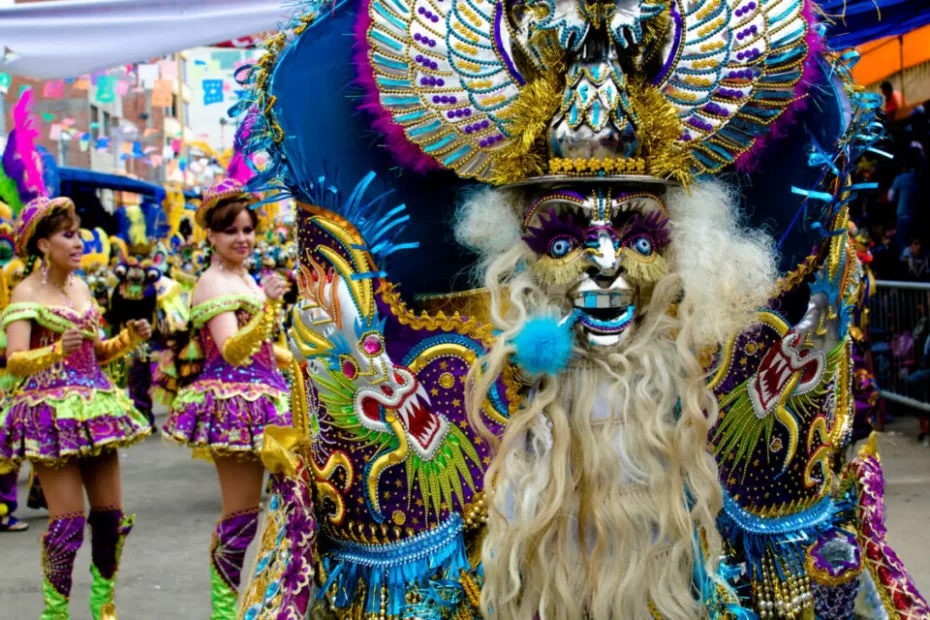
The Diablada masks are perhaps the most iconic, striking in their grotesque beauty and intricate detail. Crafted from papier-mâché, plaster, or fiberglass, they feature bulging eyes, sharp fangs, twisted horns, and often serpents, lizards, or other symbolic creatures. The colors are vivid and symbolic: red for the devil, green for hope, blue for the sky. Lucifer’s mask is often the most elaborate, adorned with mirrors, jewels, and intricate designs, signifying his pride and power. The costumes themselves are equally spectacular, with embroidered capes depicting Christian and pagan symbols, often featuring the figure of the Virgin of Socavón on the back, signifying her ultimate triumph over evil. The craftsmanship involved in creating these masks and costumes is a treasured Oruro heritage, passed down through generations of skilled artisans.
Morenada costumes are renowned for their incredible weight and opulence. Dancers wear large, wide skirts (pollera) for women and heavy, often dark, velvet or brocade suits for men, adorned with sequins, beads, and intricate embroidery. The most distinctive feature for male dancers is the “careta” or mask, typically depicting a dark-skinned face with exaggerated features, often with a large, protruding tongue. This is believed to represent the exhaustion and suffering of the African slaves due to the high altitude and harsh labor. The elaborate hats, often shaped like a boat or a helmet, further add to the grandeur and weight, symbolizing the journey across the sea or the burden of the mines.
For the Caporales, the costumes are vibrant and energetic, reflecting the dynamic nature of the dance. Male dancers wear ornate shirts, wide-legged pants with bells, and high-heeled boots, often adorned with colorful ribbons and intricate embroidery. The female costumes are equally striking, featuring short, ruffled skirts, long-sleeved blouses, and high boots, all designed to emphasize movement and flair. The bells on the male dancers’ boots, in particular, are a defining characteristic, creating a rhythmic sound that accompanies their powerful steps.
Beyond these major dances, every fraternity’s attire in the Oruro Carnival events is a testament to the creativity and dedication of its members. From the feathered headdresses of the Tobas to the traditional Andean textiles of the Incas, each costume is a carefully constructed piece of art, embodying the spirit of its respective folklore traditions. The process of creating these carnival costumes and carnival masks is a year-round endeavor, a labor of love that ensures the visual splendor and symbolic depth of the Oruro Carnival remain unparalleled.
Modern Influence and Global Recognition
The Oruro Carnival, while deeply rooted in ancient traditions, has not remained isolated from the modern world. Its designation as a UNESCO Intangible Cultural Heritage of Humanity in 2001 marked a pivotal moment, catapulting this extraordinary Bolivian festival onto the global stage. This recognition brought unprecedented international attention, transforming the carnival from a regional marvel into a must-see destination for cultural enthusiasts and travelers worldwide.
The global spotlight has had a profound impact on tourism in Oruro and Bolivia as a whole. Each year, thousands of international visitors flock to the city, eager to witness the spectacle firsthand. This influx has spurred economic growth, supporting local artisans, hotels, restaurants, and various service industries. For those planning a Bolivia travel guide, the Oruro Carnival is consistently listed as a top attraction, showcasing the vibrant cultural events Bolivia has to offer. The increased visibility has also fostered a greater sense of national pride and an enhanced commitment to preserving the carnival’s integrity and authenticity.
However, global recognition also brings challenges. The commercialization of the carnival is a constant concern, with efforts made to balance economic benefits with the preservation of its spiritual and cultural essence. Organizers and local communities work tirelessly to ensure that the Oruro Carnival traditions are maintained, protecting them from becoming overly commercialized or diluted. There’s a delicate dance between embracing modernity and safeguarding the ancient folklore traditions that give the carnival its soul.
Despite these challenges, the Oruro Carnival continues to thrive, adapting to modern influences while fiercely holding onto its core identity. It serves as a powerful example of how cultural heritage can be celebrated and shared on a global scale, drawing people together through the universal language of dance, music, and storytelling. It showcases the best of Bolivia tourism, inviting the world to experience a unique blend of history, faith, and exuberant celebration that is truly unforgettable. The carnival’s journey from an indigenous ritual to a globally recognized cultural festival is a testament to its enduring power and significance.
Conclusion
The Folklore of Oruro Carnival is an unparalleled cultural journey, a profound celebration that transcends mere entertainment to become a living, breathing testament to Bolivian identity and resilience. From its ancient pre-Columbian roots, honoring Pachamama and the Tio Supay, to its syncretic embrace of Catholic devotion to the Virgin of Socavón, the carnival embodies a magnificent fusion of beliefs and traditions. We’ve journeyed through its rich historical background, understanding how centuries of indigenous wisdom and colonial influence have shaped this extraordinary event, making it a cornerstone of Oruro cultural heritage and a beacon of Andean culture.
We’ve explored the intricate folklore traditions woven into every thread of its fabric, from the powerful storytelling of its traditional dances like the iconic Diablada, the poignant Morenada, and the energetic Caporales, to the awe-inspiring craftsmanship of its carnival costumes and masks. Each dance, each mask, each note of Oruro music is a chapter in Bolivia’s vibrant narrative, preserving myths, legends, and historical memories for future generations. The cultural significance of the carnival extends far beyond its spectacle, fostering community, reinforcing identity, and keeping the spirit of Bolivia folklore alive.
Now, recognized globally as a UNESCO Masterpiece, the Oruro Carnival stands as a beacon for cultural festivals in South America, attracting visitors from every corner of the world. Its global recognition has brought both opportunities for growth and challenges for preservation, yet the spirit of the Oruro Carnival remains undimmed, a testament to the enduring power of its people and their traditions.
To truly grasp the magic of Oruro Carnival significance, one must experience it firsthand. To hear the thunderous brass bands, witness the dazzling array of carnival costumes, feel the earth tremble with the collective rhythm of thousands of dancers, and breathe in the electric atmosphere of devotion and joy is to partake in something truly extraordinary. It’s an invitation to connect with a profound cultural heritage, to witness the vibrant heart of Bolivia, and to be swept away by one of the world’s most captivating folklore celebrations. So, if you seek an adventure that promises deep cultural immersion and unforgettable memories, plan your visit and join the celebration – the Oruro Carnival awaits.
About to log in to superwin777login. Hope everything goes smoothly. Bring on the games and the wins! Looking for a win! superwin777login is here!