
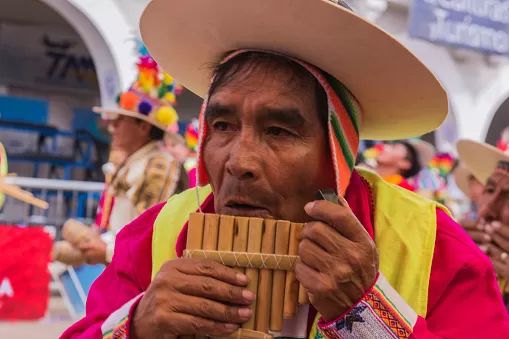
Traditional Bolivian Instruments from Oruro
Oruro, a city nestled high in the Andean mountains of Bolivia, is a vibrant crucible of culture, history, and, perhaps most notably, music. When one speaks of Oruro, it’s impossible not to conjure images of its world-renowned Carnival, a spectacle where the very air vibrates with the sounds of traditional Bolivian instruments. These instruments are not mere accompaniments; they are the heart and soul of Oruro’s rich cultural heritage, echoing the stories, struggles, and triumphs of its people. Exploring traditional Bolivian instruments from Oruro offers a profound journey into the country’s artistic traditions and deep-rooted folklore, revealing how music and culture intertwine to create a unique identity.
Cultural and Festive Role of Traditional Music in Oruro
In Oruro, music transcends entertainment; it is a fundamental pillar of daily life and grand celebrations. The rhythmic pulse of a bombo, the haunting melody of a zampoña, or the intricate strumming of a charango are more than just sounds; they are expressions of a collective spirit. This traditional music serves as a powerful medium for storytelling, preserving ancestral knowledge, and fostering a strong sense of community. During festivals, especially the iconic Oruro Carnival, these instruments transform the city into a living symphony, inviting everyone to partake in its magic. The music becomes a shared language, uniting dancers, musicians, and spectators in an unforgettable celebration of Bolivian heritage.
Introduction to Traditional Bolivian Music
Bolivian music, particularly that originating from the Andean highlands, is a mosaic of indigenous, colonial, and contemporary influences. It’s a soundscape deeply connected to the natural environment, the high altitudes, and the spiritual beliefs of its people. In Oruro, this connection is particularly strong, with traditional music serving as a direct link to the region’s pre-Columbian past and its enduring cultural expressions. The music is often characterized by its melancholic yet powerful melodies, driven by wind and percussion instruments, creating an ethereal quality that transports listeners to the heart of the Andes. It’s a testament to the resilience and creativity of a culture that has preserved its musical traditions against the backdrop of centuries of change.
Historical Context of Oruro’s Music
The history of music in Oruro is as layered and complex as the city itself. Before the arrival of the Spanish, indigenous communities in the region already possessed a rich musical tradition, utilizing various wind and percussion instruments made from natural materials. These early forms of Andean music were integral to religious ceremonies, agricultural rituals, and community gatherings. With the advent of Spanish colonization, new instruments like stringed guitars and mandolins were introduced, leading to a fascinating fusion. Oruro, a significant mining center during the colonial era, became a melting pot where indigenous melodies met European harmonies. This interaction gave birth to new genres and modified existing instruments, forging the unique sound that defines Oruro music today. Over time, this blend evolved, influenced by the struggles for independence and the subsequent development of a distinct Bolivian identity. The city’s strong connection to mining culture also infused its music with themes of labor, hardship, and community solidarity, further enriching its historical narrative and solidifying its place in Bolivian folklore. The preservation of music in Oruro is a continuous effort, linking past generations with the present through vibrant soundscapes.
Types of Traditional Instruments
The array of traditional instruments found in Oruro is diverse, each contributing its unique voice to the region’s musical tapestry. From the delicate strum of strings to the resonant boom of percussion and the airy whisper of winds, these instruments are crafted with both artistry and functionality in mind. They are often made from readily available local materials, reflecting an ingenuity that has been passed down through generations. These instruments are not just tools for making sound; they are cultural artifacts, imbued with meaning and history, playing a crucial role in various Oruro traditions and celebrations. Understanding their unique features is key to appreciating the depth of Oruro’s musical traditions.
The Charango
Perhaps one of the most iconic and beloved Latin American instruments, the charango holds a special place in the heart of Bolivian music, particularly in Oruro. This small, ten-stringed lute is instantly recognizable, often featuring a soundbox traditionally crafted from the shell of an armadillo (quirquincho), though nowadays wood is more commonly used. Its origins are steeped in legend, with many believing it to be a modification of the Spanish vihuela or mandolin, adapted by indigenous musicians in the Andean region.
The charango’s high-pitched, bright, and often rapid strumming creates a distinctive sound that can be both joyful and melancholic. It is incredibly versatile, used for both rhythmic accompaniment and intricate melodic solos. In Oruro, the charango is a staple in many folk music ensembles, accompanying traditional dances and songs with its lively presence. Its cultural significance extends beyond its musical role; it is often seen as a symbol of Andean identity and Bolivian heritage, a testament to the resilience and creativity of the people. Learning to play the charango is a rite of passage for many young musicians in the region, ensuring its legacy continues to thrive.
The Bombo
The bombo, a large, cylindrical bass drum, is the rhythmic heartbeat of traditional Bolivian music, especially prominent in Oruro. Its deep, resonant thud provides the foundational pulse for countless traditional dances and musical pieces. Typically constructed from a hollowed-out tree trunk, often ceibo wood, and covered with animal hide (usually llama or goat skin) on both ends, the bombo is played with a mallet, sometimes accompanied by a stick or brush to create varied textures.
The bombo’s sound is unmistakable – a powerful, earthy boom that evokes the vastness of the Andean landscape. It is not just a time-keeping instrument; it drives the energy of a performance, inspiring dancers and unifying ensembles. In Oruro, particularly during the Carnival and other Oruro celebrations, the sheer number of bombos creates a thunderous, immersive experience. Its role is crucial in maintaining the tempo and providing a grounding force for the often complex melodies played by other instruments. The bombo is more than a drum; it is the pulse of the community, an instrument that demands attention and commands the spirit of the celebration.
The Zampoña
The zampoña, a type of panpipe, is another quintessential Andean instrument, deeply embedded in the musical traditions of Oruro. Known for its ethereal and haunting melodies, the zampoña consists of a series of cane or bamboo tubes of varying lengths, bound together in one or two rows. Each tube produces a different note when air is blown across its open end, and musicians often play them in pairs or larger ensembles, creating rich harmonies. There are various types of zampoñas, such as the siku (often played in hocket, where two musicians alternate notes to complete a melody) and the antara, each with its own specific range and tuning.
The history of the zampoña dates back thousands of years, with archaeological evidence suggesting its presence in pre-Incan cultures. In Oruro, its sound is synonymous with the high Andes, evoking images of vast landscapes and ancient spirits. It is a cornerstone of many traditional music groups, providing the main melodic lines, often in a call-and-response pattern that is characteristic of indigenous music. The zampoña’s ability to create both soaring, majestic tunes and delicate, introspective passages makes it incredibly versatile, contributing significantly to the unique sound of Bolivian folklore. Its cultural significance lies in its deep connection to the land and the ancestral wisdom it embodies, making it a powerful symbol of Andean music.
Cultural Significance of Instruments in Oruro
The traditional Bolivian instruments of Oruro are far more than just objects that produce sound; they are profound symbols of the region’s cultural identity and heritage. Each instrument carries with it centuries of history, stories, and spiritual meaning, representing the very soul of Oruro. The charango, with its delicate yet powerful voice, speaks of resilience and innovation. The bombo, with its deep, resonant thud, echoes the heartbeat of the land and the collective strength of its people. The zampoña, with its ethereal melodies, transports listeners to the mystical heights of the Andes, connecting them to ancient traditions and the spiritual world.
These instruments are integral to the social fabric of Oruro. They are present at every significant life event, from joyous celebrations to solemn rituals, marking the passage of time and reinforcing community bonds. They are vehicles for cultural expressions, allowing the people of Oruro to articulate their joys, sorrows, hopes, and dreams. Through their music, traditions are kept alive, historical narratives are recounted, and the unique identity of Oruro is continually reaffirmed. The instruments become living extensions of the people, embodying their struggles, their triumphs, and their unwavering spirit. This deep connection makes them invaluable treasures of Bolivian heritage and a source of immense pride for the Oruro people.
Traditional Festivals Featuring Oruro Instruments
Oruro is a city that thrives on celebration, and its traditional festivals are vibrant showcases for its rich musical heritage. These events are not just performances; they are immersive experiences where the sounds of traditional instruments fill the air, creating an atmosphere charged with energy and emotion. From local community gatherings to internationally recognized spectacles, these festivals highlight the central role that music plays in Oruro traditions and cultural life. They offer a unique opportunity to witness the power and beauty of these instruments in their intended context, as part of a dynamic and living tradition.
Oruro Carnival
Undoubtedly, the most spectacular and globally recognized event featuring traditional Bolivian instruments from Oruro is the Oruro Carnival. Declared a Masterpiece of the Oral and Intangible Heritage of Humanity by UNESCO, the Carnival is an explosion of color, dance, and, most importantly, music. For days, the streets of Oruro pulsate with the sounds of thousands of musicians and dancers, making it one of the most significant music festivals in Latin America.
During the Carnival, traditional instruments are not just played; they are celebrated. Massive ensembles of bandas (brass bands), comparsas (folkloric groups), and conjuntos (traditional ensembles) fill the city with sound. The bombo provides the relentless, driving rhythm for the various dance troupes, from the fierce Diablada (Dance of the Devils) to the elegant Morenada and the energetic Caporales. The deep thrum of the bombo is the heartbeat that propels the costumed dancers through the streets, often for many hours.
Alongside the powerful brass and percussion, the delicate yet insistent melodies of the charango and the haunting tones of the zampoña weave through the soundscape. While brass bands are prominent, traditional groups ensure that the indigenous music and instruments maintain their central role, especially in the more ancestral dances. Specific performances during the Carnival often highlight these instruments, showcasing their versatility and emotional depth. The Kallawaya dance, for instance, might feature the pinkillu (a type of flute) and wankara (a large drum), while other groups will prominently feature the charango and zampoña in their renditions of traditional folk music.
The Oruro Carnival is a living testament to the enduring power of traditional music and the instruments that bring it to life. It’s a sensory overload where the sight of elaborate costumes, the smell of street food, and the overwhelming sound of Oruro music combine to create an unforgettable cultural experience. It is here that the instruments of Bolivia truly shine, acting as conduits for an ancient heritage that is vibrantly alive.
Learning and Preserving Traditional Music
The rich musical heritage of Oruro, deeply intertwined with its traditional instruments, is a treasure that requires continuous effort to preserve and pass on to future generations. Thankfully, there are numerous initiatives dedicated to music education and the preservation of music in Oruro and throughout Bolivia. These efforts recognize that the survival of these artistic traditions depends on active engagement and dedicated mentorship.
Many communities and cultural organizations in Oruro host workshops and schools where both children and adults can learn to play traditional instruments like the charango, bombo, and zampoña. These programs go beyond simply teaching technique; they immerse students in the cultural context of the music, teaching them about the history, significance, and proper care of each instrument. Often, master musicians, who have inherited their knowledge through generations, serve as teachers, ensuring that authentic playing styles and oral traditions are maintained.
Beyond formal education, community gatherings and family traditions play a crucial role. Music is often learned informally, passed down from parents to children, uncles to nephews, reinforcing the familial and communal bonds that underpin Bolivian folklore. Festivals, such as the Oruro Carnival, also serve as powerful platforms for preservation, as they motivate young people to learn instruments and participate in the cultural expressions of their heritage.
Furthermore, academic institutions and cultural foundations are engaged in documenting traditional Oruro music, creating archives of recordings, scores, and instrument designs. This scholarly work ensures that even if certain practices evolve, a record of the original forms remains. By fostering a vibrant environment for learning and celebrating these instruments, Oruro ensures that its unique musical traditions will continue to resonate for many years to come, enriching the lives of its people and captivating audiences worldwide.
Conclusion
The traditional Bolivian instruments from Oruro are more than just musical tools; they are the living voice of a culture steeped in history, spirituality, and vibrant celebration. From the intricate melodies of the charango and the ethereal whispers of the zampoña to the grounding pulse of the bombo, each instrument tells a story, echoing the rich tapestry of Andean life and Bolivian heritage. They are central to Oruro’s identity, particularly during the awe-inspiring Oruro Carnival, where their sounds transform the city into a monumental stage for cultural expressions and artistic traditions.
These instruments embody the resilience and creativity of the Oruro people, serving as vital links to their ancestors and powerful symbols of their ongoing cultural journey. The dedication to music education and the preservation of music ensures that these precious traditions will continue to thrive, inspiring new generations to embrace their heritage. We encourage everyone with an interest in music, culture, and folklore to delve deeper into the captivating world of Oruro music. Explore the sounds, learn about the instruments, and perhaps even plan a visit to witness the magic of the Oruro Carnival firsthand. It is an experience that promises to enrich your understanding of Latin American instruments and the profound beauty of Bolivian folklore.
Having problems accessing Sige777? sige777linklogin comes in clutch. I recommend using this URL so you can log in to your account without the worry of getting scammed: sige777linklogin