
Understanding the Symbolism in Oruro Carnival Masks
The Oruro Carnival, recognized by UNESCO as a Masterpiece of the Oral and Intangible Heritage of Humanity, is far more than just a vibrant street party. It’s a profound spiritual and cultural event, a tapestry woven from centuries of indigenous Andean beliefs and Catholic traditions. At the heart of this spectacular celebration, and central to its deep cultural symbolism, are the masks. These aren’t mere disguises; they are powerful conduits of history, mythology, and identity, each telling a story that resonates through generations. To truly appreciate the Oruro Carnival, one must delve into the intricate symbolism in Oruro Carnival masks, uncovering the layers of meaning that transform a festive adornment into a sacred artifact and a piece of living heritage.
Introduction to Oruro Carnival
Nestled high in the Bolivian Andes, the city of Oruro comes alive each year with one of South America’s most magnificent cultural festivals – the Oruro Carnival. This grand spectacle, a vibrant fusion of pre-Columbian rituals and colonial-era Catholicism, draws thousands of participants and spectators from across the globe. Its history stretches back centuries, rooted in ancient Andean traditions that honored Pachamama (Mother Earth) and the Uru people’s veneration of Supay (the god of the underworld, later syncretized with the Christian devil).
The carnival traditions are characterized by an impressive procession known as the “entrada,” where thousands of dancers and musicians perform elaborate choreographies over several days. Each dance group, or “conjunto,” represents a specific cultural narrative or historical event, and their elaborate carnival costumes, particularly their masks, are crucial to conveying these stories. The Oruro cultural significance lies not just in its scale but in its role as a living museum of Bolivian culture and a powerful expression of collective identity. It’s a powerful performative art that encapsulates the rich ethnic diversity and spiritual beliefs of the region, making it a cornerstone of Bolivia festivals and a testament to enduring cultural heritage. Through its festive celebrations, Oruro preserves and showcases the intricate layers of its past and present.
Historical Background of Carnival Masks
The origins of carnival masks in Oruro are deeply intertwined with the region’s complex history and spiritual landscape. Before the arrival of the Spanish, indigenous Uru communities already used masks in their ceremonial dances, often to invoke spirits, honor deities, or ward off evil. These early masks, likely made from natural materials such as wood, leather, and feathers, were integral to animistic rituals and communal rites. With the Spanish conquest and the subsequent imposition of Catholicism, these traditions didn’t disappear but rather adapted.
The syncretism between indigenous beliefs and Christian doctrines is perhaps best exemplified in the figure of the Diablada (Dance of the Devils), the most iconic dance of the Oruro Carnival. The indigenous god Supay, once a powerful yet ambivalent figure of the underworld, was slowly reinterpreted as the Christian devil. Early colonial-era masks began to reflect this transformation, incorporating elements that were both terrifying and awe-inspiring. Over time, the designs evolved, influenced by European theatrical masks, colonial religious art, and the growing artistic craftsmanship of local artisans.
The evolution of these traditional masks saw a shift towards more elaborate and durable materials, incorporating papier-mâché, plaster, and eventually, more sophisticated molds and paints. Each historical period left its mark, adding new layers of meaning and aesthetic detail. The mask traditions became a powerful means of cultural expression, allowing communities to subtly resist colonial suppression while outwardly participating in new religious frameworks. These Bolivian masks are not just decorative; they are historical masks, embodying centuries of cultural negotiation, spiritual resilience, and artistic innovation, making them central to the region’s cultural heritage and symbolic art.
The Artistic Process Behind the Masks
The creation of Oruro Carnival masks is a labor of love, a testament to the extraordinary artistic craftsmanship passed down through generations of skilled artisans. This isn’t mass production; it’s a meticulous, often months-long process that results in unique, expressive pieces of symbolic art. The journey begins with a vision, often inspired by ancient legends, mythological symbols, or the specific requirements of a dance group’s character.
The primary material for many of the larger, more elaborate masks is papier-mâché, built up over a clay or plaster mold. This process involves layering strips of paper soaked in a paste, gradually building thickness and form. For smaller details or more robust structures, materials like wire mesh, fiberglass, or even animal horns might be incorporated. Once the basic form is dry and hardened, the mask is meticulously sanded and primed, preparing it for the intricate painting phase.
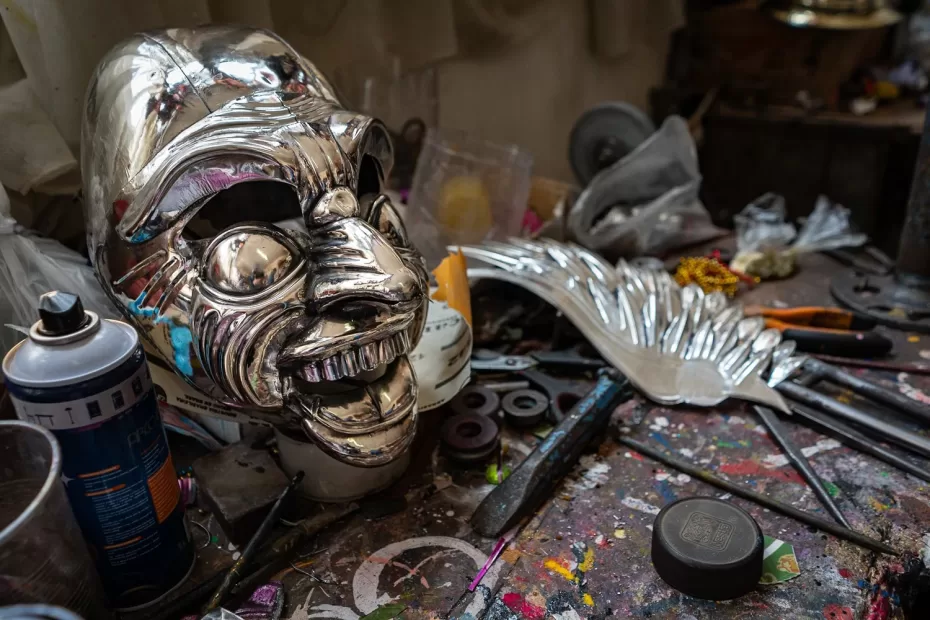
This is where the mask truly comes to life. Artisans use a vibrant palette of oil-based or acrylic paints, applying multiple layers to achieve depth and intensity. The painting process is highly detailed, often involving intricate patterns, expressive facial features, and subtle shading that gives the masks their striking, almost lifelike quality. Embellishments are then added, transforming the mask into a dazzling spectacle. These can include anything from glass eyes, mirrors, sequins, and glitter to elaborate synthetic hair, feathers, and even real animal teeth or horns, particularly for the devil masks. Each element is carefully chosen and placed, contributing to the mask’s overall impact and symbolic message.
The mask-making techniques are often a closely guarded family secret, passed from master to apprentice, ensuring the preservation of traditional methods and styles. This artisanship is a vital part of the local economy and cultural identity, showcasing Bolivia art at its finest. The dedication and skill involved in crafting these masks underscore their importance not just as carnival costumes but as deeply meaningful works of art that carry the spirit of the Oruro Carnival.
Symbolism of Colors and Designs in Masks
The vibrant colors and intricate designs found in Oruro Carnival masks are far from arbitrary; they are a complex visual language, each hue and motif carrying profound meaning in the context of the carnival. This color symbolism is deeply rooted in Andean cosmology, Catholic iconography, and historical narratives, offering a rich tapestry of cultural symbolism.
Red, a dominant color, often signifies passion, sacrifice, and the fiery essence of the devil, but also strength and vitality. Green represents fertility, hope, and the lushness of Pachamama, Mother Earth, while blue can symbolize the sky, divinity, and purity. Gold and silver, often used for embellishments, denote wealth, power, and the sun and moon, respectively, important deities in Andean cosmology. Black, though less common, can represent the underworld or mourning, while white often signifies purity or the spirit world. The combination and placement of these colors create a visual dialogue that enhances the mask’s message.
Beyond colors, the designs themselves are rich with mythological symbols and cultural references. The bulging eyes of the Diablada masks, for instance, represent the devil’s all-seeing nature, while the fangs and grotesque features emphasize his fearsome power. Serpents, lizards, and toads, often depicted on these masks, are ancient Andean symbols of fertility, water, and the underworld, predating Christian interpretations of evil. The intricate headpieces, often adorned with mythical creatures or symbols of power, further enhance the mask’s narrative.
The meaning of carnival masks is thus a layered interpretation, where every element contributes to a holistic understanding of the character being portrayed and the broader cultural narrative.
Significance of Specific Symbols
Delving deeper, specific symbols within Oruro Carnival masks carry immense cultural relevance and historical weight, speaking volumes about the ethnic diversity and cultural identity of Bolivia.
-
The Diablo (Devil) Mask: This is arguably the most iconic mask of the Oruro Carnival, central to the Diablada dance. These masks are characterized by their elaborate, often terrifying features: bulging eyes, prominent fangs, grotesque snouts, and often, a crown of serpents, lizards, or other mythical creatures. The Diablo represents Supay, the indigenous god of the underworld, syncretized with the Christian devil. Yet, his portrayal is complex; he is not simply evil but a powerful, ambivalent figure who guards the mines and can grant favors. The mask’s fearsome appearance is meant to both frighten and command respect, symbolizing the triumph of good over evil, as the Archangel Michael ultimately defeats him in the dance. The intricate details often include symbols of wealth (like coins or jewels) and power (animal horns), reflecting his dominion over earthly treasures.
-
The Moreno (Morenada) Mask: The Morenada dance, with its distinctively melancholic rhythm, tells the story of African slaves brought to Bolivia to work in the silver mines. The Moreno mask is large and often quite heavy, with a dark complexion, exaggerated lips, and a prominent tongue, symbolizing the physical suffering and exhaustion of the miners. The large, round eyes, sometimes tearful, evoke the pain and longing for freedom. The mask’s elaborate headpiece, often resembling a Spanish galleon, represents the ships that brought the slaves across the ocean. These masks are powerful expressions of historical memory and the enduring legacy of slavery, making them poignant pieces of symbolic art that speak to a specific aspect of Bolivian culture and heritage.
-
The Tobas Mask: The Tobas dance pays homage to the indigenous groups from the Bolivian lowlands, particularly the Amazonian regions. The masks for this dance are typically less grotesque than the Diablo but equally striking, often featuring feathered headpieces, painted faces that mimic tribal markings, and sometimes animalistic features such as jaguar or bird motifs. These masks symbolize the strength, agility, and spiritual connection of these indigenous peoples to their natural environment. They represent a distinct cultural identity within the broader Bolivian context, celebrating the diversity of the nation.
-
Other Characters: Masks for characters like the Caporal (representing overseers of the mines, often with European features and elaborate hats), the Kullawada (reflecting the textile workers, with elegant, often smiling faces), and the various animal masks (condors, pumas, bears, symbolizing different aspects of the Andean world) all contribute to the rich narrative tapestry of the Oruro Carnival. Each mask, with its unique design and color symbolism, is a miniature world of meaning, reflecting aspects of Bolivian history, mythology, and social structure, and reinforcing the profound symbolic art that defines the festival.
Comparative Analysis with Other Cultural Masks
While the Oruro Carnival masks possess a distinct character, a comparative analysis with masks from other cultures and festivals reveals fascinating similarities and differences in their roles and symbolic art. Masks are a universal human phenomenon, used across diverse societies for ritual, performance, and social commentary.
Take, for instance, the ceremonial masks of various African tribal masks. Like Oruro’s, these masks are often imbued with spiritual power, used to embody ancestors, spirits, or deities, and are integral to rituals and storytelling. They share a performative art aspect, transforming the wearer and communicating complex narratives without words. However, African masks often emphasize abstract forms and materials like wood, raffia, and shells, differing from the more elaborate, often grotesque, and brightly painted Oruro masks. The symbolism might also diverge, with African masks frequently focusing on rites of passage, fertility, or protection from malevolent forces, while Oruro’s are heavily influenced by the syncretism of Andean and Catholic beliefs.
In contrast, the elegant, often minimalist Venetian masks, famous from the Carnival of Venice, serve a different purpose. While both are traditional masks used in festive celebrations, Venetian masks historically provided anonymity, allowing wearers to transgress social boundaries and engage in forbidden behaviors without revealing their identity. Their symbolism often revolves around mystery, intrigue, and social satire, rather than the explicit spiritual or historical narratives of Oruro. The craftsmanship is equally high, but the aesthetic and thematic concerns are distinct.
Even within Latin America, masks from Mexico’s Día de Muertos celebrations, though also vibrant and symbolic, focus specifically on death and the remembrance of ancestors, often depicting skulls and skeletons in a celebratory rather than fearsome light. While both involve a dialogue with the spiritual realm, the specific mythological symbols and cultural symbolism vary.
What unites these diverse mask traditions, including the Bolivian masks of Oruro, is their power as cultural artifacts. They all serve as a form of artistic expression, embodying cultural identity, preserving heritage, and acting as a bridge between the mundane and the sacred, the past and the present. The Oruro masks stand out for their dramatic fusion of indigenous beliefs with colonial influences, creating a unique visual language that is both deeply local and universally compelling in its exploration of good, evil, and human experience.
The Role of Masks in Oruro Carnival Performances
In the whirlwind of the Oruro Carnival, masks are not static display pieces; they are dynamic, living components of the performative art, essential to the storytelling and spiritual essence of the festival. Each mask transforms the dancer, allowing them to embody the character they represent, whether it be a fearsome devil, a suffering slave, or a proud indigenous warrior.
When a dancer dons a mask, they step out of their everyday identity and into a realm of myth and history. The mask becomes a conduit, enabling the performer to channel the spirit and narrative of the character. For the Diablada dancers, for example, wearing the elaborate Diablo mask is a profound act. It’s not just about acting like the devil; it’s about becoming a vessel for Supay, bringing the ancient deity to life in a contemporary context. The weight of the mask, its restricted vision, and its imposing presence all contribute to the dancer’s physical and spiritual commitment to the role.
The masks are integral to the elaborate choreographies and dramatic narratives that unfold during the “entrada.” They enhance the visual impact of the carnival costumes, making each dance group instantly recognizable and their story immediately comprehensible to the audience. The expressions molded into the masks—be they menacing, sorrowful, or joyous—communicate emotions that transcend language. The movements of the dancers, often synchronized and powerful, are amplified by the visual rhetoric of their masks, creating a powerful, immersive experience for both participants and spectators.
Furthermore, the masks play a crucial role in the spiritual aspect of the performances. Many dancers undertake their participation as a form of devotion to the Virgen del Socavón (Virgin of the Mines), the patron saint of Oruro. Wearing the mask and enduring the arduous journey of the procession is a penitential act, a sacrifice offered in exchange for blessings or forgiveness. Thus, the masks are not just props; they are sacred objects that facilitate a deep spiritual connection and contribute significantly to the meaning of carnival masks within the context of faith and tradition. This artistic expression through masks is a cornerstone of the Oruro Carnival’s enduring appeal and significance.
Impact of Oruro Carnival on Local Communities
The Oruro Carnival, with its dazzling display of Bolivian masks and vibrant traditions, has a profound and multifaceted impact on the local communities, extending far beyond the festive celebrations themselves. It is a vital artery for the region’s economy, a powerful force for cultural identity, and a crucial mechanism for heritage preservation.
Economically, the carnival is a massive boon for Oruro. The influx of national and international tourists generates significant revenue for hotels, restaurants, transportation services, and local vendors. More importantly, the demand for carnival costumes, musical instruments, and especially the intricate masks, provides year-round employment for countless artisans, tailors, musicians, and other skilled craftspeople. The mask-making techniques, passed down through generations, sustain entire families and small businesses, ensuring that the artistic craftsmanship remains a vibrant part of the local economy. This creates a sustainable ecosystem where cultural practices directly support livelihoods, strengthening the community impact.
Culturally, the carnival is a cornerstone of Oruro traditions and a powerful affirmation of Bolivian culture. It fosters a strong sense of collective identity and pride among the local communities. Children grow up immersed in the preparations, learning the dances, the music, and the stories behind the masks, ensuring that these traditions are passed on. The various dance groups and fraternities (conjuntos) often act as social hubs, strengthening community bonds and providing a sense of belonging. The carnival serves as a living classroom, educating new generations about their history, mythology, and the syncretic nature of their spiritual beliefs.
Moreover, the international recognition of the Oruro Carnival by UNESCO has elevated its status, bringing global attention to Bolivia’s rich cultural heritage. This recognition encourages local communities to take even greater pride in their traditions and reinforces the importance of heritage preservation efforts. It motivates institutions and individuals to document, research, and protect the unique aspects of the carnival, from the meaning of carnival masks to the intricate dance steps and musical compositions. The carnival, therefore, is not merely an annual event; it is a dynamic cultural engine that continually regenerates and reinforces the social fabric, economic well-being, and cultural identity of Oruro and, by extension, Bolivia as a whole.
Conclusion: The Enduring Legacy of Oruro Carnival Masks
The journey through the symbolism in Oruro Carnival masks reveals a world far richer and more complex than mere festive adornment. These Bolivian masks are profound cultural artifacts, each a miniature universe of meaning, history, and spiritual expression. From the terrifying grandeur of the Diablo to the poignant narratives of the Moreno, they embody centuries of indigenous resilience, colonial encounters, and the vibrant syncretism that defines Bolivian culture.
The Oruro Carnival itself is a testament to the power of performative art and the deep-seated human need for celebration, devotion, and storytelling. It’s a living, breathing museum of traditions, where ancient mythological symbols blend seamlessly with Christian iconography, all brought to life through the extraordinary artistic craftsmanship of local communities. The meticulous mask-making techniques, the vibrant color symbolism, and the specific narratives conveyed by each design collectively form a language that transcends words, speaking directly to the heart of cultural identity and shared heritage.
The enduring legacy of Oruro Carnival masks lies not only in their aesthetic beauty or their historical significance but in their continuing ability to connect generations, sustain communities, and powerfully express the unique spirit of Bolivia. As the world becomes increasingly homogenized, the preservation of such rich cultural heritage becomes paramount. The masks of Oruro are more than just part of a festival; they are guardians of memory, symbols of identity, and vibrant expressions of a spiritual journey that continues to captivate and inspire. To witness the Oruro Carnival is to experience a profound cultural immersion, and to understand its masks is to unlock the very soul of this extraordinary Bolivian tradition.
Yo peeps! Heard about kv999game from some friends, been playing a while now. It has pretty solid customer support, which is a HUGE plus in my book. Definitely a positive experience. Check it: kv999game